Korea Best / Etiquette

Best 10 Korean Table Manners That Impress Locals

Best 10 / All Korea / korea-culture-basics

Best 10 Korean Table Manners That Impress Locals guide
Category
Etiquette
List size
Best 10
Region
All Korea
Reading time
4 min read
Intent
How can I avoid awkward mistakes in Korea?
Best for
First-time visitors, Trip planning, Korea basics

Etiquette is not a strict rulebook

Korean etiquette is not forced on visitors. These are small optional gestures, but if you use them in the right moment, many Koreans may see you as thoughtful, respectful and easy to welcome.

Top picks in this guide

  1. Wait for elders to begin
  2. Say a meal greeting
  3. Use spoon and chopsticks properly
  4. Do not stick chopsticks upright
  5. Do not dig through shared dishes
  6. Keep your bowl on the table

Quick answer

Korean etiquette works best as practical consideration, not perfection. Start politely, watch the group pace, and use simple respectful gestures in formal or shared situations.

What this guide covers

Best 10 Korean Table Manners That Impress Locals is written for visitors who want a practical, search-friendly starting point before traveling in Korea. It explains dining behaviors that make visitors look considerate in a clear list format so readers can compare choices, avoid common confusion and move into more specific ComeKR guides.

Who this guide is for

  • Respectful visitors
  • Social situations

How we selected this list

This list is an editorial travel shortlist for foreign visitors to Korea. Items are selected based on first-time visitor usefulness, search demand, ease of understanding, practical travel value, and how often the topic causes confusion for foreigners.

This is not an official national ranking. Use it as a practical starting point and check official information when needed.

Best 10 list

1

Wait for elders to begin

In formal or family-style meals, pause briefly until the oldest person or host starts eating. This small wait is easy to do and makes a first meal with Koreans feel more considerate.

Quick tip

Use Wait for elders to begin as a practical starting point, then adjust for the place, time, and people around you.

Best for

Visitors who want a quick Korea travel decision around wait for elders to begin.

How to use/order

Use Wait for elders to begin in a simple, polite way and adjust based on the person, place, and formality of the situation.

Why it matters

Wait for elders to begin matters because it turns dining behaviors that make visitors look considerate into a specific action visitors can remember during the trip.

Example situation

You notice wait for elders to begin during a real Korea travel moment and need a simple, polite response.

Common mistake

Do not treat wait for elders to begin as a rigid rule for every person or every situation.

Useful phrase

Excuse me, could you help me?

Related tool. Korea Situation Helper

2

Say a meal greeting

Before eating, many Koreans say jal meokgetseumnida to show appreciation for the meal. Foreign visitors do not need perfect pronunciation, but trying the phrase often feels warm and respectful.

Quick tip

Use Say a meal greeting as a practical starting point, then adjust for the place, time, and people around you.

Best for

Visitors who want a quick Korea travel decision around say a meal greeting.

How to use/order

Use Say a meal greeting in a simple, polite way and adjust based on the person, place, and formality of the situation.

Why it matters

Say a meal greeting matters because it turns dining behaviors that make visitors look considerate into a specific action visitors can remember during the trip.

Example situation

You notice say a meal greeting during a real Korea travel moment and need a simple, polite response.

Common mistake

Do not treat say a meal greeting as a rigid rule for every person or every situation.

Useful phrase

Excuse me, could you help me?

Related tool. Korea Situation Helper

3

Use spoon and chopsticks properly

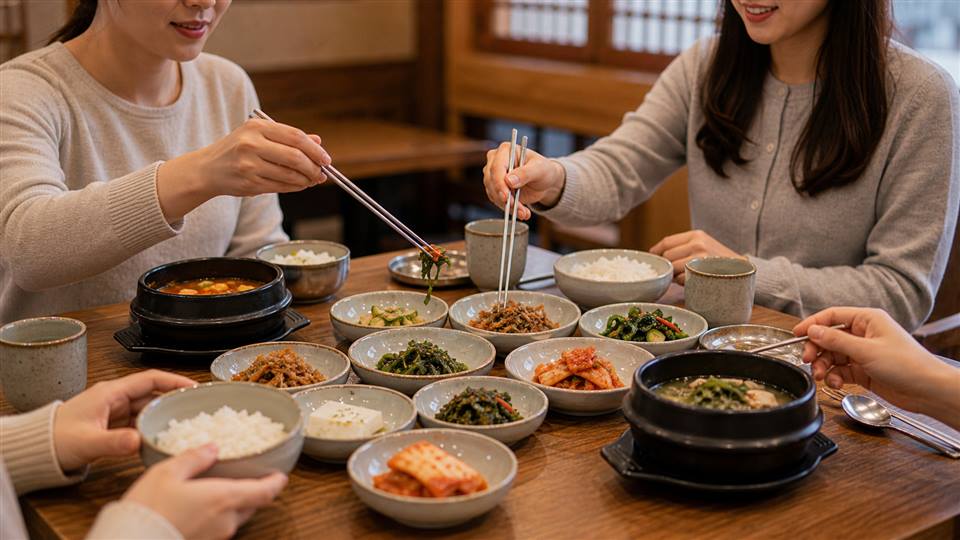
Korean meals commonly use a spoon for rice and soup, and chopsticks for side dishes or solid foods. Switching tools naturally helps you look less lost at a traditional table.

Quick tip

Use Use spoon and chopsticks properly as a practical starting point, then adjust for the place, time, and people around you.

Best for

Visitors who want a quick Korea travel decision around use spoon and chopsticks properly.

How to use/order

Use Use spoon and chopsticks properly in a simple, polite way and adjust based on the person, place, and formality of the situation.

Why it matters

Use spoon and chopsticks properly matters because it turns dining behaviors that make visitors look considerate into a specific action visitors can remember during the trip.

Example situation

You notice use spoon and chopsticks properly during a real Korea travel moment and need a simple, polite response.

Common mistake

Do not treat use spoon and chopsticks properly as a rigid rule for every person or every situation.

Useful phrase

Excuse me, could you help me?

Related tool. Korea Situation Helper

4

Do not stick chopsticks upright

Avoid placing chopsticks straight up in rice because it can resemble funeral-related imagery. Rest them on the table, holder or bowl edge instead.

Quick tip

Use Do not stick chopsticks upright as a practical starting point, then adjust for the place, time, and people around you.

Best for

Visitors who want a quick Korea travel decision around do not stick chopsticks upright.

How to use/order

Use Do not stick chopsticks upright in a simple, polite way and adjust based on the person, place, and formality of the situation.

Why it matters

Do not stick chopsticks upright matters because it turns dining behaviors that make visitors look considerate into a specific action visitors can remember during the trip.

Example situation

You notice do not stick chopsticks upright during a real Korea travel moment and need a simple, polite response.

Common mistake

Do not treat do not stick chopsticks upright as a rigid rule for every person or every situation.

Useful phrase

Excuse me, could you help me?

Related tool. Korea Situation Helper

5

Do not dig through shared dishes

Shared side dishes are common, but picking through them can look careless. Take the piece nearest you, and use serving utensils when they are provided.

Quick tip

Use Do not dig through shared dishes as a practical starting point, then adjust for the place, time, and people around you.

Best for

Visitors who want a quick Korea travel decision around do not dig through shared dishes.

How to use/order

Use Do not dig through shared dishes in a simple, polite way and adjust based on the person, place, and formality of the situation.

Why it matters

Do not dig through shared dishes matters because it turns dining behaviors that make visitors look considerate into a specific action visitors can remember during the trip.

Example situation

You notice do not dig through shared dishes during a real Korea travel moment and need a simple, polite response.

Common mistake

Do not treat do not dig through shared dishes as a rigid rule for every person or every situation.

Useful phrase

Excuse me, could you help me?

Related tool. Korea Situation Helper

6

Keep your bowl on the table

Unlike some neighboring dining customs, Korean rice and soup bowls are usually left on the table while eating. Bring the spoon to your mouth instead of lifting the bowl.

Quick tip

Use Keep your bowl on the table as a practical starting point, then adjust for the place, time, and people around you.

Best for

Visitors who want a quick Korea travel decision around keep your bowl on the table.

How to use/order

Use Keep your bowl on the table in a simple, polite way and adjust based on the person, place, and formality of the situation.

Why it matters

Keep your bowl on the table matters because it turns dining behaviors that make visitors look considerate into a specific action visitors can remember during the trip.

Example situation

You notice keep your bowl on the table during a real Korea travel moment and need a simple, polite response.

Common mistake

Do not treat keep your bowl on the table as a rigid rule for every person or every situation.

Useful phrase

Excuse me, could you help me?

Related tool. Korea Situation Helper

7

Match the meal pace

Korean meals can feel communal, so eating dramatically faster or slower than everyone else may stand out. You do not need to copy every bite, but staying near the group rhythm helps.

Quick tip

Use Match the meal pace as a practical starting point, then adjust for the place, time, and people around you.

Best for

Visitors who want a quick Korea travel decision around match the meal pace.

How to use/order

Use Match the meal pace in a simple, polite way and adjust based on the person, place, and formality of the situation.

Why it matters

Match the meal pace matters because it turns dining behaviors that make visitors look considerate into a specific action visitors can remember during the trip.

Example situation

You notice match the meal pace during a real Korea travel moment and need a simple, polite response.

Common mistake

Do not treat match the meal pace as a rigid rule for every person or every situation.

Useful phrase

Excuse me, could you help me?

Related tool. Korea Situation Helper

8

Share side dishes neatly

Banchan are meant to be shared, but the table still needs to feel clean. Avoid dropping sauce into shared plates and keep personal utensils from mixing too much when serving utensils exist.

Quick tip

Use Share side dishes neatly as a practical starting point, then adjust for the place, time, and people around you.

Best for

Visitors who want a quick Korea travel decision around share side dishes neatly.

How to use/order

Use Share side dishes neatly in a simple, polite way and adjust based on the person, place, and formality of the situation.

Why it matters

Share side dishes neatly matters because it turns dining behaviors that make visitors look considerate into a specific action visitors can remember during the trip.

Example situation

You notice share side dishes neatly during a real Korea travel moment and need a simple, polite response.

Common mistake

Do not treat share side dishes neatly as a rigid rule for every person or every situation.

Useful phrase

Excuse me, could you help me?

Related tool. Korea Situation Helper

9

Avoid noisy phone use

At the table, loud videos, speaker calls or constant filming can feel disruptive. Take quick photos if appropriate, then return attention to the meal and the people with you.

Quick tip

Use Avoid noisy phone use as a practical starting point, then adjust for the place, time, and people around you.

Best for

Visitors who want a quick Korea travel decision around avoid noisy phone use.

How to use/order

Use Avoid noisy phone use in a simple, polite way and adjust based on the person, place, and formality of the situation.

Why it matters

Avoid noisy phone use matters because it turns dining behaviors that make visitors look considerate into a specific action visitors can remember during the trip.

Example situation

You notice avoid noisy phone use during a real Korea travel moment and need a simple, polite response.

Common mistake

Do not treat avoid noisy phone use as a rigid rule for every person or every situation.

Useful phrase

Excuse me, could you help me?

Related tool. Korea Situation Helper

10

Say you ate well after the meal

After eating, jal meogeotseumnida is a polite way to say you enjoyed the meal. It is a simple phrase that works especially well when someone else hosted, cooked or recommended the place.

Quick tip

Use Say you ate well after the meal as a practical starting point, then adjust for the place, time, and people around you.

Best for

Visitors who want a quick Korea travel decision around say you ate well after the meal.

How to use/order

Use Say you ate well after the meal in a simple, polite way and adjust based on the person, place, and formality of the situation.

Why it matters

Say you ate well after the meal matters because it turns dining behaviors that make visitors look considerate into a specific action visitors can remember during the trip.

Example situation

You notice say you ate well after the meal during a real Korea travel moment and need a simple, polite response.

Common mistake

Do not treat say you ate well after the meal as a rigid rule for every person or every situation.

Useful phrase

Excuse me, could you help me?

Related tool. Korea Situation Helper

Key facts

  • Dining manners are visible and easy to learn.
  • Shared dishes and group timing matter.
  • Table manners connect food and etiquette search intent.

Category-specific practical guide

Etiquette rules that matter most

  • Use polite speech first, respect queues, keep public transport quiet, and watch shared dining pace.
  • Two-hand gestures are appreciated in formal or service moments.

What foreigners should not worry too much about

  • Koreans do not expect visitors to be perfect.
  • A quick apology, calm tone, and willingness to follow local cues usually matter more than memorizing every rule.

Common situations: restaurants, subway, drinking, homes

  • Restaurants are fast-paced, subway rides are usually quiet, drinking has group rhythm, and homes may require shoes off.

Common mistakes and tips

  • 1

    Check official information before relying on schedules, access rules, prices, or availability.

  • 2

    Use this list as a practical starting point, not as an official ranking.

  • 3

    Open related ComeKR guides when you need payment, address, transport, or phrase help.

Why this Korea Best topic matters

  • 1

    etiquette is a frequent first-trip question for Korea visitors.

  • 2

    The list format makes the topic easy to scan before a trip.

  • 3

    Each point can link to deeper Korea travel, food, culture or etiquette pages.

Visitor tips

  • 1

    Start with the top three items if you are short on time.

  • 2

    Open the official source before making a final travel or purchase decision.

  • 3

    Use the related links to move from broad planning into detailed guides.

Official information

For official and updated travel information, check the links below.

VisitKorea

Official Korea travel information for foreign visitors.

Open VisitKorea

External site opens in a new tab.

Visit Seoul

Official Seoul visitor information for public transport, attractions, and daily travel context.

Open Visit Seoul

External site opens in a new tab.

Best 10 Korean Table Manners That Impress Locals FAQ

Who is this etiquette guide for?

It is mainly for first-time visitors and foreigners who want fast, practical context before making Korea travel or daily-life decisions.

Why does this Korea Best guide include an official source?

Official sources make it easier to verify public information, travel guidance and cultural context before relying on a recommendation.

How should I use this list?

Use it as a quick shortlist first, then open the linked ComeKR detail pages for deeper tips, routes, phrases or etiquette notes.