TRAVEL IN KOREA
Korea Attractions and Sightseeing Places
Browse Korea's top sightseeing spots — palaces, mountains, temples, and landmarks from official Korea Tourism Organization listings.
Data last synced: 2026-06-25. Some details may change. Please confirm official information before visiting.
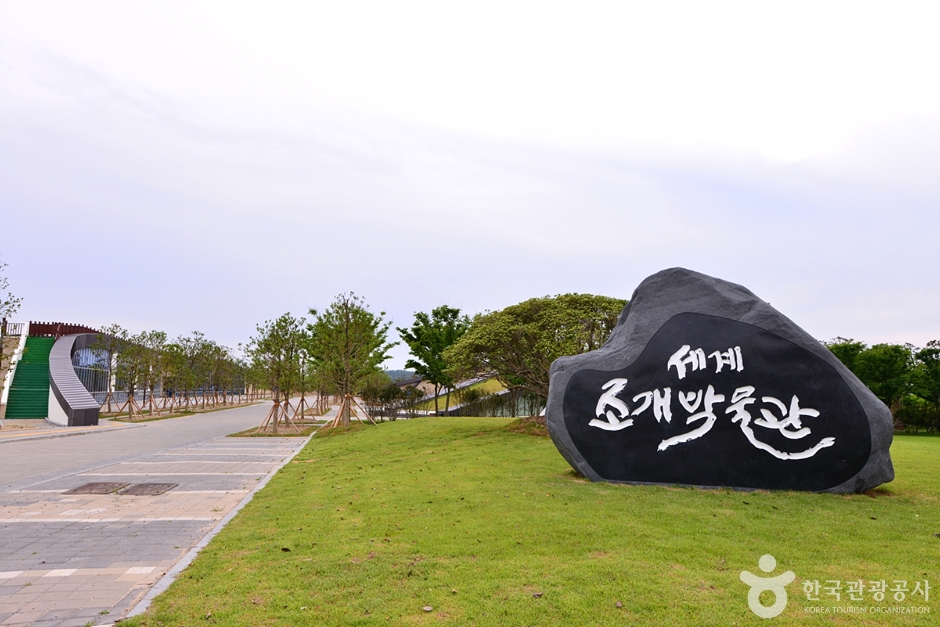
1004 Islands Museum Park (1004 뮤지엄파크)
508-65 Jaeunseobu 2-gil, Jaeun-myeon, Sinan-gun, Jeollanam-do
1004 Islands Museum Park is a marine complex cultural district located on Yangsan Beach in Jaeundo Island. It comprises the World Shell Museum, 1004 Islands Stone Art Museum, Stone Garden, and Yangsan Beach. The Stone Garden features fountains, rock formations, and pine trees, while the 1004 Islands Stone Art Museum houses 1,400 donated stones. Additionally, the World Shell Museum exhibits shells and marine life collected from oceans around the world.
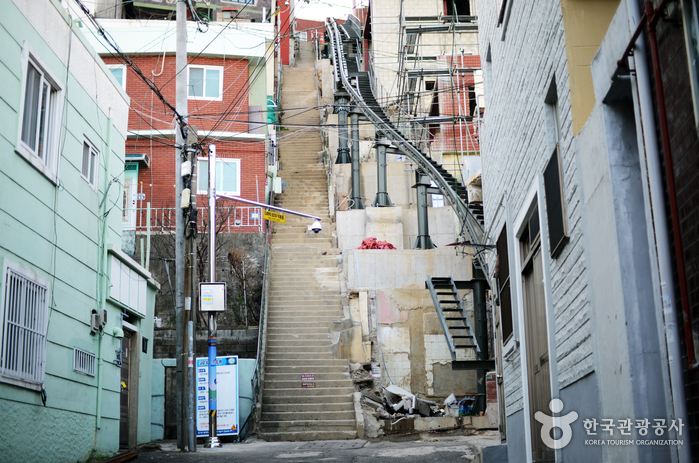
168 Stairs (168계단)
9, Yeongcho-gil 197beon-gil, Dong-gu, Busan
This is the fastest way to go downhill from Sanbok road to Busan port. The stairs are known to be as tall as a 6-story building and have exactly 168 steps. In the past, there used to be 3 wells located at the bottom of the stairs, which locals would wait in line to draw water when there was insufficient water, but now, there is only one well with drinking water.
1stbutton Rhinoplasty clinic (첫단추의원)
(12th Floor, Cheongho Building), 483 Gangnam-daero, Seocho-gu, Seoul
1stbutton Rhinoplasty clinic meets all of our patients' expectations in terms of both functionality and aesthetics. Dr. Kim Tae-hwan, an otolaryngologist with over 20 years of experience, treats patients directly and makes every effort to provide the best results. Dr. Kim specializes not only in cosmetic nose surgery but also in treating diverse functional problems related to nose, and which allows him to provide customized treatment according to each patient’s needs. Please visit and experience a safe and satisfactory cosmetic nose surgery at our clinic? We will continue to do our best to improve your confidence.
201Company (이공일컴퍼니)
2F, 151 Dogok-ro, Gangnam-gu, Seoul
201 Company runs a full-service travel agency called 201 Medi Tour, which supports medical tourism, including attracting foreign patients, in a more efficient package format. Customers can select services they want such as the hospital, tours, meals, accommodations, vehicles, medical interpretation, and tour guides. 201 Company partners with approximately 200 hospitals in various disciplines, including critical patients, rehabilitation, physical check-ups, plastic surgery, dermatology, dentistry, ophthalmology, and traditional Korean medicine. Additionally, the company offers various products including wellness programs (relaxation, retreat, healing) along with medical services. The company recommends, provides, and operates customized medical tourism packages through communication with customers.
21 Century Hospital (서울21세기병원)
39 Seochojungang-ro, Seocho-gu, Seoul
Opened in 1999, 21st Century Hospital has a long-standing medical staff, most of whom have worked for the hospital for many years. This safety has attracted many patients to our hospital.
365 Safe Town (365세이프타운)
15 Pyeonghwa-gil, Taebaek-si, Gangwon-do
365 Safe Town is the largest comprehensive safety experience center in the country, integrating education and entertainment facilities under the theme of safety. It features five main 4D experience zones covering earthquakes, forest fires, storm and flood damages, snow disaster, and terrorism, along with Escape from Singing Room and Airplane experience zone. Visitors can learn CPR, descending health line use, fire and smoke escape technique, fire extinguisher use through hands-on experiences.
365mc (365엠씨(mc)병원)
126 Seochojungang-ro, Seocho-gu, Seoul
365mc is a medical institute specializing in liposuction and Local Anesthetic Minimal-Invasive Liposuction (LAMS) for 21 years. It was established as a medical institution specialized for obesity treatment, a first in Korea. The clinic set a new record in terms of satisfaction with the liposuction procedure at 99.7%. The clinic developed LAMS, a new liposuction technique, and presented it at various international academic conferences, including AACS and AAAM in the US. It has performed over six million obesity treatment cases. To obtain optimized treatment results, 365mc has developed the Motion Capture and Artificial Intelligence assisted Liposuction (MAIL) system, and the Liposuction Efficacy Prediction Algorithm (LEPA), which is a big data-based AI system that predicts the result of liposuction.
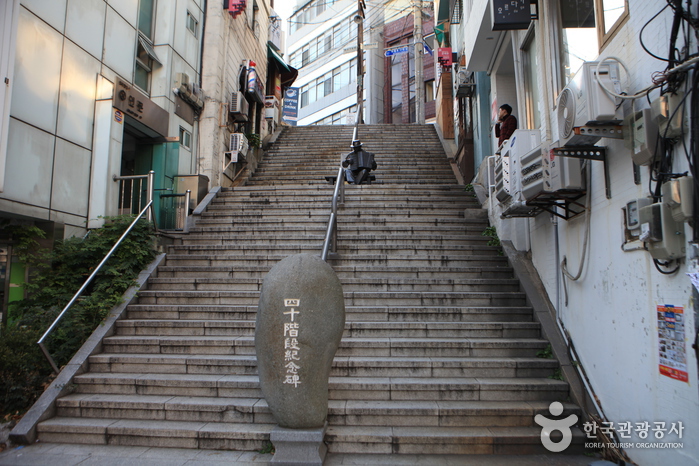
40-step Culture & Tourism Theme Street (40계단 문화관광테마거리)
Area of 40gyedan-gil, Jungang-gu, Jung-gu, Busan
The 40-step Culture & Tourism Theme Street is a 450-meter street leading up to the 40-step stairway of the '40-step Cultural Center' and continues to the Palseong Tour. The time-honored 40-step stairway embodies the joys and sorrows of refugees and those displaced by the Korean War. The entire area has been recently renovated to reflect life in Korea in the 50s & 60s. The 40-step Culture & Tourism Theme Street was designated 'The Best Street' by the Busan municipal government in June 2004.
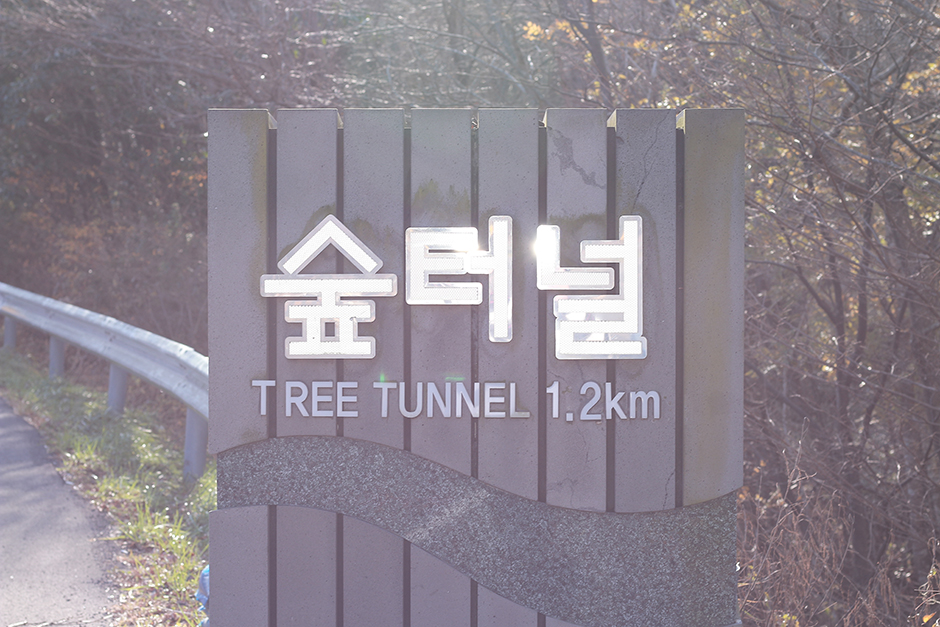
5.16 Tree Tunnel (Road 5.16 Forest Tunnel) (5.16도로숲터널)
267-110 Sillyecheon-ro, Namwon-eup, Seogwipo-si, Jeju-do
The 5.16 Road is the first national highway of Jeju and connects the cities of Jeju and Seogwipo. Drive the winding road toward Seogwipo to the points about 2.6 to 1.2 kilometers at a distance from Hallasan Seongpanak Rest Area to reach a tree tunnel shaped like an arch made with evergreen trees and deciduous trees. At the northern entrance to the tree tunnel, there is a sign reading, “The road is more beautiful if you drive slowly.” The road here is narrow and has many curves, causing a risk of accidents, so drivers should be careful. Another reason to slow down while driving on this road is to appreciate the surrounding scenery. Located at the foot of Hallasan Mountain, the road provides various aspects of nature throughout the four seasons. Trees that extend out from both sides of the road and are bent as if embracing the sky provide cool shade in the summer, red leaves in the fall, and dazzling snow scenes in the winter. The 5.16 Tree Tunnel presents picturesque four seasons of Jeju.
Aayang Gichatgil (아양기찻길)
82, Haedong-ro, Dong-gu, Daegu
After 78 years of operating, Ayang Railroad Bridge was discontinued and turned into a cultural space with a name Ayang Gichatgil. This attraction is 277 meters in length, 14.2 meters in x_height and total area of 427.75㎡. Visitors can enjoy the observatory, exhibitions, cafe and other facilities. The attraction was award Red Dot Design Award for restoring a discontinued railraod bridge using public design. Nearby attractions include Simni Cherry Blossom Road, Gomoryeongbi Monument, Dongchong Resort, and Onggijonggi Happy Village.
AB Plastic Surgery (에이비성형외과)
(2nd-4th Floors, BLOCK77), 17 Seocho-daero 77-gil, Seocho-gu, Seoul
AB Plastic Surgery Clinic is located near Gangnam Station and boasts top-tier medical staff and facilities. The clinic employs over 150 staff members, including 26 doctors (18 plastic surgeons, 2 dermatologists, and 6 anesthesiologists), and offers a comprehensive range of plastic surgeries and skin treatments. Additionally, the clinic actively integrates advanced technologies, providing treatments such as stem cell therapy, hyperbaric oxygen therapy, and Hemapure. The clinic covers approximately 21,500 square feet and features 18 operating rooms. These rooms are equipped with cutting-edge technology and equipment, prioritizing patient safety. The clinic also includes in-house diagnostic facilities capable of performing essential tests, including blood tests, ECG, X-rays, and CT scans. AB Plastic Surgery Clinic has hosted numerous international celebrities and influencers. With extensive experience in VIP surgeries and consultations, the clinic proudly maintains a very high level of patient satisfaction.
Abai Village (아바이 마을)
122-1 Cheongho-ro, Sokcho-si, Gangwon-do
Located in Cheongho-dong, Abai Village bears a history of displaced people’s distress. The village was formed by refugees of the Korean War from North Korea, mainly from Hamgyeong-do Province. The word “abai” is a dialect of Hamgyeong-do that means a friendly old man like a grandfather. Visitors to Abai Village can get a sense of displaced people’s life and story, which fade away into a chapter of history. Although it has lost its original appearance now, old shacks without a gate still remain here and there. Mural paintings on the wall show the sentiment of nostalgia about their hometown and express sorrow and hard life of displaced people, who lived from hand to mouth by fishing and doing physical labor. The original houses built by refugees in the village were restored into the Refugee Village at the Sokcho Museum. Abai Village is also known as a filming location for the Korean TV drama "Autumn in My Heart," attracting a lot of visitors and becoming a major attraction in Sokcho. The restaurant alley is packed with cafes and North Korean food restaurants serving local dishes such as Hamheung-style cold buckwheat noodles, stuffed squid, and North Korean-style sausage soup.
Abai Village Ferry (아바이마을 갯배)
39, Jungangbudu-gil, Sokcho-si, Gangwon-do
Gaetbae (boat without engine) is an exotic means of transportation to cross the Abai Village at the mouth of Cheongchoho Lake. It is a rapid means of traveling between downtown Sokcho and Abai Village along the 50 m-long waterway. This small barge-style boat without an engine can be run by pulling the wire manually. When fixing the solid steel wire on both sides of the waterway and pulling it hard with a hook, a boat moves forward slowly. As there is no boatman, passengers need to work together to move the boat. It takes about 5 min to cross the water by boat. This unique experience still attracts many tourists to Sokcho. Furthermore, it is known as the filming location for the Korean TV drama Autumn in My Heart, so many tourists from Japan and China visit the place.
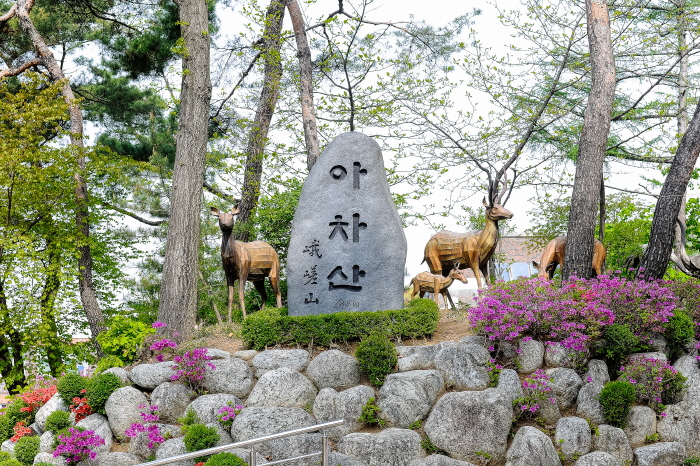
Achasan Mountain (아차산)
Acheon-dong, Guri-si, Gyeonggi-do
Achasan Mountain is a 295m-high mountain that stretches across Seoul and the city of Guri. Its proximity to the city makes it an accessible destination for hiking in Seoul. The hiking trails are maintained quite well, so even beginners can enjoy hiking in the mountain. From the summit of Achasan Mountain, one can enjoy the beautiful view of Seoul and the Hangang River. In fall, the mountain is famous for its fall colors as well.
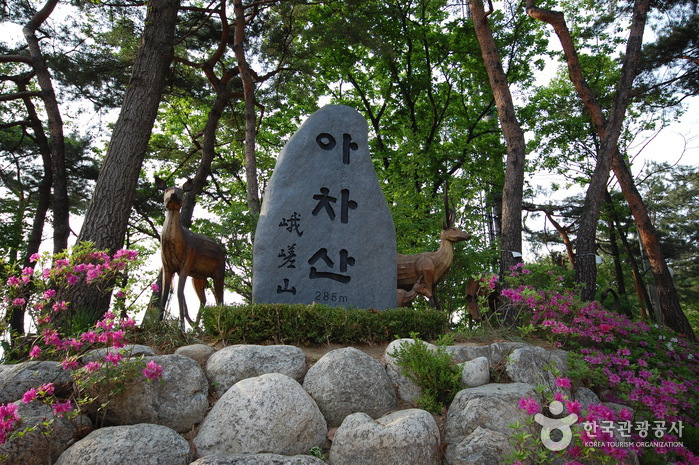
Achasanseong Fortress (아차산성)
Gwangjang-dong, Gwangjin-gu, Seoul-si
Achasanseongseong Fortress boasts magnificent views of the Hangang River and skyline. The 200m-high mountain fortress wall was built to face southeast, towards the Hangang River. It is also called Janghan-seong or Gwangjang-seong. A fierce battle was once fought here among Gogury, Baekje and Silla because of its strategic location during the period of the Three Kingdoms. King Gae-Ro of Baekje (r. 455-475) died in the war by the Goguryeo forces sent by King Jang-Su (r. 413-491) and General Ondal of Goguryeo was also killed in a battle with the Silla army in 590. Achasan Mountain is popular as a citizens’ resting place with a historical trail and a natural park including various facilities such as walkway, mountain walkway, a badminton court, a wrestling range, an archery range, various amusement facilities for children, benches, and pavilion.
Aegibong Peak (Gimpo Section) (애기봉 (김포))
139, Pyeonghwagongwon-ro, Gimpo-si, Gyeonggi-do
Aegibong Peak is located at the northern tip of Gimpo city about an hour’s drive from the downtown area. The mountain is where North and South Korea engaged in a fierce battle at the end of the Korean War; after the battle, Korea was divided into two nations. Since the peak is still a restricted area, visitors must present their passport in order to be admitted. From the peak, an open view of North Korean territory unfolds below and visitors can see South Korean territory as far as Songhaksan Mountain in Chungcheongnam-do.
About Korea Attractions and Sightseeing Places
Korea's most-visited sightseeing destinations in one place. Palaces, UNESCO sites, natural parks, coastal views, and temples — all sourced from the Korea Tourism Organization's official English database. Each listing includes an address, map link, and direct page for planning your visit.
Attractions FAQ
What kind of attractions are listed here?
Official Korea Tourism Organization listings: royal palaces, UNESCO World Heritage sites, national parks, scenic mountains, coastal cliffs, traditional villages, and major landmarks. Coverage focuses on places with English tourism records.
Are Korea attractions free to enter?
Many historic palaces and parks charge a small entry fee (typically ₩1,000–₩5,000). National parks have separate trail fees. Some sites are free. Check each attraction's official page before visiting as prices change.
How do I get to attractions from Seoul?
Most major attractions in Seoul are accessible by subway. For regional sites, KTX (high-speed rail) reaches Busan, Gyeongju, and Jeju. Use Naver Map or Kakao Map for transit directions from your starting point.
Which attractions are best for first-time visitors?
Gyeongbokgung Palace, Bukchon Hanok Village, N Seoul Tower, Jeju Hallasan, and Busan's Gamcheon Culture Village are consistently popular with first-time visitors.
Plan your Korea trip
Korea travel FAQ
How do I use the travel search?
Enter a place or interest, then narrow the results by region, category or sort order.
Will my filters stay selected on the next page?
Yes. Your search and filter choices stay in the page URL while you move through the results.
Can I find directions to each place?
Place pages include an external Google Maps search when coordinates or an address are available.
Source: Korea Tourism Organization, official website (https://knto.or.kr).