TRAVEL IN KOREA
Korea Places to Visit
Find attractions, culture, festivals, stays, restaurants, shopping and travel courses for a clear Korea trip plan.
Data last synced: 2026-06-25. Some details may change. Please confirm official information before visiting.
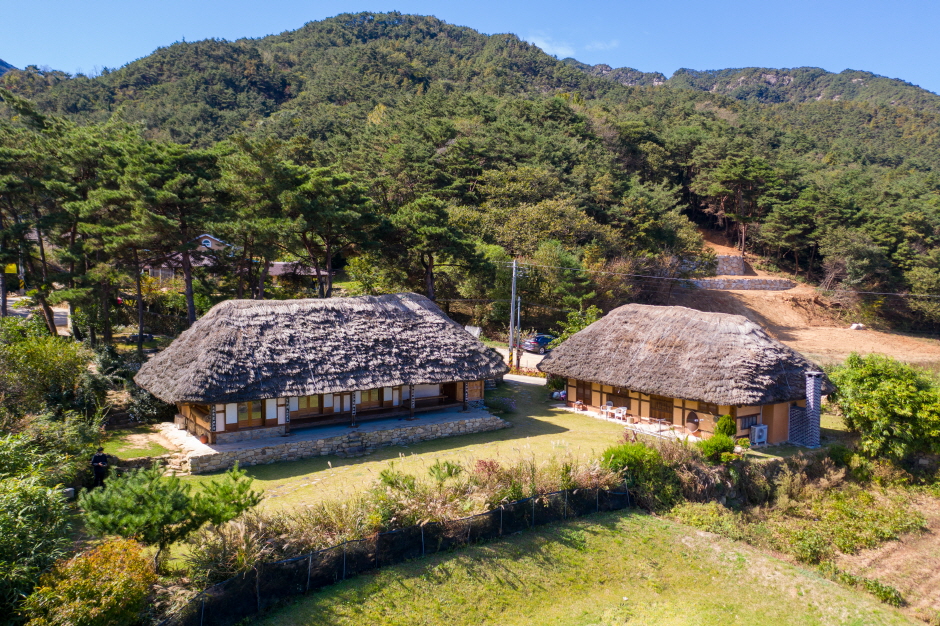
Maewoldang (매월당)
47-34 Maechon-gil, Geumji-myeon, Namwon-si, Jeonbuk-do
Maewoldang is a café that sells traditional Korean tea made from hand-picked tea leaves harvested in the wild. Their signature drink is Goryeo dancha (fermented wild tea), made by roasting leaves in an cast-iron pot using traditional methods, sourced from a large wild tea plantation discovered in Namwon's Maechon Village. Visitors can enjoy tea in a traditional thatched-roof house, and reservations are required in advance.
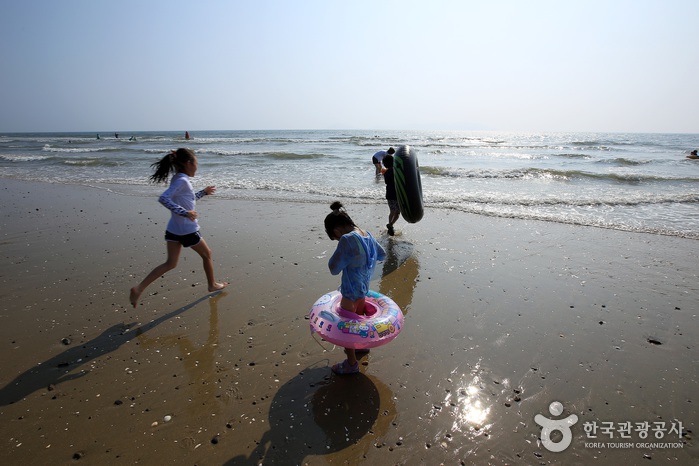
Mageompo Beach (마검포해수욕장)
Sinon-ri, Taean-gun, Chungcheongnam-do
Mageompo Beach in Nam-myeon, Taean-gun is located right before the bridge that leads to Anmyeondo Island. As the beach is not widely popular among tourists, one can spend a quiet and tranquil vacation here. Near the beach is a dense pine tree forest where one can enjoy camping. The white sand and shallow waters also make it a good place for kids to swim. In the evening, the beach is a great spot to watch the breathtaking sunset. This beach is famous for silchi-hoe , a dish consisting of freshly sliced raw fish. The ocean near the beach is one of the biggest natural sources of fresh seafood such as anchovy, sand eel and short arm octopus.

Magoksa Natural Pine Forest Trail (마곡사 천연송림욕장)
Magoksa-ro, Sagok-myeon, Gongju-si, Chungcheongnam-do
Located on Taehwasan Mountain at the head temple of the 6th District of the Jogye Order of Korean Buddhism, this trail is a dedicated "forest bathing" destination within the historic, millennium-old Magoksa Temple grounds. As the mountain is primarily comprised of Korean Red Pines, the trail serves as a wellness course where visitors can fully enjoy the therapeutic benefits of a red pine forest, which is widely considered the finest environment for forest bathing. The hiking route spans 5 kilometers along the ridges of Taehwasan Mountain, weaving through stands of 5- to 10-year-old red pines that surround the temple. The total trekking time is approximately 2 hours and 30 minutes. Starting from the entrance of Eunjeogam Hermitage in front of the main Daeungjeon Hall, the trail loops around the temple grounds, passing through Hwalinbong Peak (423 m) and Nabalbong Peak (417 m). With its gentle slopes, the course is well-suited for all ages, including children and the elderly.
Magoksa Temple [UNESCO World Heritage] (마곡사 [유네스코 세계문화유산])
966 Magoksa-ro, Sagok-myeon, Gongju-si, Chungcheongnam-do
Situated at the foot of Taehwasan Mountain in Gongju, Magoksa Temple was established in 640 during the reign of Queen Seondeok of the Silla dynasty. It was originally founded as a grand temple, but only few major halls and gates remain preserved today along with several significant cultural relics and heritages. The temple site was used as a refuge site during times of war, and it survived the the Imjin War (1592-1598) and the Korean War (1950-1953).
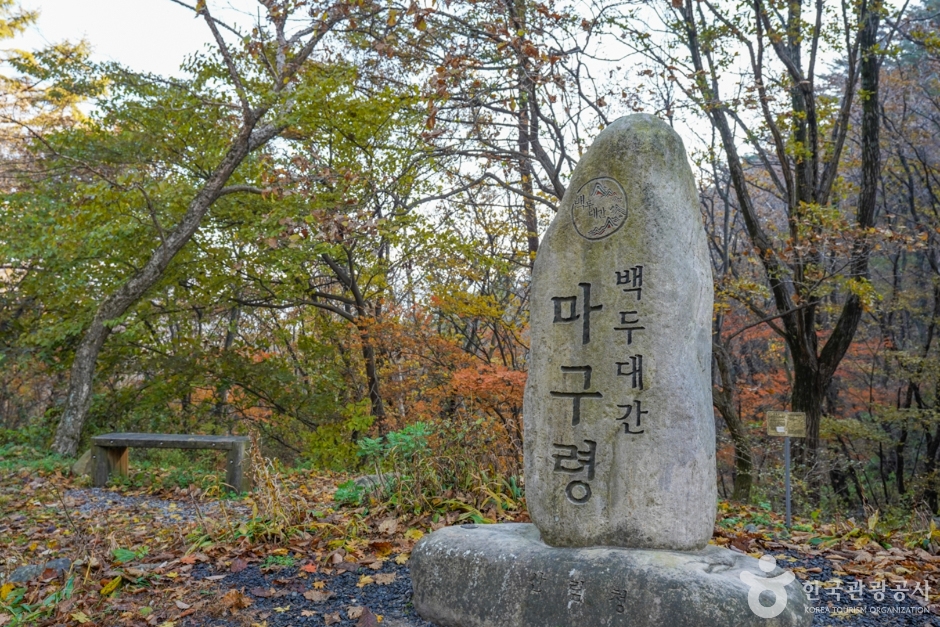
Maguryeong Pass / Gochiryeong Pass (마구령/고치령)
[Maguryeong Pass] Imgok-ri, Buseok-myeon, Yeongju-si, Gyeongsangbuk-do [Gochiryeong Pass] 1522-4 Yeongdan-ro, Dansan-myeon, Yeongju-si, Gyeongsangbuk-do
Maguryeong Pass and Gochiryeong Pass stand as iconic hills of Sobaeksan Mountain. They are known for their historical significance as rugged pathways where people and goods traversed during the Goryeo and Joseon dynasties. Situated on the easternmost edge of Sobaeksan Mountain, Maguryeong Pass derives its name from its function: "Magu" meaning "harness" and "Ryeong" meaning "pass" in Korean, highlighting its past as a route where merchants commonly traveled on horseback. Meanwhile, Gochiryeong Pass served as a vital transport link to the Gwandong and Hoseo regions. In the Silla dynasty, this pass was earmarked for palace construction at the base of the hill, which led to its name "Gochiryeong" – "Go" indicating "old", "Chi" representing "hill", and "Ryeong" meaning "pass" in Korean – effectively translating to "old hill pass".
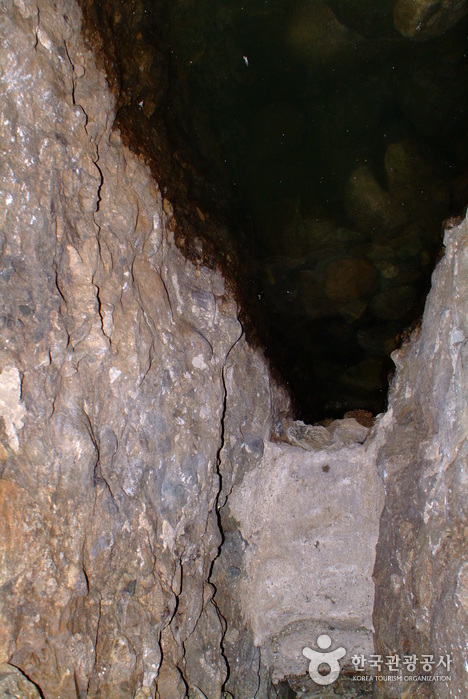
Maisan Hwaeomgul Cave (마이산 화엄굴)
367, Maisannam-ro, Jinan-gun, Jeonbuk-do
Maisan Mountain has two major peaks made of sedimentary rocks; these peaks are said to be ‘couple peaks’ and cannot be found anywhere else. Sut Maibong (alt. 667 meters) is said to be the male peak while the slightly larger Am Maibong (alt. 673 meters) is deemed the female peak. In the early Joseon period the mountain was named ‘Sokgeumsan,’ but began to be called ‘Maisan’ after the 12th year of King Taejong, who commented that the two peaks resembled horse ears (‘maisan’ meaning ‘horse ears’). All along Maisan Mountain, visitors will find small crater-like rock cavities that are formed by prolonged weathering. These unique geological features, called ‘tafoni,’ are of great academic value. Inside Hwaeomgul Cave, visitors can observe medicinal water that flows up from underground all throughout the year. It is widely believed that once you drink the water, especially on the days of the Spring and Autumn Equinox, you will soon have a son and be blessed by the mountain spirit. Even today, many women who have difficulty conceiving visit the mountain to pray to the mountain spirits for their heart’s desire—the gift of a child. The region in which Maisan is located is the birthplace of many talented people and national heroes, which some say is proof of the blessings of the mountain and its extremely powerful spirit.
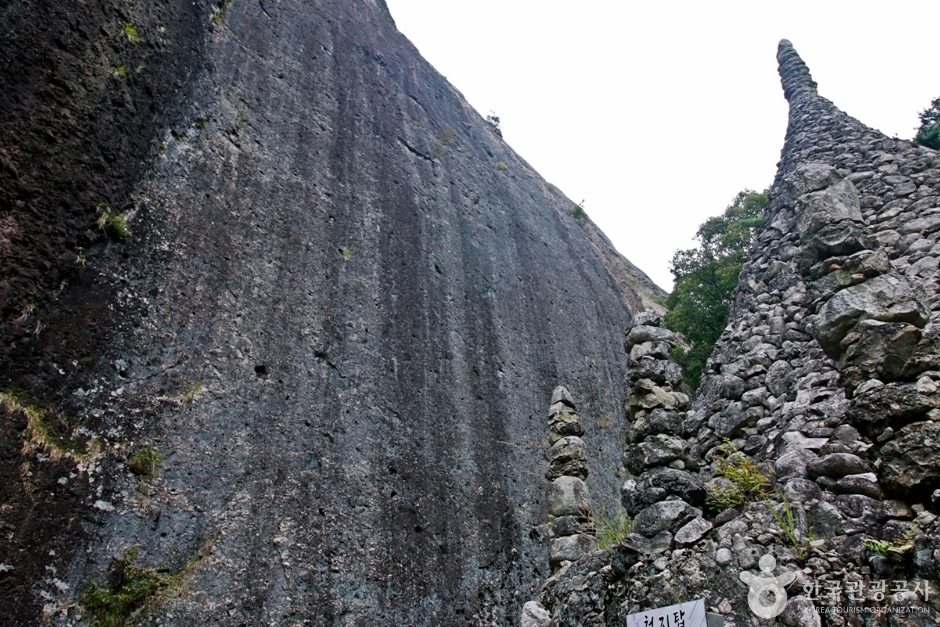
Maisan Mountain Tafoni Terrain (마이산 타포니지형)
255 Maisan-ro, Jinan-eup, Jinan-gun, Jeonbuk-do
Tafoni terrain refer to clusters of small caves resembling bombarded peaks. On the southern slope of Ammaibong Peak in Maisan Mountain, various-shaped honeycomb caves are widely spread out. These formations are believed to have been formed during the 4th Ice Age and subsequently shaped by frost action. Such caves are commonly found along coastlines.
Maisan Provincial Park (마이산도립공원)
126-3, Danyang-ri, Jinan-eup, Jinan-gun, Jeonbuk-do
Maisan Provincial Park is a rocky mountain composed of two great peaks, Ammaibong (687.4 meters) and Sumaibong (681.1 meters), and dozens of smaller peaks. These peaks have a variety of names depending on the season. In spring, the mountain provides sweeping panoramic views for its cherry blossoms, and cosmos and silver grass in fall. The Eunsusa Temple, Geumdangsa Temple, and Tapsa Temple with its 80 stone pagodas are all worth exploring, enhancing the experience of the area.
Majanghosu Lake (마장호수)
365 Gisan-ro, Gwangtan-myeon, Paju-si, Gyeonggi-do
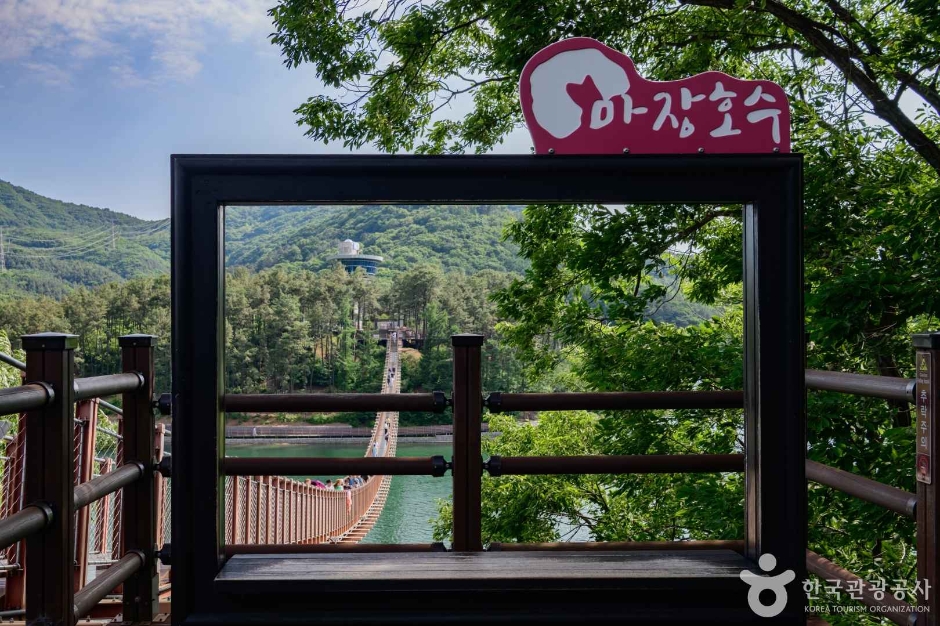
Majanghosu Lake is a beautiful location for friends and families to spend time together in nature. The lake features a 3.6-kilometer-long lakeside walking path and a 220-meter-long suspension bridge. Park facilities include a cafe overlooking the lake, forest campground, and canoeing.
Majanghosu Suspension Bridge (마장호수 출렁다리)
313 Gisan-ro, Gwangtan-myeon, Paju-si, Gyeonggi-do
Majanghosu Suspension Bridge offers more than the bridge itself with amenities like benches, wildflowers, water sports, and a lakeside promenade. It's the perfect place for couples or a family day out. The bridge is surrounded by mountains and a lake, offering a scenic landscape that becomes even more spectacular at sunset. Midway through the bridge, the floor is partially made of bulletproof glass for a thrilling view below one's feet. The bridge has many noteworthy attractions in proximity such as Bogwangsa Temple, Byukchoji Gardens, and Gongneung Tourist Resort.

Maldo Island (말도)
Maldo-ri, Okdo-myeon, Gunsan-si, Jeonbuk-do
Maldo Island is located in Okdo-myeon, Gunsan, at the end of the Gogunsan Archipelago, and is also known as "Kkeumseom Island" (End-point Island). It is a small island with about 30 households, but due to the surrounding waters being a golden fishing ground, it has the largest lighthouse in the Gogunsan Archipelago, making it a tourist attraction. The island is dotted with unique landmarks such as lighthouses, cheonnyeongsong (millennium pines), and Dalbawi Rock, and is well-known for its beautiful sunset views. Maldo Island was reportedly first settled during the mid-Joseon dynasty by Sim Ban-seo, an exile from Seoul who cultivated the land and laid the foundation for the island's growing population.

Maljae Farm (말재 농원)
209 Matigogae-ro, Banpo-myeon, Gongju-si, Chungcheongnam-do
Maljae Farm is a chestnut experience farm located in Gongju, a region historically known for chestnut cultivation. Open during the harvest season from late August to mid-October, the farm offers chestnut gathering, roasting activities, and outdoor camping. Its terraced layout allows for comfortable participation by visitors of all ages. Nearby attractions include Gyeryongsan National Park, Seokjangni Museum, and the Tomb of King Muryeong.
Mallipo Beach (만리포해수욕장)
138 Mallipo 2-gil, Sowon-myeon, Taean-gun, Chungcheongnam-do
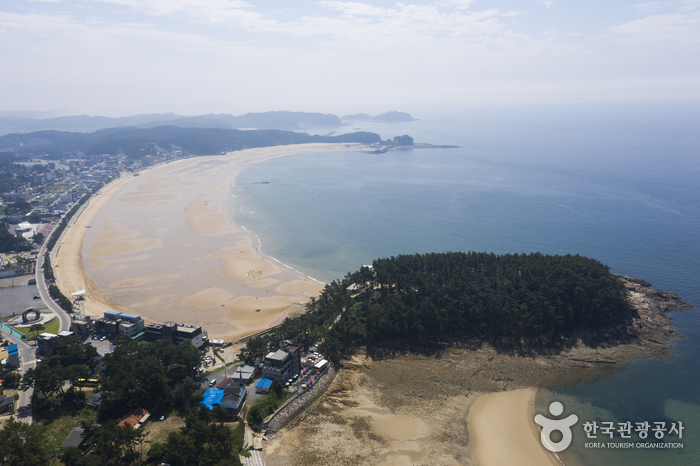
Mallipo Beach, located in Taean, is a C-shaped, flat sandy beach with shallow waters, making it ideal for swimming and various water sports during the summer. Adjacent to the beach, a pine forest provides a perfect spot for camping. Numerous nearby shops offer accommodations and fresh seafood. Additionally, the observatory offers spectacular views of the West Sea and its stunning sunsets.
Manbulsa Temple (Yeongcheon) (만불사(영천))
857-5 Goji-ri, Bugan-myeon, Yeongcheon-si, Gyeongsangbuk-do
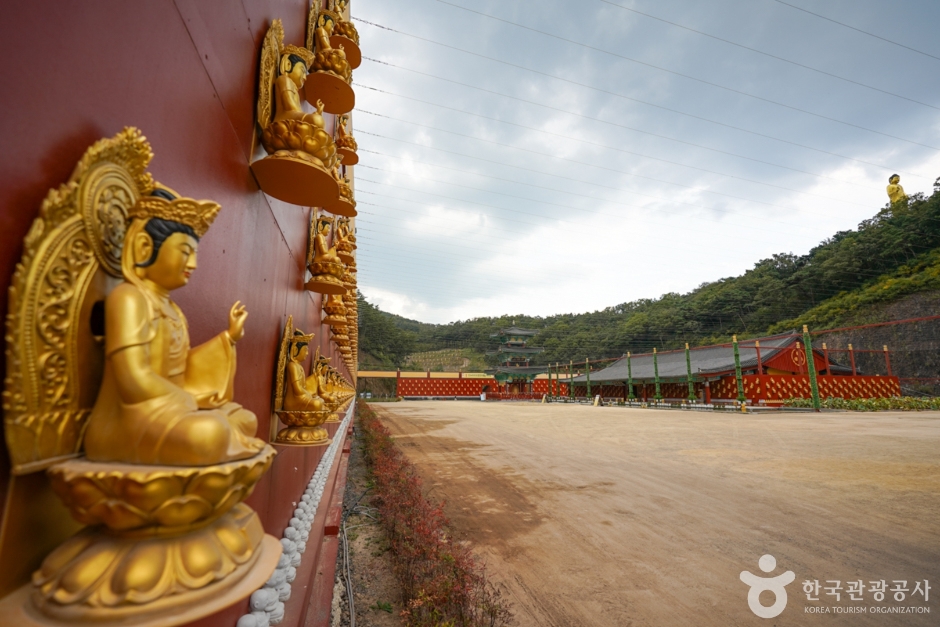
Situated on Manbulsan Mountain in Yeongcheon-si, Manbulsa Temple is renowned for housing the largest collection of Buddha statues in Korea. The temple is also celebrated for actively promoting modern Buddhism, culture, and welfare. Notable features within the temple grounds include the towering 33-meter Yeongcheon Great Amitabha Buddha, the revered five Buddha's jinsin saris and Bodhi trees from Sri Lanka, the resonant Manbul Brass Temple Bell, and the main sanctuary, Manbulbojeon Hall. Nearby attraction include Dogyeseowon Confucian Academy, Dolhalmae Wishing Stone, and Nogye Sibi (Monument Inscribed with a Poem of Pak Inro), offering a rich cultural and historical exploration.
Maneosa Temple (만어사)
776 Maneo-ro, Samnangjin-eup, Miryang-si, Gyeongsangnam-do
Maneosa Temple, perched on Maneosan Mountain in Miryang, dates back to 46 A.D. and is steeped in tradition and numerous legends. During the Silla dynasty, it served as a ceremonial site for the king to conduct Buddhist rites. Notably, beneath the Mireukjeon Hall lies the Maneoseok Rocks, reputed to be fish that transformed into stones. Remarkably, these stones emit a clear, bell-like sound when struck, earning them the nickname Jongseok (Bell stone). The temple also features a three-story stone pagoda, standing 3.7 meters tall, which has been designated as a Treasure.
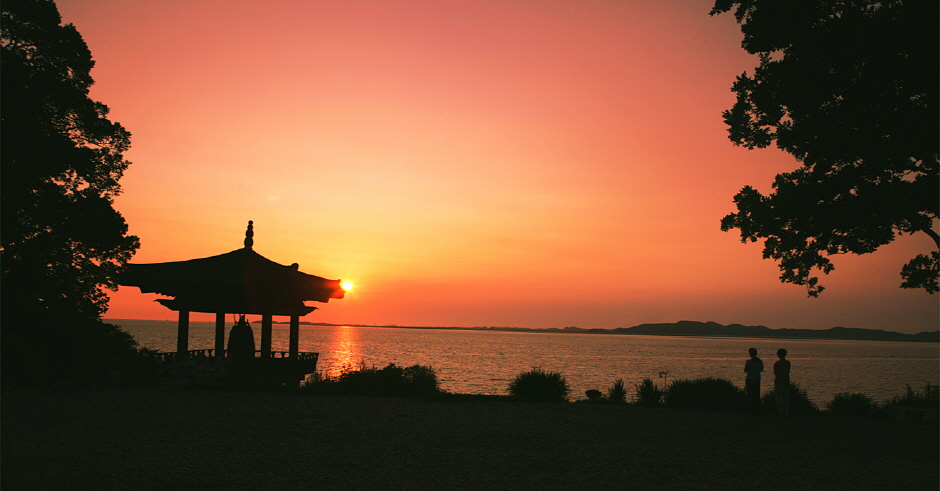
Manghaesa Temple (망해사)
94, Simpo 10-gil, Gimje-si, Jeonbuk-do
Manghaesa Temple is located at the edge of the Gimje Plains before the sea. The temple stands at the summit of Jinbongsan Mountain. The temple was named for the view of the ocean and the fields of rice. The temple was established by the great monk Buseol Geosa during the 2nd year of King Uija of Baekje (AD 642). Years later, Dobeopsa (a Chinese monk from the Tang dynasty) renovated the temple. The temple was altered again during the reign of King Injo of the Joseon dynasty when the great monk Jinmuk Daesa built Nakseojeon Hall in 1589. Bogwangjeon Hall and Chilseonggak Pavilion were built much later in 1933. Manghaesa Temple is unique in that it is the only temple where the distant horizon is visible over both land and sea. Nearby attractions include a walking path through a field of reeds by Mangyeonggang River and views of the sunset over the sea.
Plan your Korea trip
Korea travel FAQ
How do I use the travel search?
Enter a place or interest, then narrow the results by region, category or sort order.
Will my filters stay selected on the next page?
Yes. Your search and filter choices stay in the page URL while you move through the results.
Can I find directions to each place?
Place pages include an external Google Maps search when coordinates or an address are available.
Source: Korea Tourism Organization, official website (https://knto.or.kr).