TRAVEL IN KOREA
Korea Places to Visit
Find attractions, culture, festivals, stays, restaurants, shopping and travel courses for a clear Korea trip plan.
Data last synced: 2026-06-25. Some details may change. Please confirm official information before visiting.
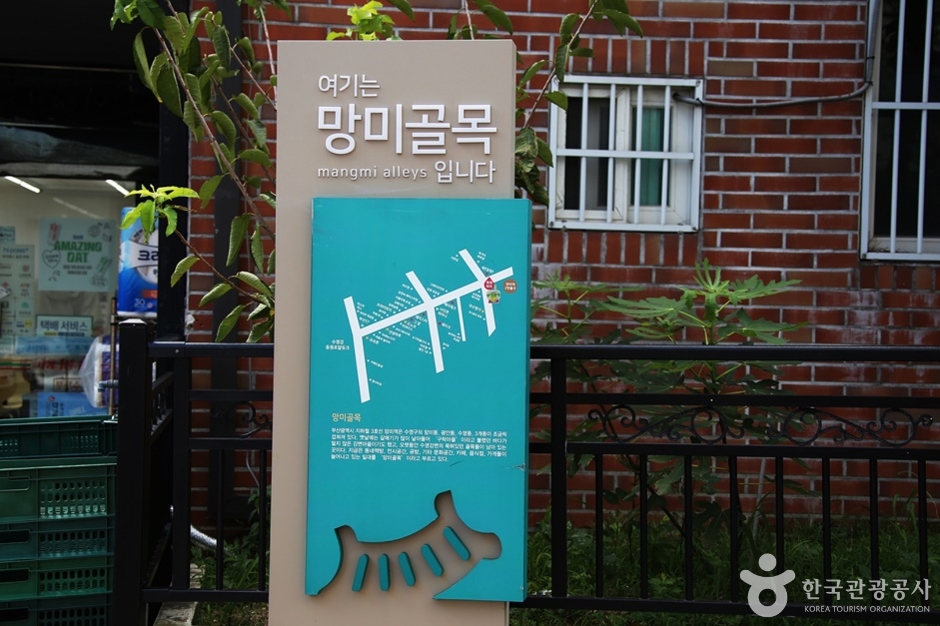
Mangmidangil Street (망미단길)
Suyeong-dong, Suyeong-gu, Busan
Mangmidangil Street referst to the main street that connects the cultural alleys in Suyeong-gu, Busan. The area is home to a variety of cozy cafes, photo studios, book stores, indie stores, workshop spaces, and clothing stores, attracting many visitors. Nearby attractions include B-Con Ground, a cultural complex featuring various facilities, and Suyeong Sajeok Park, an ideal spot to unwind and explore local history.
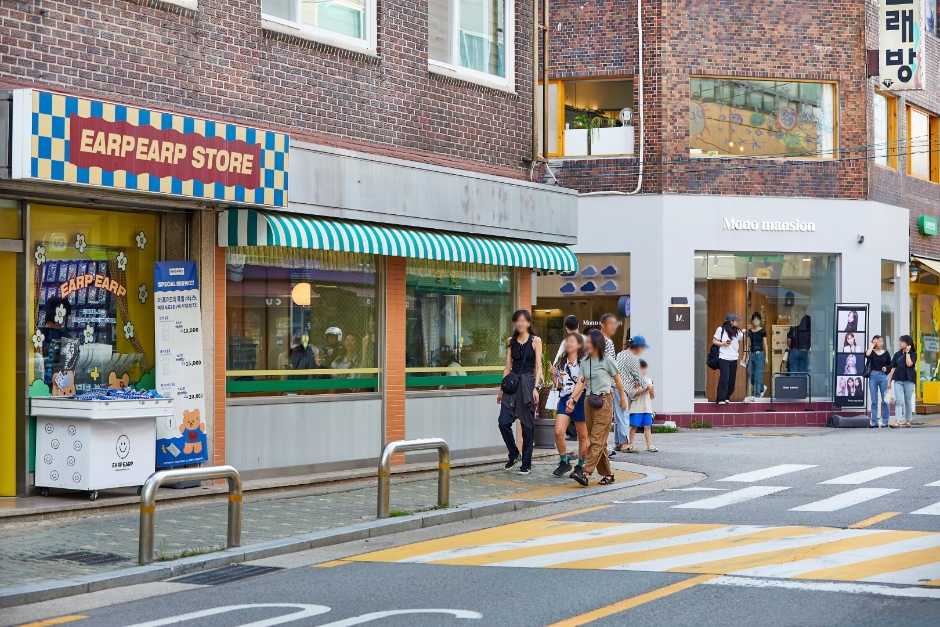
Mangnidan Street (망리단길)
Poeun-ro, Mapo-gu, Seoul
Mangnidan Street is located near Poeun-ro, which can be reached in about 6 to 8 minutes of leisurely walk toward Mangwon Hangang Park from Exit 2 of Mangwon Station on Subway Line 6. Its name comes from the combination of Mangwon-dong and the Gyeongnidan Street in Itaewon, meaning the “Gyeongnidan Street of Mangwon-dong.” There are a variety of restaurants, cafes, dessert shops, and other small shops, each with their own charm, making it a great place to take the kids shopping or just get some rest. This place is quite close to Mangwon Market, so visitors can stop by the market if time allows. Another way to fit this area into the itinerary is as a pit stop for desserts or some shopping before heading to Mangwon Hangang Park.
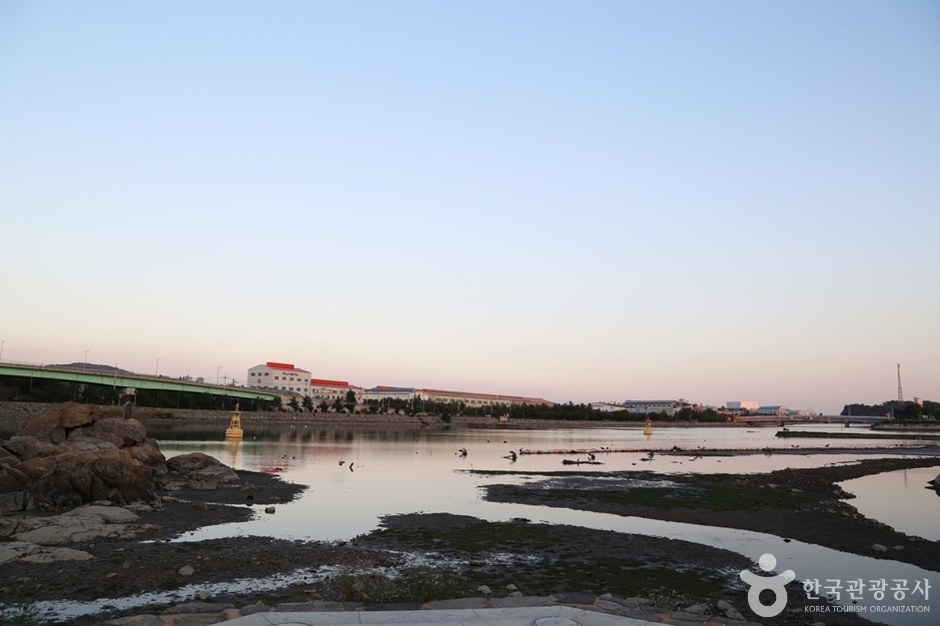
Mangsando Island, Yujuam, Yujubigak (망산도·유주암·유주비각)
188 Songjeong-dong, Gangseo-gu, Busan
Mangsando Island, a small isle near Yongwon-dong, is noteworthy for its proximity to the rocky formation known as Yujuam, situated about 70 meters southeast. Approximately 1 kilometer from these locations is Yujubigak, a place rich with the legend of Heo Hwang-ok. She was the queen consort of King Kim Suro, who was born in 42 AD and ruled the ancient kingdom of Garakguk. According to legend, Heo Hwang-ok traveled from India and first set foot on Mangsando Island. The story goes on to tell that the stone vessel she was traveling in capsized at sea, resulting in the formation of Yujuam.
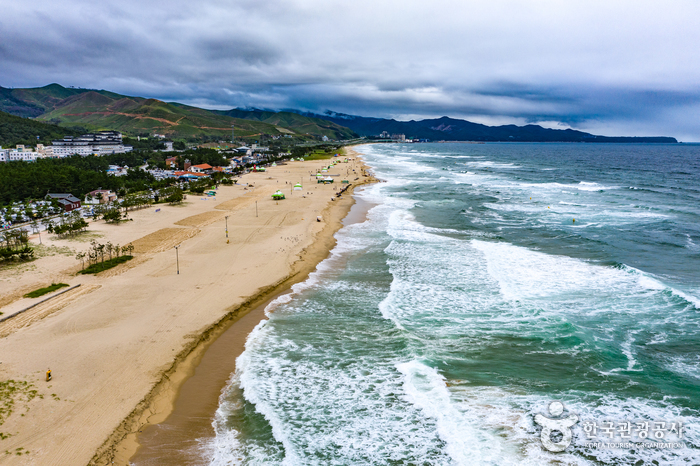
Mangsang Beach (망상해변)
6270-10, Donghae-daero, Donghae-si, Gangwon-do
Mangsang Beach is sought out by many families and tourists for its beautiful white sand, lush pine forest, shallow waters, and location in a neighborhood full of convenient facilities. Mangsang Beach is located 3 kilometers north from Mukho Port and it represents the east coast, along with Okgye and Gyeongpo Beaches.
Mangwon Hangang Park (한강시민공원 망원지구 (망원한강공원))
467 Maponaru-gil, Mapo-gu, Seoul
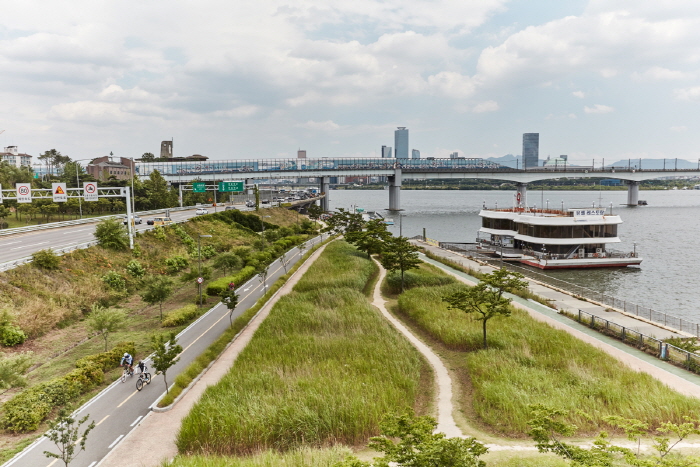
Near Mapo-gu, Mangwon Hangang Park is situated on the northern part of the river, between Wonhyodaegyo Bridge and Seongsandaegyo Bridge. It offers lush grass perfect for picnics and promenades. Since it’s located close to the World Cup Stadium, this spacious park is often full of residents and visitors. There is a wide array of excellent amenities: a bike trail, an outdoor swimming pool, sports facilities, and a dock for water sports such as yachting, waterskiing, and motor boating. Cultural attractions near the park include Mangwon Pavilion and Jeoldusan Martyrs’ Shrine.
Mangyangjeong Beach (망양정해수욕장)
Location details are available on the place page.
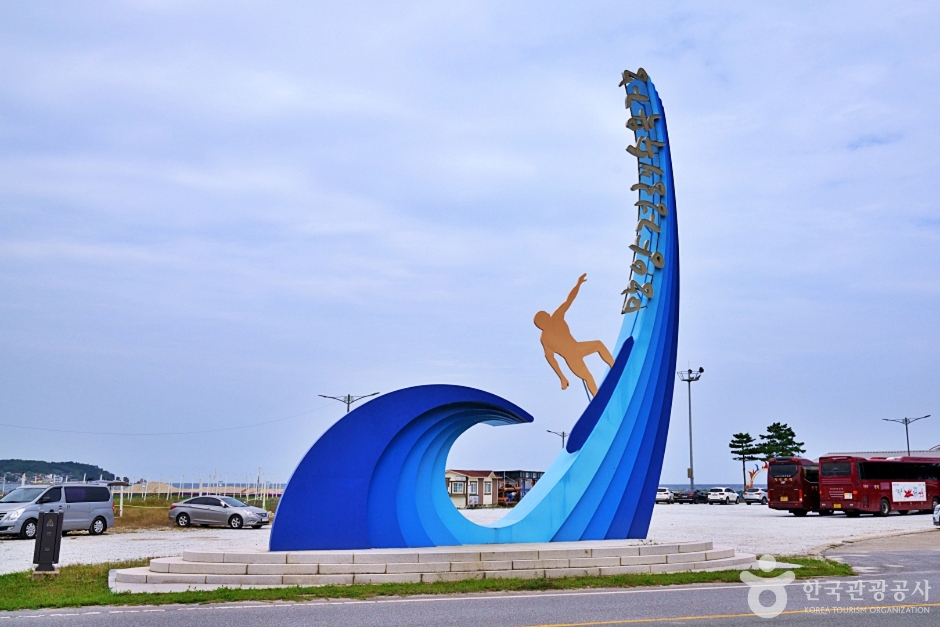
Mangyangjeong Beach is a relatively shallow and narrow beach with a comparatively higher water temperature among beaches on the east coast of Korea. It has a lush pine forest, perfect for walking, and the surrounding areas tend to be very quiet. There are many tourist attractions around the beach, including Seongnyugul Cave, a Natural Monument; Buryeonggyegok Valley; and coastal roads, making it a popular sightseeing and vacation spot. Nearby sites also include Mangyangjeong Pavilion, one of the Eight Scenic Sites of Gwandong; Expo Park, Freshwater Fish Experience Center, and Sunrise Park, the venue for Uljin’s annual county-wide sunrise event for catching the sunrise over the East Sea.
Mangyeongdae Pavilion (만경대)
Gongdan 4-ro, Donghae-si, Gangwon-do
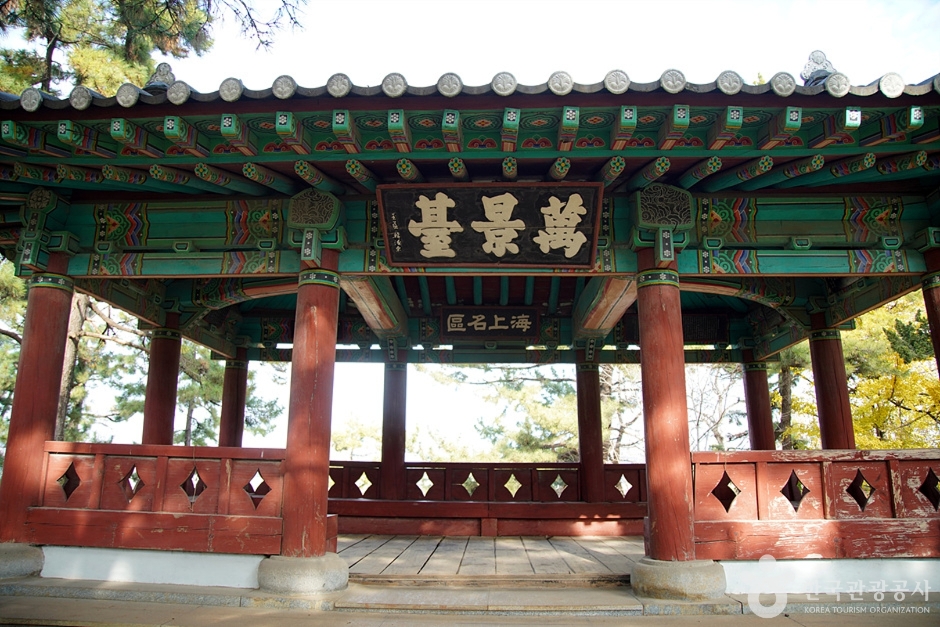
Mangyeongdae Pavilion, located on the shore of the East Coast, one-kilometer east of Donghae City Hall, was built in 1613 while old Joseon was under the rule of King Gwanghaegun. However, the pavilion was destroyed by rainstorms and later rebuilt by the Samcheok Kim family some 60 years ago. While offering a spectacular view of sea to the east, the pavilion also offers a refreshing view of expansive pine forests to the north. To the west, one can enjoy a magnificent view of Dutasan Mountain beyond the pavilion’s back lawn as well as the Jeoncheon Stream flowing into the East Sea alongside a steep cliff-wall. As only Jukseoru Pavilion of Samcheok matched its view, poets of former times are said to have frequented Mangyeongdae Pavilion.
Manhae Village (만해마을)
91, Manhae-ro, Inje-gun, Gangwon-do
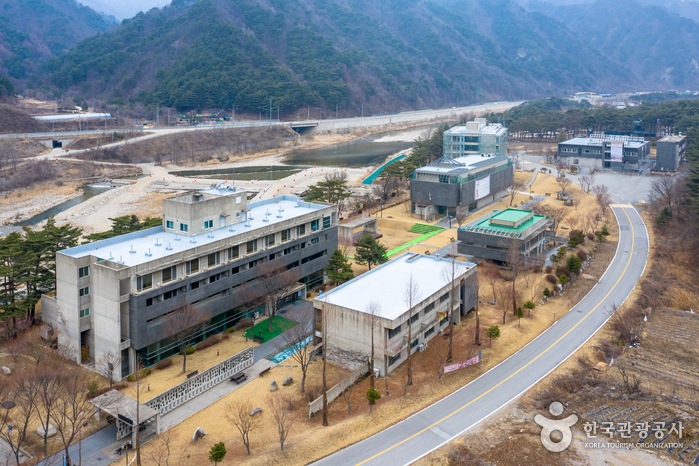
Manhae Village was established as a training center and memorial hall for national activist Monk Manhae Han Yongun, revered for his literary and philosophical inspiration, as well as his devotion to the nation and Korean people during the Democracy Movement.
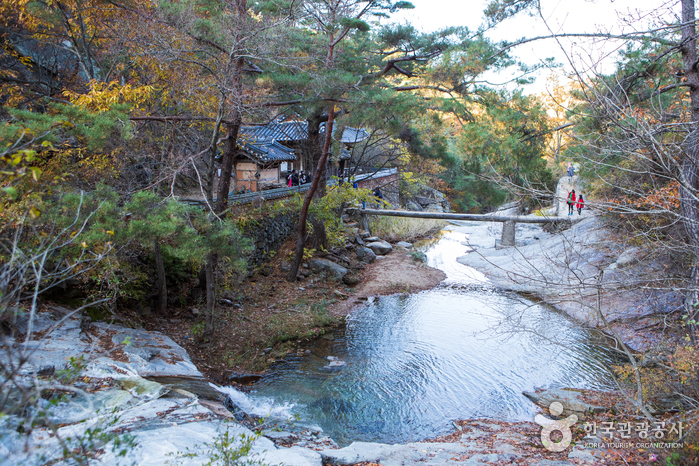
Manhyujeong Pavilion (만휴정)
42 Mukgyehari-gil, Giran-myeon, Andong-si, Gyeongsangbuk-do
Manhyujeong Pavilion is the pavilion of Bobaekdang Kim Gye-haeng and was built in 1500. The present building shows a modified appearance through remodeling, and only a part shows the style of the late Joseon dynasty. Kim Gye-haeng was a civil servant in the early Joseon dynasty and held various government posts. However, when he met the tyranny of Yeonsangun, he abandoned the government post and returned to his hometown. After that, a small pavilion was built along Seolmot (currently Sosan 2-ri), but since it was next to the road, he built Manhyujeong Pavilion in a quieter place. If you cross the stream from Mukgyeseowon Confucian Academy and enter the mountain, you can find it located in a magnificent valley that faces southeast and has a waterfall flowing over the rocks.◎ Travel information to meet Hallyu’s charm - variety show"I Am Solo"This is another famous site in Andong that was featured in Season 16 of “I Am Solo.” The Manhyujeong pavilion, which awaits visitors alone in a peaceful forest, and the log bridge, which is the only path leading to the pavilion, seem to represent the participants' feelings.
Maninsan Recreational Forest (만인산 자연휴양림)
106, Sannae-ro, Dong-gu, Daejeon
Maninsan Recreational Forest sits on the border between Daejeon and Geumsan-gun, Chungcheongnam-do, and is located approx. 17 kilometers away from Daejeon Station on National Route 17. It consists of Maninsan, the main peak, as well as Bongsuregol, Keunbaegol, and Jageunbaegol, and, because of its beautiful landscape, it even enshrined the figures of King Taejo and his princes during the Joseon Dynasty. Pure water constantly flows in the valleys and broadleaf trees form a thickly wooded forest. This recreational forest located close to the city has utilized natural ridges and is divided into the family recreation district, youth district, and picnic district to provide a pleasant resting area for citizens. Maninsan Service Area is a convenience facility of the recreational forest built with private capital in 1990 and, at the time of its construction, it utilized the natural valleys as they were without damaging any part of the forest. Decks were installed in the valleys, and the structure itself was built with one semi-underground floor and two ground floors. The main framework was made of reinforced concrete and wood was used as the primary material for construction. Also, a pond was created in front of the rest area to harmonize with the natural landscape. As a result, it is widely praised by experts as the most beautifully constructed rest area in Korea, and it is becoming a place that citizens frequently visit to relax. There are comfortable benches and resting spots situated throughout for visitors to relax while enjoying the views and, in particular, Manillugak is a symbolic recreational facility of Maninsan and a representative pavilion structure. It was built in the architectural style of Segeomjeong Pavilion located on Bugaksan in Seoul while employing reinforced concrete for the main framework. It applies a two-story, wooden tile roof to maintain as much beauty of Korean traditional architecture as possible with the consideration of maintenance.
![Manjanggul Lava Tube [National Geopark] (만장굴 (제주도 국가지질공원))](http://tong.visitkorea.or.kr/cms/resource/55/3354155_image2_1.jpg)
Manjanggul Lava Tube [National Geopark] (만장굴 (제주도 국가지질공원))
182 Manjanggul-gil, Jeju-si, Jeju-do
Manjanggul Lava Tube, located in Gimnyeong-ri, Jeju, is part of the Geomunoreum Lava Tube system. The lava tube stretches roughly 7,400 meters, with a maximum x_height of 25 meters and x_width of 18 meters. These measurements make it one of the largest lava tubes in the world. Manjanggul holds great value for science and conservation studies, having well-maintained formations despite being formed over one hundred thousand years ago. The majority of the cave is closed off, with only 1 kilometer being open to tourists. Within this open section, visitors can see a variety of lava tube and cave topographical features, including stalagtites, stalagmites, and stone pillars. Among these, the 7.6-meter-tall stone pillar at the end of the open section is recorded as the largest in the world.
Mannyeongyo Bridge (만년교)
42, Wondari-gil, Changnyeong-gun, Gyeongsangnam-do
Mannyeongyo Bridge in Yeongsan, Changnyeong is an arch-shaped stone bridge over the village creek. Because the creek flows from the south of the mountain, the bridge is also known as Namcheongyo Bridge. Natural rocks found on the sides of the creek are used as stone flooring, and well-polished granite stones are stacked on top of the rocks in the shape of an arch. The top of the bridge is layered with round natural stones and covered with soil as a pathway for people crossing the bridge. The road surface curves and stretches on both ends, making the atmosphere of the bridge more cozy. It was first built in the 4th year of King Jeongjo of the Joseon dynasty (1780) and rebuilt in the 29th year of King Gojong (1892). It is said that the bridge is still strong enough for villagers to pass, and flood-proof. (Source: Cultural Heritage Administration)
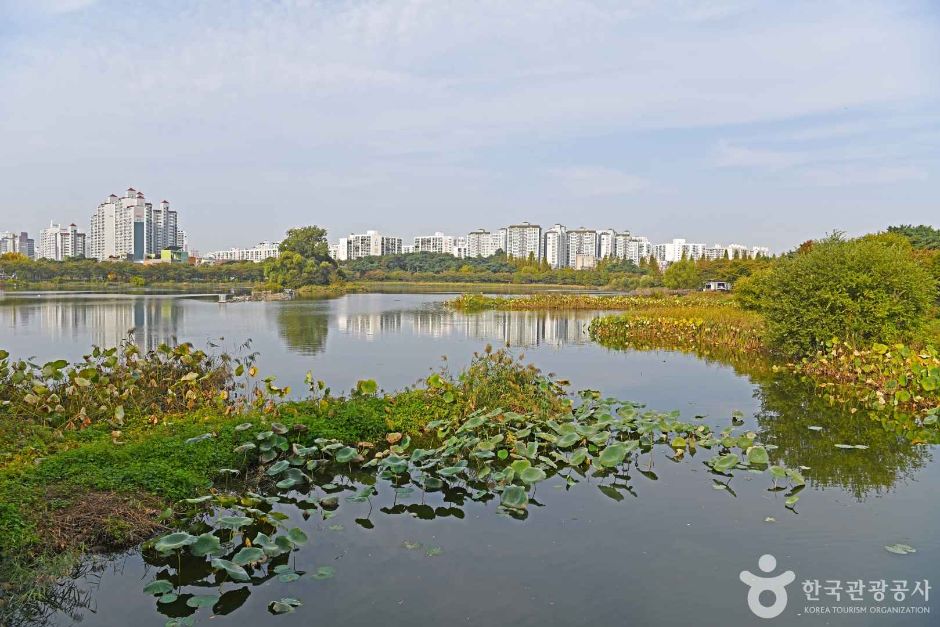
Manseokgeo Park (만석거공원)
1087 Jeongjo-ro, Jangan-gu, Suwon-si, Gyeonggi-do
Manseokgeo Park centers around Manseokgeo Reservoir, built in 1795 to combat drought by transforming barren land into a water source. The park features a pavilion, tennis courts, a playground, small convenience store, an outdoor concert hall, and an art museum. In spring, cherry blossoms bloom, while summer brings beautiful lotus flowers to the lake. A well-maintained walking trail encircles the reservoir, and at night, the rainbow-colored musical fountain provides a spectacular view.
Manseong-ri Black Sand Beach (만성리 검은모래해변)
15-1, Manseongni-gil, Yeosu-si, Jeollanam-do
Manseong-ri Black Sand Beach is located 3 kilometers to the north along the coastal road from Yeosu EXPO Station. The beach, 540 meters in length and 25 meters in x_width, has an average water temperature of 25 degrees Celsius. The black sand is said to help blood circulation and remove toxins from the body.
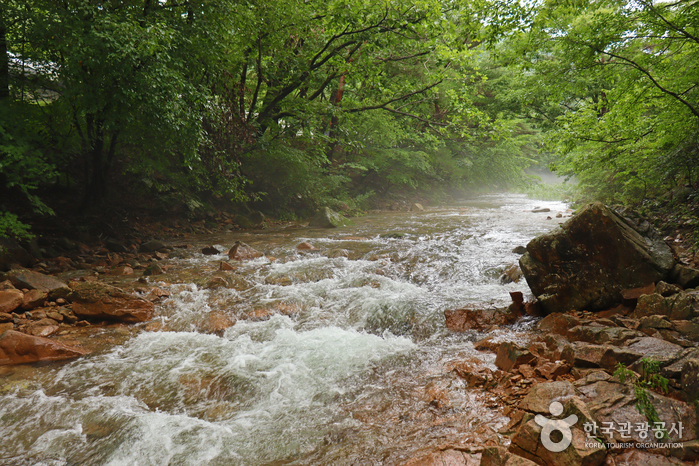
Mansugyegok Valley (만수계곡)
136, Mansu-gil, Songnisan-myeon, Boeun-gun, Chungcheongbuk-do
Mansugyegok Valley is a 4 km-long valley fed by the Samgacheon Stream, which originates from Cheonwangbong Peak in Songnisan Mountain and flows into Samga Reservoir. Its name refers to how it has enjoyed tens of thousands of years of age. Its clear water and lush forests make it a popular summer and forest bath destination. The summit of the Songnisan Mountain can be reached along the valley. There’s also a trail that leads to the Beopjusa Temple of Songnisan Mountain.
Marble Plastic Surgery (마블성형외과의원)
3F, 435 Gangnam-daero, Seocho-gu, Seoul
Directors at Marble Plastic Surgery have over 20 years of experience in the plastic surgery and dermatology fields. Since its opening, the clinic has provided safe and stable surgery outcomes to both domestic and international clients in each specialty. Post-surgery care and progress checks are overseen by each director to ensure sustainable outcomes for surgeries and procedures. Such utmost care has led to a very high level of client satisfaction. Having served clients from various countries, the clinic has dedicated translators for each language, so that it can provide care that's comparable to that of local services. There is a well-established system to ensure that patients can safely return to their home countries after completing their treatments. The clinic continually researches the latest trends, surgical techniques, and procedures, without resting on its current expertise and achievements.
Plan your Korea trip
Korea travel FAQ
How do I use the travel search?
Enter a place or interest, then narrow the results by region, category or sort order.
Will my filters stay selected on the next page?
Yes. Your search and filter choices stay in the page URL while you move through the results.
Can I find directions to each place?
Place pages include an external Google Maps search when coordinates or an address are available.
Source: Korea Tourism Organization, official website (https://knto.or.kr).