TRAVEL IN KOREA
Korea Places to Visit
Find attractions, culture, festivals, stays, restaurants, shopping and travel courses for a clear Korea trip plan.
Data last synced: 2026-06-25. Some details may change. Please confirm official information before visiting.
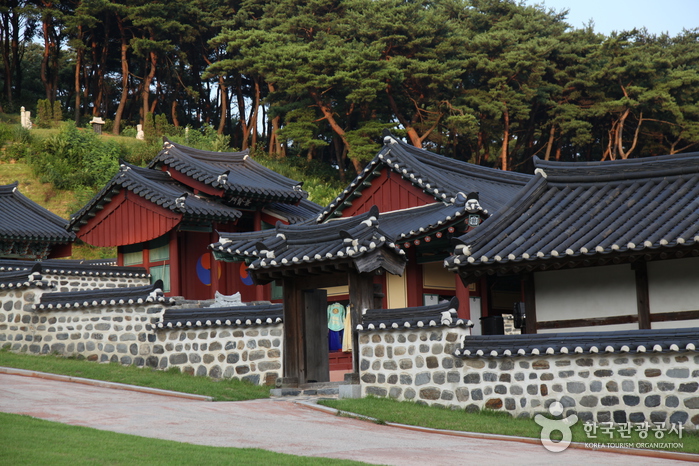
Munheonseowon Confucian Academy (문헌서원)
66 Seowon-ro 172beon-gil, Gisan-myeon, Seocheon-gun, Chungcheongnam-do
Munheonseowon Confucian Academy was established to pay tribute to the memory of Lee Gok (1298-1351) and Lee Saek (1328-1396) who were well-respected for their writings and character. The school was originally built in 1594, but was burnt down during the Imjin War (1592-1598). It was rebuilt in 1610 and became a legislated private institute in 1611. The academy consists of an educational area and a shrine. Mortuary tablets of five Confucian scholars including Lee Jong-hak, Lee Ja, Lee Gae as well as Lee Gok and Lee Saek were enshrined at the school.
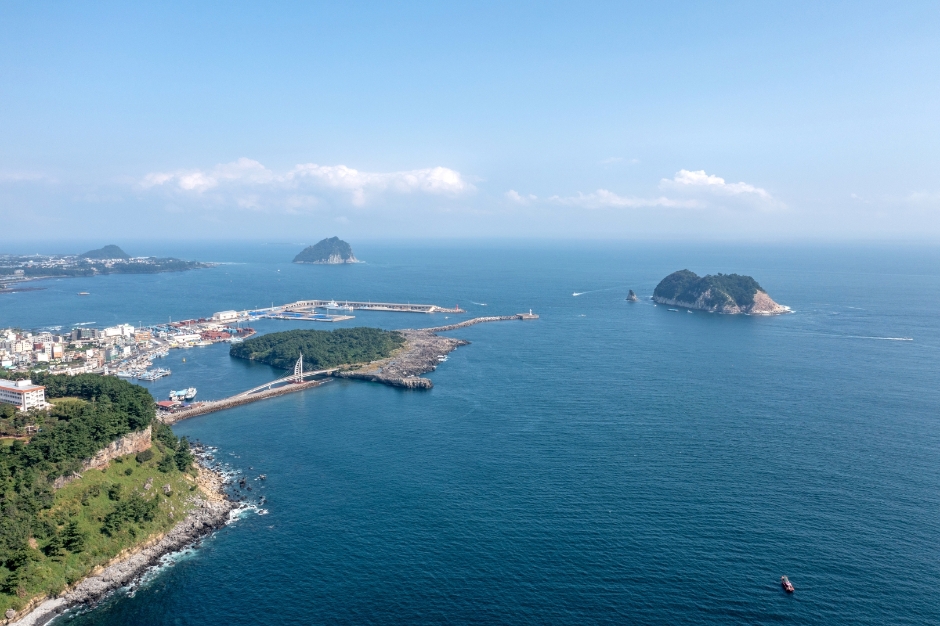
Munseom, Seopseom, Beomseom, and Saeseom Islands (문섬 / 섶섬 / 범섬 / 새섬)
43 Namseongjung-ro, Seogwipo-si, Jeju-do
These islands are part of Seogwipo Provincial Marine Park. Munseom, Seopseom, and Beomseom Islands are natural monuments and part of the UNESCO Biosphere Reserves. They can be visited by cruise ship. Saeseom Island, an uninhabited island and a tropical forest reserve, is known as a skin scuba spot and a marine ecosystem treasure trove.
Munui Cultural Properties Site (문의문화재단지)
721, Daecheonghoban-ro, Sangdang-gu, Cheongju-si, Chungcheongbuk-do
Munui Cultural Properties Site, overlooking the Daecheongho Lake, attracts many visitors. The site was created to preserve and promote the local traditional culture of Cheongwon (Chungcheongbuk-do); it is a great place to learn about local history, culture, and arts. The spacious complex (132,232m²) is a home to ten traditional houses (Munsangwan, aristocrat houses, a museum, and a tavern), showing a form of a traditional village. It is also full of dolmen stones (symbolizing abundant procreation), Jangseung (totem poles at the entrance of villages or temples), and Yeonjabanga (millstones worked by horses or oxen), providing visitors with opportunities to learn about traditional culture and life. With a theme of roof tiles, a relics gallery in the complex boasts over 774 local items, categorized by historical period (e.g. the Silla Period, Baekje Period, etc.). Munsan-ri Stone Bridge, believed to have been built during the Goryeo Period, was restored in front of the gallery. The complex also offers a wide array of amenities including mineral spring sites, playgrounds, and Munui Movie Village (a drive-in movie theatert). Nearby notable attractions include artificial falls, Yangseongsan Mountain, Jakdusan Mountain, Daecheongho Lake, Nosan Pine Forest, Donghwasa Temple, and Bugang Mineral Springs.
Munyeodo Island & Seonyudo Island (무녀도‧선유도)
Okdo-myeon, Gunsan-si, Jeonbuk-do
Munyeodo Island is located approximately 50.8 kilometers southwest of Gunsan-si, and forms the Gogunsan Islands together with Seonyudo, Sinsido, Jangjado, and other islands. Its total area occupies 1.75 square kilometers and its coastline is 11.6 kilometers long. Today, with Seonyudo in the middle, there are bridges installed between Munyeodo and Seonyudo, Seonyudo and Jangjado, and Jangjado and Daejangdo, so visitors are able to walk around as if they are on a single island. Other than Munyeobong Peak (131 meters) on the southwestern part of the island, the region is vast but lacks any tall mountains. Seonyudo Island is located in the center of the Gogunsan Islands, which consist of about 20 islands, and is approximately 50 kilometers away from Gunsan Port. It is also one of the most popular vacation spots on the entire West Coast. The location that serves as a basecamp when travelling to Seonyudo and the nearby islands is Jin-ri Village on Seonyudo. It neighbors Seonyudo Beach, which is famously known as ""Myeongsasimni,"" and faces Mangjubong Peak that stands tall like Maisan mountain. The island is crowded with schools, inns, restaurants, bike rental shops, stores, karaokes and campgrounds, which is why the area is a bit boisterous during the vacation seasons. If you wish to escape from such noise, it would be a good idea to rent a bicycle and bike to Munyeodo, Jangjado or Jinwol-ri over Mangjubong Peak. Seonyudo Island is the home of the 8 Scenic Spots of Seonyu, but the most gorgeous scenery of them all is Mangjubong Peak, which is practically the symbol of the island. Once you climb up to the top, the nearby islands and the sea come together in a cool panoramic view, which also includes the neatly sprawling Myeongsasimni Beach as well as Pyeongsanagan that resembles a seagull landing over the water. The splendid sunset on Seonyudo Island is incredible no matter where you are, whether it'll be atop Mangjubong Peak or Seonyudo Beach.
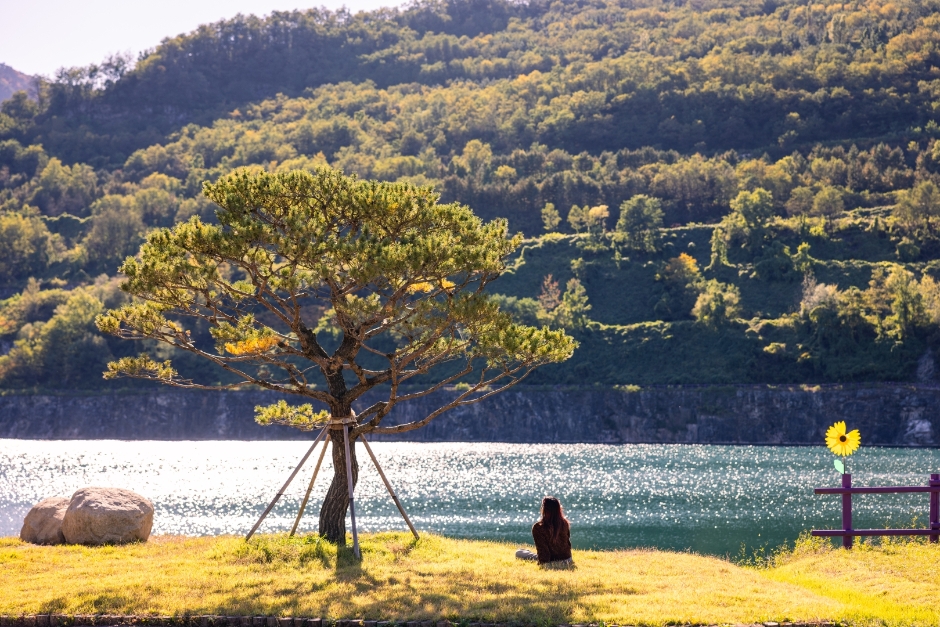
Murung Byeolyucheonji (무릉별유천지)
97 Igi-ro, Donghae-si, Gangwon-do
Mureung Byeolyucheonji was initially a limestone mine that opened in 1968. After 40 years of service as a mine, today it serves as a tourist attraction that boasts beautiful emerald lake and diverse activities. Mureung Byeolyucheonji gets its name from the rock-carved engravings in Mureunggyegok Valley and has the meaning "the place with the best view under the sky, a utopia away from the world." The attraction lives up to its name thanks to the beautiful surrounding mountain scenery pit lakes. Visitors can also enjoy the view from a different angle through diverse rides, such as the Sky Glider, Alpine Coaster, and more.
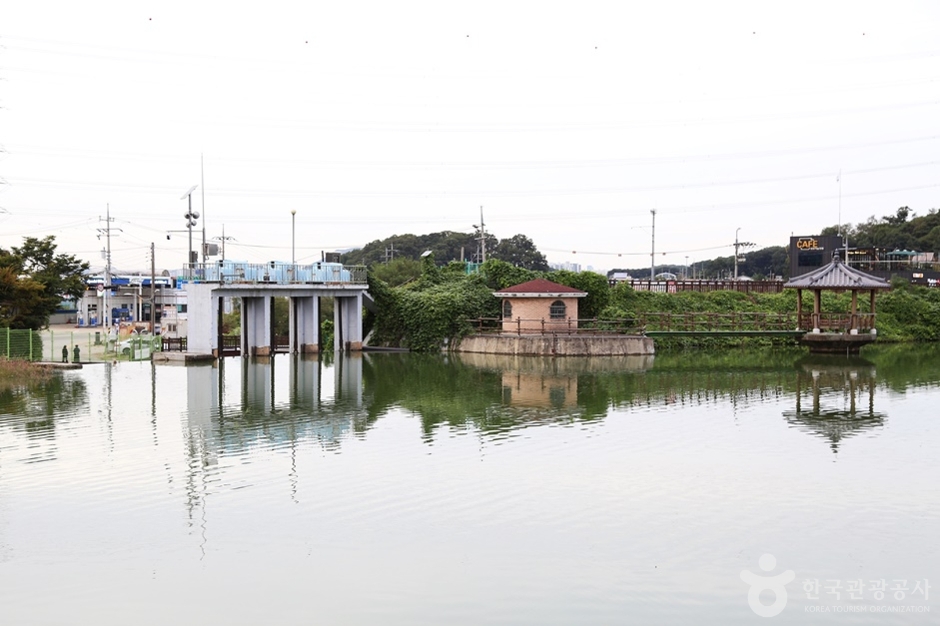
Murwanghosu Lake (물왕호수)
Murwang-dong, Siheung-si, Gyeonggi-do
Murwanghosu Lake, also known as Heungbu Reservoir, is the largest lake in Siheung-si. Visitors can immerse themselves in nature while strolling along the deck encircling the lake. The illuminated pathways provide stunning night views of the lake, enhanced by vibrant lights. Additionally, the area features solar-powered smart benches, offering the convenience of wireless smartphone charging.
Museongseowon Confucian Academy [UNESCO World Heritage] (무성서원 [유네스코 세계문화유산])
44-12 Wonchon 1-gil, Chilbo-myeon, Jeongeup-si, Jeonbuk-do
Museongseowon Confucian Academy was built in 1615 to honor Silla's scholar Choe Chiwon (857-?). An important cultural heritage for understanding the principles of Confucianism and culture of the Joseon dynasty, it is recognized as a representative example of seowon architecture and listed as a UNESCO World Heritage Site. The traditional architecture still remains, and the surrounding scenery, including old ginkgo trees, is beautiful.

Museulmokhaebyeon Beach (무슬목해변)
2876 Dolsan-ro, Dolsan-eup, Yeosu-si, Jeollanam-do
Museulmokhaebyeon Beach is not only a site of great victory achieved by Admiral Yi Sun-sin but also a tranquil beach with a beautiful seaside pine forest, which makes it ideal as a place to take a leisurely walk in. This pebble beach is also a part of the Namdo Seaside Trail and Yeosu Gaetga-gil Trail Course 2. When the tides recede, a white sand beach is revealed, showing a different side to this magical beach. Museulmokhaebyeon Beach is a beloved sunrise spot that draws a large crowd on the first day of the year, while photographers flock to the beach throughout the four seasons to capture the beautiful view. You can see the sculptures inspired by Yeosu seas within the pine forest, walk leisurely along the horizon, and enjoy the scenery of the wide sea dotted by islands. One can also find the Jeollanam-do Maritime & Fisheries Science Museum at the entrance to the beach, so there’s plenty of things to do in the surrounding areas as well.
Museum Kimchikan (뮤지엄 김치간)
(4-6th floor, Maru Art Center), 35-4 Insadong-gil, Jongno-gu, Seoul
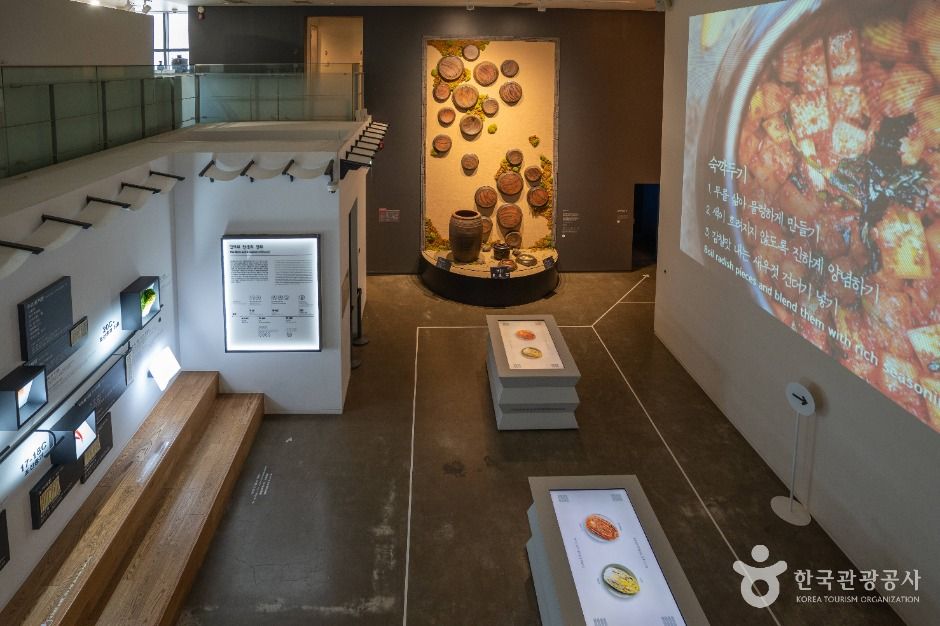
Museum Kimchikan is a museum dedicated to kimchi in Insa-dong’s Maru Art Center. The exhibition details the culture, history, trajectory, and efficacy of kimchi and teaches the visitors how to make kimchi through videos. Visitors can also sample different types of kimchi. The museum offers both individual and group experience programs.
Muuido Island (무의도)
310-11 Daemuui-ro, Jung-gu, Incheon
Muuido Island is an island located in Jung-gu, Incheon. In the past, it was accessible only by boat, but with the opening of Muuidaegyo Bridge, vehicular access became possible. Surrounding Muuido Island are other islands such as Silmido Island and Somuuido Island, which are connected by bridges, making them easily reachable. There is a beautiful beach called Hanagae Beach, and trekking trails on Muuido Island offer stunning views of the sea.
My Land (마이랜드)
252 Wolmi-ro, Jung-gu, Incheon
◎ Travel information to meet Hallyu’s charm Sung-kyu from the web show “Tour Fairy” and foreign tourists enjoyed Disco Tagada in My Land, a representative theme park in Wolmido Island. After enjoying the ocean views and thrilling rides, you can take a stroll to the nearby Wolmi Observatory and Songwol-dong Fairy Tale Village.
Myeonangjeong Pavilion (면앙정)
382-11 Myeonangjeong-ro, Damyang-gun, Jeollanam-do
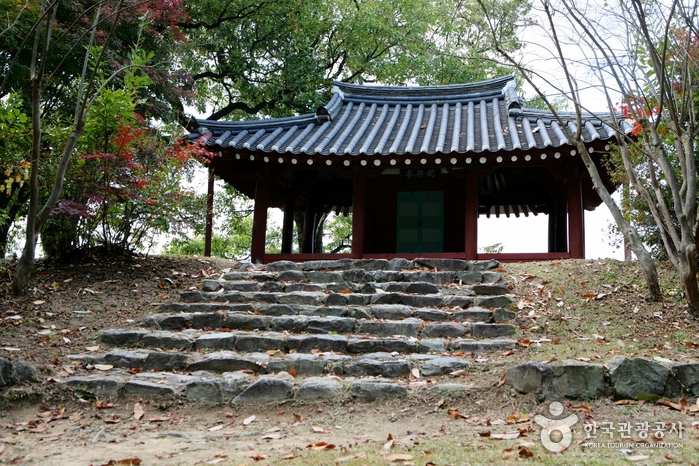
Myeonangjeong Pavilion is located on the slopes of Jebongsan Mountain in Damyang-gun. The pavilion was constructed in 1533 by Song Sun (1493-1583), who built it as a place for writing poems. After its construction, the pavilion served as a meeting place for scholars and intellectuals and was even frequented by Lee Hwang (1501-1570), a representative Confucian scholar who is pictured on the 1,000 won bill. The roof of Myeonangjeong Pavilion was originally made of reeds, straw, grass and other materials which could not withstand the elements. After several repairs, the building was developed into the wooden structure that it is today. From the back of the pavilion, you can see the mountain range and open wide fields; renowned scholars’ poems are engraved on the wooden panels that decorate the pavilion walls.
Myeoncheoneupseong Walled Town, Dangjin (당진면천읍성)
14 Mongsan-gil, Dangjin-si, Chungcheongnam-do
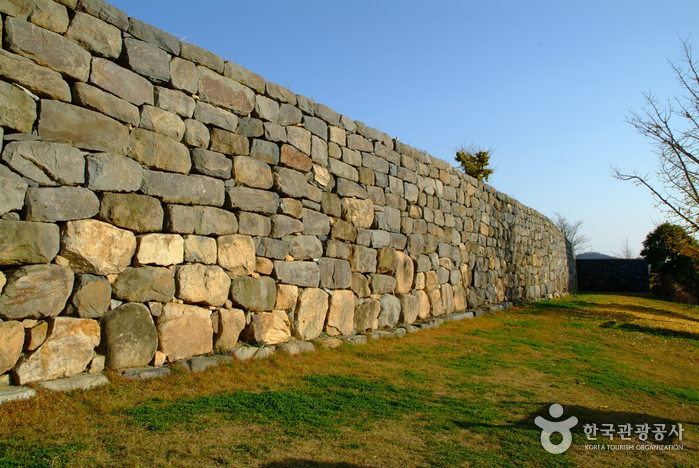
Since the ancient days, the city of Dangjin was where an important sea route to China existed along with Seosan and Taean. Not only was it an essential trading post with China, it was also a critical military hub. Myeoncheoneupseong Walled Town is widely known to have been constructed in the 16th year of King Chungnyeol's reign in the Goryeo Dynasty (1290) but many believe that it had actually existed ever since the early Baekje period for the purpose of stopping foreign invasions. Myeoncheoneupseong was a fortress that had four main gates in the east, west, south and north.
Myeong-dong (명동)
66, Eulji-ro, Jung-gu, Seoul
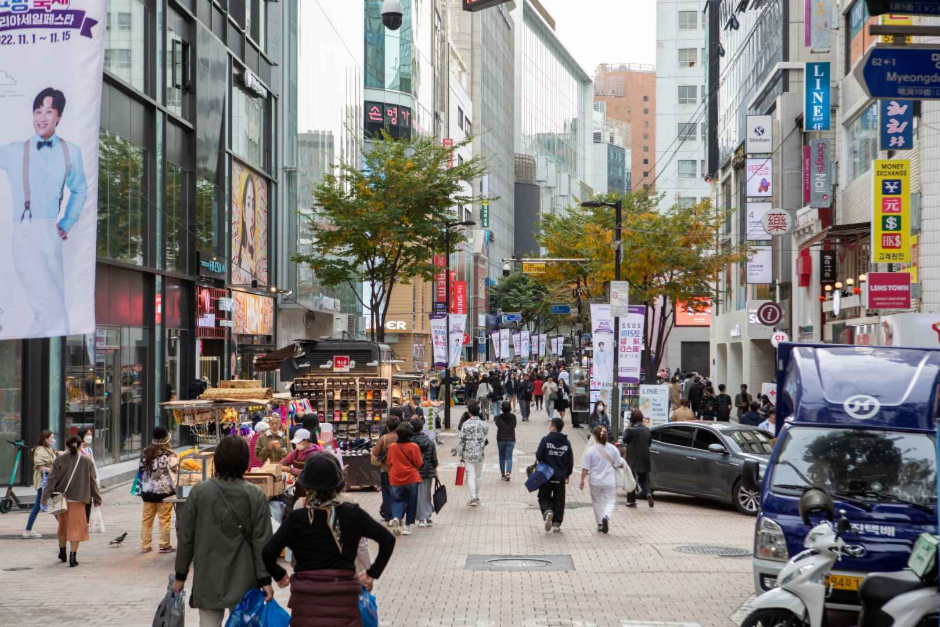
Myeong-dong is one of the primary shopping districts in Seoul. The two main streets meet in the center of the block with one beginning from Myeong-dong Subway Station (Seoul Subway Line No. 4) and the other from Lotte Department Store at Euljiro. Many brand name shops and department stores line the streets and alleys. Common products for sale include clothes, shoes, and accessories. Unlike Namdaemun or Dongdaemun, many designer brands are sold in Myeong-dong. In addition, several major department stores have branches here, including Lotte Department Store, Shinsegae Department Store, Myeong-dong Migliore, Noon Square and M Plaza. The department stores carry many premium labels and other fashionable goods at reasonable prices. Myeong-dong also has family restaurants, fast food, plus Korean, Western and Japanese dining options. Many restaurants in Myeong-dong specialize in dongaseu (pork cutlet) and kalguksu (noodle soup). Other businesses in the area include hair salons, banks and theaters.
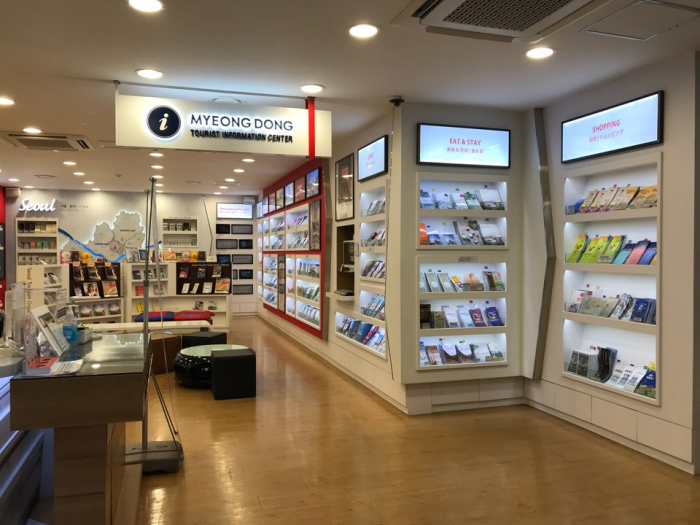
Myeong-dong Tourist Information Center (명동관광정보센터)
66, Eulji-ro, Jung-gu, Seoul
Myeong-dong Tourist Information Center provides information on traveling, shopping, attractions, and more in Seoul. Service is provided in Korean, English, Japanese, and Chinese. The center also offers experience programs like using Hangeul stamps.
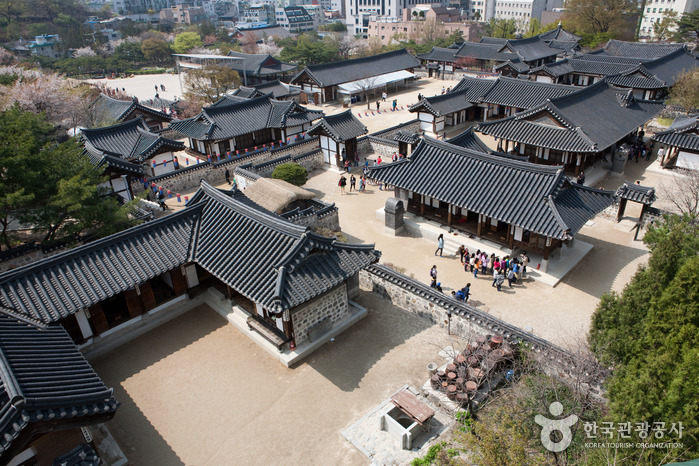
Myeong-dong, Namdaemun, Bukchang-dong, Da-dong and Mugyo-dong Special Tourist Zone (명동 남대문 북창동 다동무교동 관광특구)
40, Sejong-daero, Jung-gu, Seoul
Myeong-dong, Namdaemun, Bukchang-dong and Da-dong are widely known among international visitors as hot spots for shopping and food. Myeong-dong is a popular destination for shopping, culture, arts and fashion. Major shopping malls such as Lotte Department Store, Shinsegae Department Store, Myeong-dong Migliore and Samik Fashion Town are located here. Shoppers can find a variety of products here from high-end items to relatively inexpensive clothes. There’s also no shortage of street food, traditional restaurants, coffee shops and fancy cafes. Namdaemun Market is the biggest traditional market in Korea. Visitors can purchase souvenirs and local produce at an affordable price in the shopping complex crowded with stores and street stalls. The market sells a variety of clothes, kitchenware, toys, accessories, food, flowers and imported goods. Bukchang-dong and Sogong-dong have high-end accommodations including Lotte Hotel Seoul and Westin Chosun Seoul, duty-free shops, and restaurants serving traditional dishes. [Myeong-dong, Namdaemun Market and Bukchang-dong Special Tourist Zone] Areas included: Myeong-dong, Bukchang-dong, Mugyo-dong and Da-dong, Seoul Area size: 872,809 ㎡ Tourist attractions: Myeong-dong, Namdaemun Market and Bukchang-dong, Department Stores (Lotte Department and Shinsegae Department Store, etc.), Traditional Market, Duty-free Shop, Hanok Village, N Seoul Tower, etc.
Plan your Korea trip
Korea travel FAQ
How do I use the travel search?
Enter a place or interest, then narrow the results by region, category or sort order.
Will my filters stay selected on the next page?
Yes. Your search and filter choices stay in the page URL while you move through the results.
Can I find directions to each place?
Place pages include an external Google Maps search when coordinates or an address are available.
Source: Korea Tourism Organization, official website (https://knto.or.kr).