TRAVEL IN KOREA
Korea Places to Visit
Find attractions, culture, festivals, stays, restaurants, shopping and travel courses for a clear Korea trip plan.
Data last synced: 2026-06-25. Some details may change. Please confirm official information before visiting.
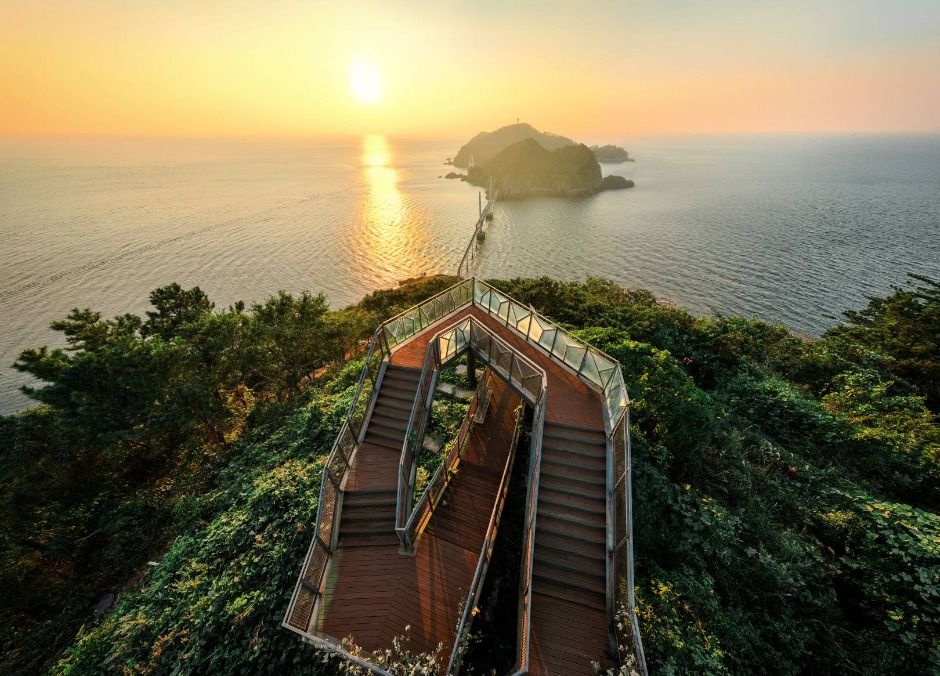
Myeongdo Island (명도)
5 Myeongdo-gil, Okdo-myeon, Gunsan-si, Jeonbuk-do
Myeongdo takes its name from the character “myeong,” which means “bright,” as its clear waters were likened to the union of the moon and the sun. It is also known as Yakdo Island, or “Medicinal Island,” for the wide variety of medicinal herbs that thrive there despite constant exposure to sea winds. Centered around Bangchukdo Island, visitors can enjoy sightseeing cruises and fishing by boat, and admire the island’s beautiful and unusual rock formations. In the mountainous areas of the island, dozens of medicinal herb species grow after enduring the harsh sea winds. The most well-known among them is laserwot, called bangpung in Korean, which is traditionally believed to help prevent postpartum pain syndrome in pregnant women and to offer effects such as inducing perspiration, reducing fever, relieving pain, and alleviating neuralgia, purportedly expelling 36 types of pain. It is also said to be effective in improving concentration, particularly for students preparing for exams.
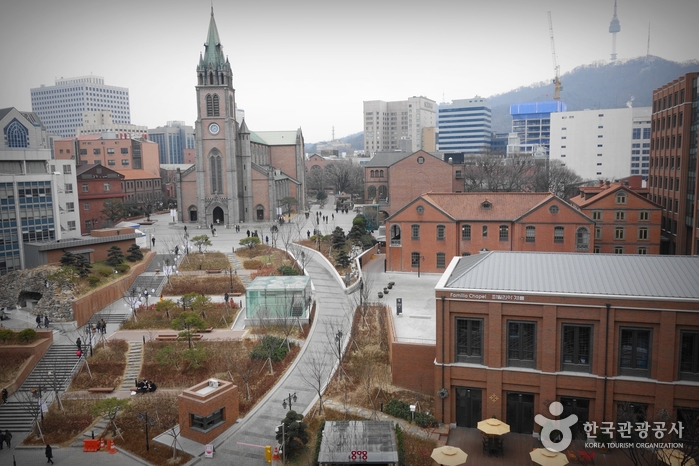
Myeongdong Cathedral (서울 명동성당)
74, Myeongdong-gil, Jung-gu, Seoul
Myeongdong Cathedral is the Church for Archdiocese of Seoul and was also the birthplace for the Roman Catholic Church community in Korea. The church houses the remains of several individuals: Bishop Laurent Joseph Marie Imbert (1796-1839), and priests Peter Simon (1803-1839), James (Jacques Honor Chastan, 1803-1839) and Pourthie Jean Antoine Charles (1830-1866) and four martyrs. Myeongdong Cathedral is located in downtown Seoul and tourists frequently come and visit the place. Near the cathedral are other tourism spots such as Namsangol Hanok Village preserving Korean traditional houses, N Seoul Tower overlooking Seoul and Namdaemun Market, a traditional market with a wide variety of food and goods.
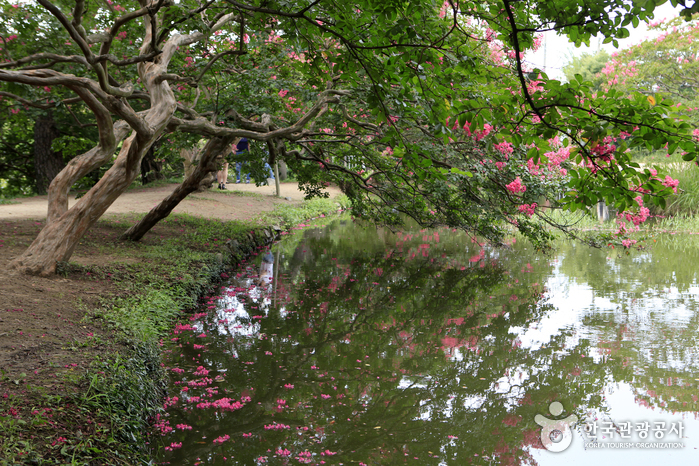
Myeongokheon Garden (담양 명옥헌 원림)
103 Husan-gil, Goseo-myeon, Damyang-gun, Jeollanam-do
Located in the eco-village of Husan-ri, Myeongokheon Garden was the garden of Oh Hui-do (1583-1623) of the Joseon dynasty and served as a simple, countryside sanctuary where the scholar read and wrote many books. Main features of the garden are the Myeongokheon Pavilion, where the scholar held lectures, and the square-shaped pond in front of the pavilion that is surrounded with graceful flowering trees. The flowering trees around the pond include red pines and crape myrtles. On the right side of Myeongokheon Garden you’ll see a 300 year-old ginkgo tree, which is where King Injo (1623-1649) of the Joseon dynasty tied his horse when he went to visit Oh Hui-do. ◎ Travel information to experience the charm of Hallyu - Drama A private garden created in the mid-Joseon Dynasty, harmoniously featuring a small pavilion, square pond, flowering trees, and pine trees. Every summer, photographers from across the country gather to capture the 300-year-old crape myrtle trees blooming in soft pink around the pond. It is also the place where Lee Yeong and Ra-on first met in .
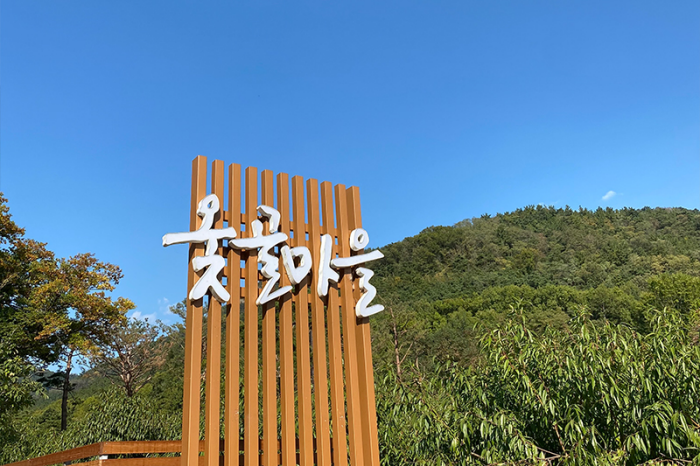
Myeongpum Otgol 1616 Cooperative Society (명품옻골 1616 협동조합)
195-5 Otgol-ro, Dong-gu, Daegu
Myeongpum Otgol 1616 Cooperative Society is a village enterprise operating in the oldest Otgol Village in Daegu. Utilizing traditional hanok houses dating back 200 years, they offer hanokstay experiences, guided village tours, and various traditional Korean experiences such as Tea Confectionery Experience, Hanbok Experience, Village School Experience, Rice Cake Pounding Experience, Tuho (Arrow-throwing), Jegichagi, Biseokchigi. Visitors can also enjoy traditional beverages at the hanok café.
Myeongsa Beach (명사해수욕장)
32 Myeongsahaesuyokjang-gil, Jeogu-ri, Nambu-myeon, Geoje-si, Gyeongsangnam-do
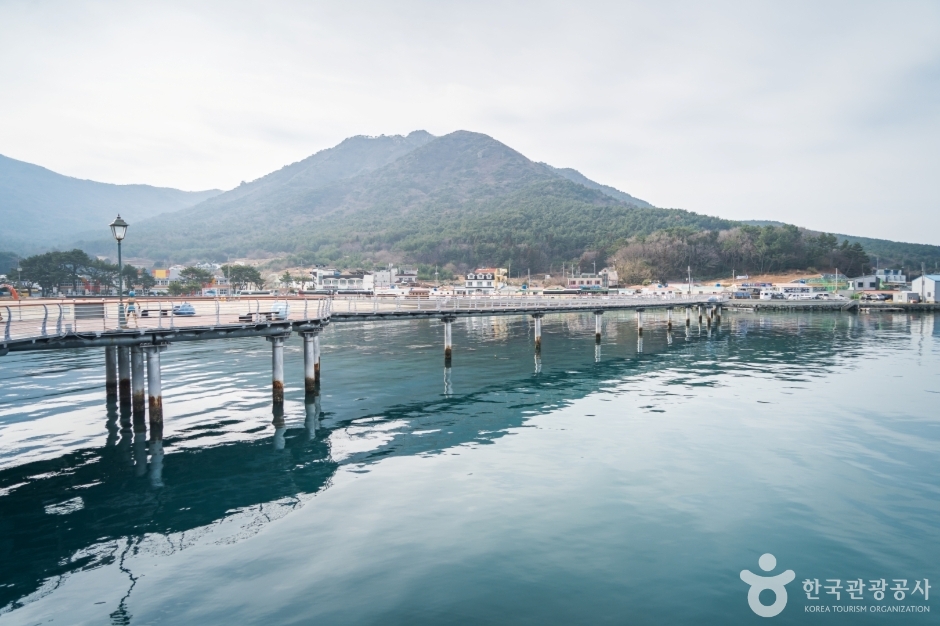
Located in Nambu-myeon, Geoje-si, Myeongsa Beach is celebrated for its fine sandy quality and clear sea waters, inspiring its name, Myeongsa (the Bright Sand). The beach, featuring moderate water temperatures and gentle depths, offers an ideal summer escape with pine forests framing the pristine white sands. A specific section for swimming with pets has been designated on the beach. In addition to swimming, visitors can partake in coastal fishing or embark on cruises to explore the surrounding islands.
Myeongseondo Island (명선도)
Jinha-ri, Seosaeng-myeon, Ulju-gun, Ulsan
Myeongseondo Island is an uninhabited island near Jinha Beach in Ulju-gun, Ulsan. The island takes on a vibrant appearance after the sun sets, with various media art displays lighting up the pathways. The island is accessible via a temporary bridge set up during the admission times.
Myeongseongsan Silver Grass Field (명성산 억새밭)
Sanjeong-ri, Yeongbuk-myeon, Pocheon-si, Gyeonggi-do
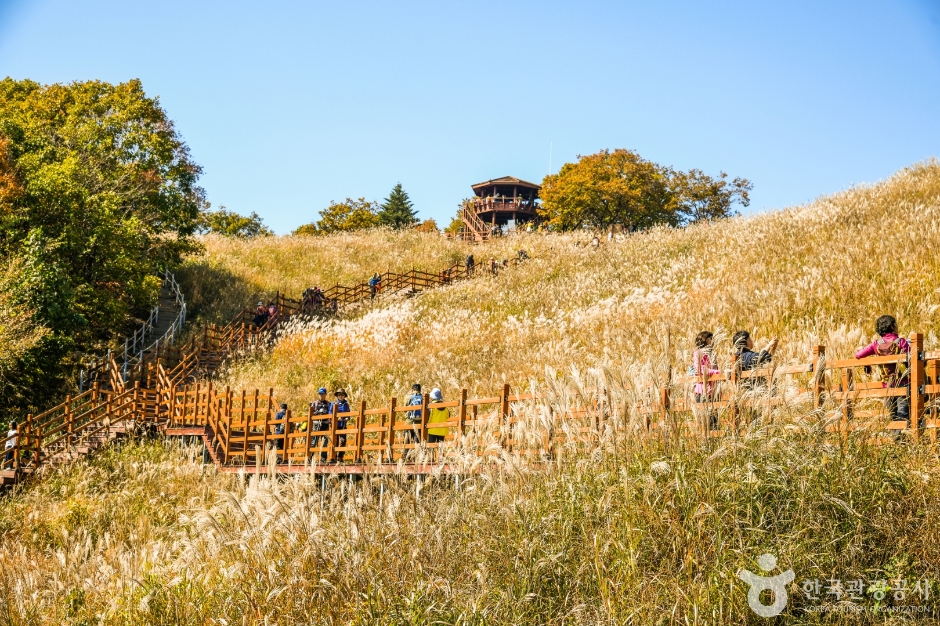
Myeongseongsan Mountain is renowned for its silver grass field. To reach the this beautiful destination, visitors must follow the Myeongseongsan Hiking Trails from Sanjeonghosu Lake's Sangdong Parking. One particularly popular trail is the first route, offering stunning views of Biseonpokpo and Deungnyongpokpo Falls. Pocheon-si hosts the Sanjeonghosu Myeongseongsan Silver Grass Festival every October.
Myongji Hospital (명지병원)
55 Hwasu-ro 14beon-gil, Deogyang-gu, Goyang-si, Gyeonggi-do
Myongji Hospital is a general hospital located in Goyang-si with various departments and specialized treatment centers. We operate Breast Thyroid Center, Prostate Cancer and Kidney Cancer Center, Ovarian Cancer and Gynecological Cancer Center, and Robotic Surgery Center for specialized treatment, and have introduced the latest medical device, da Vinci Xi to conduct surgeries for various types of cancer as well as robotic surgeries for a wide range of benign diseases. In addition, we provide more specialized and prompt medical services to patients through advanced facilities such as the Radiology Center, Rehabilitation Center, Intervention Center, and Comprehensive Health Checkup Center. Specifically, we are prominent in the field of organ transplantation and operate the Organ Transplant Center performing liver, kidney, lung, and heart transplants. We offer interpretation services for foreign patients by professional coordinators who speak English, Russian, Mongolian, and Chinese to eliminate language barriers by opening the International Medical Center in 2009 and provide guesthouses, airport pick-up and send-off services for foreign patients as well to maximize their convenience.
N Seoul Tower (남산서울타워)
105 Namsangongwon-gil, Yongsan-gu, Seoul 0
Namsan Seoul Tower was the first multipurpose tower to be established in Korea, effectively incorporating a sightseeing observatory into a broadcasting tower. For the past 40 years, Namsan Seoul Tower has served as an iconic landmark of Korea and a representative tourist attraction. The tower's observatory offers an unobstructed view of the whole city, allowing it to become one of the all-time favorite attractions of Seoul citizens as well as domestic and international tourists. Featured in many dramas and reality shows, it is also a fan-favorite destination. Another highlight of the tower is the Namsan Cable Car. The cable car began its operation in 1962, transferring passengers from the foot of the mountain to the base of the tower. Shuttle buses to the Namsan Cable Car from downtown Seoul are also available for visitors' convenience.◎ Travel information to meet Hallyu’s charmIn TXT’s content “TALK X TODAY,” the youngest members, Huening Kai and Taehyun, enjoyed a day out in their school uniforms. They rode the cable car to the top, took pictures together, and secured their wish lock. You can purchase locks at the souvenir shop near the cable car station at the top of the mountain, where name pens are also available to write down your wishes.
Nabawi Catholic Church (화산천주교회(나바위 성당))
146, Nabawi 1-gil, Iksan-si, Jeonbuk-do
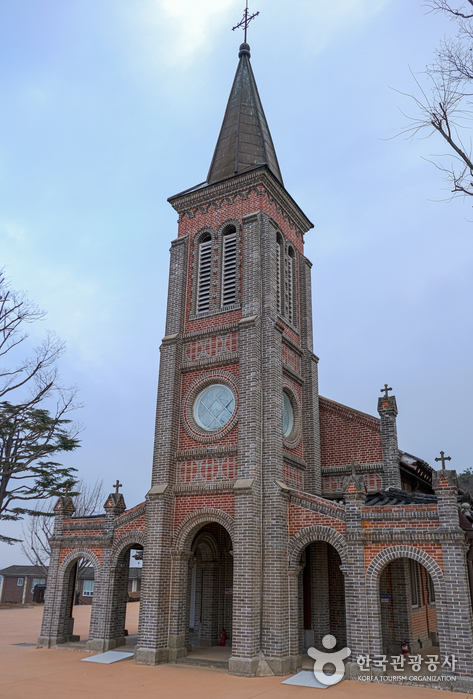
Nabawi Catholic Church is located in Hwasan-ri, Mangseong-myeon in Iksan, Jeollabuk-do Province and is known as the oldest surviving catholic church in the Jeolla-do region. The church was built in 1906 to commemorate the return of priest Kim Dae-geon in 1845 (Joseon dynasty) after he was ordained in Shanghai, China. Inside the church stand two monuments: one built in 1954 to honor Joseph Vermorel (French missionary, 1860-1937) and one built in 1955 to honor priest and martyr Kim Dae-geon. Considered the most significant catholic relic of the Jeolla-do region, the church is sought out by large numbers of Catholic visitors each year.
Naebyeonsan Mountain (내변산)
232, Naebyeonsan-ro, Buan-gun, Jeonbuk-do
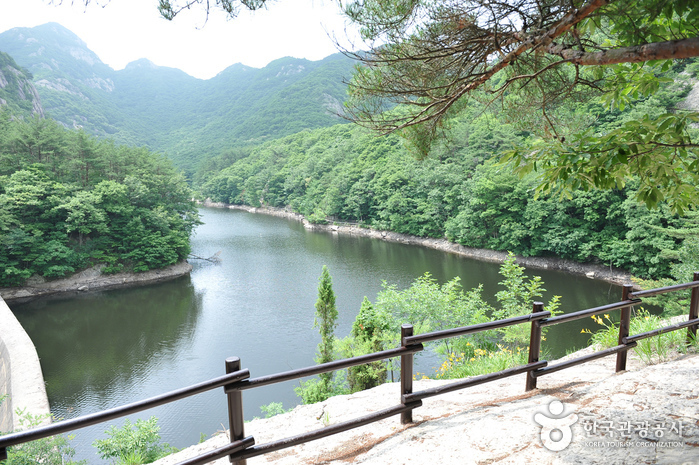
The Byeonsanbando Peninsula has a shoreline that stretches 99 kilometers, protruding into the west sea in Jeollabuk-do, with the Saemangeum, the world’s longest man-made sea barrier, to the north and Gomsoman Bay at its south shore. The peninsula is part of Byeonsanbando National Park, which is widely known for its natural beauty. Its interior mountain range is known as Naebyeonsan Mountain (Inner Byeonsan Mountain.) while the outer region near the sea is known as Oebyeonsan Mountain (Outer Byeonsan Mountain). The center of Mountain Naebyeonsan includes the highest peak of Byeonsanbando peninsula, Uisangbong Peak (509 meters) and Nakjodae (Sunset Viewpoint), Wolmyeongam Hermitage, Bongnaegugok Valley as well as Jiksopokpo Waterfall. The surrounding mountains and valleys of Byeonsan Mountain are not particularly high, standing at an altitude of around 400-500 meters, but the magnificent formation of mountains and valleys as well as the breathtaking view of the sunset from Nakjodae make it a must-see sight.
Naejangsa Temple (내장사)
1253 Naejangsan-ro, Jeongeup-si, Jeonbuk-do
Naejangsa Temple, cradled within the stunning Naejangsan National Park, is believed to have been established in the year 636, within the Baekje Kingdom. Historically, the site once hosted about 50 large temple buildings. However, they were destroyed during foreign invasions of Korea and the Korean War. Most of the structures standing today were reconstructed later. The temple, along with Geumsansa Temple, stands as one of the emblematic temples of Jeonbuk State. Enveloped by the mountain peaks of Naejangsan, which encircle it like a screen, the temple offers breathtakingly beautiful scenery. This beauty is particularly outstanding during fall when the leaves put on a vivid display of autumn colors. Notable nearby attractions include Baegyangsa Temple, Bangjangsan Mountain, Jangseongho Lake, and Damyangho Lake. Among its significant cultural assets are the Naejangsa Joseon-dongjong bell, among others.
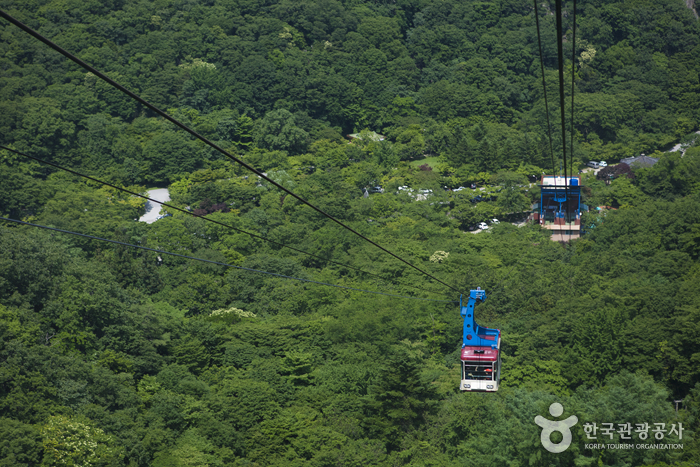
Naejangsan Cable Car (내장산 케이블카)
936, Naejangsan-ro, Jeongeup-si, Jeonbuk-do
Visitors who take Naejangsan Cable Car will enjoy a stunning view of the entire park, then after a 300m walk from the cable car terminus they will reach Yeonjabong Peak’s observatory. The cable car starts from Naejangsan Visitor Information Center.
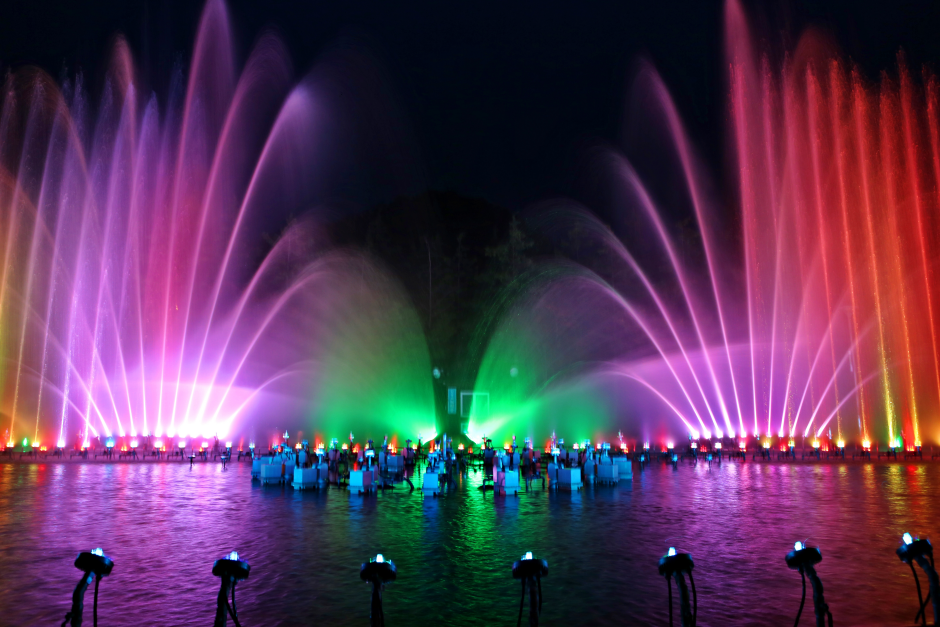
Naejangsan Cultural Tourism Musical Fountain (내장산 문화관광 음악분수)
37 Naejanghoban-ro, Jeongeup-si, Jeonbuk-do
The Naejangsan Cultural Tourism Musical Fountain, set within Naejangsan Water Park, boasts an impressive array of over 110 songs, ranging from children's tunes and pop hits to movie soundtracks. Accompanied by 14 unique fountain shows featuring various types, the display is indeed a sight to behold. Spanning 56 meters in length and 21 meters in x_width, the fountain includes 463 nozzles and 276 underwater lights, all designed to captivate and amaze onlookers. The musical fountain offers three performances daily, each catering to different music tastes and themes. The 19:00 show highlights classic pop songs, the 20:00 show is perfect for young children with a repertoire of children’s music, and the 21:00 show soothes the evening with ballads and idol music. Whether one is with their significant other or enjoying family time, the musical fountain’s performances—akin to a magical dance of water and light—are sure to provide an enchanting experience.
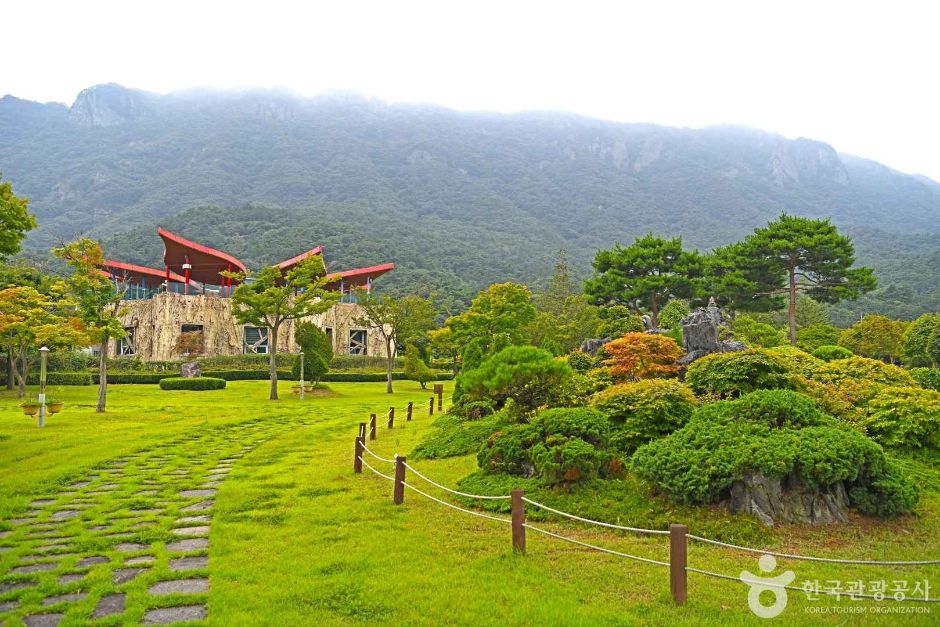
Naejangsan Maple Ecology Park (내장산 단풍생태공원)
273-17 Naejanghoban-ro, Jeongeup-si, Jeonbuk-do
Naejangsan Maple Ecology Park is created near Jaejangho Lake in Jeongeup and has diverse kinds of trees, included 11 types of indigenous maple trees. The park comprises diverse maple-themed recreational amenities such as Maple Experience Exhibition Center, various gardens, maple tunnel trails, and more. The best time to enjoy the park is in Novemeber when the fall foliage is at its peak and the park hosts a variety of events and exhibitions.
Naejangsan National Park (내장산국립공원)
328 Naejanghoban-ro, Jeongeup-si, Jeonbuk-do
Naejangsan Mountain is a famous mountain in Jeonbuk-do, and the best mountain in Korea to view the fall foliage. Because of the bright autumn leaves that blanket Naejangsan Mountain in fall, the mountain is also referred to as Geumgang of Honam, referencing the beautiful Geumgangsan Mountain. Inside the park, there are famous waterfalls, such as Dodeokpokpo Falls and Geumseonpokpo Falls, and temples such as Baegyangsa Temple and Naejangsa Temple. In addition, there are about 760 kinds of local plants, including those designated as Natural Monuments, and various wild animals living inside the park. Naejangsan National Park is beautiful not only in fall, but also in spring when the azaleas and cherry blossoms bloom, in summer when the mountain turns green, and winter when the rock cliffs are covered with snow.
Plan your Korea trip
Korea travel FAQ
How do I use the travel search?
Enter a place or interest, then narrow the results by region, category or sort order.
Will my filters stay selected on the next page?
Yes. Your search and filter choices stay in the page URL while you move through the results.
Can I find directions to each place?
Place pages include an external Google Maps search when coordinates or an address are available.
Source: Korea Tourism Organization, official website (https://knto.or.kr).