TRAVEL IN KOREA
Korea Places to Visit
Find attractions, culture, festivals, stays, restaurants, shopping and travel courses for a clear Korea trip plan.
Data last synced: 2026-06-25. Some details may change. Please confirm official information before visiting.
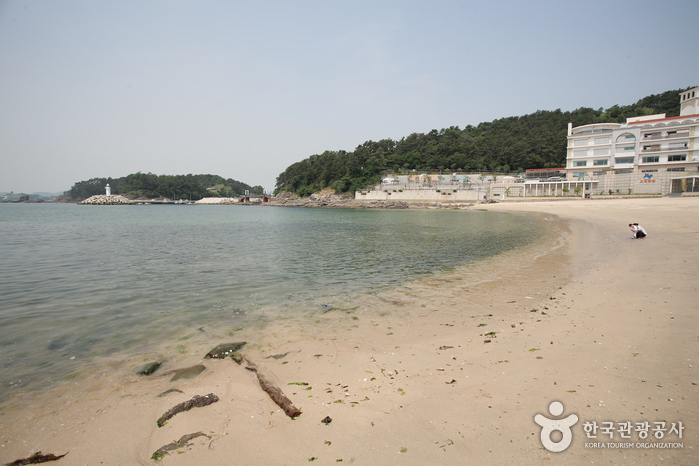
Namildae Beach (남일대해수욕장)
55, Namildae-gil, Sacheon-si, Gyeongsangnam-do
Located in Sacheon and home to the huge Elephant Rock that resembles an elephant drinking water, Namildae Beach is a popular vacation spot all year round thanks to its clean water and soft sand. The thick surrounding forests and Jinneol Observation Deck, as well as many fishing spots, add to its popularity. During the summer season, there is a singing competition and film festival. Vacationers can also visit Changseon-Samcheonpo Bridge, the biggest bridge in Asia, and see Hallyeohaesang National Park on a ferry cruise.
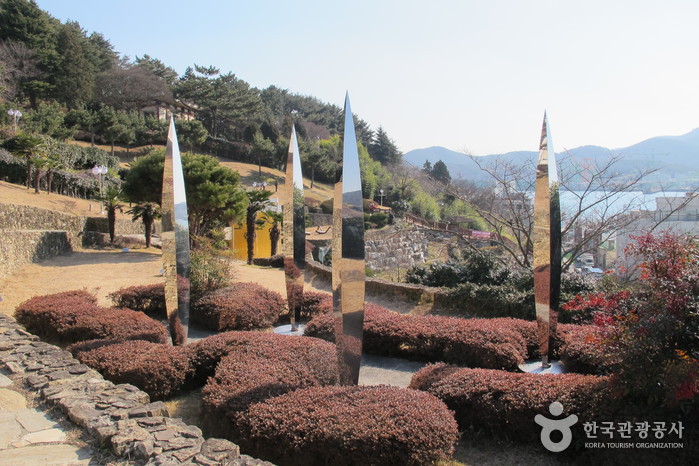
Nammangsan Sculpture Park (남망산 조각공원)
29, Nammanggonwon-gil, Tongyeong-si, Gyeongsangnam-do
Nammangsan Sculpture Park was established to display the works of 15 famous sculptors from 10 countries who participated in the Tongyeong International Sculpture Symposium. It is also a popular spot for dates because this 30 square kilometer land has beautiful sculptures from which visitors can feel the individual taste of the artists.
Namsa Yedamchon Village (남사예담촌)
10 Jirisan-daero 2897beon-gil, Danseong-myeon, Sancheong-gun, Gyeongsangnam-do
Namsa Yedamchon Village is situated at the foot of Jirisan Mountain. It is a traditional hanok village renowned for its history as the birthplace of accomplished scholars, adding to the region's rich scholarly tradition. This meticulously preserved village boasts ancient hanok houses, venerable trees, and historic walls. Beyond its significance as a center for traditional culture, the picturesque village also offers experiential programs, including the opportunity to wear hanbok and engage in traditional games. ◎ Travel information discovering the charm of Hallyu - Drama Namsayedamchon, where Yoon Cho-won and Ha Do-yoon once visited together during a business trip, is a representative hanok village in the Gyeongsang-do region. It offers warm and charming views of traditional Korean houses visible over low stone walls. Visitors can not only explore the hanok village but also enjoy a variety of traditional cultural experiences, such as traditional wedding ceremonies, natural dyeing using pagoda tree flowers, and folk games. It is an ideal place to experience Korean culture in greater depth.
Namsan Cable Car (남산 케이블카)
83 Sopa-ro, Jung-gu, Seoul
Namsan Cable Car provides a panoramic view of downtown Seoul. The cable car has been in operation for over 40 years, taking tourists and residents alike to Namsan Seoul Tower, one of the most representative tourist attractions in the city.
Namsan Outdoor Botanical Garden (남산 야외식물원)
323, Sowol-ro, Yongsan-gu, Seoul
Namsan Outdoor Botanical Garden opened its doors on February 18, 1997 in Hannam-dong, where the residential complex for foreigners once stood before it was demolished in 1994. Covering an area of around 59 ㎡, it is divided into 13 themed gardens with a total 117,132 plants from 269 species. Among this diversity, 60,912 plants from 129 species are tree types and 56,220 plants from 140 species are grass types.
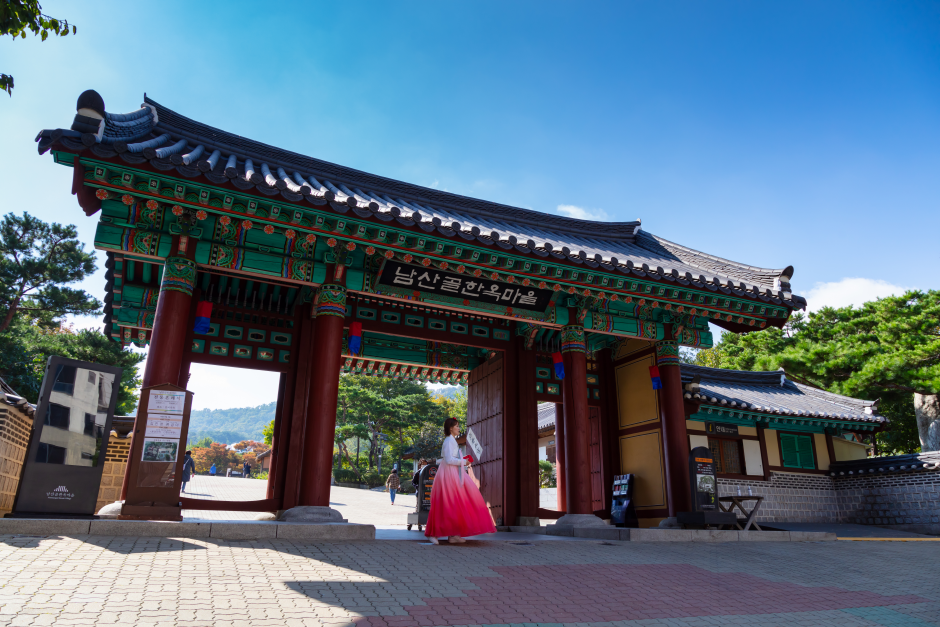
Namsangol Hanok Village (남산골한옥마을)
28 Toegye-ro 34-gil, Jung-gu, Seoul
Namsangol Hanok Village opened in 1998 on the northern side of Namsan Mountain in the center of the capital. This village has five restored hanok (traditional Korean house) premises, a pavilion, a traditional garden, a performance art stage, and a time capsule plaza, making it a perfect spot for locals and tourists to take a leisure walk. Upon entering from the front gate, visitors will get a taste of Korea's traditional life while escaping from bustling city life. The traditional garden with its pavilion and old houses creates a peaceful ambiance before the forested Namsan Mountain. A time capsule commemorating Seoul’s 600th anniversary was buried in 1994 at the highest point of the village and is scheduled to be reopened 400 years later in 2394. The five hanok premises at Namsangol Hanok Village once belonged to aristocrats and government officials of the Joseon dynasty. Each house was originally located in a different neighborhood, but they were all moved to this area and restored to their original form. The houses were rebuilt using their original materials, except for one house, where the materials were too old and deteriorated to be reused. The premises were carefully restored and replicated according to their original form to depict the owners’ social class and personality. These buildings are now used as an exhibit to portray the living environment during the Joseon dynasty and as a venue for educational and cultural programs for children and tourists. Some of the unique programs and activities to participate in include wearing hanbok, folding hanji (traditional Korean paper), writing in Korean, traditional tea ceremony, traditional etiquette school, and herbal medicine experience. There are also taekwondo demonstrations and other various performances held around the village. Visitors can also try traditional games such as yunnori (traditional board game), or understand more about the area through a guided tour.
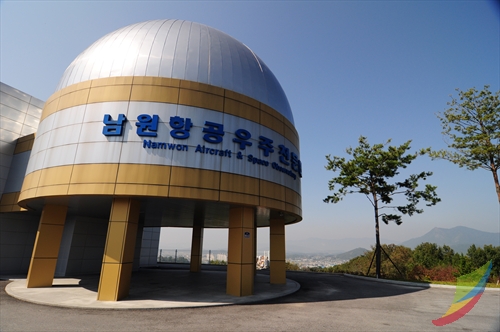
Namwon Aircraft & Space Observatory (남원항공우주천문대)
48-63, Yangnim-gil, Namwon-si, Jeonbuk-do
Chosen as a government funded project, Namwon Aircraft & Space Observatory was granted 4.6 billion won by the Ministry of Science, ICT and Future Planning in 2006 for project development. The three-story observatory, with a total area of 6,532 square meters, has an exhibition hall showing the history of space aviation, an aviation experience hall, and a 10-meter-wide dome showing images of the night sky. The secondary observatory is equipped with a 600 millimeter telecope and other astronomical telescopes ranging in focal length from 125 millimeter to 350 millimeter for observing Namwon's night sky. In addition to the telecopes, retired combat planes from the air force, including the main fighter plane Phantom from the 1970s, are displayed outside. Namwon Aircraft & Space Observatory offers programs such as tours and experience programs for groups. These include a 4D film experience of the sun and celestial bodies, a virtual aviation experience, and lectures about astronomy, all of which can accommodate up to 120 people per session. A variety of classroom learning activities are also offered in the summer to attract more visitors.
Namwon AirRail (남원에어레일)
86 Sori-gil, Namwon-si, Jeonbuk-do
Namwon AirRail is a 2.44-kilometer monorail that circulates three stations: Chunhyang Theme Park within the major Namwon tourist resort; Hampawoo Korean Music Experience Center; and Namwon Aircraft & Space Observatory. It boasts an in-vehicle cooling and heating system and a comfortable interior space for eight people. Passengers can view the beautiful scenery of Namwon while moving along the high-altitude rail at a maximum x_height of 11.2 meters and feel as if they're riding a luxurious roller coaster over the view along the sky road. As such, it offers a healing and thrilling experience.
Namwon Recreational Forest (남원자연휴양림)
228, Bosan-ro, Namwon-si, Jeonbuk-do
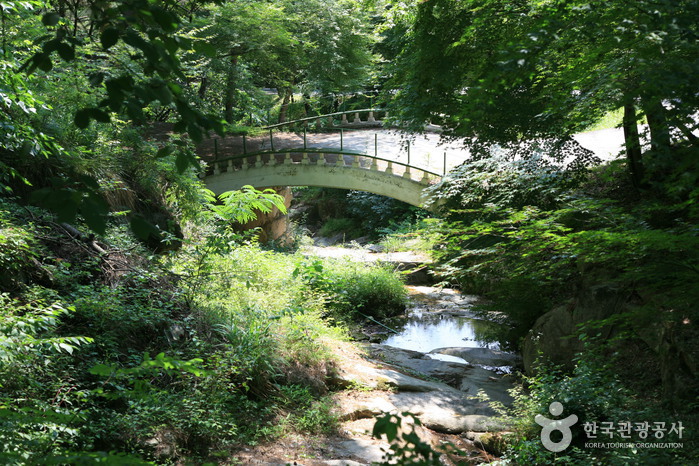
Namwon Recreational Forest is located at the base of Cheonhwangsan Mountain. Korean pine trees that are twenty to thirty years old span over a 330,578 ㎡ stretch of land with a 4-kilometer-long walking path in between, serving as the perfect place for forest bathing. The recreational forest facility is equipped with convenient facilities, including accommodations, a sports field, seminar rooms, and swimming pool and campfire sites. It also serves as a great field trip destination due to its well-preserved nature and small wild animals witnessed on site.
Namwon Silsangsa Temple (실상사(남원))
94-129, Ipseok-gil, Namwon-si, Jeonbuk-do
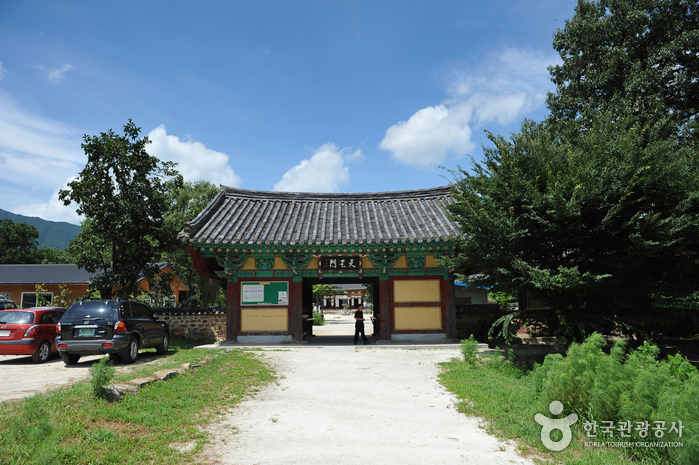
Silsangsa Temple was constructed by Monk Jeunggak, as one of nine special temples in the year 828. The temple was established because of the theory of divination, based on topology. The belief held that Korea’s good spirit would be taken away to Japan, bringing bad luck if the temple was not constructed at this particular location. The temple was reconstructed in the 26th year of King Sukjong’s reign (1700) after it was completely destroyed during the Imjin War (1592-1598). However, it was almost burnt down in the 19th year of King Gojong’s reign (1882). It is presently preserved just as it was during the Unified Silla Kingdom, with its three-story pagoda and its 11 treasures with a total of 17 cultural assets. The entrance of the temple lies in the middle of a rice field and the temple has a pastoral view, surrounded by trees. From the entrance, visitors can cross the half-moon shaped stone bridge to find a remarkable totem pole.
![Namyangju Sareung Royal Tomb [UNESCO World Heritage] (남양주 사릉(정순왕후) [유네스코 세계문화유산])](http://tong.visitkorea.or.kr/cms/resource/44/2480844_image2_1.jpg)
Namyangju Sareung Royal Tomb [UNESCO World Heritage] (남양주 사릉(정순왕후) [유네스코 세계문화유산])
180, Sareung-ro, Namyangju-si, Gyeonggi-do
Sareung Royal Tomb is the tomb of Queen Jeongsun (1440-1521), a consort to King Danjong. She was perhaps the most tragic royal woman of the Joseon dynasty. In 1453, she was selected to be queen out of many candidates and actually became the queen two years later. However, when King Danjong was forced to abdicate from the throne in 1457 and was exiled to Yeongwol in Gangwon-do, Queen Jeongsun was deprived of her title as well. After King Danjong died, she built a thatched-roof house outside Seoul’s Dongdaemun Gate and lived there for the rest of her life, continuing to mourn her husband. The tomb’s name, Sareung, came from the fact that she had missed her dead husband so much. Unlike other royal tombs, Sareung looks very simple. Its size is relatively small.
Nana Plastic Surgery (나나성형외과의원)
(2nd-10th and 12th-13th Floors, HM Tower), 492 Gamnam-daero, Gangnam-gu, Seoul
Nana Plastic Surgery Center provides one-on-one care that takes into account individual characteristics. We boast a system that makes patients feel at ease. For example, we have surveillance cameras in the operating room, a system where doctors are responsible for safe surgery with their real names, and a resident anesthesiologist. We have specialized doctors in each field (eye/nose/breast/facial contouring cosmetic surgeries, cosmetic surgery for men, skin lifting, body contouring surgery, non-invasive procedures, collaboration with otolaryngologists, breast examination, etc.). They treat patients with great care and always strive for satisfactory results.
Nangchugol Learning Park (낭추골 현장체험학습원)
1890 Danjae-ro, Nangseong-myeon, Sangdang-gu, Cheongju-si, Chungcheongbuk-do
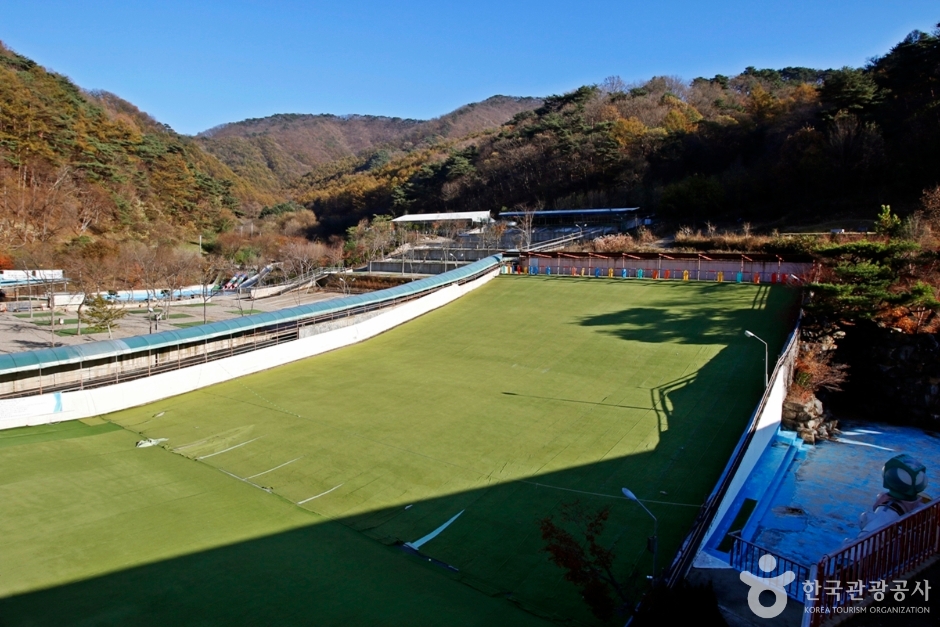
Nangchugol is a mountain village located in the eastern part of Cheongju, offering children the chance to observe and experience nature through play and a variety of activities. It boasts a goblin trail, four-season sledding options (grass sled, water sled, and snow sled), swimming pools, a nature learning center focusing on wild plants, valleys, and animals, a traditional game ground, an adventure playground, an insect experience center, and guided forest tours. Additionally, the village includes a campground for visitors.
Nanji Hangang Park (난지한강공원)
162 Hangangnanji-ro, Mapo-gu, Seoul
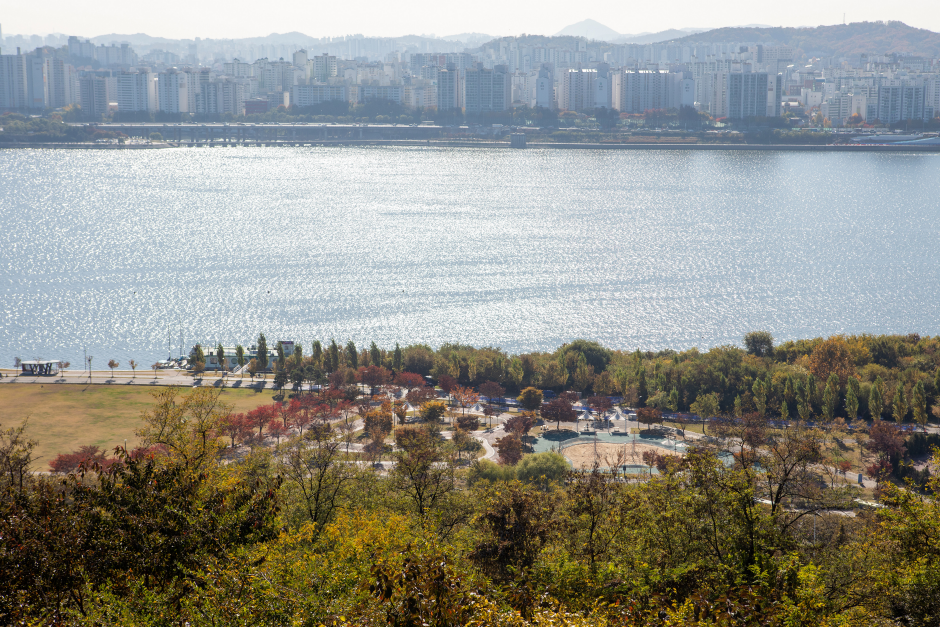
Nanji Hangang Park, situated north of the Hangang River near World Cup Park, provides a riverside space for leisure and recreation. The park offers Campgrounds, Water Leisure Sports Facilities, Bike Lane, Waterside Plaza, Mirror Fountain, Riverside Pool, a convenience store, and an information center. The Mirror Fountain emits a rainbow-like light with each water spray. The campgrounds are popular for their proximity to the city and affordable fees. Visitors can enjoy activities such as motorboating, water skiing, and wakeboarding on the Hangang River.
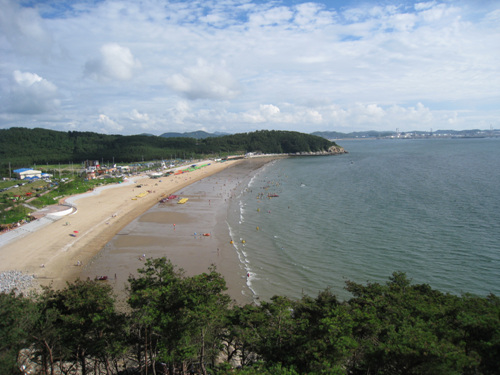
Nanjiseom Beach (난지섬해수욕장)
67, Nanji 1-gil, Dangjin-si, Chungcheongnam-do
Nanjiseom Beach on Nanjiseom Island in Dangjin, Chungcheongnam-do features soft white sand over a 700 meter-long, 50 meter-wide area. The water is shallow, clean and relatively warm, and a pine grove surrounds the beach. Nanjiseom Beach offers various convenience facilities such as campsites, showers, drinking fountains and bathrooms. The rocky coast in the northwest is a great spot for catching fish, such as rock cod and spotty belly greenling. By taking a boat, visitors can enjoy scenic ocean views as they pass beautiful islands, such as Yeongheungdo, Palmido, Seonjaedo, Gukhwado, Yukdo and Pungdo.
Nanoori Hospital (나누리병원)
(Nonhyeon-dong), 731 Eonju-ro, Gangnam-gu, Seoul
Nanoori Hospital is a spine-specialized hospital and a member of the Accredited Hospitals for serving Foreign patients. Our international healthcare team consists of Russian, English, and Mongolian-speaking coordinators to ensure that international patients can access consultation and treatment services without language barriers.
Plan your Korea trip
Korea travel FAQ
How do I use the travel search?
Enter a place or interest, then narrow the results by region, category or sort order.
Will my filters stay selected on the next page?
Yes. Your search and filter choices stay in the page URL while you move through the results.
Can I find directions to each place?
Place pages include an external Google Maps search when coordinates or an address are available.
Source: Korea Tourism Organization, official website (https://knto.or.kr).