TRAVEL IN KOREA
Korea Places to Visit
Find attractions, culture, festivals, stays, restaurants, shopping and travel courses for a clear Korea trip plan.
Data last synced: 2026-06-25. Some details may change. Please confirm official information before visiting.

Paradise City Cimer (파라다이스시티 씨메르)
186 Yeongjonghaeannam-ro 321beon-gil, Jung-gu, Incheon
Paradise City Cimer on Yeongjongdo Island, Jung-gu, Incheon, opened in September 2018. The word 'Cimer' combines the French words 'ciel' and 'mer,' meaning the sky and the sea, respectively. The facility spans an area of approx. 13,000 square meters and can accommodate approx. up to 2,000 people. The luxurious and trendy Aqua Spa Zone features dynamic LED media art and unique pool parties with differentiated concepts, as well as swimming pools.
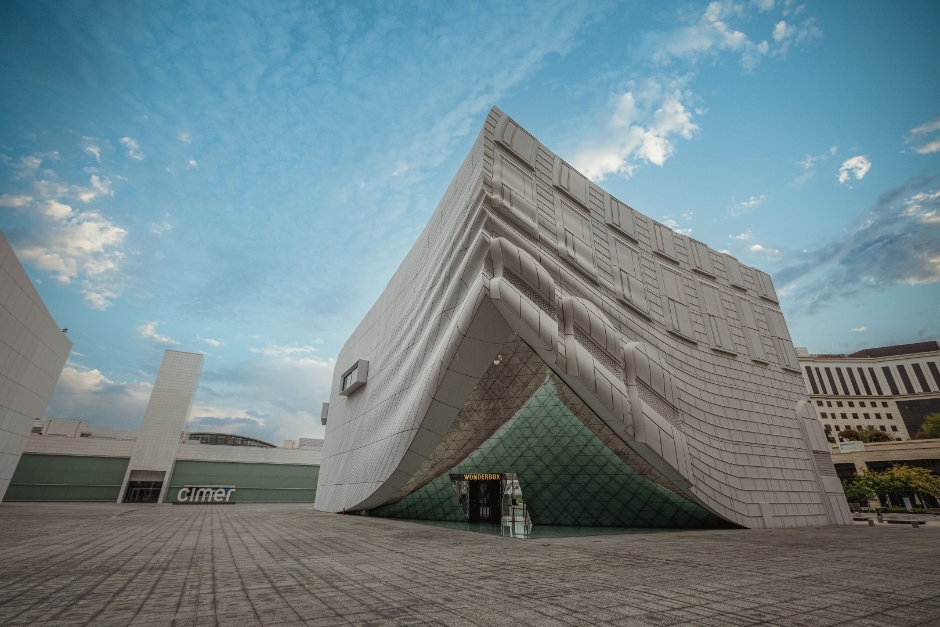
Paradise City Wonderbox (파라다이스시티 원더박스)
186 Yeongjonghaeannam-ro 321beon-gil, Jung-gu, Incheon
It is a theme park filled with the pleasant excitement of an amusement park at night. All the photos look great thanks to the fancy lighting and colorful interiors. You can also enjoy thrilling attractions such as Megamix and Giant Slide. Another advantage is that it can be used regardless of the weather or season because it is indoors.
Paradise Spa Dogo (파라다이스 스파 도고)
176 Dogooncheon-ro, Asan-si, Chungcheongnam-do
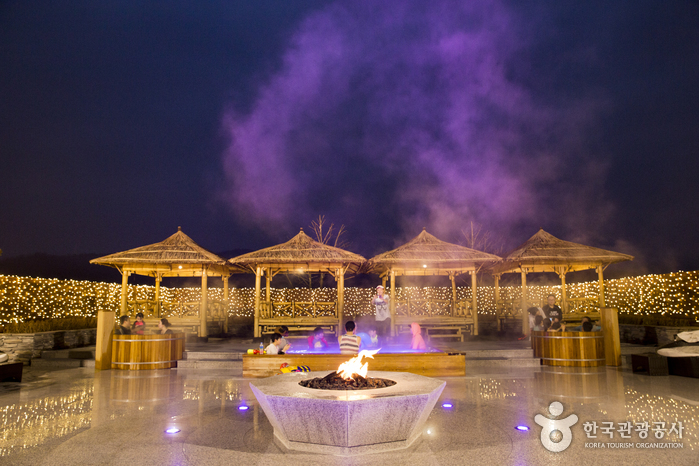
Paradise Spa Dogo, a government-designated hot spring in Korea, is a large resort facility opened by the Paradise Group in Asan, Chungcheongnam-do, an area renowned for its hot springs. It is the first government-designated hot spring in Chungcheong-do, a designation granted after review and approval by the Ministry of the Interior and Safety. Spanning an area of 24,622 square meters, the facility can accommodate up to approx. 5,000 guests. It has a Bade (meaning bathing) pool, which can also be used for hydrotherapy; a large hot spring bath where you can enjoy a sauna and relax in warm sulfur spring water year-round; and various water recreational facilities. In particular, the outdoor event spa, featuring various seasonal themes, is quite popular. In winter, you can enjoy a Siberian ginseng water bath, a ginger water bath, a tangerine peel water bath, and many more. Additionally, unique weekend package programs await you with activities like kimchi-making, persimmon-picking, and ranch experiences in addition to enjoying the hot spring.
Parc Sajik (Gwangju) (사직공원 - 광주)
Gwangju-Si Nam-Gu, Sajik-Gil 49 Sa-dong
Le parc Sajik a l’avantage d’être bien ammenagé, entre une variété d’arbres et de nombreux lits de fleurs. Chaque année autour du 15 avril, les cerisiers sont en fleurs, créant un spectacle splendide. Durant cette periode, la municipalité de Gwangju fait installer des lumières sur les arbres afin que les habitants puissant profiter du spectacle jusqu’à tard dans la nuit. Le parc est considéré comme l’endroit favori des habitants de Gwangju pour se reposer. Le parc accueille plusieurs attractions, incluant un mémorial pour les héros nationaux, la station de TV et de radio de Gwangju (KBS), une tour en mémoire des policiers, le pavillon Yeonpajeong, la station de tir Gwandeokjeong ainsi que le pavillon Palgakjeong qui offre un point de vue sur le centre ville de Gwangju. Les variétés d’arbres, d’arbustes et de fleurs offrent une atmosphère accueillante pour chaque sortie.
PARK 1538 (POSCO Museum) (Park1538 포스코역사박물관)
14 Donghaean-ro 6213beon-gil, Nam-gu, Pohang-si, Gyeongsangbuk-do (Goedong-dong)
The PARK 1538 POSCO Museum not only showcases the history, spirit, corporate culture and vision of POSCO, but also Pohang city's development, showing the city's transformation alongside the company. POSCO was able to achieve success thanks to the POSCO employees who fought against all kinds of adversities. The museum showcases such great achievements, as well as the entire history of the company, giving dreams and hopes to the youth who visit the museum.
Park Habio Water Kingdom Water Park & Jjimjil Spa (파크하비오 워터킹덤&스파)
111 Songpa-daero, Songpa-gu, Seoul
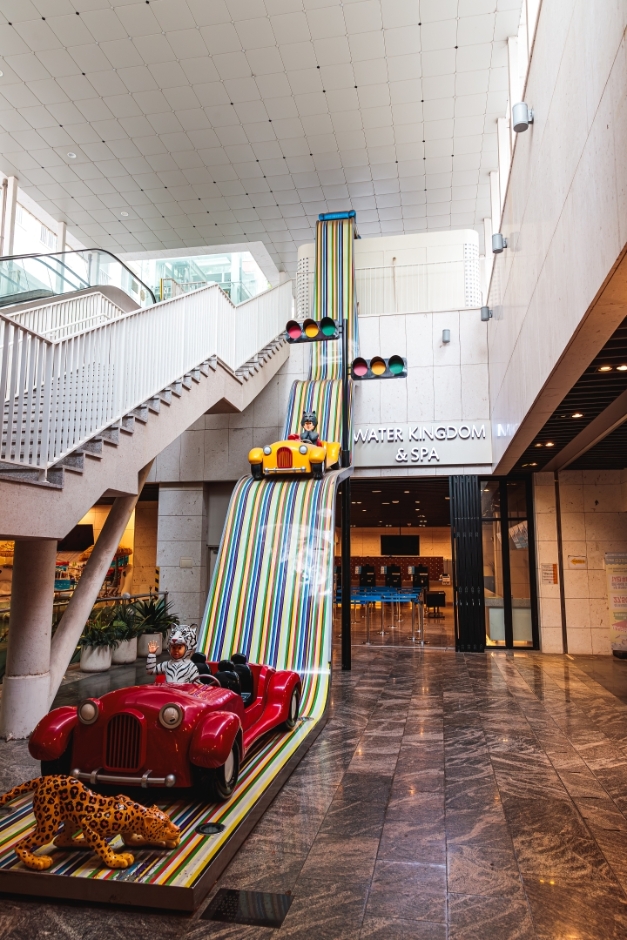
In the episode “Proxy Vacation,” where the members of Running Man take a summer vacation on behalf of the viewers, they are seen enjoying swimming and sliding in a cool pool. This refreshing vacation spot is the Water Kingdom & Spa in Songpa Park Habio. This indoor water park, open 365 days a year regardless of the weather, offers a variety of fun activities. If you get tired after playing in the water all day, you can also rest and recharge in the spa.
Paroho Lake (Hwacheon) (파로호(화천))
36-8, Baeteo-gil, Gandong-myeon, Hwacheon-gun, Gangwon-do
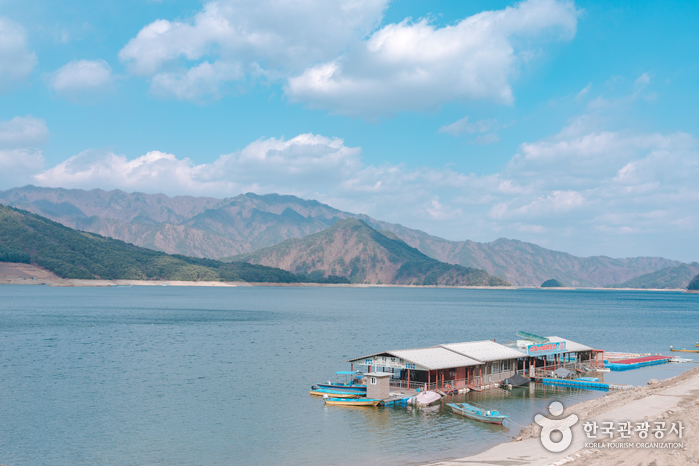
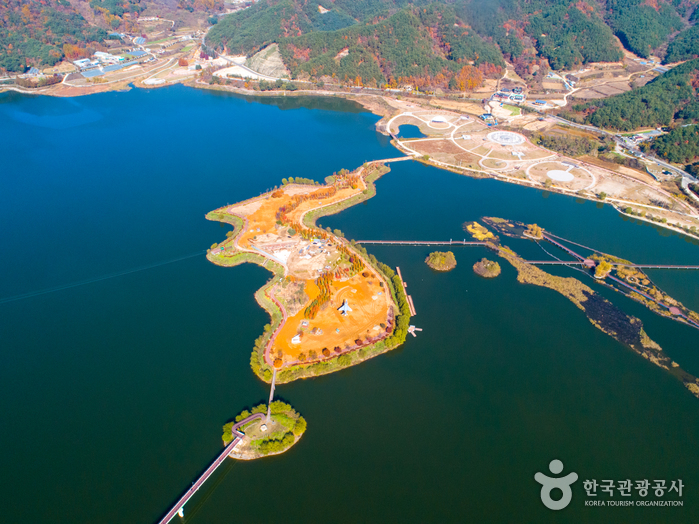
Paroho Lake is a manmade lake created when Hwacheon Dam was built in the valley of the Bukhangang River. The lake was once referred to as Daebungho Lake for its resembling image of an imaginary phoenix rising with its wings spread wide open when seen from afar. The area was a territory of North Korea after Korea's independence, but became a South Korean territory after the Korean War.
Paroho Lake (Yanggu) (파로호(양구))
545, Ha-ri, Yanggu-gun, Gangwon-do
Paroho Lake is a manmade lake that was completed in 1943. The lake was created due to the construction of a hydraulic power plant in Hwacheon during Japanese colonial period. The name was given after President Syngman Rhee designated a plaque in his own handwriting naming the body of water ‘Paroho Lake’ during the Korean War after a victorious feat in a battle against the Chinese army. The power plant has a generation capacity of 105,000 kilowatts, and the lake is one of the top fishing grounds in Korea as it is abundant in freshwater fish. The area boasts several splendid views and a former president built his country home on the lake. Relics from the Stone Age and New Stone Age were found to be well preserved in the area. Twenty-one dolmens were found on the lake grounds, as well as 4,000 pieces of Prehistoric relics used during Paleolithic age, drawing interest from the academic field. Recently, habitats of mandarin ducks, a national natural monument, were found near the Paroho lakeside.
Paryongsan Stone Towers (팔용산 돌탑)
58 Yangdeok-dong, Masanhoewon-gu, Changwon-si, Gyeongsangnam-do
Paryongsan Stone Towers are a collection of around 1,000 stone towers on Paryongsan Mountain. These towers were constructed by a local resident, Lee Samyong, inspired by his fervent wish for the reunification of North and South Korea. As word of these structures spread, the surrounding area evolved into a park. Today, the blend of the towers' presence with the mountain's majestic scenery draws numerous visitors to this symbolic site.
Peace Dam - Hwacheon (평화의댐 (화천))
3481-18 , Pyeonghwa-ro, Hwacheon-gun, Gangwon-do
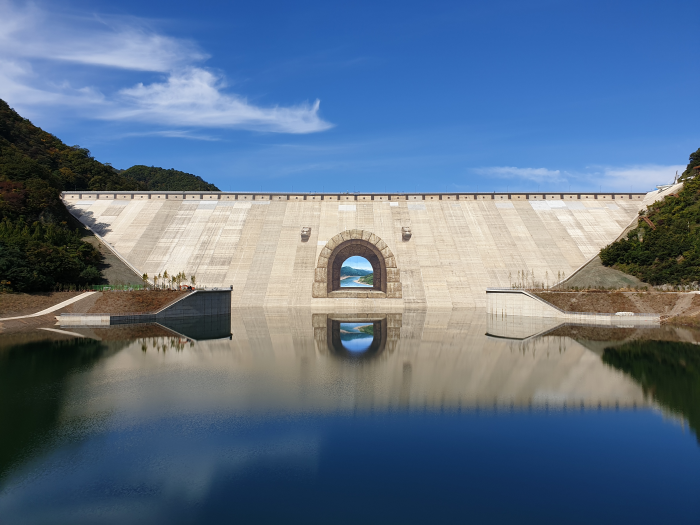
Peace Dam in Hwacheon-gun was built in response to a potential flooding attack from North Korea. The first phase of construction began in 1986, and ended in 1989; the second phase, which entailed raising the x_height of the dam, began in 2002, and ended in 2005. Over the years, the dam has become a major tourist destination. It has several cultural and recreational facilities including the Water Culture Center, an artificial wall stream, and rest areas. It is also located close to the DMZ, and natural landmarks such as Bimok Park, Bisugumi Valley, and Suhari Fishing Site.
Peace Park (평화공원)
10, Sinseon-ro 447beon-gil, Nam-gu, Busan
Peace Park is the representative citizen's rest area in Busan, filled with over 30,000 camellia and pine trees. A fountain in the middle of the park provides a fun water playground for children, and a popular date spot with beautiful lights at night.
Petite France (쁘띠프랑스)
1063, Hoban-ro, Gapyeong-gun, Gyeonggi-do
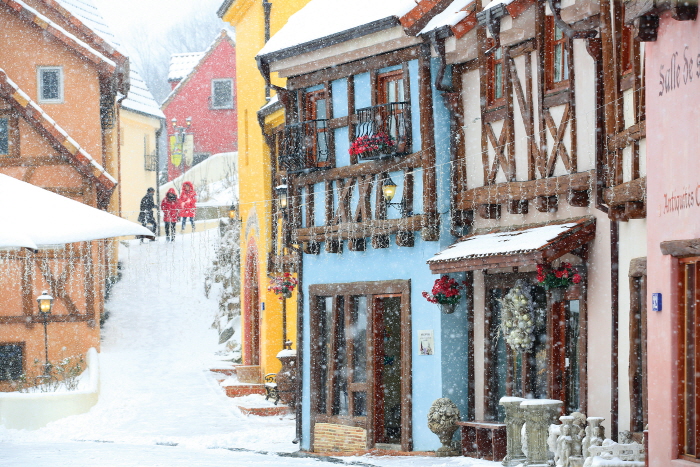
Petite France is a French cultural village set in the Korean countryside. Designed with the theme concept, "flowers, stars, and the Little Prince," the village offers experience programs, training facilities, and accommodations. Additional attractions within the village include a memorial hall dedicated to Saint-Exupery, the author of the celebrated French novel, Le Petit Prince (1943); Orgel House where a 200-year-old music box plays a sweet melody; a French housing exhibition; a gallery displaying sculptures and paintings of le coq gaulois (the Gallic rooster), the national symbol of France; and many other galleries and shops to experience French culture. The training facility can accommodate up to 200 visitors in rooms that hold four to ten people each. ◎ Travel Information to Discover Hallyu’s Charm - K-Drama "Bon Appétit, Your Majesty (2025)" Petite France’s “Maison de Marie” doubled as Yeon Ji-yeong’s (Im Yoon-ah) room in contemporary Korea in "Bon Appétit, Your Majesty." Maison de Marie is famous not only as the filming site for "Bon Appétit, Your Majesty, " but also for numerous K-Dramas such as "My Love From the Star (2013)," "Secret Garden (2010)," "Beethoven Virus (2008)," "Vincenzo (2021)," "Money Heist: Korea – Joint Economic Area (2022)," and "Doona (2023)!" If you enjoyed these shows, you will be able to recognize scenes from your favorite series during your visit.
![Petroglyphs of Bangudae Terrace in Daegok-ri [UNESCO World Heritage] (울주 대곡리 반구대 암각화 [유네스코 세계유산])](https://tong.visitkorea.or.kr/cms/resource/85/3507485_image2_1.jpg)
Petroglyphs of Bangudae Terrace in Daegok-ri [UNESCO World Heritage] (울주 대곡리 반구대 암각화 [유네스코 세계유산])
Daegok-ri, Eongyang-eup, Ulju-gun, Ulsan
In Daegok-ri, Eonyang-eup sits Bangudae Terrace, a picturesque spot where a ridge of Yeongosan Mountain extends to and stands tall to form quite a spectacle featuring uniquely shaped rocks and cliffs. The name, Bangudae, comes from how it resembles a turtle lying prone on the ground. Petroglyphs are paintings drawn by people from the prehistoric times carved on rocks and depicting various scenes and events in their daily lives. Petroglyphs were often drawn on enormous rocks and other sacred locations of groups, and it is believed that people gathered around them to hold various rituals. Petroglyphs of Bangudae Terrace in Daegok-ri, Ulju-gun are estimated to have been drawn over several periods since the New Stone Age, and visitors can observe the differences in styles among various ages. Primary objects that were popularly carved include sea animals, land animals, humans and tools and, as the prehistoric ancestors actively engaged in hunting, the hope of abundance in game is believed to be the reason why these objects were frequently carved on rocks. Vividly expressing animals and hunting scenes and colorfully depicting outstanding traits of objects, these petroglyphs are a form of both hunting art and religious art, and they are considered as the greatest masterpieces that give a peek at the life and customs of the prehistoric ages. The petroglyphs on the Bangudae Terrace and the petroglyphs in Cheonjeon-ri, spanning three kilometers altogether along the Bangucheon Stream, have been inscribed on the UNESCO World Heritage List on July 12, 2025.
![Petroglyphs of Cheonjeon-ri [UNESCO World Heritage] (울주 천전리 명문과 암각화 [유네스코 세계유산])](http://tong.visitkorea.or.kr/cms/resource/14/3335114_image2_1.jpg)
Petroglyphs of Cheonjeon-ri [UNESCO World Heritage] (울주 천전리 명문과 암각화 [유네스코 세계유산])
Cheonjeon-ri, Dudong-myeon, Ulju-gun, Ulsan
The petroglyphs (figures, pictures, and letters were made on the rocks along the mid-stream area of Naegokcheon Stream, which is a tributary of Taehwagang River. The upper and lower sides of the rocks contain petroglyphs that differ in the content and techniques used. The upper side contains petroglyphs made by means of chiseling. The inscriptions include geometric patterns, animals, and abstract human figures. There are concentric circles, with a round figure looking like the sun at the center, four running deer next to them, and several semi-human animals. The figures with simplistic expression and symbolism appear to have been made during the Bronze Age. The lower side contains line-drawn picture mixed with Chinese characters. They include a procession of horse riders, animals including dragons, and boats. In particular, the procession of horse riders appears in three different places. The boats provide researchers with important information on the offshore activities carried out by people of the Silla dynasty. The 800-plus written characters are about the King and Queen’s visit to the place. They were presumed to have been inscribed on two occasions during the reign of King Beopheung (r. 514-540) of the Silla dynasty. The content on the official positions and the government system makes it a precious material for those studying Silla during or around the 6th Century. The petroglyphs were made by many people over an extended period of time, providing vivid information on the life and thoughts of people from prehistoric times to the Silla dynasty. The petroglyphs in Cheonjeon-ri and petroglyphs on the Bangudae Terrace, spanning three kilometers altogether along the Bangucheon Stream, have been inscribed on the UNESCO World Heritage List on July 12, 2025. (Source: Korea Heritage Service)
Phil Hospital of Korean Medicine (필한방병원)
(3rd,4th,11th Floors, Calix Building), 128 Cheongsa-ro, Seo-gu, Daejeon
Phil Hospital of Korean Medicine, located in Daejeon, is a training hospital designated by the Ministry of Health and Welfare. With 8 specialized professionals (including 2 doctors) and 70 patient beds, we offer a wide range of services. Director Yoon Je-pil, a specialist in Korean medicine rehabilitation, brings 18 years of experience from a renowned Korean medicine hospital, 7 years at our hospital, and 8 years of international experience in the United States and Africa, making him an excellent choice for international patients. Our head of internal medicine is fluent in Japanese. We have a women-only immunization ward where we provide immune-boosting foods. Dedicated staff for international patients and private waiting and treatment areas are also available.
Phoenix Blue Canyon (휘닉스 블루캐니언)
174, Taegi-ro, Pyeongchang-gun, Gangwon-do
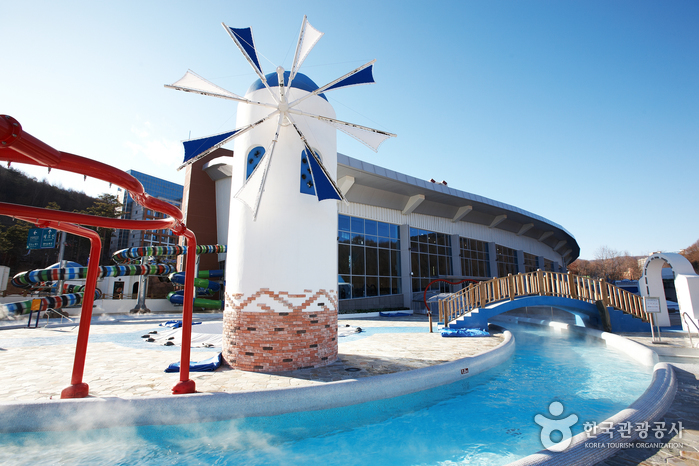
Phoenix Blue Canyon is a leisure water park that uses pure water from deep valleys amid the fresh air of Gangwon-do. It features Mediterranean-style water facilities, comprised of various resting areas and water rides.
Plan your Korea trip
Korea travel FAQ
How do I use the travel search?
Enter a place or interest, then narrow the results by region, category or sort order.
Will my filters stay selected on the next page?
Yes. Your search and filter choices stay in the page URL while you move through the results.
Can I find directions to each place?
Place pages include an external Google Maps search when coordinates or an address are available.
Source: Korea Tourism Organization, official website (https://knto.or.kr).