TRAVEL IN KOREA
Korea Places to Visit
Find attractions, culture, festivals, stays, restaurants, shopping and travel courses for a clear Korea trip plan.
Data last synced: 2026-06-25. Some details may change. Please confirm official information before visiting.
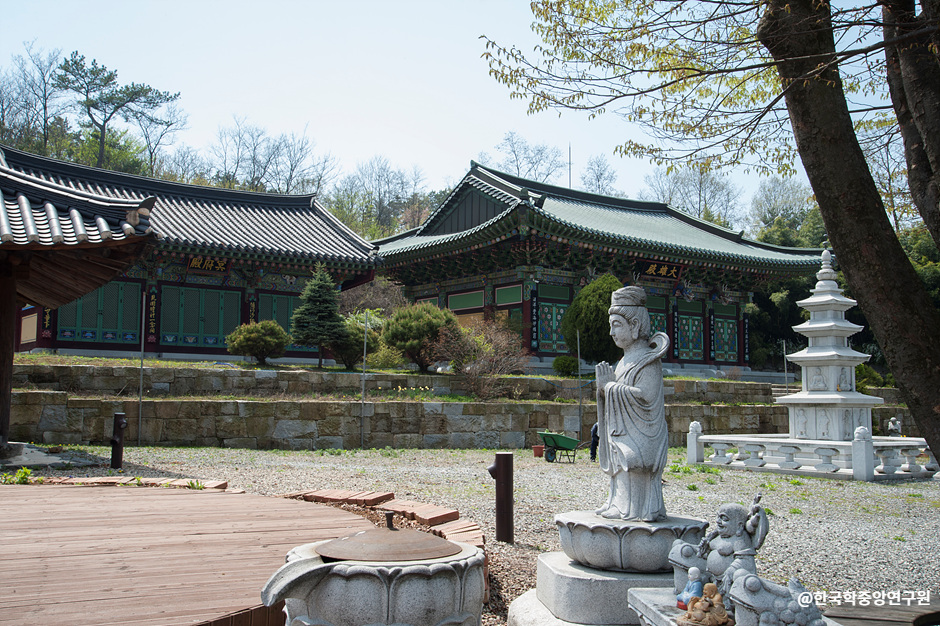
Pyeongtaek Sudosa Temple (수도사 (평택))
58, Hoam-gil, Pyeongtaek-si, Gyeonggi-do
Sudosa Temple is known for its well-being food. Designated as “Slow Food Test Village,” the temple emphasizes the idea that healthy food cleanses the body and enriches the soul, leading to true salvation. Sudosa Temple operates traditional temple food and temple experience programs that allow visitors to gain a deeper understanding of Monk Wonhyo’s beliefs.
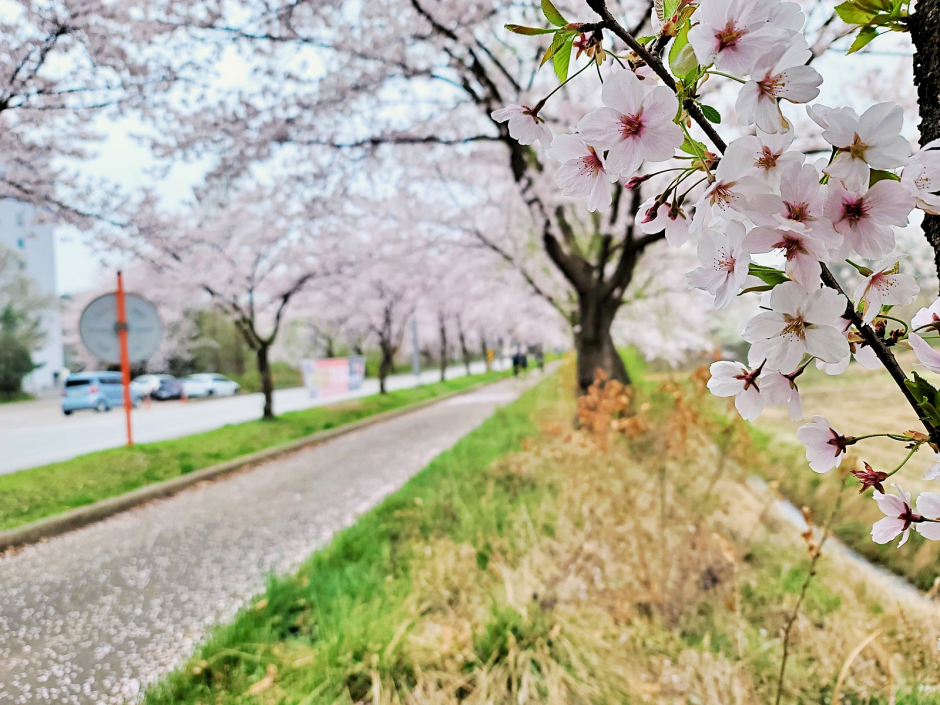
Pyeongtaekho Art Park (평택호예술공원)
167 Pyeongtaekho-gil, Hyeondeok-myeon, Pyeongtaek-si, Gyeonggi-do
Pyeongtaekho is a lake that flows to the western sea. Pyeongtaekho Art Park is located along side it. Sculptures are spread throughout the park, creating a pleasant atmosphere for visitors to stroll and enjoy the art. The Ji Young-hee Gugak Center and Haegum Bench have been built to commemorate Ji Young-hee's (1909-1980) achievements as a national intangible cultural heritage who pioneered the popularization and globalization of Korean traditional music. The Korea Soriter Arts Center has an outdoor performance hall and a library dedicated to traditional Korean music.
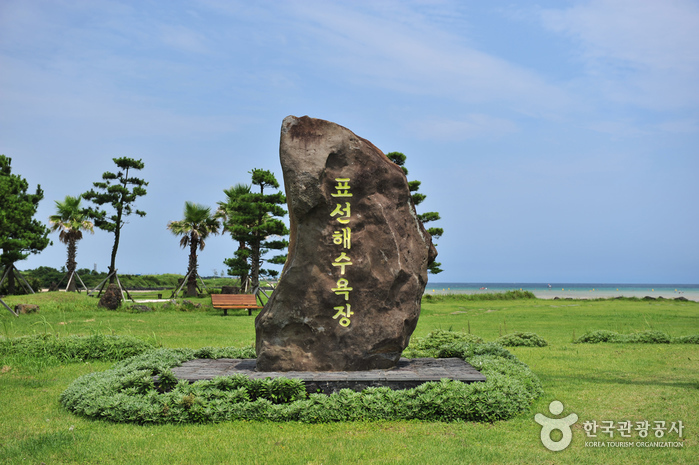
Pyoseon Haevich Beach (표선 해비치 해변)
Minsokhaean-ro, Seogwipo-si, Jeju-do
Pyoseon Beach in Seogwipo is a spacious beach, taking up more than 150,000 m². During low tide, the beach looks like an elegant circle, and it becomes a circular lake less than 1 meter deep during high tide, and displays many different colors. The beach is a great place for children to play and for watching the sunrise. The sand on the beach is formed out of broken shells, and sand baths are believed to be effective for people suffering from neuralgia. Every August, this beautiful beach hosts the Pyoseon White Sand Festival, which offers fun and colorful events. The beach is equipped with excellent amenities (a campground, abundant parking space, dressing rooms and shower rooms) and surrounded by nearby attractions, such as Seongeup Folk Village and Jeju Folk Village Museum.
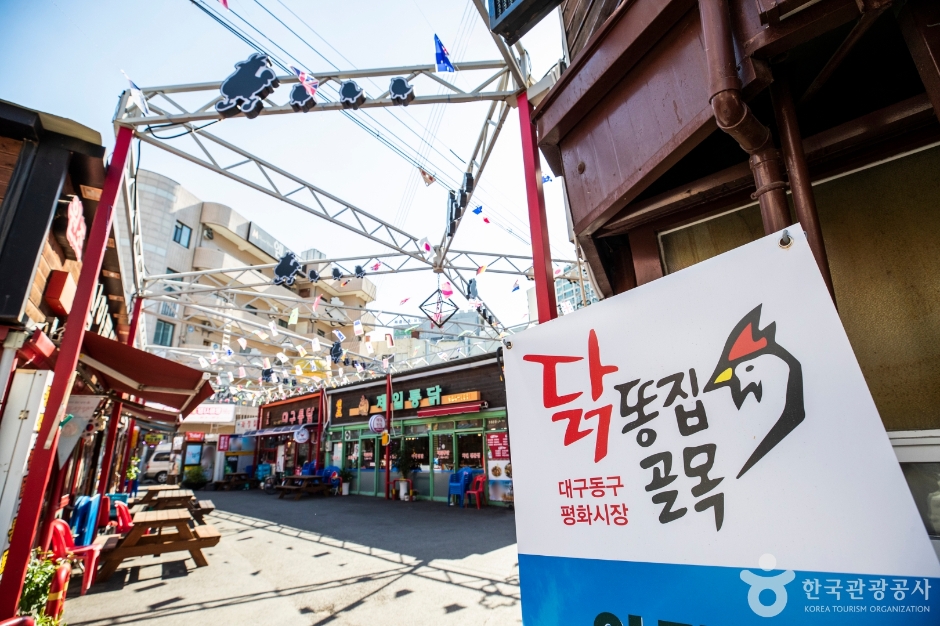
Pyounghwa Market Dakttongjip Street (대구 평화시장 닭똥집 골목)
6 Ayang-ro 9-gil, Dong-gu, Daegu
Pyounghwa Market Dakttongjip Street was established with the opening of Samatongdak in 1972, and is a street specializing in chicken gizzard dishes. It is said that the dish was first offered as an affordable dish to accompany drinks, favored by blue-collar laborers who gathered at the early labor market in front of Pyounghwa Market in the 1970s. Inexpensive and delicious, the dish has remained popular.
Q Spa & Clinic (큐스파앤클리닉)
8 Samseong-ro 133-gil, Gangnam-gu, Seoul-si
Q Spa & Clinic has clinical and spa programs managed by expert staff certified in cosmetology and trained to handle the state-of-the-art equipment and facilities.
Railway Forest & The Garden of Fire (철길숲 & 불의정원)
Location details are available on the place page.
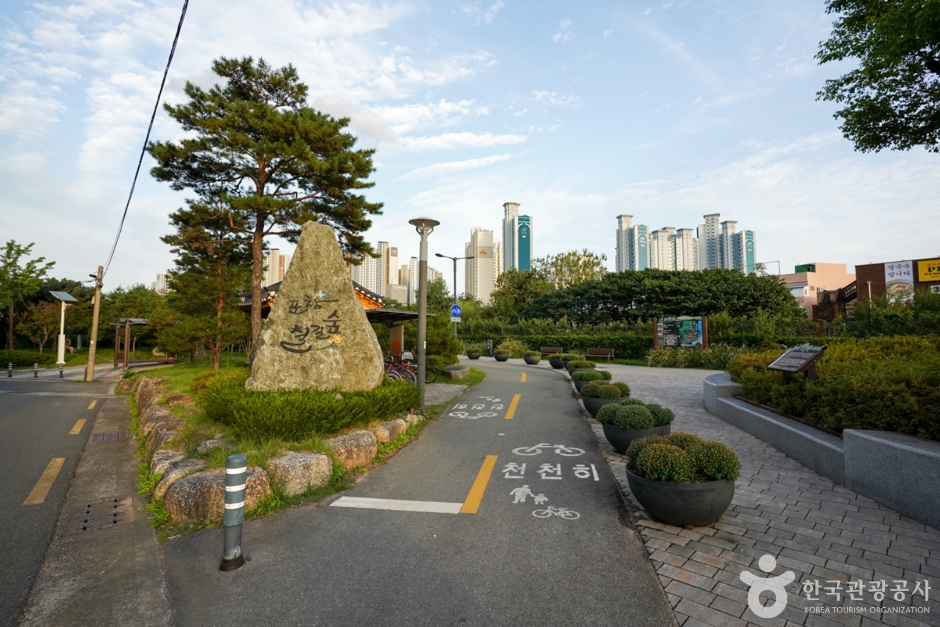
A 4.3-kilometer stretch of railroad between Hyoja Station and the old Pohang Station that fell into disuse after nearly 100 years of operation due to the opening of the KTX Pohang Station in 2015. The railroad track runs through residential areas to create an urban forest, and water features like wall streams, musical fountains, and steel artworks began to attract tourists, creating a prime example of future-oriented urban regeneration and green ecological city plan. The Garden of Fire came about as a natural gas spring from 200-meter under sea level was ignited during the construction work for the Railway Forest. The flame was expected to be extinguished, but as the flame persisted, a garden was built around the flame to create a unique view.
Railway Residency Village (Sollangsiul-gil) (철도관사촌(솔랑시울길))
Soje-dong, Dong-gu, Daejeon
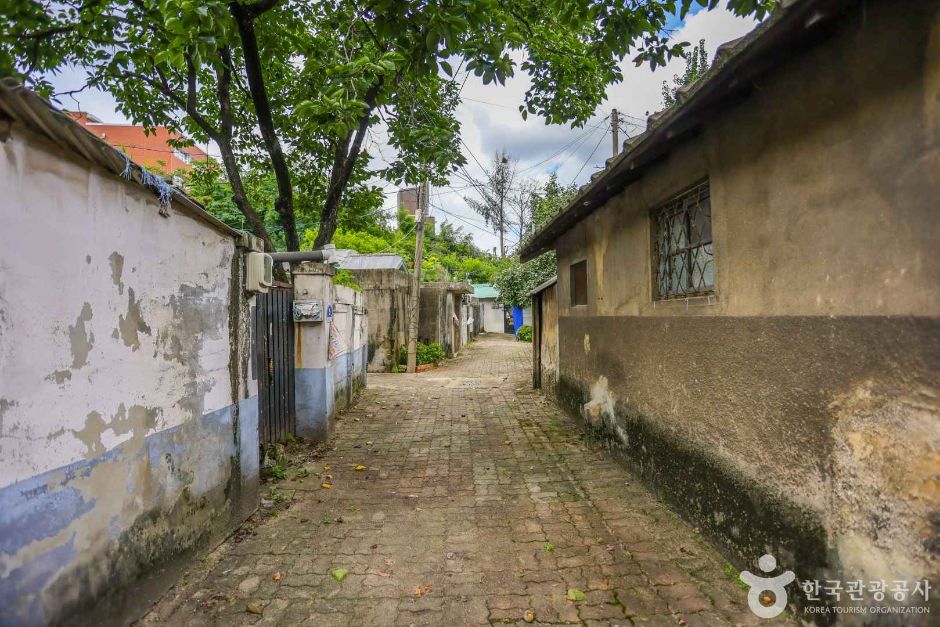
Railway Residency Village, located near Daejeon Station, retains much of its old charm, offering visitors the feeling of stepping back in time. Daejeon’s modern history is closely tied to the development of its railroads. With the opening of the Gyeongbu Line in 1905 and the Honam Line in 1911, the city emerged as a major transportation hub. As traditional villages began to disappear, people flocked to Daejeon, transforming it into a growing metropolis. During the Japanese occupation in the 1930s, the area housed many Japanese railway engineers, which is why Japanese-style architecture can still be found today. At the time, there were over 100 government buildings, though only about 40 have survived. Several of these have been recognized as Registered Cultural Properties for their historical significance. Among them, Building No. 42 now serves as a cultural space that occasionally hosts exhibitions. A stroll along the quiet Solangseoul-gil offers visitors a chance to admire charming murals adorning the walls, adding to the nostalgic atmosphere of the village.
Rainbow Healing Center (레인보우 힐링센터)
95 Yeongdong healing-ro, Yeongdong-eup, Yeongdong-gun, Chungcheongbuk-do
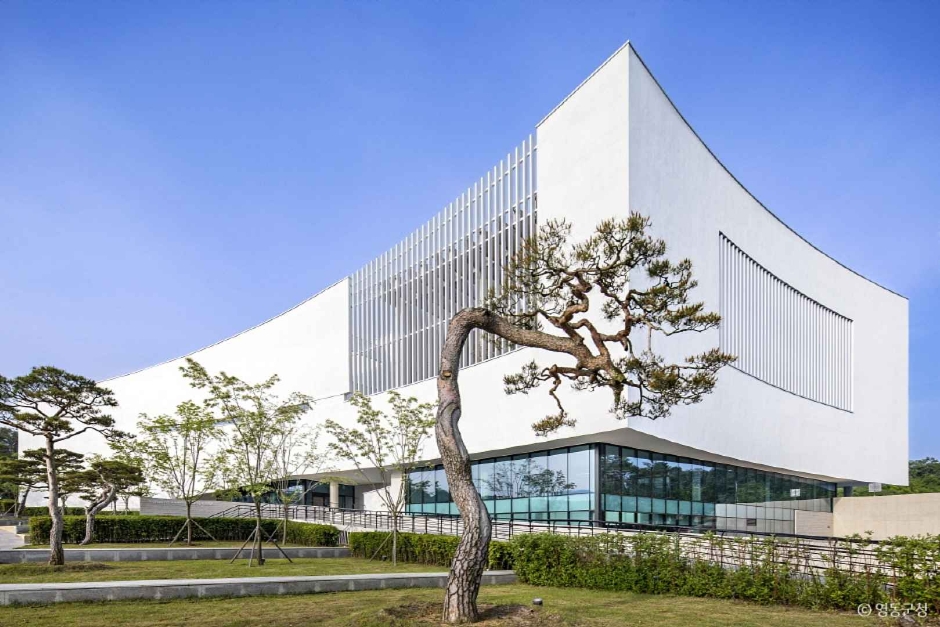
When developing the Yeongdong Rainbow Healing Tourist Site, the Rainbow Healing Square was envisioned as a venue for four major festivals held in Yeongdong-gun. Later, the Rainbow Healing Center was created to represent and express Yeongdong's concept of 'healing,' adding to the square as a place to share passion and joy. The center reflects the local community's wish to hear children's laughter again in this rural village where the population has declined. At this healing center, you can feel the light and wind of Yeongdong from anywhere. It is the perfect place to reconnect with yourself, as you are surrounded by nature. Come and discover the true meaning of healing offered by the natural environment of Yeongdong.
Rajetongmun Gate (라제통문)
Rajetongmun-ro, Muju-gun, Jeonbuk-do
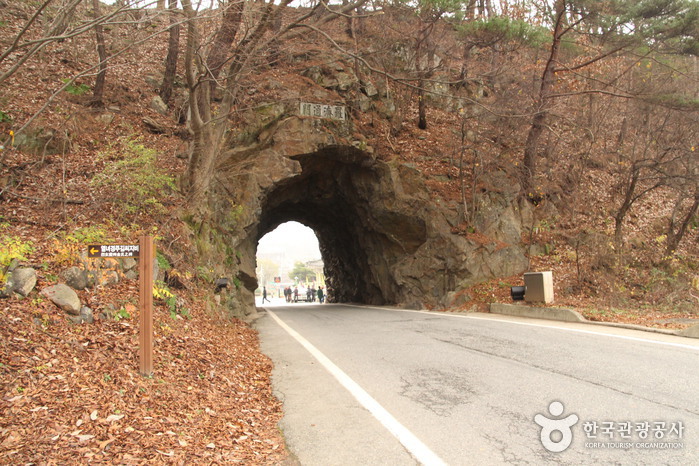
The historical border of the Silla and Baekje Kingdoms, Rajetongmun Gate of Seolcheon-myeon, Muju was formed from a rock cave in Seokgyeonsan Mountain. The tunnel is approximately 3 meters in x_height and 10 meters in length, and divides the villages of Sindu Maeul into Dugil-ri, Seolcheon-myeon and Inam Maeul in Socheon-ri. During the Three Kingdoms Period, the rocky ridges of Seokgyeonsan Mountain drew the boundary of Silla's Mupung in the east with Baekje's Seolcheo to the west. Tracing the history from the Three Kingdoms Period to the Goryeo dynasty, the cultures and traditions of the two regions were markedly different. If curious about the difference, one could simply stop by Seolcheon on market day, where the Muju and Mupung local dialects and customs can easily be distinguished. People used to cross Seokgyeonsan Mountain by a footpath along the rocky ridge to travel between Seolcheon and Mupung. During the Japanese occupation, a new road was created by turning a cave into a tunnel through the mountain so cows and horse carts could freely pass from Muju to Gimcheon. General Kim Yoo Shin from the Silla Kingdom, the hero of unification of the Three Kingdoms, often passed by the gate, later giving rise to the gate's nickname, Tongilmun (literally "Unification Gate"). The gate is number one on the list of 33 scenic sites in Gucheon-dong.
Ray Business Group Inc. (레이비즈니스그룹(주))
(#105, 10th Floor, WeWork Building), 507 Teheran-ro, Gangnam-gu, Seoul
Ray Business Group Inc. supports foreign patients by providing medical consulting to ensure that they can receive safe and high-quality medical services. The company offers concierge services to deliver convenient and professional support, including handling reservations, emergency responses, transportation, and accommodation management, while flexibly addressing various customer needs. It provides essential information and expert advice for surgeries to help customers make informed and reliable decisions. The company also supports customers for their safe and effective surgeries and offers comprehensive post-operative care and recovery services. By establishing a network with medical professionals, hospitals, and medical facilities both at home and abroad, Ray Business Group Inc. delivers integrated and efficient medical services. Also, it builds partnerships with players from diverse medical fields to provide a wide range of options to customers.
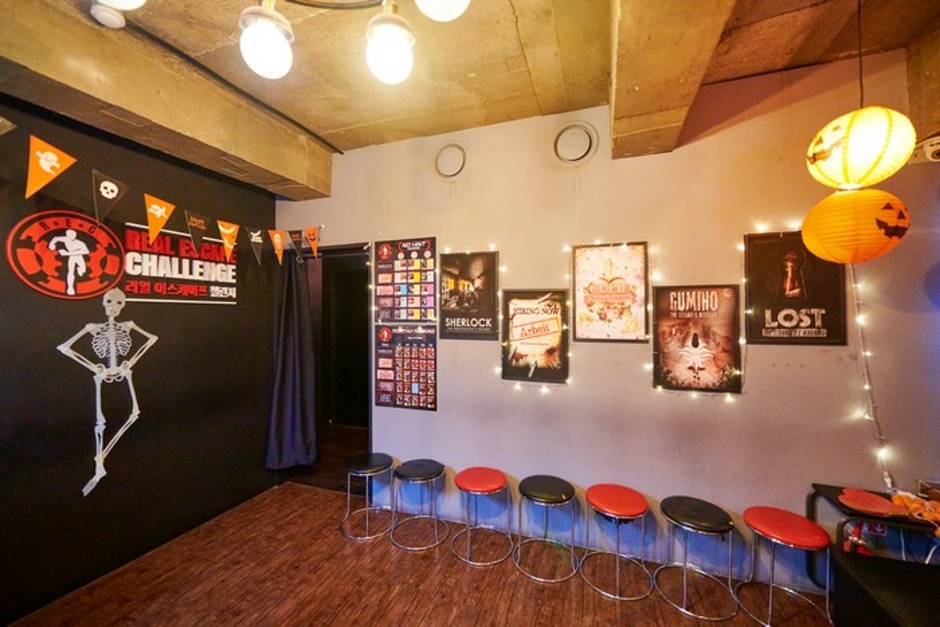
Real Escape Challenge (리얼 이스케이프 챌린지)
21, Wausan-ro 27-gil, Mapo-gu, Seoul
Thrilling Escape Café Depending on the theme, you can enjoy a thrill-based game where you have to escape from a room within a time limit. Celebrities such as Lovelyz Mijoo also enjoy visiting. The theme changes periodically and each room is marked in English, and a guide service for foreigners is also provided. It is 100% reservation-based.
Reberry Clinic Gangnam (리베리의원 강남점)
B1 Floor, KI Tower, 8 Gangnam-daero 69-gil, Seocho-gu, Seoul
1. A dedicated medical director is personally assigned to each client, ensuring responsible and individualized care. 2. We go beyond consultation — every session is a professional medical treatment. 3. With our LifeBiz AI-powered 3D analysis camera, we provide an objective and precise facial assessment. 4. Our treatments are guided by a scientific skin-type classification system for accurate and tailored results. 5. Through 3D facial analysis, pigmentation diagnosis, and skin-type classification, we design a fully customized treatment pathway. 6. At Reberry Clinic Aesthetic, we offer not only advanced medical procedures, but also warm décolleté and therapeutic massage care for a holistic experience.
Reberry Clinic Myeongdong (리베리의원 명동점)
#201, 2nd Floor & #301, 3rd Floor, 58 Myeongdong 10-gil, Jung-gu, Seoul
1. A dedicated medical director is personally assigned to each client, ensuring responsible and individualized care. 2. We go beyond consultation — every session is a professional medical treatment. 3. With our LifeBiz AI-powered 3D analysis camera, we provide an objective and precise facial assessment. 4. Our treatments are guided by a scientific skin-type classification system for accurate and tailored results. 5. Through 3D facial analysis, pigmentation diagnosis, and skin-type classification, we design a fully customized treatment pathway. 6. At Libery Clinic Aesthetic, we offer not only advanced medical procedures, but also warm décolleté and therapeutic massage care for a holistic experience.
Reberryclinic Yeongjongdo (리베리의원 영종도점)
(3rd Floor), 20 Haneuljungang-ro 195beon-gil, Jung-gu, Incheon
Re:berry Clinic Yeongjongdo offers personalized care tailored to skin types determined by an “AI-based 3D diagnosis,” helping you achieve healthy, beautiful skin. As the largest dermatology clinic near Incheon International Airport, we are just 10-minute drive away, allowing patients to conveniently visit after arrival or before departure. At Re:berry Clinic Yeongjongdo, the director personally consults with international patients, providing personalized care based on 3D precision diagnostics and using state-of-the-art equipment. With more than 20 specialized skin care departments and experts to care for your skin post-treatment, we offer consistent pricing for both Korean and international patients and provide professional counselors, various benefits, and services to attract international clients from China and other countries.
Rebom Hospital (리봄한방병원)
(2nd-4th Floors), 7 Hakdong-ro 50-gil, Gangnam-gu, Seoul
Rebom Hospital is a spine and joint hospital characterized by collaboration between western and Korean medicine. We provide treatment for spine and joint pain focusing on chiropractic and spinal joint care, along with precise examination through equipment such as X-rays and the exBody 3D body shape measurement system. Our main practice areas include neck and back discs, car accident aftereffects, herbal medicine for diet control, and x_height growth stimulation. We specialize in prescribing premium clean herbal medicines as well as body shape correction for conditions such as pelvic deformity, text neck and curved back, scoliosis, temporomandibular disorders (TMD). Our international support team is available in multiple languages, including English, French, Chinese, Arabic, and more, so that international patients feel comfortable to visit us.
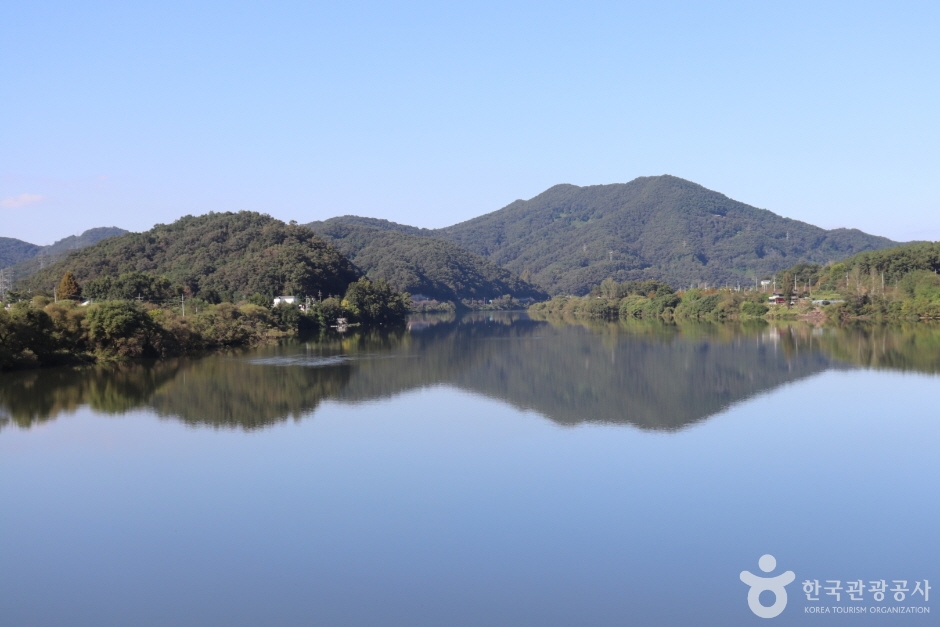
Red Leaf Willow Habitat (왕버드나무군락지)
Miho-dong, Daedeok-gu, Daejeon
Red Leaf Willow Habitat is located near Daechung Dam and Geumgang Lohas Daecheong Park, along the Geumgang River. This area is ideal for photography, offering stunning views during sunrise and sunset, with sunlight and mist creating a picturesque scene. The decaying wood of the trees in the wetland area can even emit light on its own during the nighttime.
Plan your Korea trip
Korea travel FAQ
How do I use the travel search?
Enter a place or interest, then narrow the results by region, category or sort order.
Will my filters stay selected on the next page?
Yes. Your search and filter choices stay in the page URL while you move through the results.
Can I find directions to each place?
Place pages include an external Google Maps search when coordinates or an address are available.
Source: Korea Tourism Organization, official website (https://knto.or.kr).