TRAVEL IN KOREA
Korea Places to Visit
Find attractions, culture, festivals, stays, restaurants, shopping and travel courses for a clear Korea trip plan.
Data last synced: 2026-06-25. Some details may change. Please confirm official information before visiting.
Seopori Beach (서포리해변)
15, Deokjeongnam-ro 587beon-gil, Ongjin-gun, Incheon
Seopori Beach, designated as a national tourism area, is surrounded by a luxurious forest of 100-year-old pine trees. The moderately sloped, white sand beach extends 3 kilometers in length and 300 meters in x_width. The beach and the pine tree forest provide a great recreational area for the 100,000 annual visitors. Leisure facilities include a vast sports field, seaside playground, tennis court, restaurants, karaoke, bicycle rentals, and more. Visitors can enjoy fishing from the rocks on the seashore, swimming in the clean sea, and strolling through the pine forest to appreciate the scenic surroundings.
Seorae Village (서래마을)
Banpo-dong, Seocho-gu, Seoul
Seorae Village is located in between Banpo 4-dong and Bangbaebon-dong in Seocho-gu, Seoul. Seorae Village took its form as a French neighborhood when French residents moved to the area after Ecole Francaise de Seoul, a school for French residents in Korea, was established here in 1985. According to 2008 census, about half of the total 1,000 French citizens residing in Korea were registered to be living in Seorae Village. The area naturally took shape as a global neighborhood as many international residents settled at Seorae Village much thanks to the strong presence of French residents. In addition to its convenient location near the central district area as well as Gangnam area and Hangang River Park, Seorae Village serves as a pleasant environment space for all. Many shops and restaurants in Seorae Village are small in size and rather charming, resembling those in Europe. A bakery that makes traditional French baguettes using ingredients directly imported from France can be found here. In recent years, Seorae Village has undergone several changes, gaining much attention as one of the most modern and fanciest regions found in Seoul.
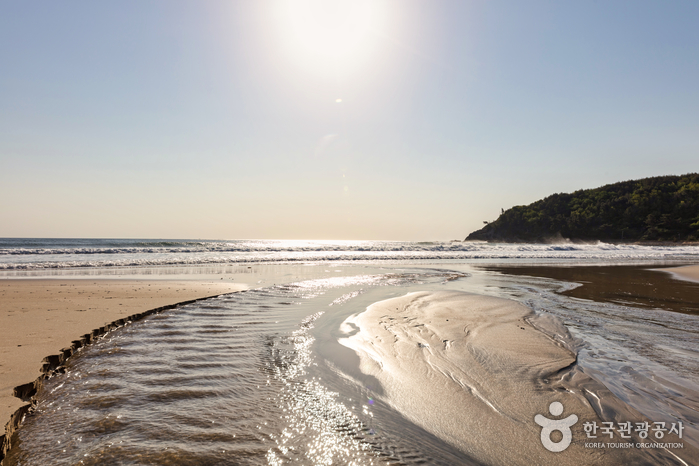
Seorak Beach (설악해수욕장)
Dwinnaru 2-gil, Ganghyeon-myeon, Yangyang-gun, Gangwon-do
Known for its shallow waters and clean white sand, this beach is a sanctuary for surfers. It is conveniently located near famous tourist sites such as Seoraksan Mountain and Naksansa Temple, making it ideal for sightseeing. Just a five-minute walk from Hujin Harbor, go for a walk during sunset period like Lee Know and enjoy the beautiful sunset in the background.
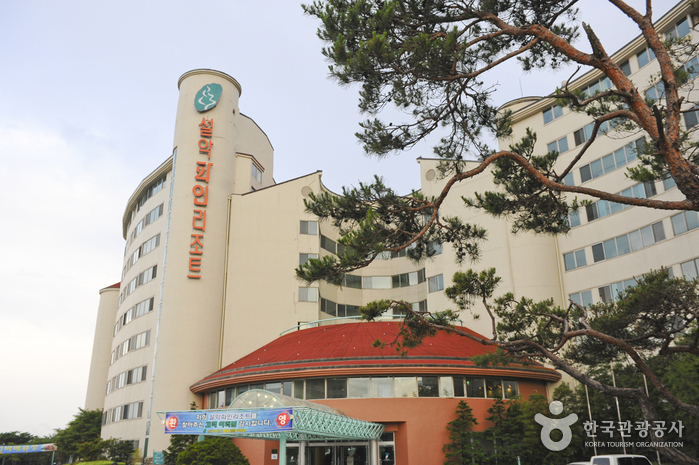
Seorak Pine Resort (설악파인리조트)
14, Gwangwang-ro 408beon-gil, Sokcho-si, Gangwon-do
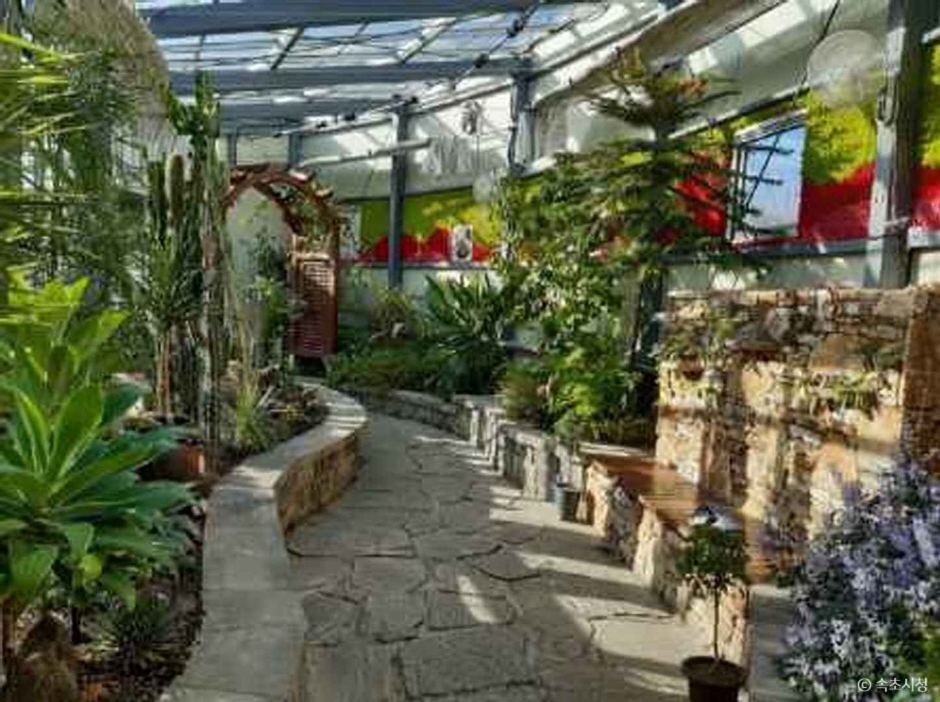
Seoraksan Botanical Garden (설악산 자생식물원)
164 Baramkkonmaeul-gil, Sokcho-si, Gangwon-do
Seoraksan Botanical Garden is a miniature version of Seoraksan Mountain. The garden features a wide range of plants, from rare species native to the mountain to more common wildflowers. It includes a water plant garden connected to the Sabang Dam, a rock garden with rare plants, a maze garden perfect for children, and greenhouses. Forest trails, walking paths, and stepping stones add to its charm, making it an ideal year-round destination.
Seoraksan Cable Car (설악산 케이블카)
1085 Seoraksan-ro, Sokcho-si, Gangwon-do
A ride on the Seoraksan Cable Car is the best way to enjoy the unexplored regions of Seoraksan Mountain. The cable car station is located in Seoraksan National Park, and it takes about 10 minutes to reach Gwongeumseong Fortress, which is 700 meters above sea level. Since one-way tickets are not available, passengers must purchase a round-trip ticket. From the cable car window, passengers can see famous attractions like Ulsanbawi Peak and Manmulsang Rocks. From Gwongeumseong Fortress, passengers can take in a panoramic view of Seoraksan Mountain. Seoraksan Mountain, seen from the top of Gwongeumseong Fortress, is majestic and mysterious with unique rock formations. Upon reaching the top of the mountain, the entire scenery of Outer Seorak unfolds before one's eyes. Visitors will be amazed by the Allak Hermitage from the Silla dynasty and the Muhagsong Pine Tree, which has survived for hundreds of years just below Gwongeumseong Fortress. There are many tourists on weekends, public holidays, and fall foliage season, so visitors are advised to plan ahead.
Seoraksan Daecheongbong Peak (설악산 대청봉)
1 Daecheongbong-gil, Yangyang-gun, Gangwon-do
Standing at 1,708 meters above sea level, Daecheongbong is the highest peak of Seoraksan Mountain. It is the third highest peak in South Korea, after Hallasan Mountain (1,950 meters) and Jirisan Mountain (1,915 meters). The peak is a home to a variety of alpine species, including dwarf pine, Korean rosebay, and Erman's Birch, and its summit offers breathtaking views. The shortest of Seoraksan's hiking trails is the Osaek course (Osaek-Seorak Falls-Daecheongbong), which takes about four hours.
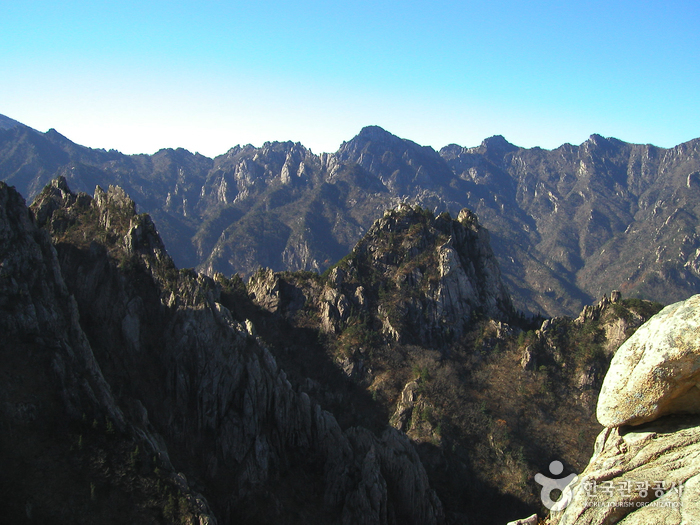
Seoraksan Gwongeumseong Fortress (설악산 권금성)
1091 Seoraksan-ro, Sokcho-si, Gangwon-do
Gwongeumseong Fortress is a stone castle from the Goryeo dynasty and is located 800 meters above sea level in Seoraksan National Park. From a distance, Gwongeumseong Fortress looks like a rising peak, while up close, the expansive stone floor and remnants of castle walls become visible. Visitors can access the fortress via hiking trails or by taking a cable car. From the fortress, visitors can enjoy the majestic view of Seoraksan Mountain and the blue waters of the East Sea.
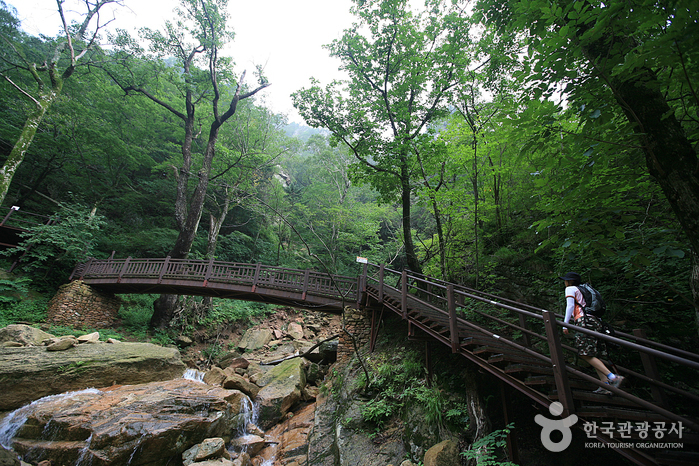
Seoraksan Heullimgol Valley (설악산 흘림골)
San1-71, Osaek-ri, Seo-myeon, Yangyang-gun, Gangwon-do
Yangyang’s Heullimgol Valley, named for its cloud-like, foggy appearance due to the surrounding high mountains and deep valleys, offers a spectacular view and serves as the gateway to Deungseondae. This spot provides an expansive view of the southern side of Seoraksan Mountain. Notable sites near Heullimgol Valley include Yeosimpokpo Falls, Deungseondae, Deungseonpokpo Falls, Geumgangmun Gate, and Jujeongol Valley. Access to Heullimgol Valley is strictly limited to 5,000 visitors per day, with entry based on time reservations. Therefore, visitors must make a reservation through the Korea National Park Service's reservation system before visiting.
Seoraksan National Park (Outer Seorak) (설악산 국립공원 (외설악))
1 Daecheongbong-gil, Yangyang-gun, Gangwon-do
Seoraksan Mountain is renowed for its natural splendors and breathtaking views. It holds the distinction of being Korea's first UNESCO Biosphere Reserve and is also listed on the IUCN Green List. The mountain is divided into Inner Seorak, South Seorak, and Outer Seorak, which includes Daecheongbong peak (1,708 meters above sea level), ranking as the third highest peak in Korea. The area is celebrated for its popular hiking trails, with the sunrise and sunset views from the top being particularly spectacular.
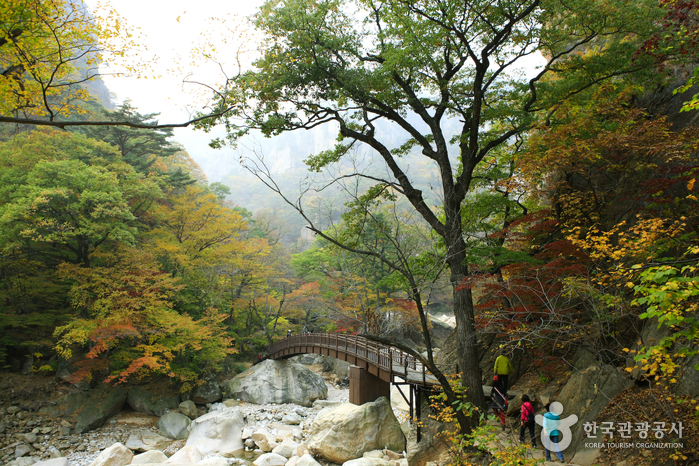
Seoraksan National Park (Southern Section) (설악산국립공원 (남설악))
801 Seorak-ro, Yangyang-gun, Gangwon-do
Seoraksan Mountain, the highest amid the Taebaek Mountain Range, boasts beautiful landscape and scenery all year round. To the east of Hangyeryeong and Misiryeong Passes is classified as the outer section ("Oeseorak"), to the west is the inner section ("Naeseorak"); and to the south of Hangyeryeong Pass as the southern section ("Namseorak"). The southern section is famous for its mineral water, hot springs, and waterfalls including Yongsopokpo, Sibipokpo, and Yeosinpokpo Falls. Jeongbongsan Mountain (1,424.2 meters) is also included in the area. There are also several different hiking courses varying in distance and duration.
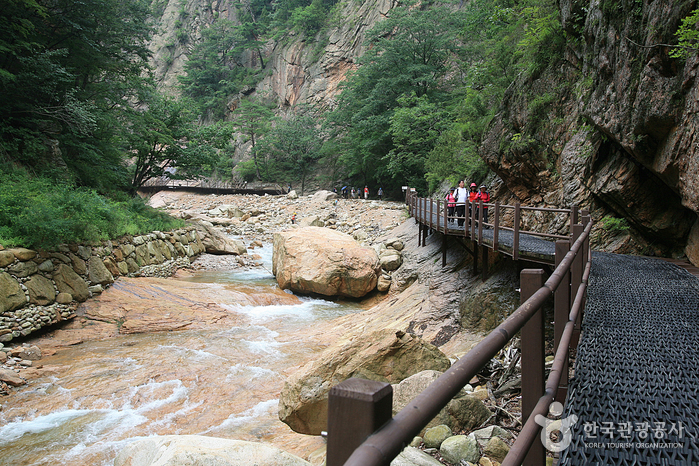
Seoraksan Osaek Jujeongol Valley (설악산 오색주전골)
Yaksu-gil, Seo-myeon, Yangyang-gun, Gangwon-do
Osaek Jujeongol Valley in Seoraksan Mountain is renowned for its vibrant autumn maple leaves. The area features a 7-kilometer trail stretching from Oksaek Mineral Spring to Yongsopokpo Falls, accessible to all visitors. The valley boasts stunning scenery, with a mix of valleys and rock formations. When the autumn leaves begin to change colors, the landscape turns into a breathtaking masterpiece.
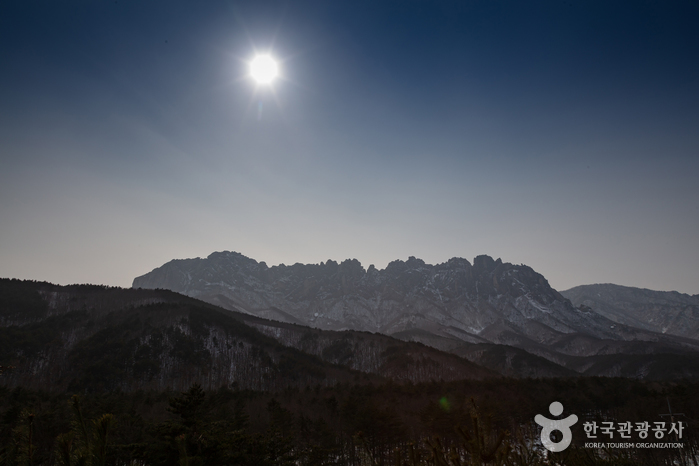
Seoraksan Ulsanbawi Rock (설악산 울산바위)
1091 Seoraksan-ro, Sokcho-si, Gangwon-do
Ulsanbawi is a rock formation in Seoraksan Mountain that consists of six massive peaks, each reaching 900 meters above sea level. The name "Ulsanbawi" is derived from the shape of the peaks, which spread out like a fence, and it is located at the center of Seoraksan Mountain. This rock is celebrated for its unique shape, the scenic beauty surrounding it, and its hiking trails. It takes about three hours to reach the top of Ulsanbawi from Sogongwon Park.
Seosan Buseoksa Temple (부석사(서산))
243 Buseoksa-gil, Seosan-si, Chungcheongnam-do
Located on Dobisan Mountain in Seosan, Chungcheongnam-do, Buseoksa Temple was built by the Great Monk Uisang in 677, the 17th year of King Munmu of Silla, and was later rebuilt by Great Monk Muhak during the Joseon dynasty. The temple houses eight seated Buddha statues and attracts many visitors due to its magnificent surrounding scenery.
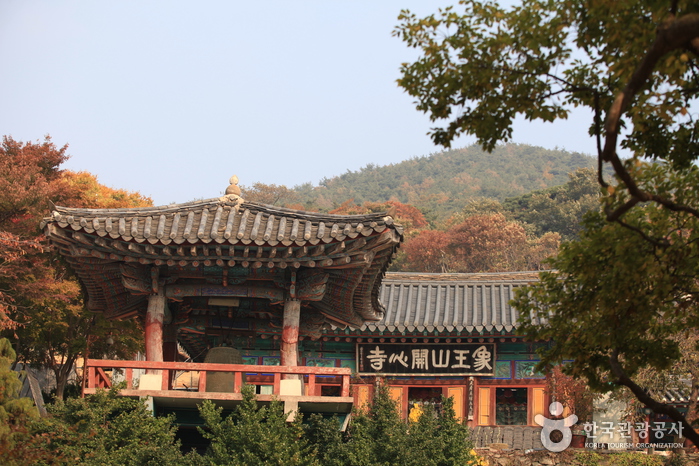
Seosan Gaesimsa Temple (개심사(서산))
321-86, Gaesimsa-ro, Seosan-si, Chungcheongnam-do
Situated in a dense forest in Sangwangsan Mountain and 6 kilometers away from Haemi-myeon, Gaesimsa Temple is one of the four major temples in Chungcheongnam-do. The path from the parking lot to the temple site is quite remote and curved, but beautiful especially in spring when cherry blossoms are in full bloom. The temple was built in 1484 during the 15th year of King Seongjong and designated as a Treasure. The architecture of the temple stands out, as the buildings use bent tree trunks for pillars.
Seosan Ganworam Hermitage (간월암(서산))
119-29, Ganwoldo 1-gil, Seosan-si, Chungcheongnam-do
Ganworam is a small hermitage located in Ganwoldo-ri in Seosan-si, Chungcheongnam-do. Ganworam Hermitage was created by the Great Monk Muhak, the monk to King Taejo of the Joseon dynasty. The name of the hermitage is directly tied with Muhak himself as it is said Muhak became enlightened while meditating under the moon ( wol means moon in Korean) at this hermitage. At low tide, Ganworam Hermitage is connected to shore via a natural walkway, but at high tide, the walkway is submerged and the hermitage becomes an island. At night time, in particular, the hermitage and its surrounding islets create a breathtaking view as the moonlight reflects off the sea.
Plan your Korea trip
Korea travel FAQ
How do I use the travel search?
Enter a place or interest, then narrow the results by region, category or sort order.
Will my filters stay selected on the next page?
Yes. Your search and filter choices stay in the page URL while you move through the results.
Can I find directions to each place?
Place pages include an external Google Maps search when coordinates or an address are available.
Source: Korea Tourism Organization, official website (https://knto.or.kr).