TRAVEL IN KOREA
Korea Places to Visit
Find attractions, culture, festivals, stays, restaurants, shopping and travel courses for a clear Korea trip plan.
Data last synced: 2026-06-25. Some details may change. Please confirm official information before visiting.
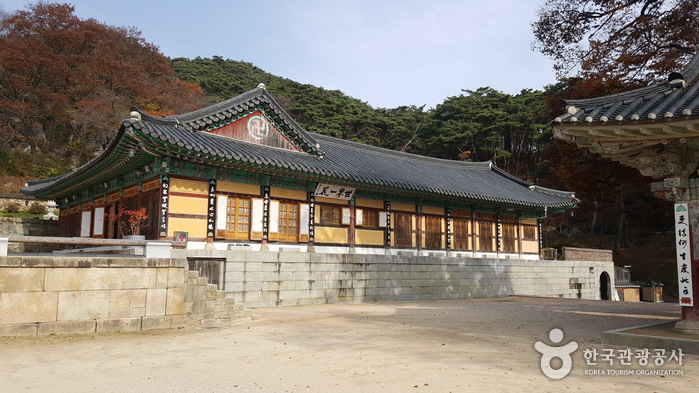
Sudeoksa Temple (수덕사)
79, Sudeoksaan-gil, Yesan-gun, Chungcheongnam-do
Sudeoksa Temple, which has played an important role in the history of Korea’s Buddhism, is located at the foot of Deoksungsan Mountain. It was one of twelve temples from the Baekje Kingdom mentioned in Chinese historical records. There is no historical record of when the temple was founded but researchers believe it was founded sometime during the reign of King Wuideok (554-597). The main building of Sudeoksa Temple, Daeungjeon Hall, was constructed in 1308 during the Goryeo dynasty. It was repaired four times between 1528 and 1803, but fortunately kept its original beauty. In addition to Daeungjeon Hall, Sudeoksa Temple houses many cultural treasures, such as the Three-story Stone Pagoda of Sudeoksa Temple.
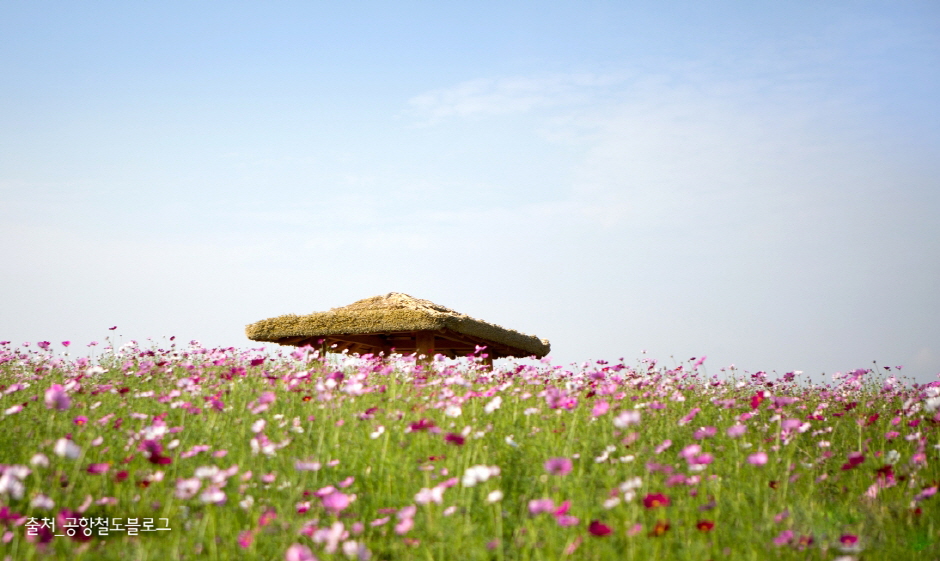
Sudokwon Landfill Site Wildflower Complex Dream Park (수도권 매립지 야생화단지 드림파크)
61 Geowol-ro, Seo-gu, Incheon
Sudokwon Landfill Site Wildflower Complex Dream Park is an eco-project park that maintains the function of a landfill site while restoring natural habitats and providing citizens with recreational spaces. It features Green Bio Complex, Wildflower Garden, Nature Observation District, and Wetland Observation District. A leisurely stroll takes about 40 minutes, while exploring every nook and cranny may take around 1 hour and 30 minutes. There's also a dog playground, making it suitable for visits with pets.
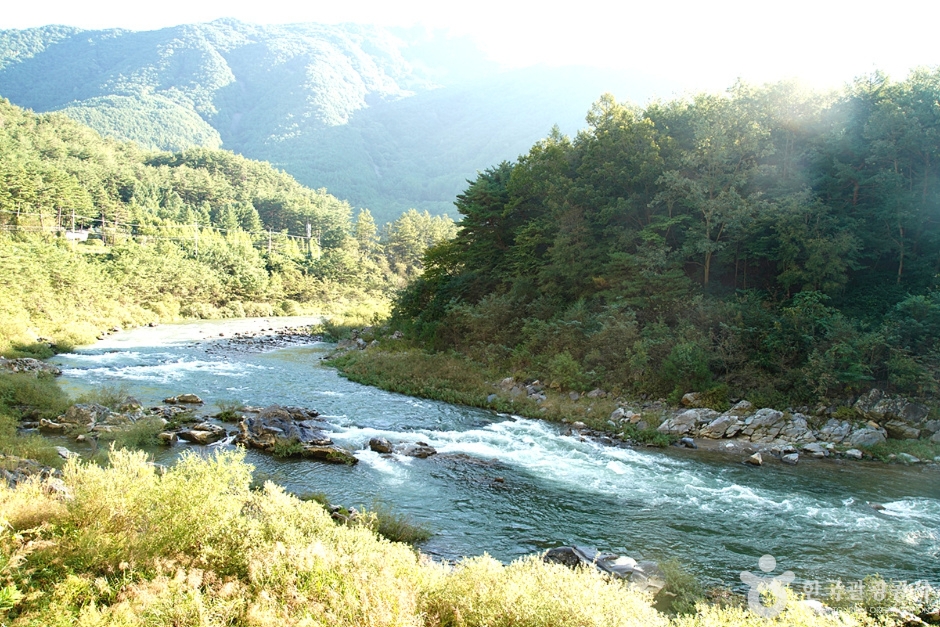
Sugamgyegok Valley (숙암계곡)
Danim-gil, Bukpyeong-myeon, Jeongseon-gun, Gangwon-do
Sugamgyegok Valley, stretching 10 kilometers long, meanders around Sangwonsan and Gariwangsan Mountains. The roads flanking the valley are favored destinations for scenic drives. One of the valley's key features is the Sugamsaem Spring, known for its clear and cold water. Upstream, a 20-meter-tall waterfall stands as a prime attraction, complemented by the historical Sugamseowon Confucian Academy. The valley is lush and verdant in spring, transforming into a vibrant display of red fall colors in autumn. Visitors can follow the hiking trails to fully immerse themselves in the stunning scenery of the valley.
Sugi Beach (수기해변)
291-48, Sido-ro 86beon-gil, Ongjin-gun, Incheon
Located on Sido Island in Incheon, Sugi Beach is easily accessible from Seoul. Sido Island is situated between Yeongjongdo Island and Ganghwado Island. The beach is not as crowded as other famous beaches, and is ideal for families or campers. Sugi Beach was the filming location for the famous drama series "Full House (2004)." Sido Island connects Sindo Island and Modo Island, making it easy to tour the three islands by foot or car.
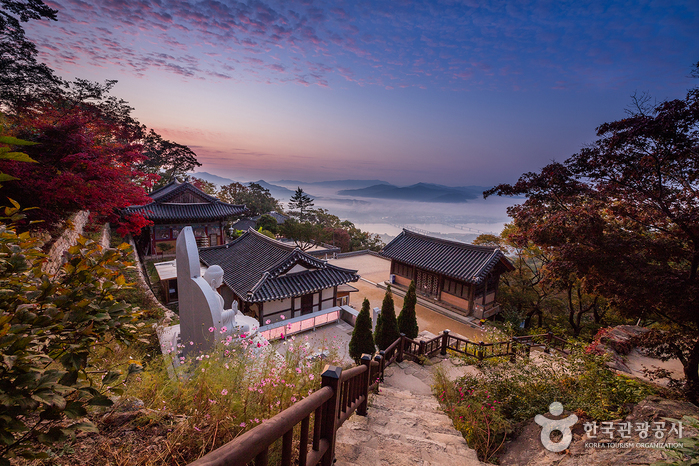
Sujongsa Temple (수종사)
186, Bukhangang-ro 433beon-gil, Namyangju-si, Gyeonggi-do
Sujongsa Temple is a branch temple of Bongseonsa Temple, located near the top of Ungilsan Mountain. Amazing views from Sujongsa Temple include various mountaintops and the Bukhangang River. While records are not entirely clear, it is believed that the temple was built in 1439 during the Joseon period. The temple went through many reconstructions and expansions, but ultimately was entirely destroyed during the Korean War. In 1975, Monk Hyegwang began reconstructing the temple, starting with Daeungbojeon Hall and slowly expanded the temple site subsequently.
Sujupalbong Mountain (수주팔봉)
Salmi-myeon, Chungju-si, Chungcheongbuk-do
Sujupalbong Mountain is located in Hyangsan-ri, Salmi-myeon, Chungju in Chungcheongbuk-do. Though relatively low in elevation, the eight peaks are formed of sharp, rugged rock, giving them a striking and imposing appearance. The name “Sujupalbong,” meaning “eight peaks of suju,” comes from the view across the Dalcheon Stream from Palbong Village in Munju-ri. From that vantage point, the eight peaks appear to rise in a row from the riverbank to the summit. Seen from above, the scenery resembles a traditional East Asian landscape painting. Sheer rock formations such as Songgotbawi Rock, Jungbawi Rock, and Kalbawi Rock stand like blades along vertical cliffs, creating dramatic views.
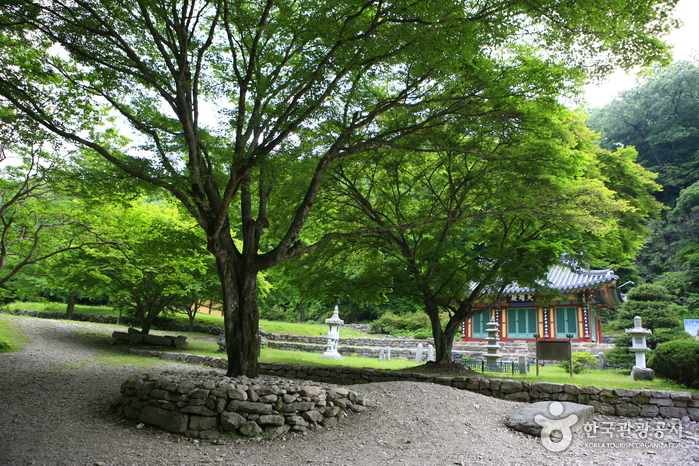
Sunchang Gangcheonsa Temple (강천사 (순창))
270, Gangcheonsan-gil, Sunchang-gun, Jeonbuk-do
Located approximately 1.8 kilometers from the entrance of Gangcheonsan County Park, Gangcheonsa Temple was built by Monk Doseon during the first year of Queen Jinseong of Silla (AD 887). In the third year of King Chungsuk of Goryeo (1316), the temple saw the addition of a five-story stone pagoda, built by Monk Deokhyeon. At its peak, the temple was said to have had 12 hermitages and housed 1,000 monks. It was burned down during the Imjin War (1592-1598), leaving only the pagoda, but was rebuilt a few years later by Monk Soyo during the 37th year of King Seonjo (1604). Unfortunately, the temple was burned down again in the Korean War, but was once again restored to its original state in 1959. Cultural assets found at the temple include Stone Guardian Post of Chungsin-ri & Namgye-ri, Sunchang Guesthouse, and the Three-story Stone Pagoda of Sunhwa-ri. Nearby tourist attractions include Geumseongsanseong Fortress, Yongsopokpo Falls, Gangcheonho Lake, Damyangho Lake, Chuwolsan Mountain, Huimunsan Mountain, and Naejangsan National Park.
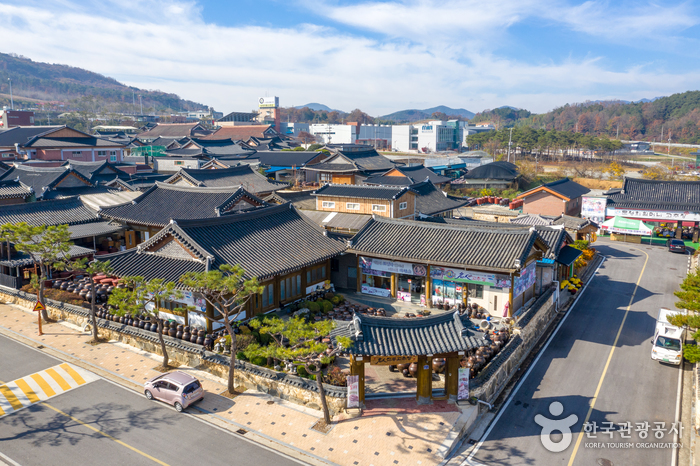
Sunchang Gochujang Village (순창고추장민속마을)
9 Baegya-gil, Sunchang-eup, Sunchang-gun, Jeonbuk-do
Sunchang Gochujang Village is home to expert gochujang (Korean chili paste) crafters using the traditional methods. Visitors can learn how to make gochujang and enjoy dishes using it, such as tteokbokki (rice cakes cooked with gochujang) and wild vegetables bibimbap. The village is fully equipped with accommodations, restaurants, seminar rooms, and other facilities, providing perfect conditions for a variety of hands-on experiences.
Sunchang Jangnyu Experience Center (순창장류체험관)
55, Minsokmaeul-gil, Sunchang-gun, Jeonbuk-do
Located in front of the Traditional Gochujang Folk Village in Sunchang, Jeollabuk-do, Sunchang Jangnyu Experience Center offers visitors the opportunity to sample and make delicious dishes using Sunchang's famous gochujang (red pepper paste). Visitors can make refined gochujang using traditional methods, along with a variety of other popular dishes such as injeolmi (rice cake coated with powdered soybeans) and twibap (popped rice snack). In addition to a range of experience programs, clean accommodation facilities are also available for program participants.

Suncheon Filming Location (순천 드라마촬영장)
24 Biryegol-gil, Suncheon-si, Jeollanam-do
Suncheon Filming Location is the outdoor filming site of the drama "Love and Ambition" aired in 2006, and where houses from the '60s and '80s are recreated. It is also where various dramas such as "Giant," "East of Eden," "Bread, Love and Dreams" and "Chronicle of a Blood Merchant" were filmed. It is pleasant to tour the filming site by walking through the alleys and taking pictures of the unique vibe.
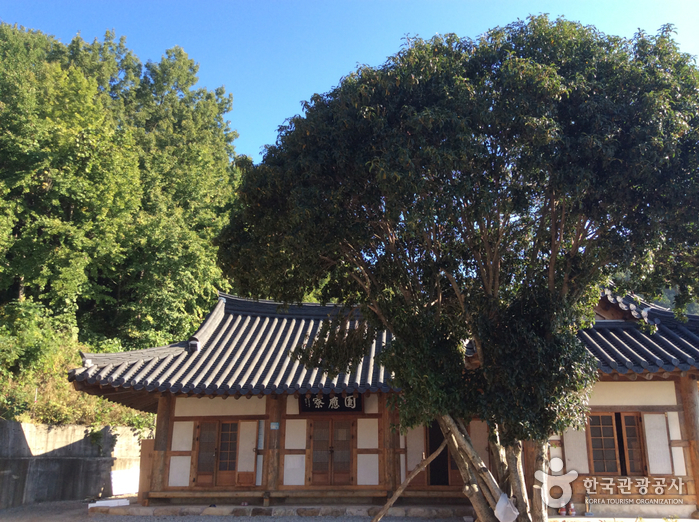
Suncheon Heungryunsa Temple (흥륜사 (순천))
102, Jangdae-gil, Suncheon-si, Jeollanam-do
Heungryunsa Temple is a missionary center of the Hwaeomsa Temple. Located in Jukdobong Park (downtown Suncheon), the site was previously used as an archery range. *History Heungryunsa Temple is a branch of Hwaeomsa Temple, which is the 19th local temple of Jogye Order. It is said that Heungryunsa Temple was constructed during the reign of King Seonjo of the Joseon dynasty and that the site was used as a place where naval forces practiced archery during the Imjin War in 1592. At the same time, the temple was the first military base of monk-turned-military officers from Hwaeomsa, Songgwangsa, and Seonamsa Temples. The current building was reconstructed in 1986 by Monk Jongwon, who is still the chief abbot of the temple.
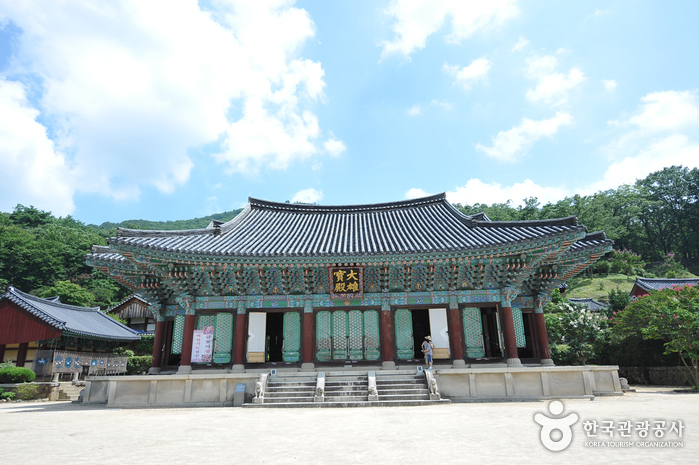
Suncheon Songgwangsa Temple (송광사(순천))
100 Songgwangsaan-gil, Songgwang-myeon, Suncheon-si, Jeollanam-do
Songgwangsa Temple is a temple located to the west of Jogyesan Mountain and is known as one of the three priceless temples along with Haeinsa Temple in Hapcheon and Tongdosa Temple in Yangsan. It was founded during the Silla dynasty and boasts cultural assets including four national treasures and 26 treasures, along with over 80 buildings including the Daeungbojeon Hall. Additionally, it operates the Buddhist Museum exhibiting temple cultural assets, a Buddhist university, and templestay programs.

Suncheon Traditional Wild Tea House (순천전통야생차체험관)
450-1 Seonamsa-gil, Seungju-eup, Suncheon-si, Jeollanam-do
Located on the road to Seonamsa Temple in Jogyesan Mountain, Suncheon Traditional Wild Tea House offers visitors a chance to experience the beauty and composure of a traditional Korean-style house. Surrounded by the scent of pine trees, guests can enjoy the delicate flavor and aroma of tea in a serene natural setting. Programs include darye (traditional tea etiquette), tea-making experiences, tea cookie tasting, and educational sessions on the tea ceremony.

Suncheonman Bay (순천만습지)
513-25 Suncheonman-gil, Suncheon-si, Jeollanam-do
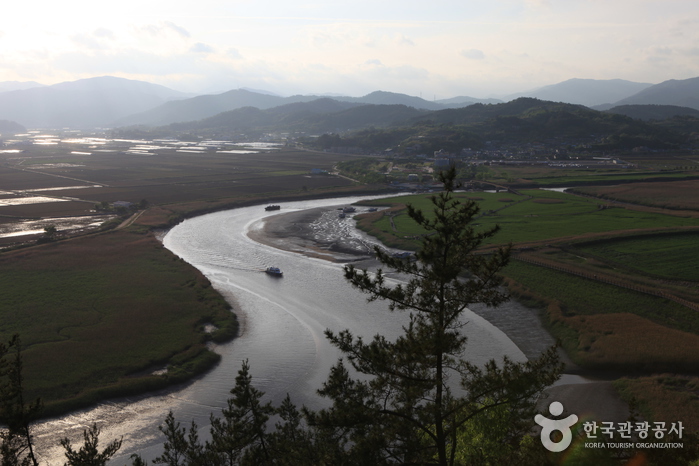
Suncheonman Bay is one of the world’s top five coastal wetlands, stretching along a 3-kilometer waterway with expansive mudflats and reed beds. The reed colonies serve as wintering and breeding grounds for various bird species, including hooded cranes. The tidal flats are home to diverse wildlife, including mudskippers and East Asian seepweed. It is an ecological tourism destination where visitors can enjoy spectacular sunsets over the S-shaped waterway from the observatory, often accompanied by flocks of birds soaring above the reeds.
Suncheonman Bay Yongsan Observatory (순천만 용산전망대 (S자 물길))
513-25, Suncheonman-gil, Suncheon-si, Jeollanam-do
Yongsan Observatory offers an unobstructed view of Suncheonman Bay's large S-shaped waterway. The observatory can be reached by following the trail through the field of reeds, crossing over Daedae Estuary on Mujingyo Bridge. With a birds-eye-view, take in the vast fields of reeds and mudflats, dotted throughout with groups of birds wading through in search of food.
Suncheonman National Garden (순천만국가정원)
47 Gukgajeongwon1ho-gil, Suncheon-si, Jeollanam-do
Suncheonman National Garden & Suncheonman Wetland is the first national garden of South Korea and one of the five major coastal wetlands in the world. The national garden spans 1.12 million square meters and is located in Dosa-dong, Suncheon-si. It is home to 790,000 trees covering 505 species, and 3.15 million flowers covering 113 species. During spring, tulips and royal azaleas are in full bloom, creating magnificent views. Additionally, there is a 30,000 square-meter canola flower field near the Forest of Sharing. You can see yellow waves of canola flowers in full bloom in mid-May. The city of Suncheon has planted 50,000 Japanese hackberries and zelkova trees along major routes in the area to create natural shade. There is a small unmanned personal rapid transit (PRT) system that operates between the Suncheonman National Garden and the Suncheon Literary Museum section (4.64 kilometers in length). After looking around the garden, visitors can take the PRT to the literary museum. There, they can take the Reed Train which travels 1.2 kilometers to Mujingyo Bridge located at the entrance of Suncheonman National Garden. Eco-friendly transportation is also available, such as the Sky Cube, which runs between Suncheonman National Garden and the wetland.◎ Travel information to meet Hallyu’s charm - variety show"Battle Trip Season 2"This is the place where Mi-na of Gugudan and Yoo-jung of Weki Meki, two friends of the same age, set out to see the spring flowers as 20-year-olds. Thanks to her meticulous preparations, Yoojung came back from this trip with a great picture of her blowing on bubbles in the middle of a garden with tulips and canola flowers.
Plan your Korea trip
Korea travel FAQ
How do I use the travel search?
Enter a place or interest, then narrow the results by region, category or sort order.
Will my filters stay selected on the next page?
Yes. Your search and filter choices stay in the page URL while you move through the results.
Can I find directions to each place?
Place pages include an external Google Maps search when coordinates or an address are available.
Source: Korea Tourism Organization, official website (https://knto.or.kr).