TRAVEL IN KOREA
Korea Places to Visit
Find attractions, culture, festivals, stays, restaurants, shopping and travel courses for a clear Korea trip plan.
Data last synced: 2026-06-25. Some details may change. Please confirm official information before visiting.
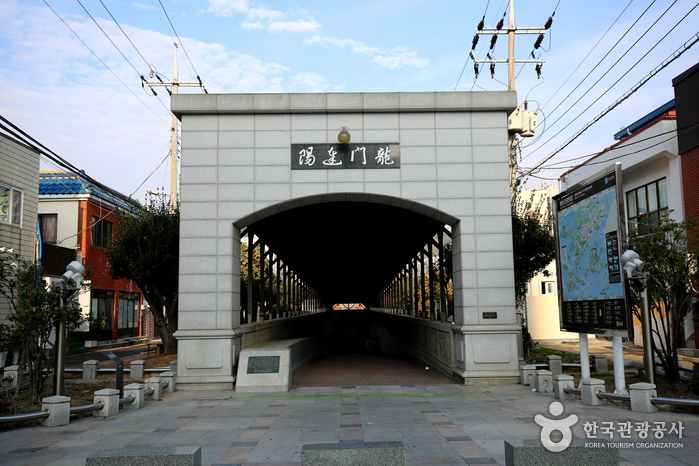
Undersea Tunnel - Tongyeong (해저터널-경남 통영)
Dang-dong, Tongyeong-si, Gyeongsangnam-do
Constructed over a 16-month period from 1931 to 1932, the undersea tunnel in Tongyeong is Asia’s first submarine tunnel. For its construction, the sea water was blocked at both ends, the tunnel was dug underground, and was paved with concrete. The Korean word “Yongmundalyang” engraved at the entrance of this 483-meter long, 5-meter wide tunnel means “the entrance of an undersea tunnel that connects island to land.”
Ungok Ramsar Wetland (고창 운곡람사르습지)
362 , Ungokseowon-gil, Gochang-gun, Jeonbuk-do
Ungok Ramsar Wetland, registered as Ramsar Wetland in 2011, is home to endanged species and various rare animals and flowers. The wetland also has four different courses that will take visitors all around the wetlands. Course 1 takes approximately 50 min and is 3.6 km-long. Course 2 takes approximately 2 hour 30 minutes and is 9.5 km-long. Course 3, the longest out of the 4 courses takes approximately 3 hours 30 minutes and is 10.2 km-long. Last, Course 4 takes approximately 2 hours 50 minutes and is 10.1 km-long.

Unhyeongung Royal Residence (서울 운현궁)
464 Samil-daero, Jongno-gu, Seoul
Located near the Gyeongbokgung Palace, Unhyeongung Palace was a residence of royalty in Joseon period. It was the place where Gojong (1582-1919, reign 1864-1907), king of Joseon (1392-1897) and emperor of the Korean Empire (1897-1910), was born in, as well as the place where Heungseon Daewongun (1821-1898), his father, had resided in. Buildings include Noandang Hall, Norakdang Hall, and Irodang Hall. The Royal Residence offers programs like traditional weddings and traditional culture experiences, while the exhibition hall showcases Joseon-era artifacts.
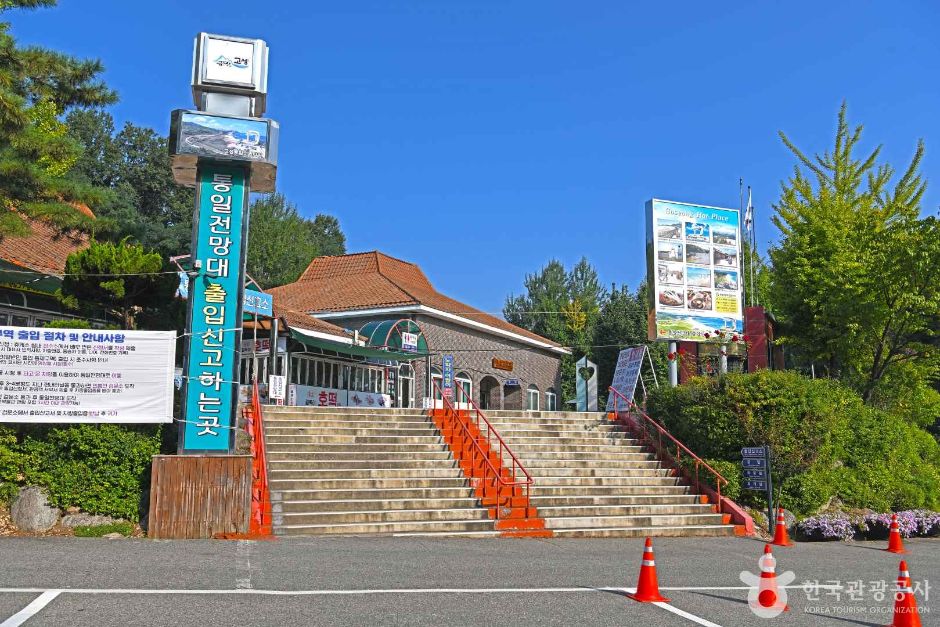
Unification Security Park (통일안보공원)
481 Geumgangsan-ro, Hyeonnae-myeon, Goseong-gun, Gangwon-do
Unification Security Park serves as the entry point to the Unification Observatory. Before entering the observatory, visitors can watch a video at the Education Security Hall, which has a seating capacity of 700 people. In front of the Education Security Hall, stands the Peace Bell, a symbol of hope for peaceful reunification. Additionally there is a monument commemorating the army unit members who sacrificed their lives to stop the invasion of North Korean guerillas just before the Korean War. ◎ Due to its location within the Civilian Control Line area, visitors must complete the required procedures before entering.
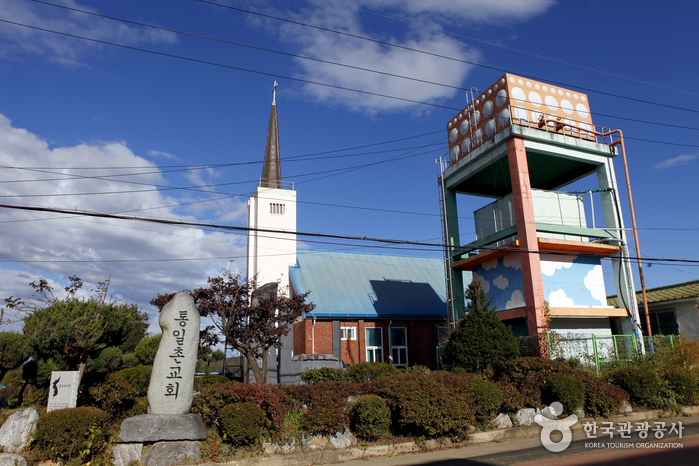
Unification Village (통일정보화마을)
330-7, Baegyeon-ri, Gunnae-myeon, Paju-si, Gyeonggi-do
Paju’s Unification Village is located north of the Civilian Control Line (CCL). It has security tour locations, such as Panmunjeom, The 3rd Tunnel, and the Dora Observatory. The village is also famous for its agricultural products, such as Jangdan ginseng, Jangdan soybeans, and Jangdan rice, grown in the fertile and blessed nature of the area. Applications for Panmunjeom visits can be made a month in advance, starting from the 10th day of that month. Visitors are required to bring their passports for identification purposes. Nearby tourist sites include Imjingak Pavilion and Paju Book City.
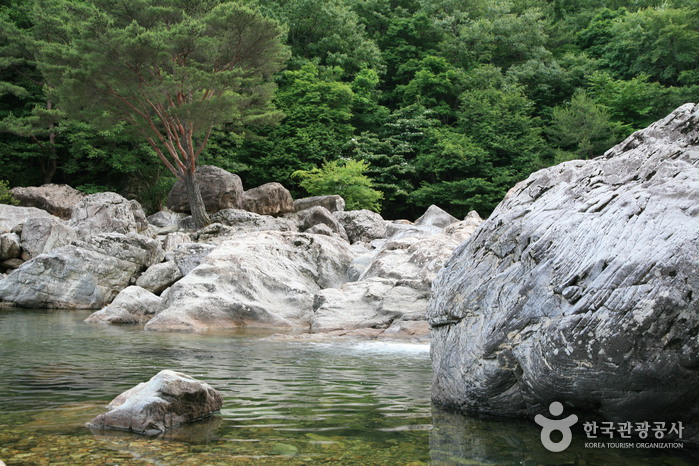
Uniram Baniramgyegok Valley (운일암 반일암 계곡)
1926, Dongsangjucheon-ro, Jucheon-myeon, Jinan-gun, Jeonbuk-do
Uniram Baniramgyegok Valley (5 km long) falls between Myeongdeokbong Peak and Myeongdobong Peak in the northeastern region of Mount Unjangsan. The name Uniram refers to the steep walls of the valley where nothing but the sky, rocks, thick forests, and clouds can be seen. The valley is also befittingly named Baniram since it is so deep that it only receives direct sunlight for half the day. There are many strangely-shaped rocks like Jjokduri Rock, Cheollyeop Rock, and Daebul Rock scattered throughout the lush valley. At the peak of summer, the area is crowded with vacationers and is also popular for its autumn leaves.
Unjangsan National Recreational Forest (국립 운장산자연휴양림)
77, Hyuyangnim-gil, Jinan-gun, Jeonbuk-do
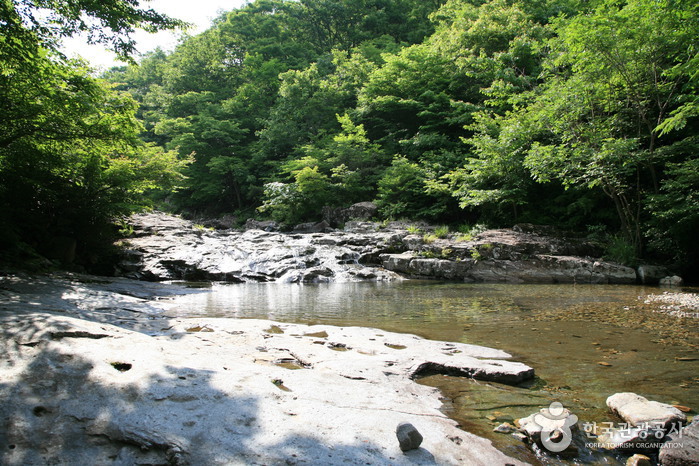
Unjangsan National Recreational Forest is located within Galgeogyegok Valley in Unjangsan Mountain. The valley has a 7-kilometer-long stream and natural attractions such as Madangbawi Rock and Haegiso Pond.

Unjesan Forest Park (운제산산림욕장)
102 Unje-ro 386beon-gil, Daesong-myeon, Nam-gu, Pohang-si, Gyeongsangbuk-do
Located at the foot of Unjesan Mountain, a site rich with history and myth, Unjesan Forest Park is a sustainable sanctuary designed for the community. The park was restored into a natural, water-friendly environment that filters out pollutants to provide a clean, eco-friendly space for residents. The grounds feature a variety of amenities, including a forest classroom, wetland and ecology observation areas, a children’s forest playground, and multiple scenic rest spots. It is a perfect destination for family outings, particularly on weekends when visitors can participate in hands-on programs at the woodcraft experience center.
Unjusa Temple (운주사)
91-44, Cheontae-ro, Hwasun-gun, Jeollanam-do
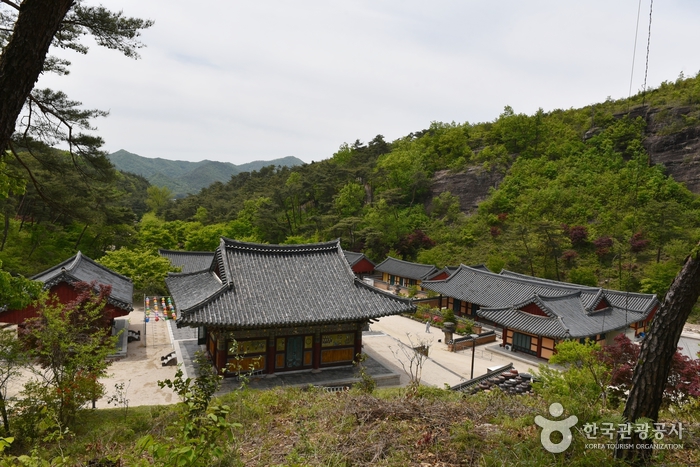
Unjusa Tmeple was called Bibosa Temple during the late Silla Period. However, during excavation work that took place between 1984 and 1989, it was discovered to have been built long before that during the early Goryeo period. The temple fell into disrepair after the Imjin War (1592-1598), but was partly restored in the 1800s by Monk Seoldamjau. Unjusa Temple’s famous heritages include the Nine-story Stone Pagoda (Treasure No. 796), Shrine of Stone Buddha (Treasure No. 797), and Cylindrical Multi-story Stone Pagoda (Treasure No. 798).
Unjusanseong Fortress (운주산성)
Migok-ri, Sejong-si
Unjusanseong Fortress, also known as Gosansanseong Fortress, is a cultural heritage of the Baekje dynasty. This is a mountain fortress built along the surrounding three mountain peaks in the westernmost and southernmost parts of Unjusan Mountain. The stone fortress wall, which borders three villages in Jeondong-myeon and two villages in Jeonui-myeon, is 3,210 meters long and two meters wide with a x_height that ranges from two to eight meters. The walls follow the natural geographical features of the mountain range, with the southern walls surrounding the mountain's peak. Remnants of a village can still be observed within the fortress walls, such as the fortress gate and a ritual site. Pieces of earthenware from the Baekje period, porcelain from the Goryeo and Joseon periods, and broken tiles from the Baekje, Goryeo and Joseon periods have been discovered around the site as well.
Unmunsa Temple (운문사)
264, Unmunsa-gil, Unmun-myeon, Cheongdo-gun, Gyeongsangbuk-do
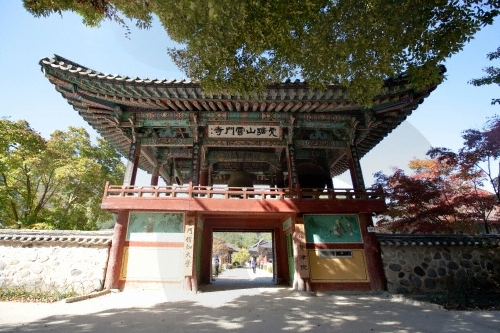
Unmunsa Temple in Cheongdo, Gyeongsangbuk-do belongs to Cheongdo-gun in terms of administrative district. However, it is actually more closely connected to Daegu in terms of traffic and lifestyle. Unmunsa Temple was built in 560 during the Silla period. This ancient temple features seven treasured artifacts including the Weeping Pine Tree (Natural Monument No. 180) and stone lantern. There are four small hermitages (Sariam, Naewonam, Bukdaeam and Cheongsinam) around the temple. Moreover, the surrounding forest of pine and fir trees only enhances the temple’s beauty. Unmunsa is the largest Buddhist nunnery in Korea, maintaining a capacity of roughly 260 bhikkhunis, or Buddhist nuns, who practice Buddhism in a four-year term. But, thanks to its magnificence and lush forest, Unmunsan Mountain, located on the southernmost part of Taebaek Mountain range, has become a favorite spot for many tourists.
Unmunsan County Park (운문산군립공원)
Unmun-myeon, Cheongdo-gun, Gyeongsangbuk-do
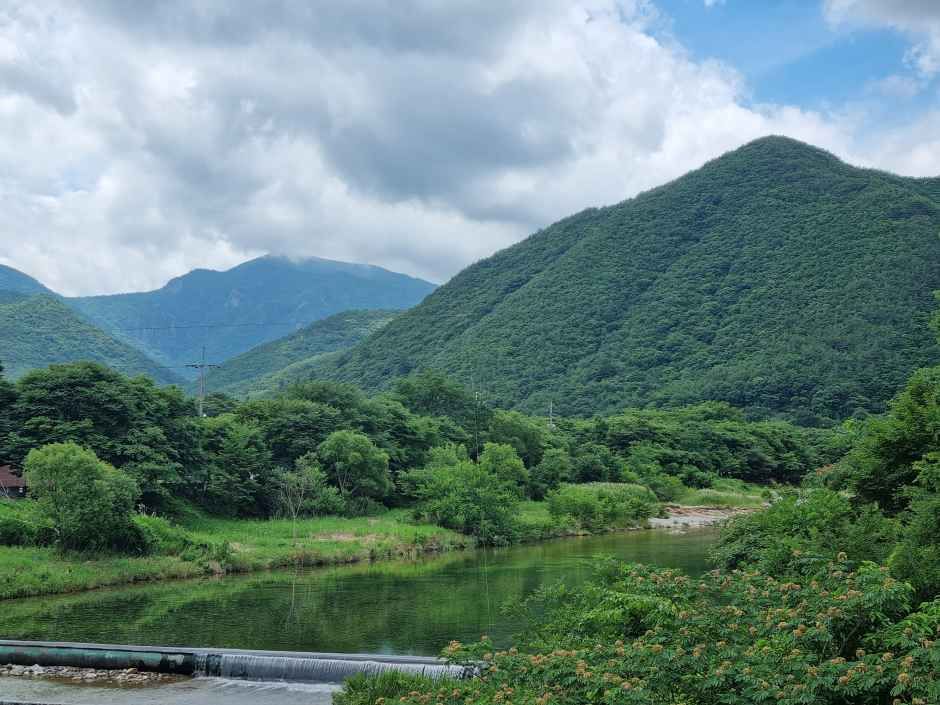
Unmunsan Mountain (1,118 meters) is one of the seven mountains rising over 1,000 meters above sea level in the Yeongnam Alps in the Taebaeksanmaek Mountain Range. Unmunsan Mountain features dense groves, attracting a large number of hikers. From the summit, one can get a great view of the golden reeds on Cheonhwangsan Mountain to the south, and the ridges of Gajisan Mountain to the east. There are various sized temples and hermitages on the mountain, nestled among a splendid landscape. Unmunsa Temple is situated at the foot of the mountain on the northern side. It was built by Sinseung in the 18th year of the reign of King Jinheung (557) of the Silla Kingdom. Though some buildings burned down during the Imjin War, the Obaengnahanjeon Hall and Gwaneumjeon Hall have been preserved in their original state. The dense groves of pine trees and fir trees add to the tranquility of the beautiful scenery. In the temple, seven treasures are kept, including the Stone Lantern at Geumdang Hall (Treasure). The historic relics date back to the Silla kingdom and Goryeo dynasty.

Unmunsan National Recreational Forest (국립 운문산자연휴양림)
763 Unmun-ro, Cheongdo-gun, Gyeongsangbuk-do
Unmunsan National Recreational Forest in Cheongdo, Gyeongsangbuk-do is located at the foot of Unmunsan Mountain (1,188 meters), which is also called Hogeosan Mountain. It is a great place to spend time in summer for hiking and camping, surrounded by taller mountains (more than 1,000 meters above sea level) such as Munboksan Mountain (1,014 meters) and Gajisan Mountain (1,240 meters). Yongmipokpo Falls (20 meters) and Byeokgyesu Valley, in which the waters flow across the sandless rock bed, are famous locales in the forest. Located in a thick broadleaf forest, inhabited by many diverse species such as Korean mountain camellia, Unmunsan National Recreational Forest offers lush greenery in summer, beautiful foliage in autumn, and cozy, splendid snowscapes along with the Yongmi Ice Wall in winter. In Unmunryeong, located 2.5 kilometers to the east, visitors can watch the spectacular sunrise above the East Sea.
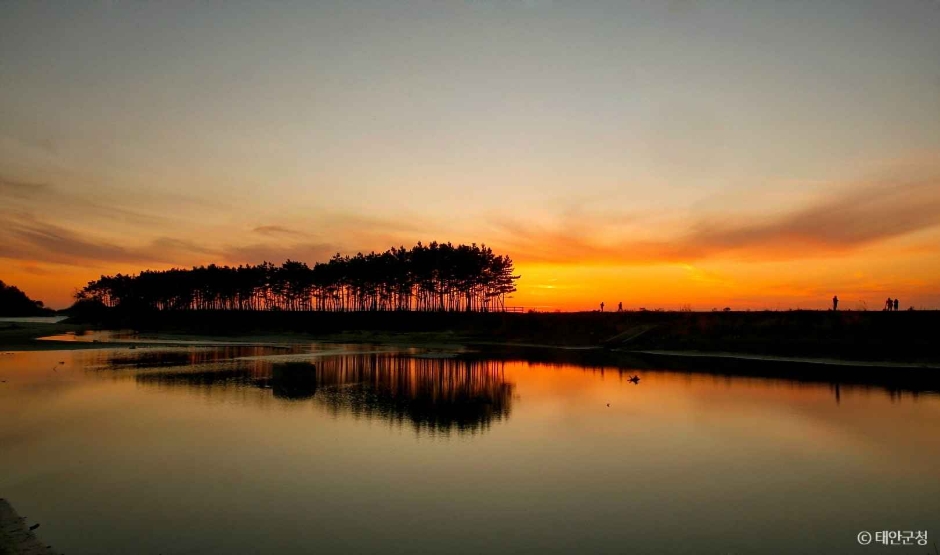
Unyeo Beach (운여해변)
535-57 Jangsampo-ro, Gonam-myeon, Taean-gun, Chungcheongnam-do
Unyeo Beach, located on Anmyeondo Island and facing the Yellow Sea, is characterized by its coastal dune and doksal, walls constructed for trapping fish at low tide, creating picturesque scenery. To the south of the beach, a breakwater adorned with pine trees, transforms into an island-like platform filled with water at high tide, offering stunning views at sunset. The beach welcomes swimmers during the summer season.
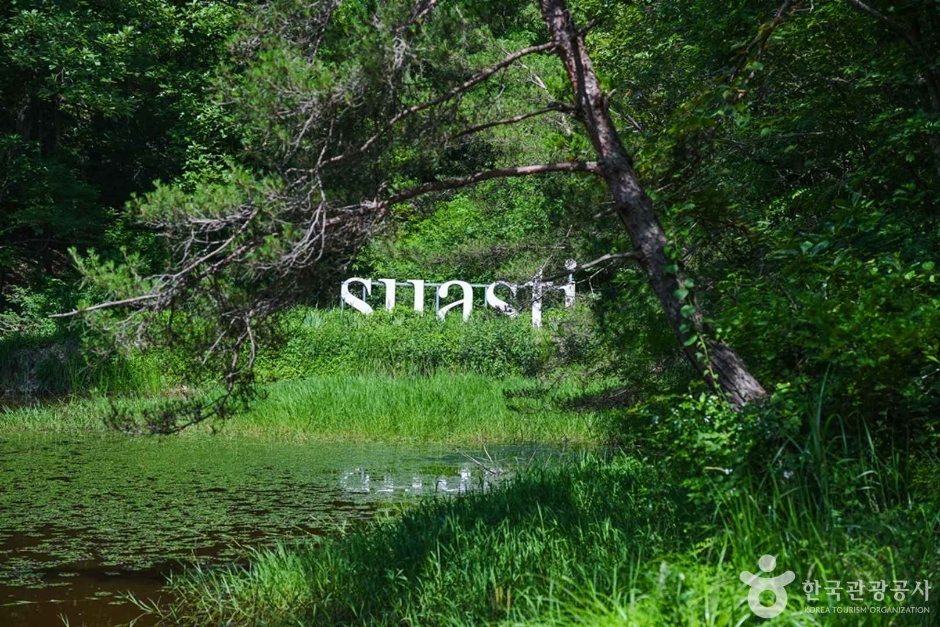
Vanastha (와나스타)
207 Daeam 1-gil, Eonyang-eup, Ulju-gun, Ulsan
Vanastha, located in the forest inside Daeam Dam in Ulju-gun, is a forest yoga house that means "stay in the forest." For modern people who lack time to look back on their bodies in their tired daily lives, it provides time to fully focus on themselves with proper breathing, meditation, and Hatha yoga. Here, one can hear the sounds of nature, feel nature, and experience of becoming one with nature and the universe, only in nature. It offers a one-day class and a yoga meditation program on Saturday mornings. Private session option is available for a group of four or more people with a reservation in advance.
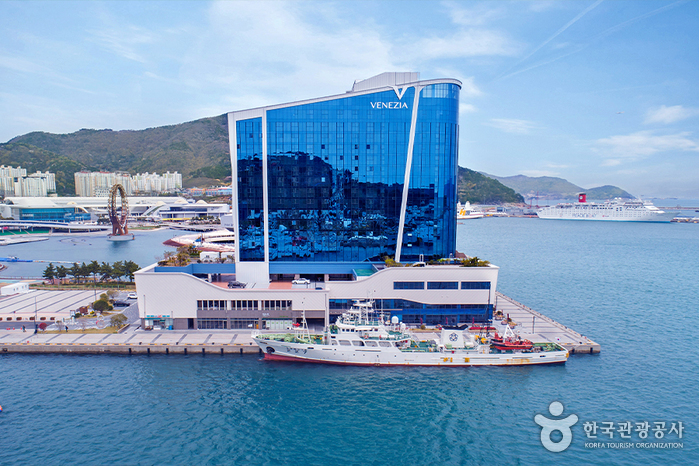
Venezia Hotel & Resort Yeosu (여수 베네치아 호텔앤리조트)
61-13 , Odongdo-ro, Yeosu-si, Jeollanam-do
Yeosu Venezia Hotel & Resort is just 5 minutes from Yeosu Expo Station and and is popular with both business and family travellers. All rooms have an ocean view, and some rooms are self-catering. Bedding is luxurious and all rooms have clothing stylers. The hotel is close to Odongdo Island and the marine cable car terminus. In the rooftop heated cinema pool, guests can have the special experience of watching a movie while lolling in sea water and looking down at the sea!
Plan your Korea trip
Korea travel FAQ
How do I use the travel search?
Enter a place or interest, then narrow the results by region, category or sort order.
Will my filters stay selected on the next page?
Yes. Your search and filter choices stay in the page URL while you move through the results.
Can I find directions to each place?
Place pages include an external Google Maps search when coordinates or an address are available.
Source: Korea Tourism Organization, official website (https://knto.or.kr).