TRAVEL IN KOREA
Korea Places to Visit
Find attractions, culture, festivals, stays, restaurants, shopping and travel courses for a clear Korea trip plan.
Data last synced: 2026-06-25. Some details may change. Please confirm official information before visiting.
Amisan Observatory (아미산 전망대)
77 , Dadaenakjo 2-gil, Saha-gu, Busan
Amisan Observatory, where you can look down at the point where the Nakdonggang River and the sea become one, consists of a total of 3 floors: an information desk and seminar room on the 1st floor, an exhibition hall on the 2nd floor, an indoor observatory and a cafeteria on the 3rd floor. It is a place where visitors can enjoy the golden sunset and appreciate the pleasant scenery of the river and the sea while feeling the cool breeze.
Amnam Park (부산 암남공원)
185, Amnamgongwon-ro, Seo-gu, Busan
The magnificent cliffs and tree-lined seaside views of Amnam Park bring the harmony of the bluish-green waters and the forested landscape together. Originally a protected area, entrance was not permitted until its opening to the public in 1996, when visitors could first experience the untouched landscape. Now, visitors can fish, explore the observatory, and enjoy the walking path and the elevated bridge. The abundunt pine trees along the walking path make for a pleasant stroll while the path up to the observatory offers great views. If it is fishing that you want, here you can fish on the ocean as well as off the fantastically shaped rocks. There is also a famous road to go for a drive, leading from Songdo Beach to Amnam Park. This drive takes approximately 5 minutes, but it takes about 20 minutes on foot.
Amnam-Park (암남공원)
San 193
Die großartigen Aussichten auf die prächtigen Klippen und die mit Bäumen gesäumte Küste vom Amnam-Park lassen das blau-grüne Wasser mit der bewaldeten Landschaft verschmelzen. Nach der Erklärung zum Schutzgebiet war der Zutritt zu diesem Gebiet verboten, bis es schließlich 1996 wieder der Öffentlichkeit zugänglich gemacht wurde, und Besucher zum ersten Mal die unberührte Landschaft erleben konnten. Im Park kann man heute angeln, ein Observatorium besuchen und sich an Spazierwegen und einer erhabenen Brücke erfreuen. Die Fülle an Pinien entlang der Wege machen es zu einem angenehmen Spaziergang; auf dem Weg hinauf zum Observatorium bietet dieses gut beforstete Gebiet großartige Aussichten. Wenn Sie angeln möchten, können Sie dies auf dem Meer oder von den fantastisch geformten Felsen aus tun. Es gibt eine berühmte Straße vom Songdo-Strand zum Amnam-Park, die beliebt ist für sehr gemütliche Fahrten. Die Fahrt dauert etwa 5 min., wenn Sie zu Fuß gehen wollen, brauchen Sie etwa 20 Minuten.
Amore Seongsu (아모레 성수)
7 Achasan-ro 11-gil, Seongdong-gu, Seoul
Amore Seongsu is an experiential store presented by the cosmetics brand Amorepacific Corporation. The building was renovated from an old car repair shop and presents a unique vibe. Visitors can test products on their skin and purchase products from over 30 brands released by Amorepacific Corporation. Recommended items include the Puzzlewood Hand Cream and Vegan Brush, made using a vegan recipe and a certified-vegan. A pop-up store is operated every month in collaboration with brands from various fields worldwide, providing trendy and extraordinary experiences such as exhibitions and product testing.
AMORE Spa (아모레퍼시픽 스파)
21, Apgujeong-ro 29-gil, Gangnam-gu, Seoul
AmorePacific, a Korean brand, initially gained popularity in New York since its opening of AMORE Beauty Gallery & Spa in Soho, New York. The AMORE Spa is a popular spa and treatment center frequented by many international celebrities. The AMORE Spa Seoul branch, opened in April 2005, offers approximately 30 different kinds of programs. One of the most popular spa programs is Spa Therapy, which uses a diverse range of natural therapy materials including lotus flower, ginger and bamboo. Another popular program is the Halla Green Tea program, which uses green tea leaves grown in Jeju's Hallasan Mountain. Other programs include Gold & Silver Energy Healing therapy, Mystic Bamboo Forest, facial therapies, body slimming and massages.
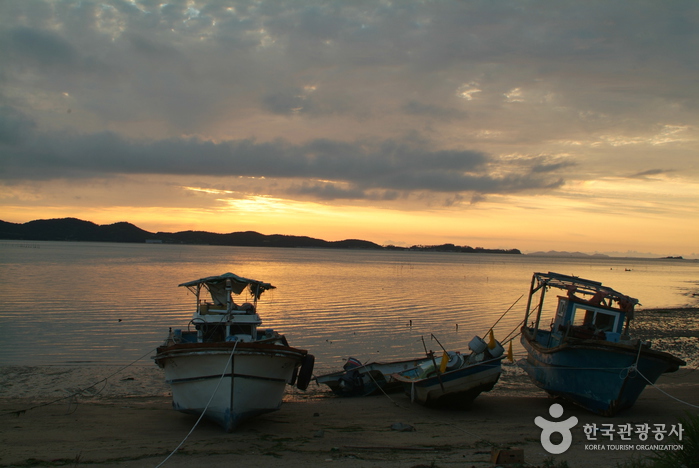
Anak Beach (안악해수욕장)
2108, Wolcheon-ri, Hampyeong-gun, Jeollanam-do
Anak Beach is a white sand beach that stretches for more than 200 meters and is bordered by a forest of pine trees. In addition to the gorgeous scenery, a major draw is the great seafood like fresh mullets, long-legged octopuses, small shrimps, and other local specialties said to provide strength during the sweltering summer heat. Since the beach has not yet been discovered by many tourists, visitors will be able to have a calm and relaxing time. The nearby coastal road is a perfect driving course with a stunning view of the sunset.
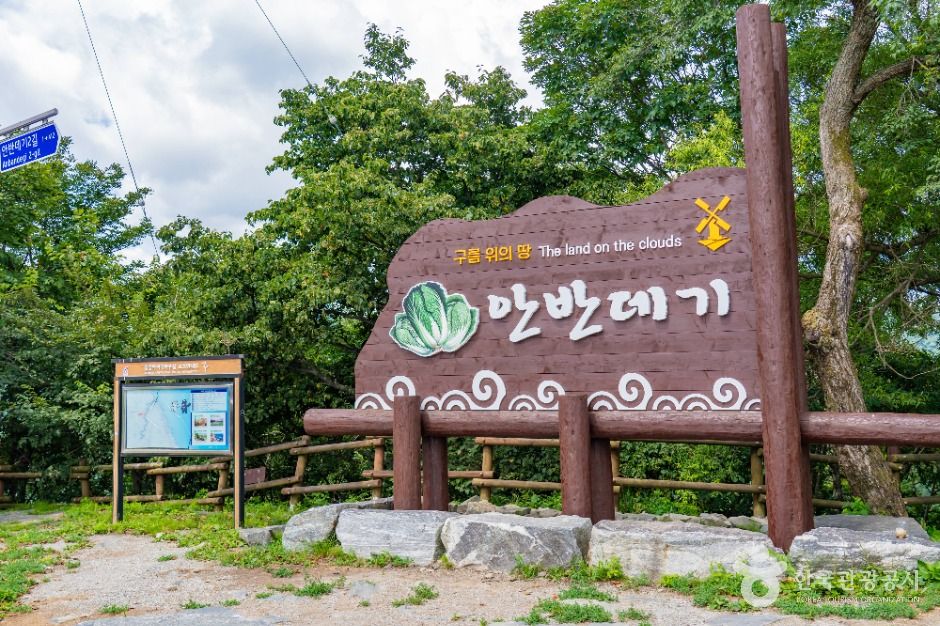
Anbandegi Village (안반데기 마을)
428 Anbandegi-gil, Wangsan-myeon, Gangneung-si, Gangwon-do
Anbandegi Village is a mountainside village located at an elevation of 1,100 meters. The village name is a combination of the words "anban," which refers to the large and oval wooden platform used when pounding rice cakes, and "degi," which means flat land. Most of the village lands are covered with cabbage farms formed along the mountain slope. The steep slopes make it impossible to use farm machinery, which means all the cabbages farms are the result of manual work by the villagers.
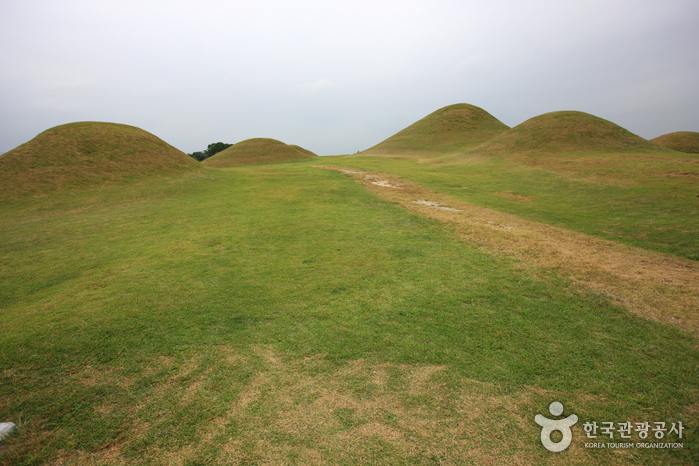
Ancient Tombs in Gyo-dong and Songhyeon-dong, Changnyeong (창녕 교동과 송현동 고분군)
34, Changmil-ro, Changnyeong-gun, Gyeongsangnam-do
Songhyeon-dong Ancient Tombs, located under Mokmasanseong Fortress at the west foot of Hwawangsan Mountain, are large ancient tombs located in the southwest by the road leading to Hyeonpung. The Gyo-dong Ancient Tombs are dozens of ancient tombs that were once gathered around a large royal tomb, which among only eight tombs with damaged mounds now remain. Some of these ancient tombs were excavated by the Japanese between 1918 and 1919, and most of the relics were moved to Japan, and only some of them remain in Korea. According to the results of the investigation at the time, the large tombs were either built in a passageway form or an entry gate form. It is said that a large number of relics such as jewelry made of various precious metals, including gold crowns, pure gold transplants, and copper, iron armour, and earthenware were excavated. The excavation report left by the Japanese is simple, so it is not possible to accurately grasp the structure of the Gyo-dong Ancient Tombs and the excavated relics. Twenty-one of the existing tombs have been restored so far, and only one of them has an accessible entrance. The tombs in Songhyeon-dong are largely divided into two areas. Area 1 used to be large tombs with 80 tombs west of the foot of Mokmasan Mountain, but now only about 16 tombs remain. It is said that there were about 20 tombs in the second area near the stone Buddha in Songhyeon-dong, but now most of them have turned into rice paddies, and only a few tombs reveal their original appearance. Since the tombs are close to the Gyo-dong tombs, the structure of the tomb and the nature of the relics are believed to be almost the same. Along with the Gyo-dong tombs, a large number of relics were excavated in 1918, but the whereabouts of some of the relics are unknown.
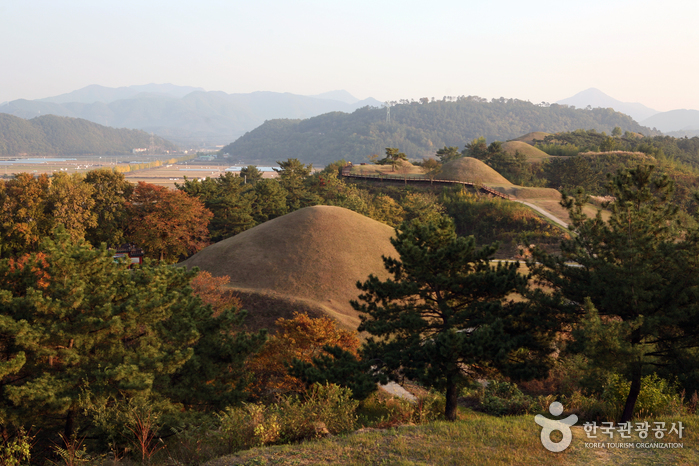
Ancient Tombs in Marisan Mountain, Haman (함안 말이산 고분군)
114 Bondong-gil, Gaya-eup, Haman-gun, Gyeongsangnam-do
The Ancient Tombs in Marisan Mountain are from the Aragaya State, and showcase the Gaya culture through many remaining relics. There are around 100 large tombs, assumed to be those of the Aragaya kings, located on the upper summit, as well as nearly 1,000 smaller tombs on the lower side of the mountain. The tombs were first excavated during the Japanese occupation, as which point Tomb No. 34 was found to be the largest tomb, with a circumference of 39.3 meters and a x_height of 9.7 meters. However, Tomb Nu. 8 is more famous, discovered to inter five people and including armor designed with images found on the tomb walls of Goguryeo kingdom.
Andeok Health and Healing Village (안덕 건강 힐링 체험마을)
72 Jangpa-gil, Gui-myeon, Wanju-gun, Jeonbuk-do
Andeok Health and Healing Village is nestled near a valley at the foot of Moaksan Mountain in Wanju. As Korea's first health and healing experience village, it offers experience programs and health and wellness classes. Health experience programs and health and wellness classes are professionally designed in collaboration with a traditional Korean medicinal clinic in Andeok Village. Therefore, it offers visitors opportunities to learn quality information and experience specialized programs. Andeok Health and Healing Village consists of a healing experience center, Yochodang House, a food experience center, a traditional sauna, a well-being restaurant, and a convention hall. For accommodations, seven Hwangtobangs (red-clay cottages) are available as well as studio-type rooms at Soo Pension. These accommodation facilities are open to visitors regardless of whether they participate in programs run by the village or not. The village's signature experience programs include the red-clay sauna where the floor is heated in the traditional manner. The walls are made of red clay mixed with traditional herbal medicinal water. When heated, the sauna effectively removes waste from the body. Other signature programs include making injeolmi (bean-powder-coated rice cakes) by cooking rice and pounding the rice dough using a mallet; and harvesting seasonal crops (e.g., potatoes, sweet potatoes, and corn)
Andong Dam (안동댐)
31, Hoban-ro, Andong-si, Gyeongsangbuk-do
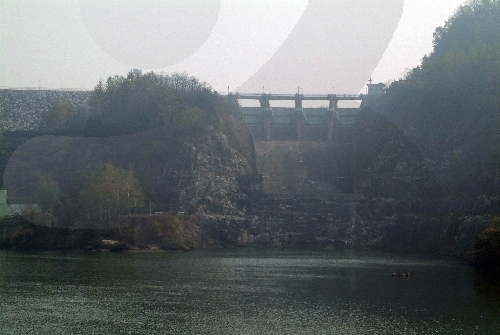
Andong Dam is a multipurpose dam on the Nakdonggang River. The dam was constructed to prevent flood damage to the downstream region and to procure water for agricultural, industrial, and residential purposes. Construction of the dam completed in 1976 with a length of 612 meters. x_height of 83 meters and holds 1.2 billion tons of water. Andongho Lake formed by the dam is a popular fishing location.
Andong Folk Village (안동민속촌)
Seonggok-dong, Andong-si, Gyeongsangbuk-do
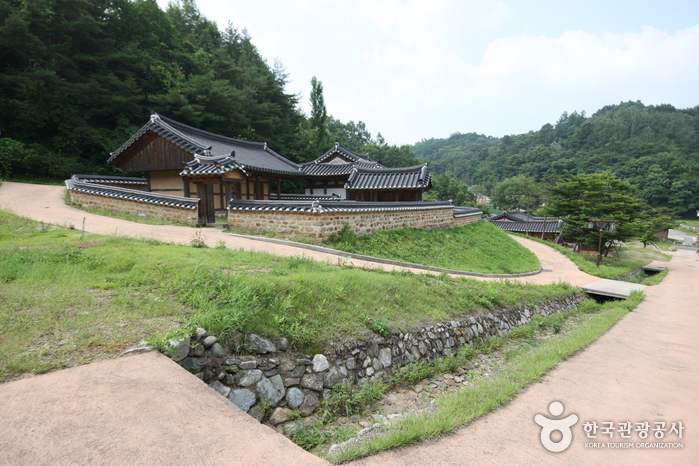
On the other side of the subsidiary dam of Andong Dam, thatched houses can be sparsely seen on a hilltop. The area is practically an outdoor museum, displaying traditional houses that were moved to safety prior to the construction of Andong Dam. Two jangseung (traditional Korean totem poles) are raised at the entrance of the outdoor museum, followed by a monument inscribed with the poem of famous Andong poet and democracy activist, Lee Yuk-sa. On the monument, his most noted work “Gwangya” (Wild Plain) is carved. Nearby attractions include Andong Museum, Lee Yuk-sa Monument, a filming site of “Taejo Wang Geon (2000)," and Andongho Lake.
Andong Gunja Village (Ocheon Historic Site) (안동 군자마을(오천유적지))
29 Gunjari-gil, Waryong-myeon, Andong-si, Gyeongsangbuk-do
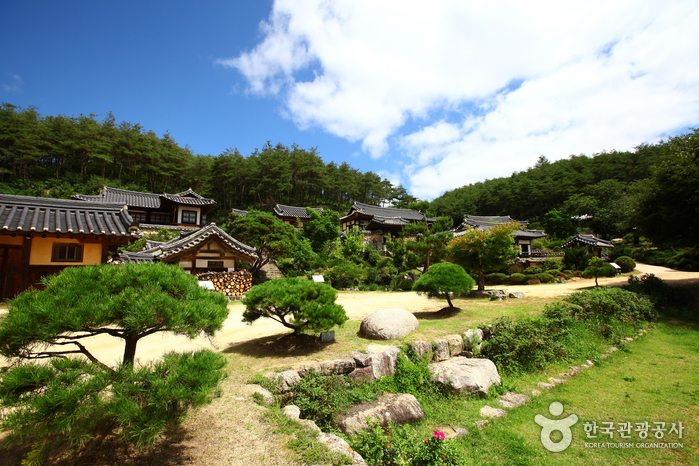
Andong Gunja Village is a cluster of around twenty hanok. During the Joseon dynasty, this area produced many scholars, hence earning the name Gunja Village, meaning a village where many learned scholars reside. Designated cultural heritage sites include Takcheongjeong Historic House, and Shrine of the Gwangsan Kim Clan. Visitors can experience hanok stay, immersing themselves in the ambiance of historic houses and traditional customs. ◎ Travel information discovering the charm of Hallyu - Drama Hwawonjae is the place where the story begins, as Gu San-yeong inherits her father’s hair ribbon heirloom. Hujodang Head House in Andong Gunjamaeul Village, which was used as the filming location for Hwawonjae, is a traditional house with over 600 years of history. It is recommended to experience the traditional beauty of Korea and enjoy a stay in this historic house, located in a village that has been home to families for over 20 generations.
![Andong Hahoe Village [UNESCO World Heritage] (안동 하회마을 [유네스코 세계유산])](https://tong.visitkorea.or.kr/cms/resource/38/3421438_image2_1.jpg)
Andong Hahoe Village [UNESCO World Heritage] (안동 하회마을 [유네스코 세계유산])
186 Jeonseo-ro, Pungcheon-myeon, Andong-si, Gyeongsangbuk-do
Hahoe Village is one of the most famous folk villages in Korea. Surrounded by the Nakdonggang River, the village is home to descendants of the Ryu clan of Pungsan, which still makes up 70 percent of the villagers. The village became even more famous after Queen Elizabeth of England visited on April 21, 1999, and President George H. Bush of the U.S.A. in 2005.The village has many cultural treasures and important cultural materials, earning the village the designation of National Folklore Cultural Heritage in 1984. Hahoe Masks, a National Treasure, is also an important feature of the village. ◎ Travel Information to Experience the Charm of Hallyu - Drama From a 64-meter-high cliff, countless sparks descend along suspended lines. Lantern lights drift gently along the river, and with the cry of ‘Nak-hwa!’ huge flames cascade down the cliff like a waterfall. The traditional Korean fireworks festival Seonyu Julbulnori is a grand purification ritual carrying the wishes of all gathered there. Gu San-young, determined to live by her own will rather than for anyone else, smiles brightly in that place where hope and wishes shine like starlight despite the threat of losing her sight.
Andong Hospital (안동병원)
11 Angsil-ro, Andong-si, Gyeongsangbuk-do
Founded in 1982 in Andong-si, Andong Hospital is a general hospital and a member organization of Andong Medical Group Hospital. We operate several specialized centers designated or certified by the Korean Ministry of Health and Welfare (e.g., Regional Emergency Center, Air Ambulance Helicopter, Integrated Cancer Center, Regional Cardio-Cerebrovascular Disease Center (RCDC), Spine and Joint Center, Clinical Trial Center, and Robotic Surgery Center). Within the Andong Medical Foundation are Andong Hospital, Andong Nursing Hospital, Yongsang Andong Hospital, and Andong Hospital Specialized Care Center so that patients can receive connected care at general acute care hospitals, nursing hospitals, and nursing homes. Andong Medical Group Hospital oversees Andong Hospital, Andong Convalescent Hospital, and Yongsang Andong Hospital. This allows patients to receive coordinated care at general acute care hospitals, convalescent hospitals, and nursing homes.
Andong Market Jjimdak Alley (안동시장 찜닭골목)
30 Beonyeong-gil, Andong-si, Gyeongsangbuk-do
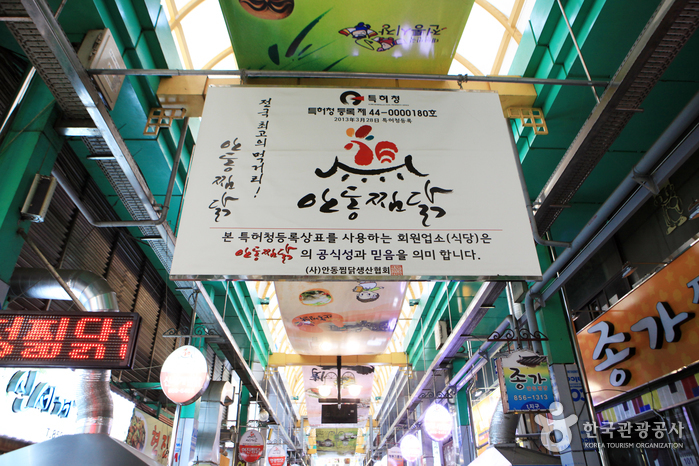
Since the 1970s, there has been a chicken alley in Andong Old Market where both raw chicken and fried chicken are sold. But, as seasoned spicy chicken became popular, merchants in the chicken alley needed to find a solution and this is how a fusion dish called Andong jjimdak, or braised chicken, was born. The dish is cooked with the seasoning of braised galbi and boiled down after adding glass noodles and different vegetables. Its sweet and spicy flavors, inexpensive price and abundant amount made the dish an instant hit nationwide, and "Chicken Alley" naturally changed its name to "Jjimdak Alley." Today, there are some 30 stores in business on this street that attract over 20,000 tourists on weekends. Although Andong jjimdak is not a traditional dish that has been passed down for generations, "Suun Japbang" and "Eumsik Dimibang," a pair of the oldest cooking books in Korea, talk about a cooking method that seems similar to that of Andong jjimdak in the Andong region from a long time ago. Andong jjimdak is protein-rich and contains vitamins and various nutrients from different types of vegetables, which makes it a nutritionally sound dish as well.
Plan your Korea trip
Korea travel FAQ
How do I use the travel search?
Enter a place or interest, then narrow the results by region, category or sort order.
Will my filters stay selected on the next page?
Yes. Your search and filter choices stay in the page URL while you move through the results.
Can I find directions to each place?
Place pages include an external Google Maps search when coordinates or an address are available.
Source: Korea Tourism Organization, official website (https://knto.or.kr).