TRAVEL IN KOREA
Korea Places to Visit
Find attractions, culture, festivals, stays, restaurants, shopping and travel courses for a clear Korea trip plan.
Data last synced: 2026-06-25. Some details may change. Please confirm official information before visiting.
ID Clinic Gangnam (강남 아이디의원)
11th Floor, Daewon Building, 437 Gangnam-daero, Seocho-gu, Seoul
ID Clinic Gangnam is an aesthetic and dermatology clinic under the ID Hospital Group, offering customized treatments such as non-surgical lifting, skin boosters, botox & fillers, and laser procedures. With a dedicated multilingual team, we provide convenient care for international patients. Equipped with the latest technology and skilled medical professionals, we ensure safe treatments and highly satisfying results.
ID Clinic Hongdae (홍대 아이디의원)
10th Floor, H-CUBE, 140 Yanghwa-ro, Mapo-gu, Seoul
Hongdae ID Clinic is a specialized clinic of the ID Group, backed by over 20 years of expertise in facial contouring surgery, skin treatments, and petit procedures. With a deep understanding of facial anatomy, we provide safe and precise treatments, offering a wide range of customized solutions such as lifting, Botox, fillers, and lasers to create natural and harmonious beauty.
ID Hospital (아이디병원)
142 Dosan-daero, Gangnam-gu, Seoul
ID Hospital offers innovative medical services and one-stop solutions, delivering value that is more than just beauty. A plastic surgery clinic comparable to a large hospital, ID Hospital ensures safe, personalized treatments with cutting-edge technology and world-class expertise. From facial contouring to Mommy Makeover, the clinic creates harmonious transformations that enhance patient's natural beauty and confidence.
Igari Anchor Observatory (이가리 닻 전망대)
Iga-ri, Buk-gu, Pohang-si, Gyeongsangbuk-do
Igari Anchor Observatory, located in Iga-ri, Cheongha-myeon, Buk-gu, Pohang-si, is an observatory in the shape of an anchor that anchors ships near the beautiful beach and blue sea pines. With a x_height of 10 meters and a length of 102 meters, visitors can see the open sea of Pohang at a glance. It is also a popular attraction visited by many tourists as the main filming location for the popular drama "Run On (2020)."
Igidae Cliff [National Geopark] (이기대 (부산 국가지질공원))
Yongho-dong, Nam-gu, Busan
Igidae Cliff is a geological park located along the southern coast of Busan. Formed by volcanic activity dating back 80 million years to the Cretaceous period, the accumulated lava, volcanic ash, and other rocks have been eroded by waves, creating cliffs, caves, and other formations. Along the coastal trail leading to Oryukdo, visitors can appreciate various geological and topographical landscapes, including copper mines and pothole.
Iho Tewoo Beach (이호테우해변)
Dori-ro, Jeju-si, Jeju-do
Iho Tewoo Beach is conveniently located close to downtown Jeju-si. The sandy, gently sloping beach and its mix of city amenities and natural beauty make it a popular destination for tourists during the summer. There are plenty of things for visitors to enjoy in the beach area. Visitors can rent boats to go fishing or fish off the seawall, an area known among the local fisherman for its abundance of sea smelts. The beach and the pine forest are especially beautiful at night. There are also many restaurants located nearby to enjoy a great meal with a view of the beach.
Ikgeum Beach (익금해수욕장)
32 Ikgeumhaebyeon-gil, Geumsan-myeon, Goheung-gun, Jeollanam-do
Ikgeum Beach is a beach in Goheung, featuring the blue waters of the Namhae sea and lush pine forests. With shallow depths and gentle slopes, its clean waters and white sandy beaches make it ideal for swimming. It's not too crowded, making it suitable for a relaxing getaway, and it typically opens from mid-July to mid-August. During low tide, visitors can also explore the tidal flat.
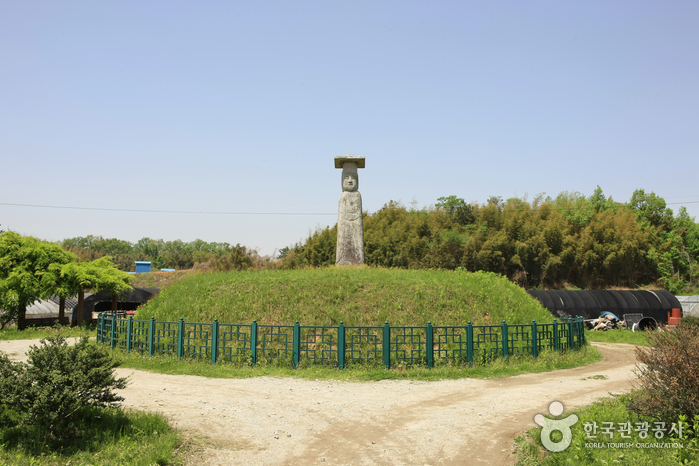
Iksan Godori Standing Stone Buddha (익산 고도리 석조여래입상)
Donggodo-ri, Geumma-myeon, Iksan-si, Jeonbuk-do
Iksan Godori Standing Stone Buddha is Treasure No. 46. The two Buddha statues (each measuring 424 cm) stand face-to-face at a distance of 200 meters apart and tell the story of an eternal, but unrequited love. According to legend, the two Buddhas (one male, one female) are lovers that can only meet for one night in the twelfth month of the lunar calendar. After the sunset on that special day, the lovers are allowed to meet, but must return to their respective positions before the rooster crows at dawn. The two statues are very representative of the Goryeo era, which produced many stone statues with minimal expression of the physical body. True to the era, each Buddha has almost no curves and is depicted with plain clothing and barely distinguishable arms. On their heads, the Buddhas wear a crown topped with another square hat. With their square faces, small eyes, pug noses, and small lips, the Buddhas are reminiscent of guardian deities typically placed at the entrance of villages.
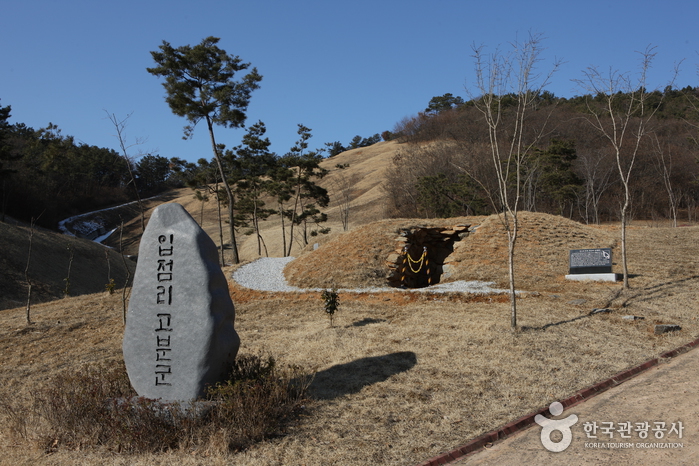
Iksan Ipjeomni Ancient Tombs (익산 입점리 고분)
80, Ipjeomgobun-gil, Iksan-si, Jeonbuk-do
The Iksan Ipjeomni Ancient Tombs are a group of ancient Baekje-era tumuli located 100 meters above sea level on the northeast brow of Chilmokjae Hill in Ipjeom-ri, Iksan-si, Jeollabuk-do. The burial ground covers an area of more than 18,520 square meters and is officially listed as Historical Site No. 347. To date, a total of eight tumuli have been excavated, all of which are chamber tombs. Surprisingly enough, the tombs were first discovered in 1986 by a high school student. While digging for arrowroot, a young man from a local high school found some pieces of gold that resembled a hat. He quickly notified the authorities and it was soon discovered that the pieces of gold were in fact valuable ancient artifacts. An emergency excavation was conducted and the eight tumuli were uncovered, but unfortunately all of the tumuli except Tomb No. 1 had been severely damaged. Tomb No. 1, which is still in relatively good condition, boasts an entrance measuring an impressive 16 meters in x_height and 2 meters in x_width. Inside the tombs archaeologists found valuable relics from the Baekje dynasty including earthenware, jewelry (a gilt-bronze hat, gold earrings, glass beads, etc.), harnesses and ironware. Given the shapes and the types of the pieces found, historians estimate that the tumuli were built in the 5th century. Since the gilt-bronze hat is similar in shape to those found in Japan, experts believe that there was an active exchange between the Baekje people and the people of Japan.
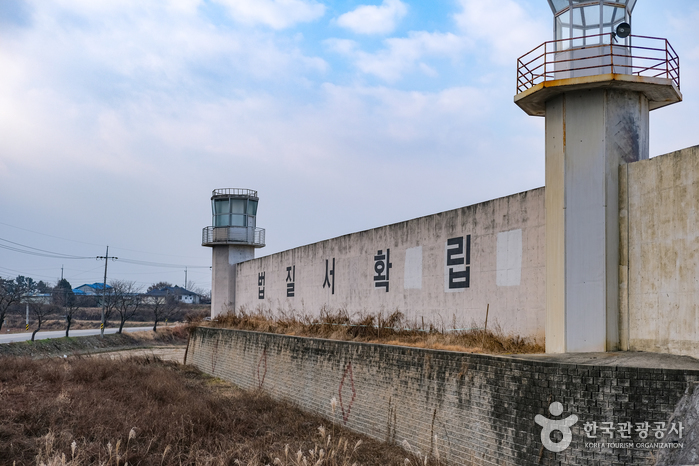
Iksan Prison Set (익산교도소세트장)
207 Hamnang-ro, Seongdang-myeon, Iksan-si, Jeollabuk-do
It is the only prison set in Korea made for movie filming. Dramas like "Delightfully Deceitful" and " Divorce Attorney Shin" and movies like "Tazza" and "Miracle in Cell No. 7" were filmed here. Although the set was built using a closed school, shooting photos in places like the court, solitary confinement, interrogation rooms, and torture chambers can feel eerie. Renting costumes and becoming a correctional officer or inmate provides a more realistic prison experience.
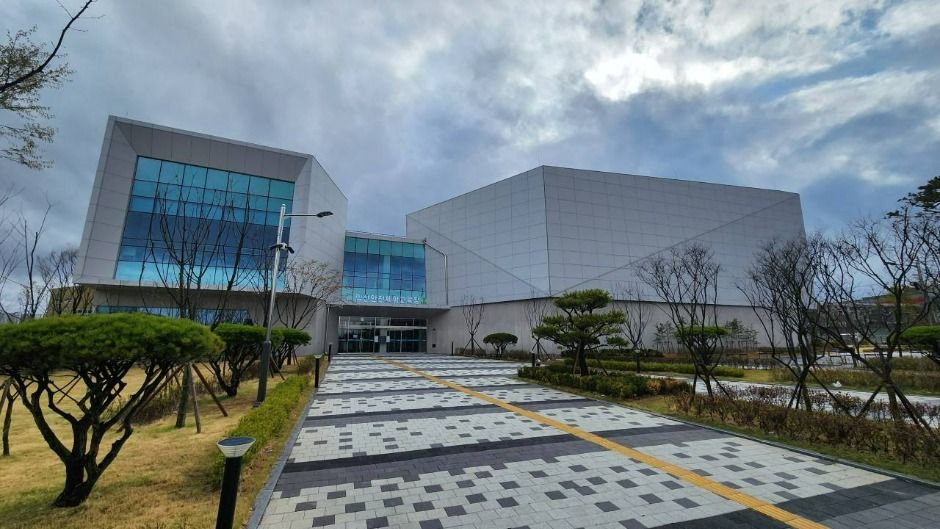
Iksan Safety Experience Training Center (KOSHA) (익산 안전체험장(안전보건공단))
127-49 Iksan-daero 78-gil, Hamyeol-eup, Iksan-si, Jeonbuk-do
Iksan Safety Experience Training Center is a safety training facility founded to raise public awareness on safety prevention and management, covering a wide variety of safety hazards that can occur in the everyday or workplace environment through fun and interactive content. The center uses VR and smart technology to simulate real-life emergency situations to educate the public on how to prevent and handle hazardous situations. It has 50 interactive content overall, spread out among six different themed halls. The training center is open to visitors of all ages for free.
Iksan Ssangneung (익산 쌍릉)
Seogwang-dong, Iksan-si, Jeonbuk-do
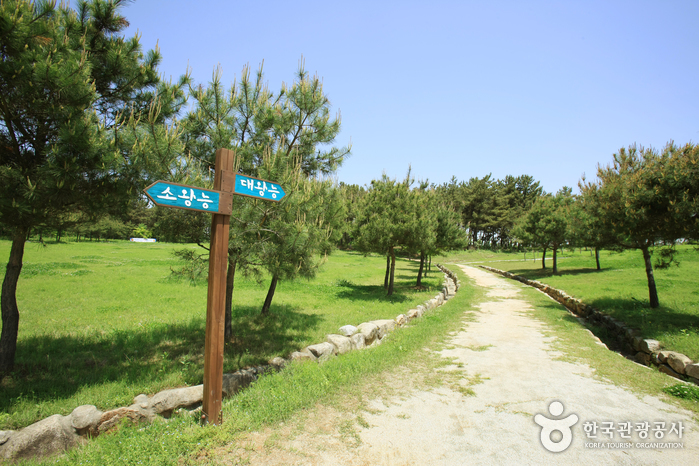
The Ssamgneung (Twin Tombs) in Iksan are stone chamber tombs that were unearthed during an academic excavation survey in 1917. At the time of the survey it was discovered the tombs had already been illegally excavated, most likely during the reign of King Chungsukwang of the Goryeo dynasty. Though looters had stripped the tombs of any burial accessories, the wooden coffins were found to be relatively intact. The coffins were severely damaged in the aftermath of the Korean War, but were later restored by the Jeonju National Museum. When they were first found, the twin tombs measured 3.1 meters high and 0.5 kilometers wide, but some of the original wood was lost during the tombs’ tumultuous history and the restoration that followed. The larger of the restored tombs now measures 30 meters in diameter and 5 meters in x_height while the smaller tomb measures 24 meters in diameter and 3.5 meters in x_height. On January 21, 1963 the tombs were designated Historic Site No. 87. The Twin Tombs are roughly 200 meters apart, with the tomb in the east called Daewangmyo (big royal tomb) and the one in the west Sowangmyo (small royal tomb). The interiors of the tombs are done in the same style as the stone chamber tombs found in the tomb cluster of Neungsan-ri, Buyeo. Considering that the nearby Mireuksaji Temple Site was built during the reign of King Mu of Baekje dynasty, it is highly likely that the Twin Tombs are those of King Mu and his wife, Queen Seonhwa.
Iksan Sungnimsa Temple (숭림사(익산))
495-57, Baekje-ro, Iksan-si, Jeonbuk-do
Sungnimsa Temple is one of the major temples in Iksan under Geumsansa Temple and was believed by some to have been built by monk Jinpyo Yulsa during the reign of King Gyeongdeok (742-764) during the Silla period. Others believe that the temple was established during the first year of King Chungmok of the Goryeo dynasty in 1345. Sungnimsa Temple was named in honor of great monk Bodhi-Dharma, who practiced seated Zen meditation for nine years at Sorimsa Temple located deep inside Sungsan Mountain in China. The temple was burnt down during the Imjin War (1592-1598), leaving only Bogwangjeon Hall. Bits and pieces of the temple were later restored in 1697, 1819, and 1892.
Ikseon-dong Hanok Street (익선동 한옥거리)
Ikseon-dong, Jongno-gu, Seoul
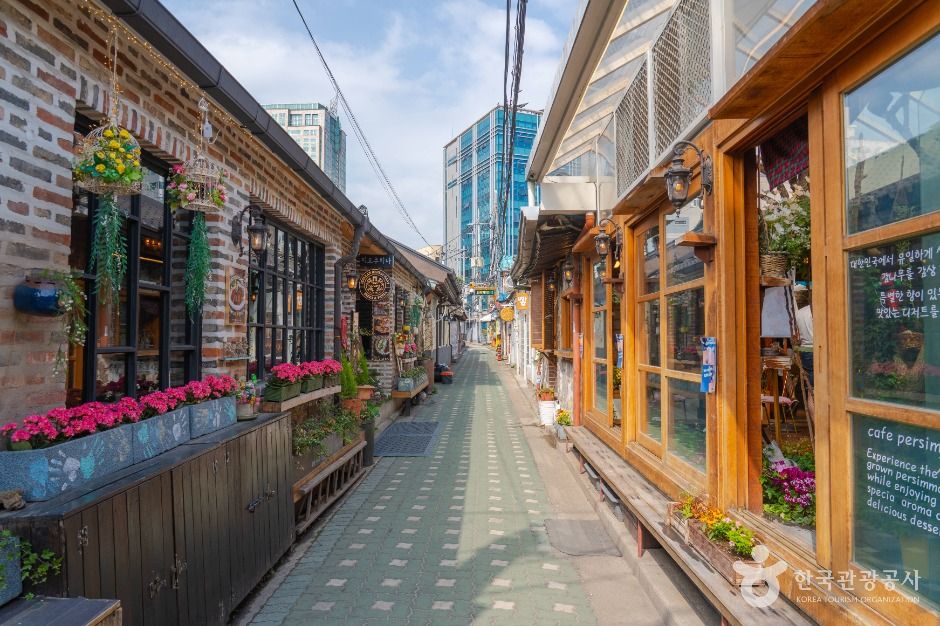
Ikseon-dong is a place where the harmony of alleys and hanok houses exudes beautiful charm and is a must-visit spot for tourists of all ages and genders. It is also an area that connects the younger and older generations.
Ilbungsa Temple (일붕사(의령))
1180-42 Cheongjeong-ro, Gungnyu-myeon, Uiryeong-gun, Gyeongsangnam-do
Situated at the base of Bonghwangsan Mountain in Uiryeong, Ilbungsa Temple is renowned for being the world's largest cave temple, a distinction recognized by the Guinness World Records. It features two cave temples, including the Daeungjeon Hall Grotto and Muryangsujeon Grotto. A sought-after destination for those seeking the fulfillment of their wishes through prayer, Ilbungsa Temple is surrounded by other attractions including the Byeokgye Tourist Complex, Chalbigyegok Valley, and Bonghwangdae Cliff.
Ilchulland (일출랜드)
4150-30, Jungsangandong-ro, Seogwipo-si, Jeju-do
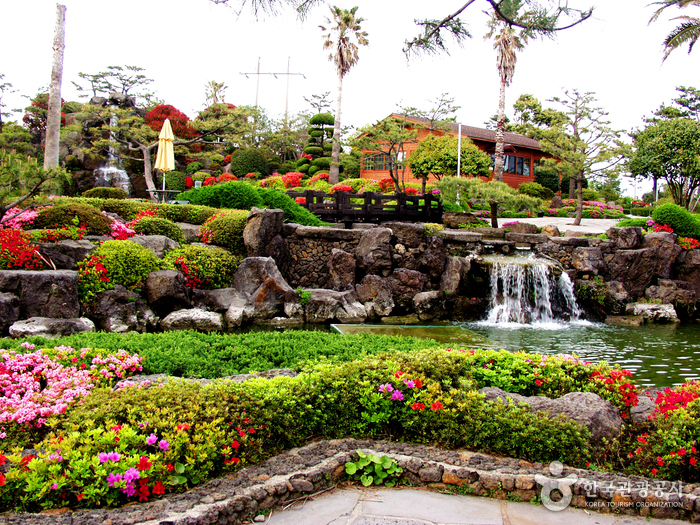
Ilchulland centered around Micheongul Cave is located in the eastern region on Jeju Island. The attraction provide important resources for academy, tourism and culture as well as store and distribute fresh air, water, green fields and oreum. The undeground area takes human back to the beginning with various chemical elements. Visitors will be able to experience relaxation and refreshing nature not available in the city.
Plan your Korea trip
Korea travel FAQ
How do I use the travel search?
Enter a place or interest, then narrow the results by region, category or sort order.
Will my filters stay selected on the next page?
Yes. Your search and filter choices stay in the page URL while you move through the results.
Can I find directions to each place?
Place pages include an external Google Maps search when coordinates or an address are available.
Source: Korea Tourism Organization, official website (https://knto.or.kr).