TRAVEL IN KOREA
Korea Places to Visit
Find attractions, culture, festivals, stays, restaurants, shopping and travel courses for a clear Korea trip plan.
Data last synced: 2026-06-25. Some details may change. Please confirm official information before visiting.
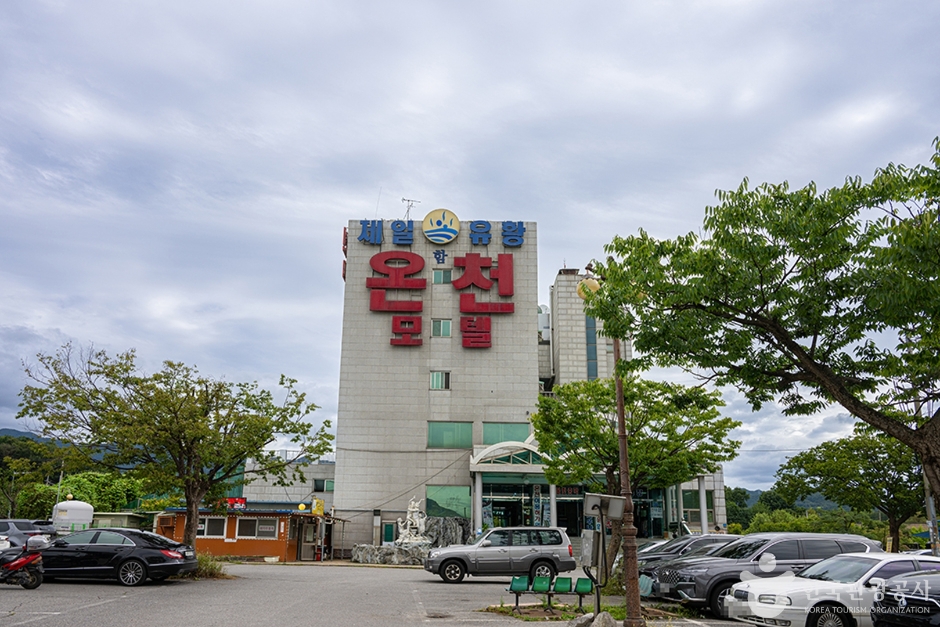
Ildong Jaeil Yuhwang Oncheon (일동제일유황온천)
1210 Hwadong-ro, Ildong-myeon, Pocheon-si, Gyeonggi-do
The Ildong Jaeil Oncheon is situated in the hot springs region of Pocheon-gun. Many visitors from the Seoul and Gyeongin areas come for the high-quality water that comes from the hot springs located 800~1000 meters underground. Visitors to the Ildong hot springs region also enjoy the famous Idong galbi (grilled meat), visit the nearby Baekunsan, Gwangdeoksan, Cheonggyesan, and Unaksan Mountain ranges and also visit Nasan Golf Course and Ildong Lake. The Ildong Jaeil Oncheon’s hot springs water are known to be effective in treating rheumatism, obesity, diabetes, high blood pressure, neuralgia, women’s diseases, arthritis, and various skin ailments.
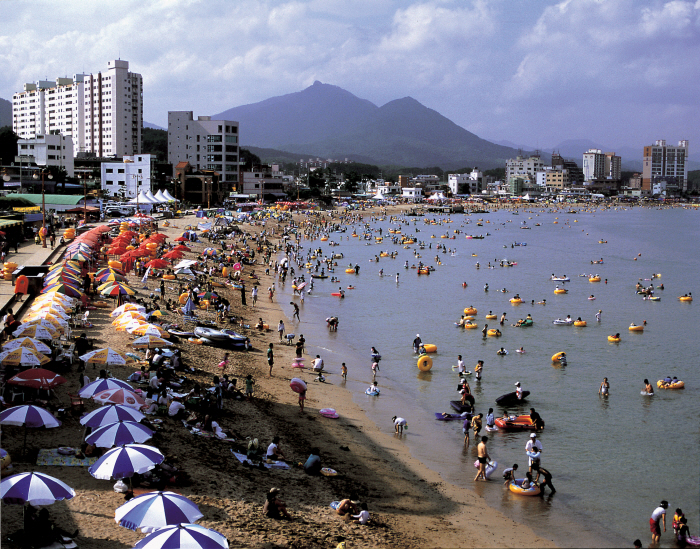
Ilgwang Beach (일광해수욕장)
17, Samseong 3-gil, Gijang-gun, Busan
Ilgwang Beach is a popular beach for families with a white sandy beach and Gangsongjeong Pine Tree Forest. With shallow waters and a clear view of the ocean, there is also Samseongdae Pavilion built during the late Joseon dynasty. There are numerous accommodation, dining and convenience facilities near the beach as well as a place to fish. Moreover, Ilgwang Beach hosts a festival annually in late July or early August.
Ilmi Dental Clinic (일미치과의원)
(9th Floor), 428 Gyeongin-ro, Michuhol-gu, Incheon
Ilmi Dental Clinic is a specialized dental clinic for the treatment of snoring and sleep apnea. With over 30 years of experience in implant and prosthetic treatments, Ilmi Dental Clinic has actively sought patient feedback and developed the Pasa device for preventing snoring and sleep apnea about 10 years ago. Since then, the Pasa device has been used in the treatment of snoring patients nationwide. Dr. Park Young-Hyun’s CT-based diagnostic method for identifying the causes of snoring and the personalized Pasa oral appliance therapy are exclusively available at Ilmi Dental Clinic. Currently, apart from uncomfortable positive airway pressure machines, there are no other comfortable treatments for snoring. However, Ilmi Dental Clinic offers a solution to this problem. Additionally, dental treatments can be challenging for international patients who need multiple visits, but Ilmi Dental Clinic can provide effective treatment for snoring and sleep apnea in just one day at a reasonable price.

Ilsan Lake Park (일산호수공원)
595 Hosu-ro, Ilsandong-gu, Goyang-si, Gyeonggi-do
Ilsan Lake Park is an artificial lake park built as part of the city development project. The park is equipped with convenient facilities and attractions, including a riverside square, a walking path, recreational amenities, and ecological experience facilities. The park also serves as the venue for International Horticulture Goyang Korea, as well as other cultural and seasonal events.

Ilsung Namhangang Condo & Resort (일성남한강콘도&리조트)
5, Silleuk-ro, Yeoju-si, Gyeonggi-do
Guests can enjoy the beautiful Namhangang River at Ilsung Namhangang Condo & Resort.
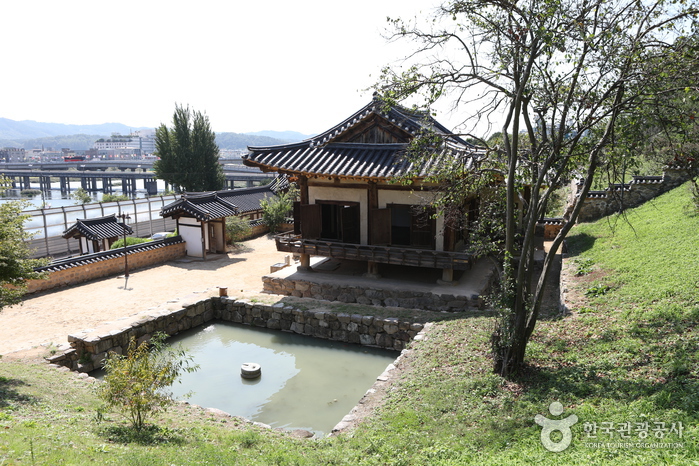
Imcheonggak House (안동 임청각)
63, Imcheonggak-gil, Andong-si, Gyeongsangbuk-do
Imcheonggak House is the largest remaining household from the Joseon dynasty, holding a history of over 500 years. The house was built for one aristocratic family’s love of the scenic beauty in the surrounding area. It was originally built with a total of 99 kan (traditional measurement of space between pillars) but only 70 remain. The most famous structure on this property is the annexed pavilion, Gunjajeong. An autograph of the famous Confucian scholar Lee Hwang can be found hanging outside the pavilion.
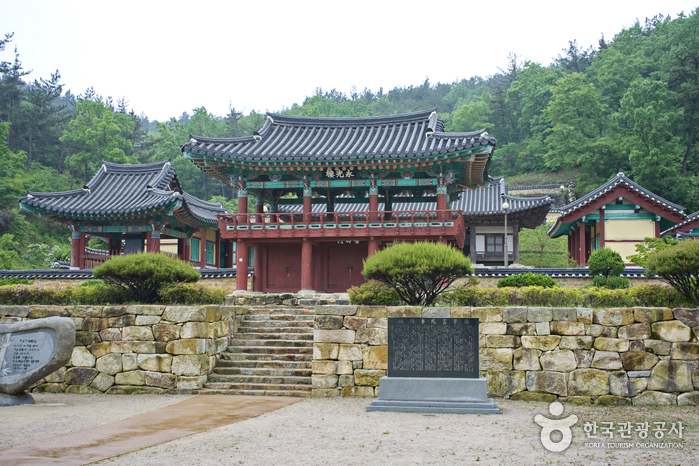
Imgoseowon Confucian Academy (임고서원)
447 Poeun-ro, Imgo-myeon, Yeongcheon-si, Gyeongsangbuk-do
Imgoseowon Confucian Academy, established in 1553, was built to commemorate the esteemed Goryeo statesman Jeong Mongju. Visitors can explore Munchungsa Shrine, the sanctuary of his ancestral tablet, and Jonyeonggak Pavilion, where his portrait is displayed. Heungmundang Hall, historically used as a lecture hall, is also a significant site within the academy. Among the treasured relics, the academy holds three portraits of Jeong Mongju and a collection of over 200 books. A highlight is the Books of Imgoseowon Confucian Academy, an esteemed compilation of twenty-five volumes across ten categories, recognized as a national Treasure. Furthermore, the grounds are graced by a revered ginkgo tree, recognized as a monument, and the Stele of Jeong Mongju, each adding to the rich cultural tapestry of the site.
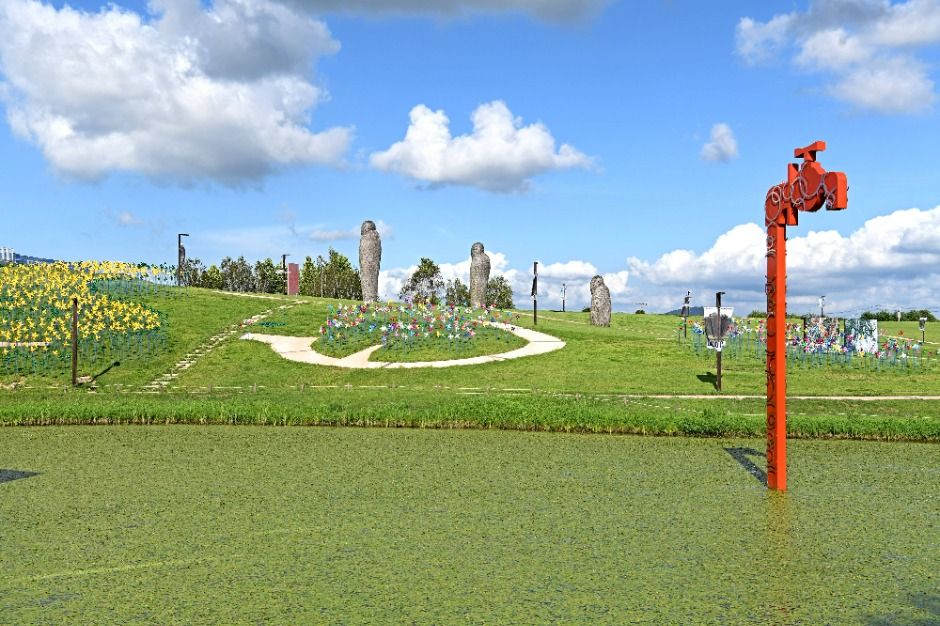
Imjingak Resort (Pyeonghwa Nuri Park) (파주 임진각(평화누리공원))
177 Imjingak-ro, Munsan-eup, Paju-si, Gyeonggi-do
Located approximately 56 kilometers from Seoul City Hall and 7 kilometers from DMZ, the site of Imjingak Pavilion is an important part of Korean history. Imjingak Resort, the main tourist complex, has various war-related artifacts as well as the spacious Pyeonghwa Nuri Park. The resort preserves the Freedom Bridge and Imjingang rail bridge from the Korean War to remind people of the past, along with a Memorial Hall, memorial monuments, and recreational areas.
Imjingang Hwangpo Sailboat (임진강 황포돛배)
1857, Yulgok-ro, Jeokseong-myeon, Paju-si, Gyeonggi-do
A Hwangpo sailboat quietly floats on the Imjingang River moving with the wind with its broad and yellow sail stretched out. Hop on a Hwangpo sailboat, which was a major means of transportation in the Joseon Dynasty, and enjoy the beauty of the red cliffs of Imjingang for about 45 minutes from Duji-ri to Jajang-ri. Paju Hwangpo Sailboat has fully recreated the original form from the Joseon Period and presents tourists with the excitement of traveling back in time. Once you board a Hwangpo sailboat and depart from Duji Quay, you will be able to immerse yourselves into the gorgeous landscape of Imjingang, from the red cliffs in Wondang-ri and Horogoruseong Fortress to Gorangpo Yeoulmok, where civilian access was restricted for several decades.
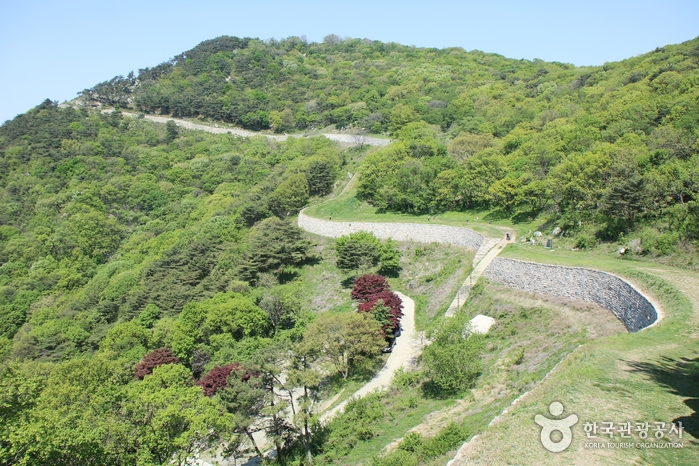
Imjonseong Fortress (예산 임존성)
San 28 Masi-ri, Yesan-gun, Chungcheongnam-do
Imjonseong Fortress (also known as Daeheungsanseong Fortress) is located at the top of Bongsusan Mountain between Yesan-gun and Hongseong-gun in Chungcheongnam-do. This stone fortress was designed as a place to launch attacks against enemies. One of the ways in which those in the fortress fended off intruders was to unleash the water from the giant fortress well and let it gush down the mountain towards the oncoming forces. The fortress wall is about 2.5 meters high and 3.5 meters wide and has a 7 to 8-meter ditch that runs alongside the southern wall. Compared with other Korean fortresses, Imjonseong Fortress is higher and about 2 meters thicker. It is the largest fortress of the Baekje Kingdom and has become the subject of much research. History shows that the fortress was the central hub of the Restoration Movement of the Baekje Kingdom (18 BC - AD 660). In the 20th year of the reign of King Uija (Baekje dynasty), the kingdom was defeated by the united forces of the Silla Kingdom and the Tang dynasty (currently, China). Boksin (a cousin of King Uisa), a monk, and Heukchisangji stayed at the fortress for three years while trying to return the king to power. As one walks along the winding trail, the view of Daeryeonsa Temple comes in to view and as once at the top, the spectacular views of Oseosan, Baekwolsan, and Gayasan mountains unfold. Those who come to the fortress from Masa-ri, Gwangsi-myeon, can drive and park their car in the parking lot located right below the fortress.
Imsil Cheese Theme Park (임실치즈테마파크)
50, Doin 2-gil, Imsil-gun, Jeonbuk-do
Imsil Cheese Theme Park is the only cheese related theme park in Korea. Open in 1960, the park provide visitors a chance to enjoy the delicious Imsil cheese in various ways.
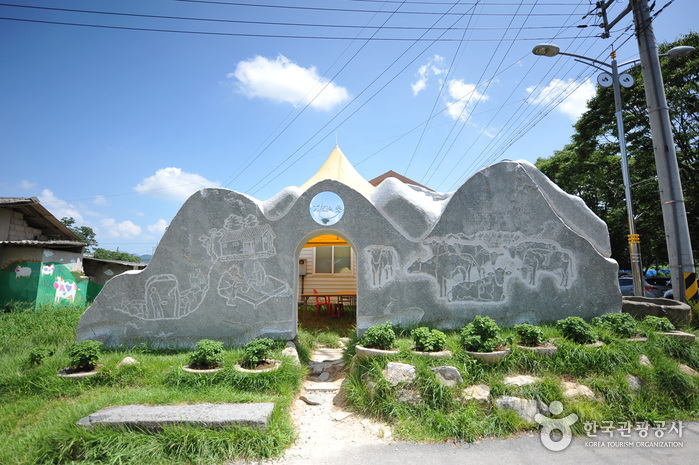
Imsil Cheese Village (임실 치즈마을)
4 Cheese maeul 1-gil, Imsil-eup, Imsil-gun, Jeonbuk-do
Imsil Cheese Village is the home of Korean cheese. In 1966, Father Didier t'Serstevens (Korean name: Ji Jeong-hwan), a Belgian priest, brought two mountain goats to the village and started making cheese. He worked day and night with the locals to make the cheese that has earned its current reputation. Imsil Cheese Village runs experience programs such as mozzarella cheese making and yogurt making.
Incheon Baendaengi Street (연안부두 밴댕이회무침거리)
24-1, Yeonanbudu-ro, Jung-gu, Incheon
The Gwanghwado and Incheon areas are known for their plentiful catches of baendaengi (large-eyed herring). After a little street started specializing in serving baendaengi some 30 years ago, the fish has continued to grow in popularity. Located in Guwol-dong, across from the Incheon Culture & Arts Center, Baendaengi Street has expanded, and so has the variety of dishes served. Visitors can try baendaengi prepared sashimi-style, roasted, or in a spicy soup. For this particular species of herring, locals believe the flavor is best in March and April when they grow to their largest size. Salted Baendaengi also makes an excellent side-dish for Korean meals. * Baendaengi is one of many types of small prey fish referred to as ‘Soeo’ for their fierce struggle in fishing nets. Soeo have internal organs that are proportionally smaller than other species of fish and are known for their feisty nature. These attributes are thought to signify a stress-filled life, which is why many Koreans refer to narrow-minded or hot-tempered people as ‘baendaengi.’
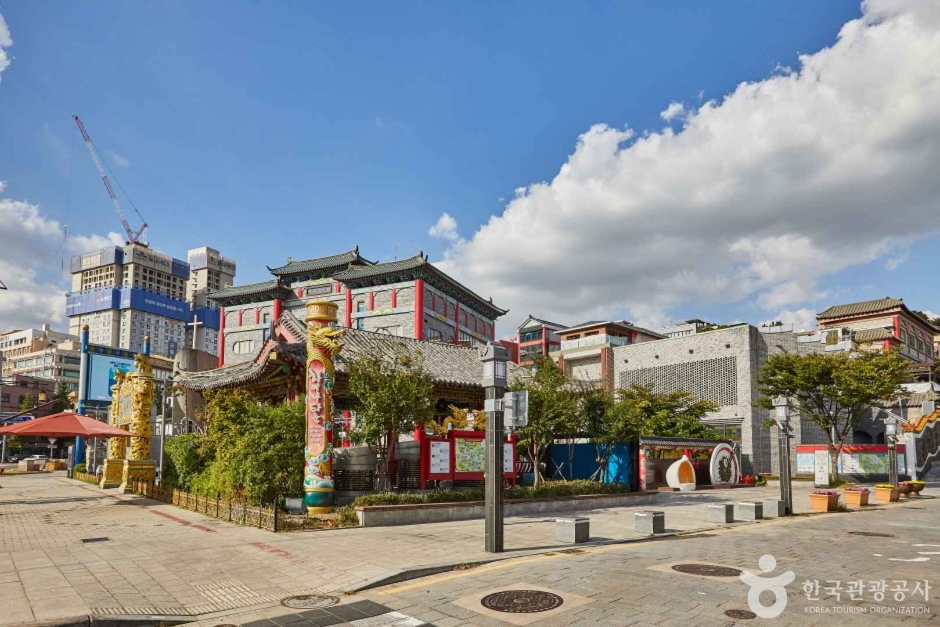
Incheon Chinatown (인천 차이나타운)
20 Chinatown-ro 59beon-gil, Jung-gu, Incheon
Incheon's Chinatown came into being with the opening of Incheon Port in 1883 and Incheon's designation as an extraterritoriality of the Ching dynasty in the following year. In the past, the area held many stores trading goods imported from China, but currently most Chinese businesses in the area are restaurants. Today, the residents of Chinatown are mostly 2nd or 3rd generation Chinese, descendents of the early Chinese settlers. The area harbors many of the flavors of China, while the traditional culture of the first generation is preserved.
Incheon Grand Park (인천대공원)
236 Munemi-ro, Namdong-gu, Incheon
Incheon Grand Park is an urban nature park located in Jangsu-dong, Namdong-gu, Incheon. The park is surrounded by Gwanmosan Mountain and Sangasan Mountain. Spanning across 727 acres of land, Incheon Grand Park is the only large-scale natural green park in Incheon. The park provides a pleasant atmosphere for citizens to escape from the city life and enjoy the natural surroundings. Over 4 million people visit the park every year to take in the clean air and relax in nature.
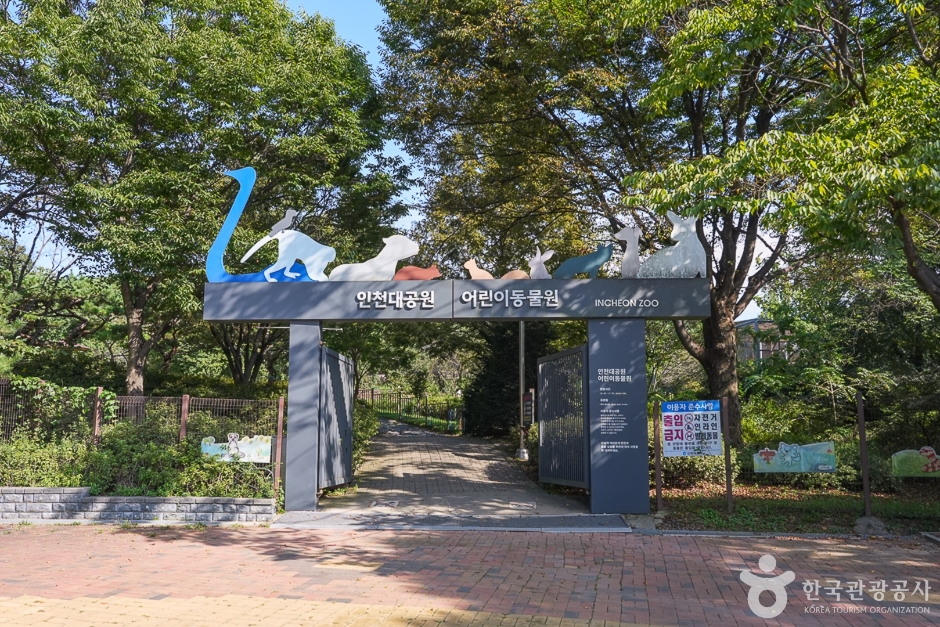
Incheon Grand Park Children's Zoo (인천대공원 어린이동물원)
236 Munemi-ro, Namdong-gu, Incheon
The Children's Zoo of Incheon Grand Park is located near the south gate, and is home to over 230 animals in 27 species. The zoo mostly features gentle animals like rabbits, guinea pigs, Japanese macaques, marmosets, fennec foxes, wallaroos, meerkats, macaws, ostriches, and other non-dangerous animals. The zoo also houses protected Korean animals such as eagles and the Eurasian eagle-owl. To prevent accidents and animal stress, the zoo does not operate any animal feeding programs.
Plan your Korea trip
Korea travel FAQ
How do I use the travel search?
Enter a place or interest, then narrow the results by region, category or sort order.
Will my filters stay selected on the next page?
Yes. Your search and filter choices stay in the page URL while you move through the results.
Can I find directions to each place?
Place pages include an external Google Maps search when coordinates or an address are available.
Source: Korea Tourism Organization, official website (https://knto.or.kr).