TRAVEL IN KOREA
Korea Places to Visit
Find attractions, culture, festivals, stays, restaurants, shopping and travel courses for a clear Korea trip plan.
Jinjamhyanggyo Confucian School (진잠향교)
67, Gyochon-ro, Yuseong-gu, Daejeon
Jinjamhyanggyo Confucian School was established to enshrine and orient the ancestral tablet of excellent classical scholars in 1405 (the 5th year of King Taejong's reign) and to educate people. More detailed information is not available in the record. The remaining building is called Daeseongjeon, and the ancestral tablets are 5 Seong, Songju 6 hyeon, and Korean 18 hyeon. One instructor, who received a plot of land and slaves from the nation, taught 30 students during the Joseon period, but after the Gapo Reform, the educational function disappeared and Seokjeon, a religious ceremony, was served in summer and fall with offerings of incense on the first day of each month and at the half-moon instead. Daeseongjeon (Cheongju Daeseong High School (Former Main Building of Cheongju Commercial High School) is designated as a Registered Cultural Heritage.
Jinju Allbam Night Market (Nongae Market) (진주 올빰야시장(논개시장))
12 Jinyangho-ro 569beon-gil, Jinju-si, Gyeongsangnam-do
Located between Jinju Jungang Market to the west and Produce Market to the north, this traditional market boasts over 60 years of history, having first opened in 1962. Originally called Jangdae Market, it was renamed to Nongae Market in a bid to reinvigorate the declining traditional market. One of its highlights is the Allbam Night Market, Jinju’s only permanent night market. The name “Allbam” is a portmanteau of Olppaemi (owl in Korean) and Bam (night). The market opens every Saturday from 6:00 PM to 11:00 PM, offering a wide variety of food and attractions, including flat Bibim mandu (flat mandu in spicy sauce), grilled ice cream, Yukjeon (pan-fried battered Beef), and spicy braised pigs' feet. It has become a rising hotspot for night tourism in Jinju. With nearby attractions like Jinjuseong Fortress and Somangjinsan Lantern Theme Park, it is also a convenient destination for visitors looking to explore the vicinity.
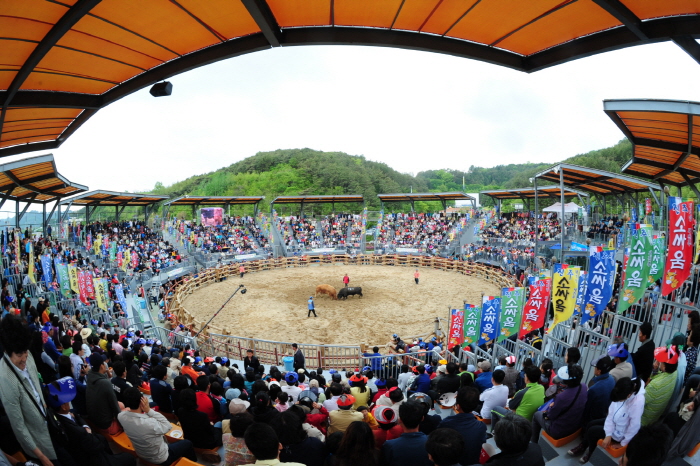
Jinju Bullfighting Arena (진주소싸움경기장)
100 Panmunodong-gil, Jinju-si, Gyeongsangnam-do
Jinju Traditional Bullfighting Arena was established with the aim of preserving and fostering Jinju's traditional folk culture of bullfighting. With a seating capacity of 3,000, the arena is strategically situated in proximity to the expansive Jinyangho Park, seamlessly blending with its picturesque scenery. This venue annually hosts national competitions and holds regular Saturday bullfighting matches, providing visitors with a unique and captivating spectacle.
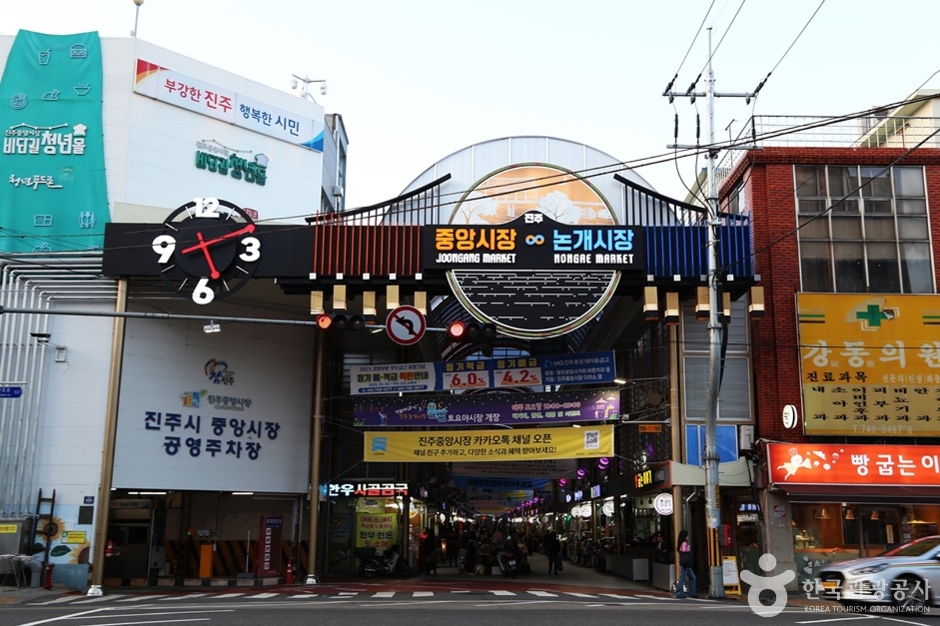
Jinju Jungang Market (진주중앙시장)
8-1 Jinyangho-ro 547beon-gil, Jinju-si, Gyeongsangnam-do
Jinju Jungang Market is a long-standing traditional market that traces its origins to the Jinju Sangmusa (now the Chamber of Commerce) established in 1884. Designated as a cultural tourism market in 2011, it is located in the heart of Jinju. Nestled between underground shopping malls, financial institutions, medical facilities, and youth-oriented streets, the area boasts heavy foot traffic and serves as a main hub for the city’s logistics, economy, and culture. Originally a five-day-interval market opened every 5 days from the 2nd of each month, it now operates year-round. The market features a 980-meter-long retractable arcade and is divided into three sections of Hanbok and fabric shops, food alleys, and general goods areas. Starting at 2:00 AM, a dawn market is also held here, with vegetable and fish auctions for retailers. Trading of agricultural and fishery products continues until around 10:00 AM, after which the regular stores open. Located at a key commercial point where abundant agricultural products from Jirisan Mountain and fresh seafood from the southern coast are distributed, the market offers a wide array of local specialties, such as dried seafood, agricultural and fishery products, as well as Hanbok. It also participates in regional events like the Jinju Namgang Yudeung Festival, showcasing items such as Jinju bibimbap. Once known as Jinju Jungang Yudeung Market, it was officially renamed Jinju Jungang Market in 2015.

Jinju Namgang Yudeung Festival (진주 남강유등축제)
287 Gangnam-ro, Jinju-si, Gyeongsangnam-do
The Jinju Namgang Yudeung Festival is an event that continues the practice of making wishes by floating colorful lanterns down the Namgang River. This practice of over 400 years originated from the Siege of Jinju in 1592. The festival begins at sunset when lanterns of various shapes and sizes are lit on the Namgang River. World Pungmul lanterns, wish lanterns, traditional lanterns, religious lanterns, and customized lanterns embroider the night with colorful lights. Fireworks and lighting shows are held against the backdrop of this beautiful night view, along with various cultural shows. The festival operates food trucks where visitors can enjoy delicious foods from around the world. ◎ The Siege of Jinju and YudeungDuring the Japanese invasion of Korea in 1592, yudeung (oil lanterns) were lit in the battle at Jinjuseong Fortress to stop the Japanese army from crossing the Namgang River. The lanterns were also used as a means of contacting families outside the fortress.
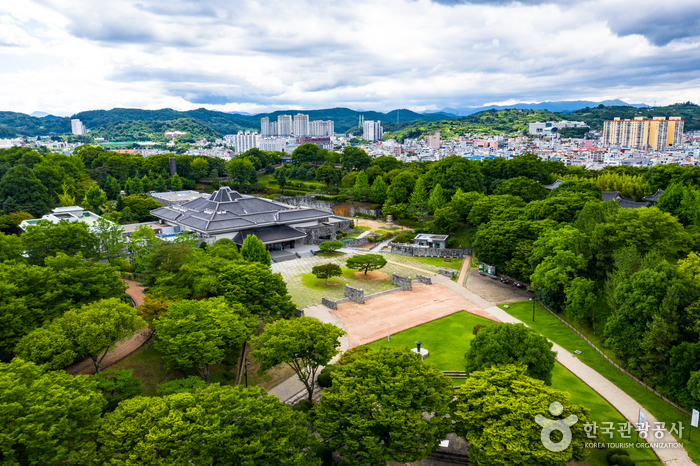
Jinju National Museum (국립진주박물관)
626-35, Namgang-ro, Jinju-si, Gyeongsangnam-do
Jinju National Museum opened on November 2, 1984 within Jinjuseong Fortress to promote the culture of ancient Gaya and act as the main archeological research center for the western Gyeongsangnam-do. In 1998, the museum also began specializing in research and collection of materials related to the Imjin War (1592-1598). The museum continues to exhibit and educate the public about the Imjin War and overall history of eastern Asia.
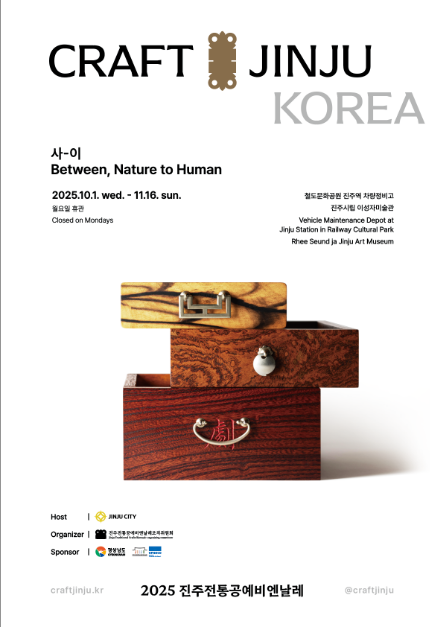
Jinju Traditional Crafts Biennale (2025 진주전통공예비엔날레)
18 Jinju-daero 879beon-gil, Jinju-si, Gyeongsangnam-do
Jinju Traditional Crafts Biennale explores the relationship between nature and humankind. The materials used in the craft—wood, earth, and metal—are drawn from nature and reborn through human hands and senses. By reflecting on this relationship, it reconnects the memories of tradition and modernity, time and place.
](https://tong.visitkorea.or.kr/cms/resource/25/4043425_image2_1.jpg)
JINJUNGSUNG Eyewear E-Mart Gangneung Branch[Tax Refund Shop](안경진정성 이마트 강릉점)
2F, 2398-10, Gyeonggang-ro, Gangneung-si, Gangwon-do
Glass Integrity (Angyeong Jinjeongseong) focuses on the essence of eyewear to provide customers with the most honest and professional vision services, as its name suggests. It is an optical store that repays customer trust through sincere, unexaggerated counseling and verified quality products.
](https://tong.visitkorea.or.kr/cms/resource/22/4023422_image2_1.jpg)
JINJUNGSUNG Eyewear X WINC Cheongna Branch [Tax Refund Shop](안경진정성 윙크 청라점)
252, Cheongna canal-ro, Seo-gu, Incheon
Glass Integrity (Angyeong Jinjeongseong) focuses on the essence of eyewear to provide customers with the most honest and professional vision services, as its name suggests. It is an optical store that repays customer trust through sincere, unexaggerated counseling and verified quality products.
](https://tong.visitkorea.or.kr/cms/resource/29/4018429_image2_1.jpg)
Jinjungsung Optical - Emart Sinchon Branch [Tax Refund Shop](안경진정성 이마트 신촌점)
B2F, 94, Sinchon-ro, Mapo-gu, Seoul
Glass Integrity (Angyeong Jinjeongseong) focuses on the essence of eyewear to provide customers with the most honest and professional vision services, as its name suggests. It is an optical store that repays customer trust through sincere, unexaggerated counseling and verified quality products.
](https://tong.visitkorea.or.kr/cms/resource/01/4018601_image2_1.jpg)
Jinjungsung Optical - Hongdae Branch [Tax Refund Shop](안경진정성 홍대점)
1F, 13-5, Dokmak-ro 15-gil, Mapo-gu, Seoul
Glass Integrity (Angyeong Jinjeongseong) focuses on the essence of eyewear to provide customers with the most honest and professional vision services, as its name suggests. It is an optical store that repays customer trust through sincere, unexaggerated counseling and verified quality products.
](https://tong.visitkorea.or.kr/cms/resource/03/4020203_image2_1.jpg)
Jinjungsung Optical - Starfield Coex Mall Branch [Tax Refund Shop](안경진정성 스타필드 코엑스몰점)
B1F, 513, Yeongdong-daero, Gangnam-gu, Seoul
Glass Integrity (Angyeong Jinjeongseong) focuses on the essence of eyewear to provide customers with the most honest and professional vision services, as its name suggests. It is an optical store that repays customer trust through sincere, unexaggerated counseling and verified quality products.
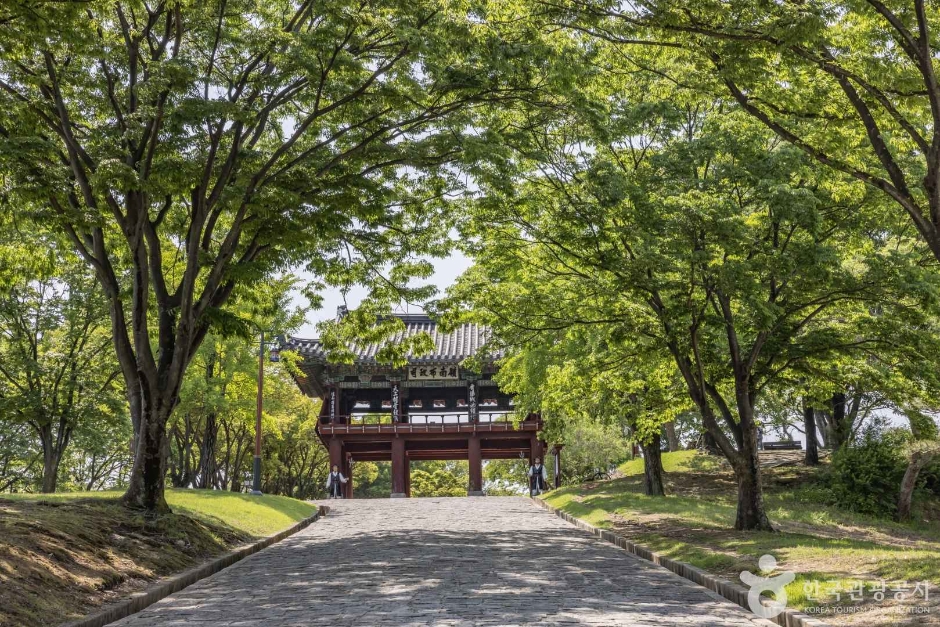
Jinjuseong Fortress (진주성)
626 Namgang-ro, Jinju-si, Gyeongsangnam-do
Jinjuseong Fortress, initially erected in ancient times, was expanded in 1379 to fend off pirate invasions. It saw two battles during the Imjin War (1592-1598). Inside, there are structures like Chokseongnu Pavilion, Jinju National Museum, a victory monument, an outdoor stage, and cafés. The castle overlooks the scenic Namgang River. Visitors can also enjoy hanbok experiences and take a ferry on the Namgang River.
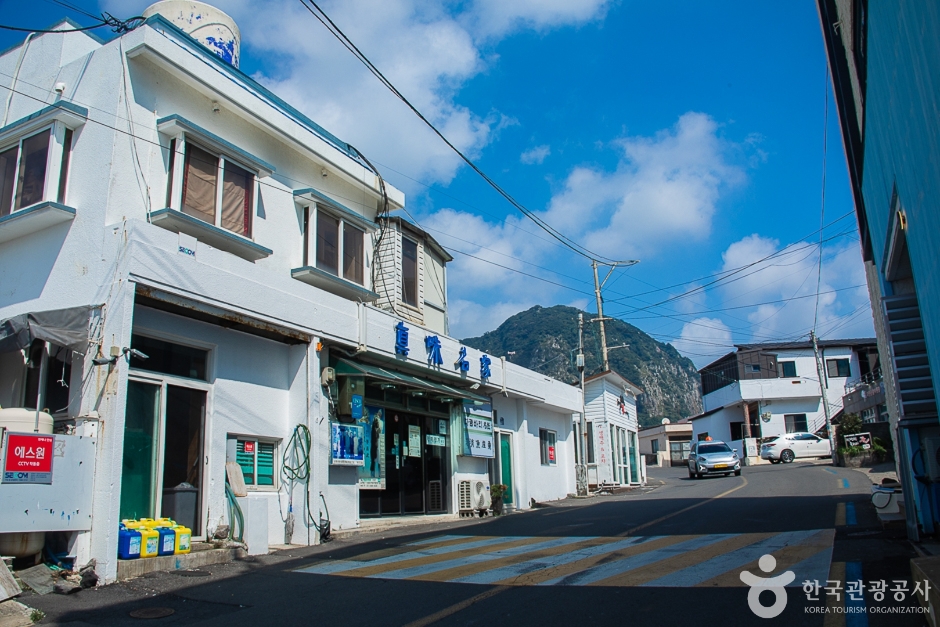
Jinmi Myeongga (진미명가)
167 Sagyenam-ro, Andeok-myeon, Seogwipo-si, Jeju-do
Jinmi Myeongga, under the ownership of Chef Kang Chang-gun, a saw-edged perch maestro, offers an extensive menu of over 30 dishes derived from a single saw-edged perch. Established in 1983, it has become a favored dining spot for Korean presidents and global leaders. Guests ordering Jeju's natural saw-edged perch are treated to hoe (raw fish), ppyeo jiriguk (bone fish soup), and an assortment of side dishes, where the hoe is noted for its chewiness and the fish soup for its rich flavor. It's advisable to make a reservation before visiting.
Jinnamgwan Hall (여수 진남관)
11, Dongmun-ro, Yeosu-si, Jeollanam-do
Jinnamgwan Hall (National Treasure) is located at the site of the Jeolla Province naval base during the Joseon dynasty. At that time, it was a watchtower called Jimhaeru, where Admiral Yi Sun-sin commanded his forces during the Imjin War (1592-1598). The original building burned down near the end of the war, and Admiral Yi Sun-sin's successor, Yi Si-eon, constructed Jinnamgwan Hall, a large gaeksa (government officer guesthouse) at the site in 1599. Jinnamgwan Hall is a single-story gable-roofed building with 15 kan (traditional Korean measurement between two pillars) on the front and 5 kan on the sides. It is the largest single-story goverment building from the Joseon dynasty in the region. At the hall entrance is a small museum outlining the history of Jinnamgwan and the Imjin War, and the famous Yeosu Stone Statue (Jeollanam-do Tangible Cultural Asset) is located within the precincts of the hall. Nearby attractions include Jasan Park, Odongdo Island, Dolsan Bridge, Chungminsa Shrine, and Manseongni Beach.
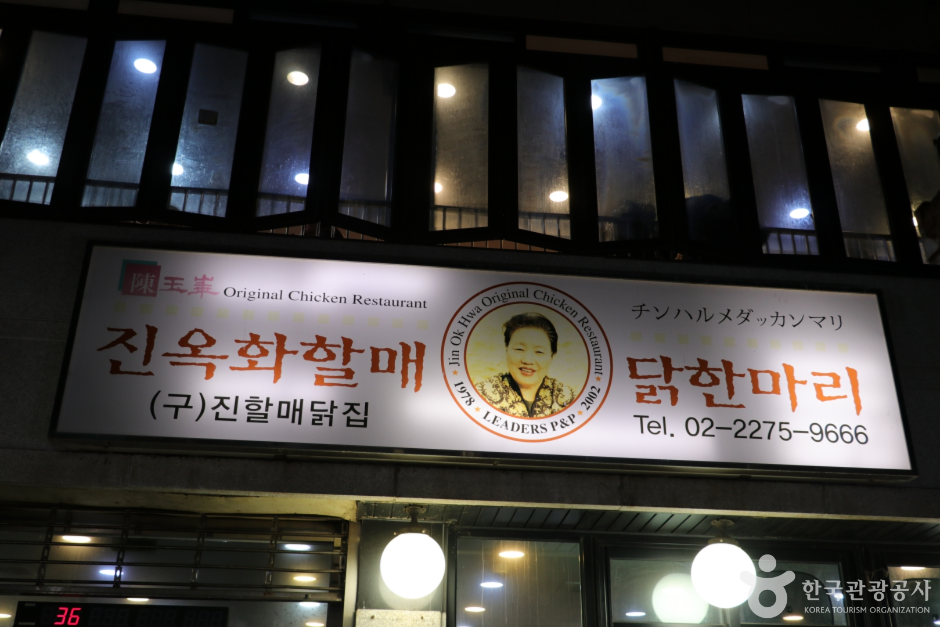
Jinokhwa Halmae Wonjo Dakhanmari (진옥화할매원조닭한마리)
18 Jong-ro 40ga-gil, Jongno-gu, Seoul
Jinokhwa Halmae Wonjo Dakhanmari is a renowned restaurant located in the food alley of Dongdaemun Market, operating since 1978. Its specialty and the only offered menu item is dakhanmari (whole chicken soup), a whole chicken boiled in savory and rich broth. Visitors can order toppings and extra ingredients like rice cakes, green onions, potatoes, and noodles to their soup.
Plan your Korea trip
Korea travel FAQ
How do I use the travel search?
Enter a place or interest, then narrow the results by region, category or sort order.
Will my filters stay selected on the next page?
Yes. Your search and filter choices stay in the page URL while you move through the results.
Can I find directions to each place?
Place pages include an external Google Maps search when coordinates or an address are available.
Source: Korea Tourism Organization, official website (https://knto.or.kr).