TRAVEL IN KOREA
Korea Places to Visit
Find attractions, culture, festivals, stays, restaurants, shopping and travel courses for a clear Korea trip plan.
](https://tong.visitkorea.or.kr/cms/resource/52/4043152_image2_1.png)
MIPASTRY Annex[Tax Refund Shop](미페이스트리 별관)
B1, 9, Jahamun-ro 9-gil, Jongno-gu, Seoul
ME Pastry is a premium dessert brand where a chef's craftsmanship and sweet aesthetics harmonize. Through high-class pastries completed with honest ingredients and elaborate baking technology, it presents customers with the sweetest rest and touching moments in daily life.
](https://tong.visitkorea.or.kr/cms/resource/66/4044766_image2_1.png)
MIPASTRY[Tax Refund Shop](미페이스트리)
2F, 35-2, Jahamun-ro, Jongno-gu, Seoul
ME Pastry is a premium dessert brand where a chef's craftsmanship and sweet aesthetics harmonize. Through high-class pastries completed with honest ingredients and elaborate baking technology, it presents customers with the sweetest rest and touching moments in daily life.
](https://tong.visitkorea.or.kr/cms/resource/41/4024641_image2_1.jpeg)
Miraii Optical [Tax Refund Shop](미라이안경)
2F, 716, Samseong-ro, Gangnam-gu, Seoul
Mirai Optical is a professional eyewear brand that promises bright eyes for looking into the future. Through precise fitting by professional opticians and high-performance lens prescriptions, we gift customers the world's most comfortable and accurate visual experience.
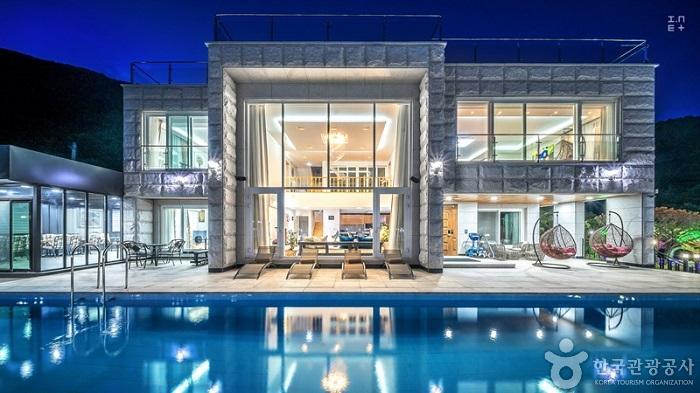
Miramonti Pool Villa Pension (가평미라몬티풀빌라펜션)
1364-59 , Gahwa-ro, Gapyeong-gun, Gyeonggi-do
Miramonti Pool Villa Pension is located in Buk-myeon, Gapyeong-gun, Gyeonggi-do and has beautiful mountain views to the front and back. There is one private pension and three pool villa pensions. The private pension has five rooms and four bathrooms and can accommodate up to 30 group guests. There is a private outdoor swimming pool in the front yard and an indoor jungle gym. Pool villas are all two-story structures equipped with a lukewarm indoor pool. The rooms are equipped with a kitchen, a barbecue area, and a bathtub. Nearby tourist attactions include Nami Island and Petite France.
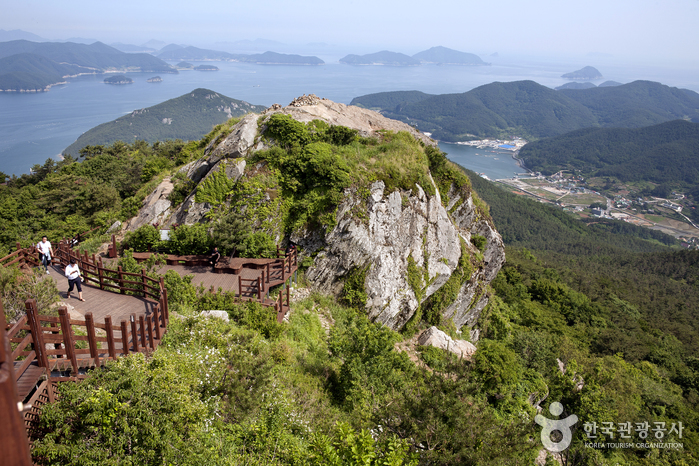
Mireukdo Island Special Tourist Zone (미륵도 관광특구)
Donam-dong, Tongyeong-si, Gyeongsangnam-do
Mireukdo Island is located in Tongyeong, a city that holds great historical significance for being the home of the Tongjeyeong naval station during the Joseon dynasty. The Tongyeong base served as the central command station for the three other naval bases in the Gyeongsang, Jeolla and Chungcheong regions. Not only is Mireukdo Island designated as a Special Tourist Zone, it is also a part of the Hallyeohaesang National Park and serves as the center of tourism in the South Coast. The Mireukdo Special Tourist Zone, with the Donam Tourist Complex as its core, is well-equipped with a variety of leisure facilities, tourist accommodations and restaurants. This district caters to visitors with yacht services and a variety of water sports such as windsurfing, kayaking and water skiing. Exceptionally popular is the ferry cruise that takes visitors to Hansando Island, which is located just off the coast of Tongyeong, and to the other scenic islands such as Bijindo and Maemuldo. Mireukdo Island is connected to Tongyeong through an undersea tunnel, Chungmu Bridge and Tongyeong Bridge, making it even more accessible to visitors. At the center of the island is the towering Mireuksan Mountain. The panoramic Hallyeosudo Viewing Ropeway, which opened in 2008, takes visitors to the summit of Mireuksan Mountain. The top offers a commanding view of the forests and valleys below. On a clear day, visitors can even see the Japanese island of Tsushima. The mountain’s hiking trails are well-maintained and are suitable for short hikes. The most traveled trail is the one starting from Yonghwasa Temple. Hikers taking this trail pass through Gwaneumsa Temple and Mireukjae Pass to reach the top. The trail leads to Miraesa Temple and a grass field on the way down before finally going back to Yonghwasa Temple. [Mireukdo Special Tourist Zone] Areas Covered: Part of Sanyang-eup (Mireukdo Island and Obido Island), areas of Misu-dong, Bongpyeong-dong and Donam-dong in Tongyeong-si, Gyeongsangnam-do Area size: 32,900,000 ㎡ Tourist Attractions: Hallyeosudo Viewing Ropeway, Ferry Cruise, Tongyeong Concert Hall, Undersea Tunnel
![Mireuksa Temple Site [UNESCO World Heritage] (익산 미륵사지 [유네스코 세계문화유산])](http://tong.visitkorea.or.kr/cms/resource/91/2514991_image2_1.jpg)
Mireuksa Temple Site [UNESCO World Heritage] (익산 미륵사지 [유네스코 세계문화유산])
362, Mireuksaji-ro, Iksan-si, Jeonbuk-do
Mireuksa was the largest Buddhist temple of the ancient Baekje Kingdom (18 BC-AD 660). According to Samgukyusa (historical records published in 1281), King Mu (30th king of Baekje, in power AD 600-641) and his wife Queen Seonhwa were said to have seen a vision of Mireuksamjon (the three Sanskrit) emerging from a large pond. At the time of their revelation, the king and queen were on their way to visit a Buddhist monk in Sajasa Temple on Yonghwasan Mountain (now known as Mireuksan Mountain). In response to their vision, the king drained the nearby pond and established Mireuksa Temple. The temple is believed to have shown the most advanced architectural and cultural skills of Baekje, Silla, and Goguryeo (the three main kingdoms at that time). Records indicate that King Jinpyeong of Silla even sent his craftsmen over to assist with the temple construction. The two main features of the Mireuksa Temple Site are the stone pagoda (Mireuksaji Seoktap) and the flagpole supports (Mireuksaji Dangganjiju). The 14.24-meter-high west stone pagoda (National Treasure No. 11) is the oldest and largest Korean stone pagoda in existence. The west pagoda currently has only six tiers, but is estimated to originally have had nine. The nine-story east stone pagoda (27.67 meters in x_height) was restored to its original stature in 1993 based on historical records. Other surviving landmarks include the flagpole supports (Treasure No. 236) to the south of the stone pagodas. The 395 centimeter-tall poles are estimated to have been created during the Unified Silla period (AD 676-935) and are set 90 meters apart from east to west.

Mireuseom Island (미르섬)
368 Geumbyeok-ro, Gongju-si, Chungcheongnam-do
Mireuseom Island is covered in a blanket of beautiful plants every fall, from cosmos to pink muhly, broom cypress and pearl millet. The pink muhly growing along the Geumgang River is a popular photo spot. The beautiful landscape unfolds the longer you walk towards Gongjudaegyo Bridge.
Mirinae Camp (미리내캠프)
21 Wolsanjeosuji-gil, Jipyeong-myeon, Yangpyeong-gun, Gyeonggi-do
Mirinae Camp is a comprehensive camping facility covering 370,000㎡, capable of accommodating up to 600 guests. It features a range of facilities for training, leisure, and convenience. The camp includes a horseriding club, a lawn ballpark, a lawn sports ground, a foot volleyball court, a survival game area, a kayaking center, a rock climbing facility, challenge courses, and a walking trail. Additionally, it offers Heal Being Club programs, which encompass foot spa, essential oil therapy, dining, and café experiences. In summer, an outdoor swimming pool is available, and in winter, the camp operates a snow sledding park.
Mirinae Healbeing Club (미리내 힐빙클럽)
21 Wolsanjeosuji-gil, Jipyeong-myeon, Yangpyeong-gun, Gyeonggi-do
The word "healbeing" combines the words healing and well-being. Mirinae Healbeing Club is a 'healing' space where you can relieve yourself of fatigue and detox your body through healthy organic foods and relaxation in a comfortable and restful environment. This is the place where you can restore your immunity and physical balance. The club has a traditional five-element therapy room inspired by natural healing principles; a five-sense therapy room; a bubble foot bath; a ceramic ball sauna; a floor-heated sauna; and shower facilities that use mineral water. An outdoor swimming pool opens in summer, and a snow slope is available for sledding in winter. At the restaurant, you can enjoy a buffet with nutritious and organic dishes made with natural seasoning and fresh ingredients.
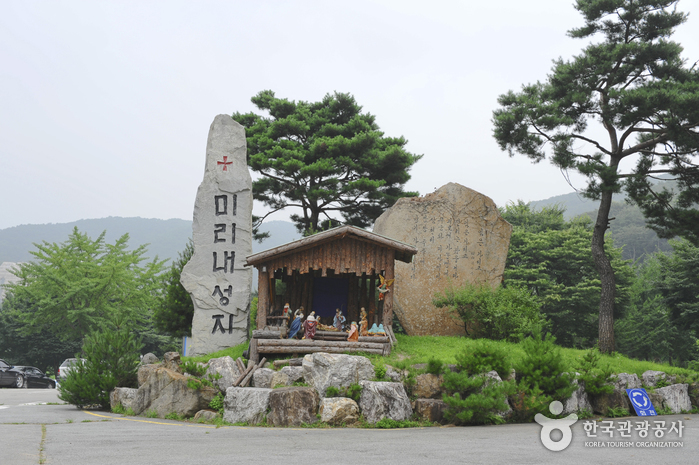
Mirinae Holy Site (미리내 성지)
420 Mirinaeseongji-ro, Yangseong-myeon, Anseong-si, Gyeonggi-do
Mirinae Holy Site in Anseong is the final resting place of Saint Andreas Kim Daegeon, Korea’s first Catholic saint, along with his mother Ursula, Bishop Ferréol—the third head of the Joseon parish who ordained Priest Kim—and Vincentius Lee Minsik, who buried Saint Kim’s body. The name ‘Mirinae,’ meaning ‘Milky Way’ in Korean, adds a celestial significance to the site. Saint Andreas Kim Daegeon, who was martyred at the age of 26, was buried here 40 days after his execution. Sanctification efforts began in earnest in 1972 and have since resulted in the establishment of a memorial church, a statue of Saint Kim, and a serene garden for reflection.
](https://tong.visitkorea.or.kr/cms/resource/02/2878802_image2_1.jpg)
Miromiro - Konkuk Univ. Branch [Tax Refund Shop](미로미로 건대점)
B1F, 123, Neungdong-ro, Gwangjin-gu, Seoul
-
Mirsaem Bridge (미르샘 다리)
Sinjeong-dong, Jeongeup-si, Jeonbuk-do
Mirsaem Bridge is a 642-meter wooden deck bridge that spans Yongsanho Lake. Benches are placed in the middle of the bridge for visitors to sit and rest during their crossing. The lakeside fountains operate until 21:00 from March to November and until 22:00 from June to September. At the center of the bridge is an art installation that represents Jeongeup. There is glass flooring near the fountain by the art installation, allowing visitors to see the water below their feet. For visitors who want to savor the nature-friendly atmosphere, cross the bridge and follow the trail leading to a mountain forest to continue the adventure. The bridge has night lights installed that turn on after sunset until 22:00, making it an ideal place for an evening stroll as well.
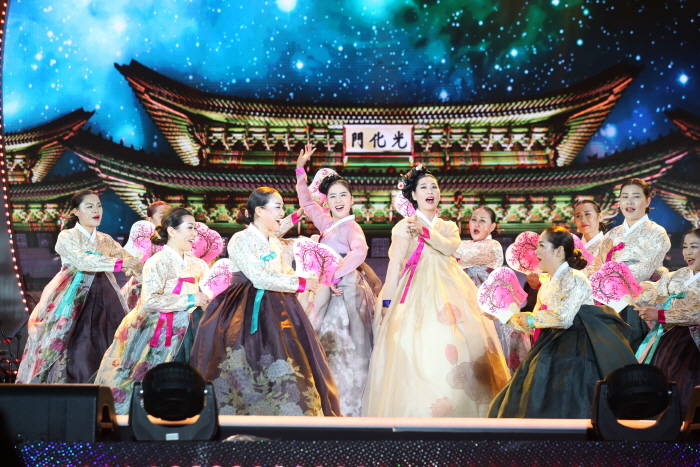
Miryang Arirang Festival (밀양아리랑대축제)
Sammun-dong, Miryang-si, Gyeongsangnam-do
Listed as a UNESCO Intangible Cultural Heritage of Humanity, “Miryang Arirang” is famous for its repetitive lyrical phrase “Look at me.” The Miryang Arirang Festival is held to remember and develop this traditional piece of music. This historic event began as the Miryang Cultural Festival in 1957. The highlight of the festival is the musical Miryanggang Odyssey, where a magnificent fantasy world of light unfolds against the backdrop of Yeongnamnu Pavilion and the Miryanggang River. Visitors can also check out the historical exhibits of “Miryang Arirang” at the Arirang Exhibition, and enjoy other exhibits, activities, and performances like the Miryang Arirang Song Contest and Arirang Experience.◎ Miryang ArirangOne of Korea’s three major “Arirang,” “Miryang Arirang,” is played to cheerful and upbeat music, but the lyrics contain the tragic story of Arang, the daughter of the Miryang governor.
Miryang Museum (밀양시립박물관)
100, Miryangdaegongwon-ro, Miryang-si, Gyeongsangnam-do
Miryang Museum features cultural items and materials of the Nakdonggang River area. The purpose of the museum is to effectively preserve, exhibit, and acknowledge the history and culture of the area through collecting, researching, investigating and organizing the items on display. In addition, the museum was established to enhance cultural nostalgia and contribute to public education. The museum is comprised of several halls, including a permanent exhibition hall and a temporary exhibition hall, showing the history of Miryang during the Samhan era and the Joseon dynasty. Collections include various cultural assets designated by Gyeongsangnam-do, as well as an exhibit-style storage of literary works, and folk and daily relics.
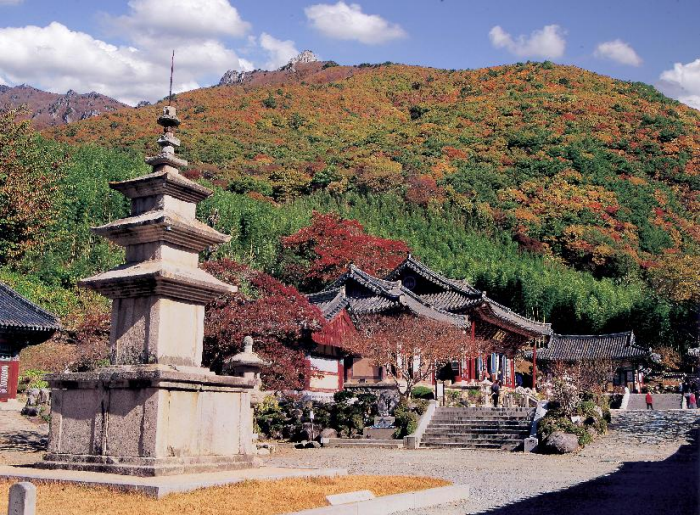
Miryang Pyochungsa Temple (표충사 (밀양))
1338, Pyochung-ro, Miryang-si, Gyeongsangnam-do
Pyochungsa Temple is located at the base of Jaeyaksan Mountain, 20 kilometers east of Miryang. The temple was originally founded by Monk Wonhyo in the 1st year of King Muyeol in Silla period under the name Junnimgsa Temple, then expanded and renamed by a monk from India in the fourth year of King Heungdeok’s reign of the Silla period. Nearby attractions include Cheungcheungpokpo Falls, Geumgangpokpo Falls, and Eoreumgol Ice Valley, as well as Sajapyeong Plain at the ridge of the mountain.
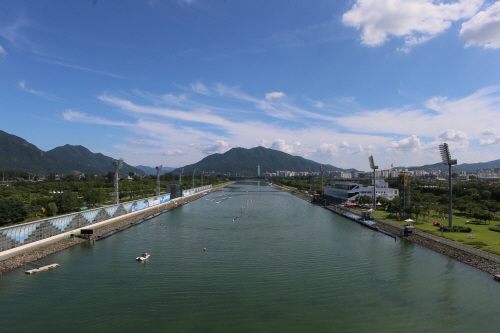
Misari Speedboat Park (미사리 경정공원)
505, Misa-daero, Hanam-si, Gyeonggi-do
Misari Speedboat Park was created for use in rowing and sailing competition during the 1988 Seoul Olympic Games. The park features various other sports facilities around the lake, including a 5 kilometer-long bike course, soccer fields and footvolley courts. Other amenities include pavilions and snack bars, making this place loved by locals as a place to relax and play.
Plan your Korea trip
Korea travel FAQ
How do I use the travel search?
Enter a place or interest, then narrow the results by region, category or sort order.
Will my filters stay selected on the next page?
Yes. Your search and filter choices stay in the page URL while you move through the results.
Can I find directions to each place?
Place pages include an external Google Maps search when coordinates or an address are available.
Source: Korea Tourism Organization, official website (https://knto.or.kr).