TRAVEL IN KOREA
Korea Places to Visit
Find attractions, culture, festivals, stays, restaurants, shopping and travel courses for a clear Korea trip plan.
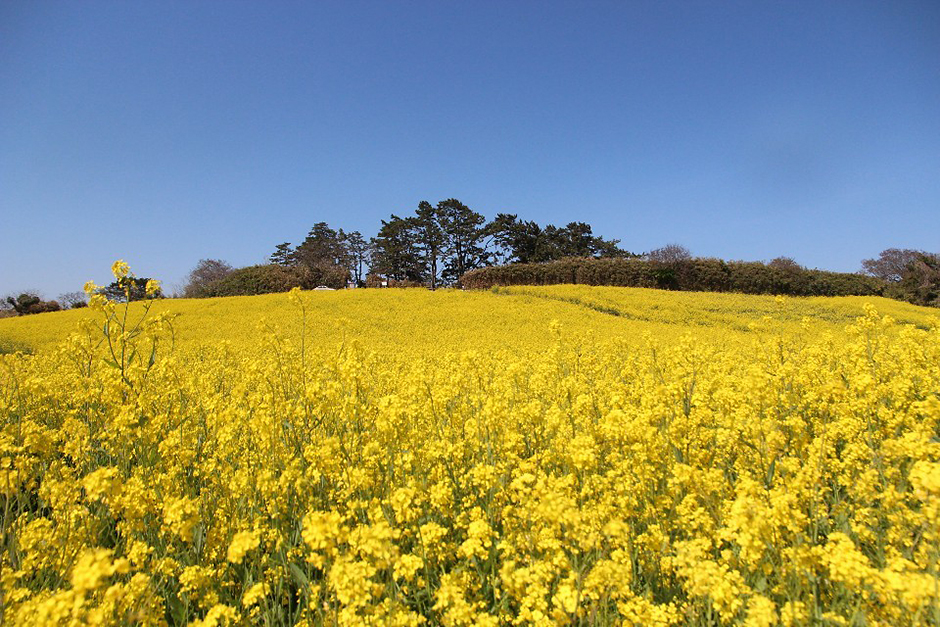
Suseongdang Canola Field (수성당유채꽃)
252-11 Gyeokpo-ri, Byeonsan-myeon, Buan-gun, Jeonbuk-do
Suseongdang Canola Field refers to the colony of canola flowers that can be found along the trekking course connecting Saemangeum Information Center and Byeonsan Beach. Located near Suseongdang Shrine, the canola field spreads across an area of 32,000 ㎡, and transforms into a field of buckwheat flowers in summer, followed by cosmos flowers in fall, and becomes blanketed with snow in winter. This area is even more popular due to the scenery of canola flowers with an ocean backdrop as Jeju Island is the only other region in Korea to offer such scenery.
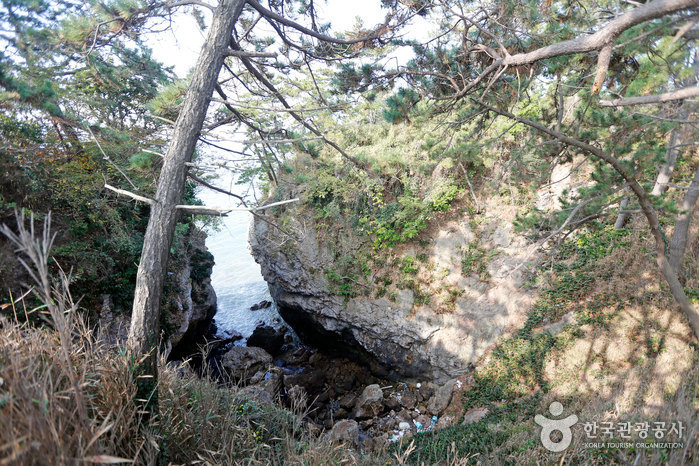
Suseongdang Shrine (수성당)
54 Jeokbyeokgang-gil, Buan-gun, Jeonbuk-do
Located at the end of Jeokbyeokgang Cliff, Suseongdang Shrine is the only shrine in Korea that is dedicated to the sea god “Gaeyang Halmeoni” (Granny Gaeyang), the deity who rules over the West Sea, and her eight daughters. This is a place that holds rituals for the welfare and safety of fishers. Visitors can also see cairns dedicated to the fishermens’ safety. For tourists, however, this shrine is notable for its canola flowers. In early spring, the road connecting Suseongdang Shrine with Jeokbyeokgang Cliff blooms in yellow canola flowers, creating a beloved view and a premier photo area of the region. It is a recommended spot to see the flowers when visiting Buan in springtime.
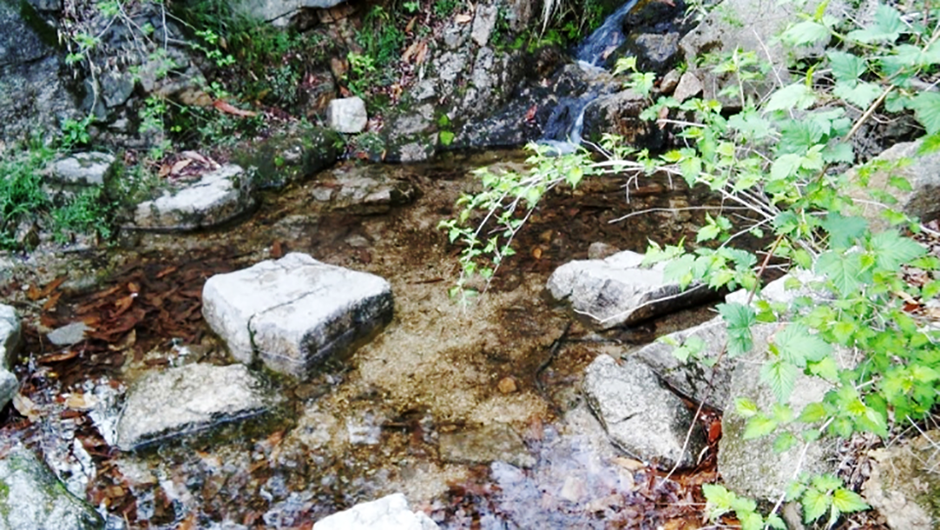
Suseongdonggyegok Valley (수성동계곡)
185-3, Ogin-dong, Jongno-gu, Seoul 서울특별시 종로구 옥인동
Suseong-dong Valley's stream runs down from Inwangsan Mountain and joins Cheonggyecheon Stream, and it is said that the name of the village was called Suseong-dong during the Joseon dynasty due to the loud and clear sound of the flowing water. It appears in the painting "Jangdong Palgyeongcheop," which is Jangdong Eight Scenic Views, that depicts the eight scenic views of Bugaksan Mountain and Inwangsan Mountain as well as in other historical books of the Joseon dynasty as a place of scenic beauty. The valley was so famous for its beauty, that Prince Anpyeong of the Joseon dynasty built his house "Bihaedang" to fully enjoy the view, and the valley and its stone bridge were designated as a cultural property of Seoul in 2010.
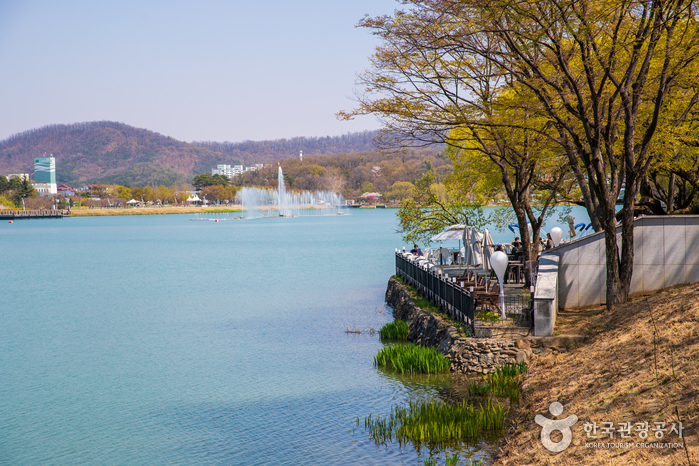
Suseongmot Lake Resort (수성못 유원지)
35-5 Yonghak-ro, Suseong-gu, Daegu
Suseongmot Lake Resort is located at the foot of the northwest side of Yongjibong Peak (altitude 629 meters) in Beommul-dong and offers outstanding scenery including gently sloping mountains along with Suseongmot Lake. The resort is centered around Suseongmot Lake, established in 1925 with 700,000 pondage in a circumference of 2,020 meters. The total area of the park is 218,000 ㎡. Suseongmot Lake is an artificial lake created in 1925 during the Japanese colonial period to supply water for agriculture to rural areas. Today, it is no longer used for agricultural purposes, but has been turned into a resting area. Nearby the lake is Suseong Land which houses benches, walking paths, a ferry dock, and entertainment facilities such as a Viking ship, bumper cars, and merry-go-round. In addition, visitors can enjoy a duck boat ride, view of Dusanpokpo Falls and other exciting places perfect for excursions. The lake has a music fountain that operates four times a day from May to October.◎ Travel information to meet Hallyu’s charm - TV series"Hyde Jekyll, Me"Suseongmot Lake Resort, where Ha-na prepares to send Robin off, is one of the most popular hangouts in Daegu. It is particularly beautiful at night, when the lake and the fountain shows are illuminated by the lights of the city.
Suseonsa Temple (수선사)
1117 Nae-ri, Sancheong-eup, Sancheong-gun, Gyeongsangnam-do
Suseonsa Temple is a temple situated on Ungseokbong Peak in Jirisan Mountain. Renowned for its picturesque hydrangea and lotus, it has become a favored destination for many visitors. The temple offers a temple stay program, allowing participants to restore both body and mind. Nearby, the café run by Suseonsa Temple provides a pleasant retreat, adding to the enjoyment of visitors' experiences.
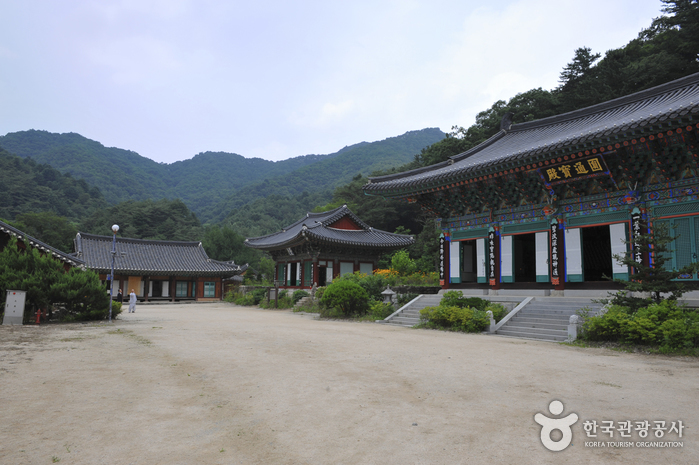
Sutasa Temple (수타사)
473, Sutasa-ro, Hongcheon-gun, Gangwon-do
Gongjaksan Mountain (887 m), home to Sutasa Temple and named for its resemblance to a peacock proudly displaying its tail feathers, gives visitors a bird’s-eye-view of Hongcheon. From the bottom, Gongjaksan Mountain looks like a giant laying on his back, looking up to the sky. The mountain offers elegant azaleas in spring, beautiful fall foliage, majestic cliffs with unusual rocks, colonies of pine trees, and a serene snowscape in winter. Sutasa Valley, stretching over 12 kilometers between Sutasa Temple and Nocheon-ri, is full of large ponds and broad bedrocks and is flanked by rocky cliffs and pine groves. Located among the foothills, Sutasa Temple is an ancient temple built by Monk Wonhyo in AD 708. The temple boasts numerous cultural properties including the gabled roof of Daejeokgwangjeon, a bronze bell, a three-tiered pagoda, and Wolinseokbo, a biography of Buddha that has been designated as a National Treasure.
Suwolbong Peak (수월봉)
Gorak-ro, Jeju-si, Jeju
Suwolbong peak is a small oreum located in Gosan-ri, the westernmost point of Jejudo Island. Suwolbong rises 77 meters above sea level and the ocean-facing natural formation is surrounded by steches of green fields. On a clear day, the sunset from Suwolbong is comparable in beauty to the one from Sarabong. On top of Suwolbong Peak is a small pavilion called Suwoljeong. The pavilion offers views of Chagwido (an island known to be the most beautiful in Jeju), as well as Songaksan Mountain and Jukdo Island. Next to Suwolbong Peak is a mountain weather station that observes and forecasts the weather for the western region. Below the peak is a small Buddhist temple and Eongal, a steep cliff which faces toward the sea. Visitors can enjoy mineral water that falls freely from the cliff.
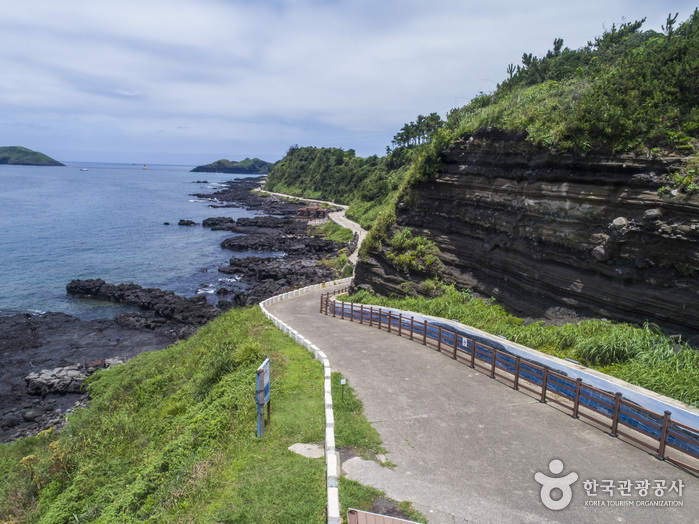
Suwolbong Tuff Cone and Chagwi Coast (수월봉과 차귀해안)
1013-70, Noeulhaean-ro, Jeju-si, Jeju-do
Located at the western end of Jeju Island, Suwolbong Tuff Cone, a small mountain, is famous for being a favorite sunset viewing place. The mountain has vertical cliffs spreading out like a scroll painting, created from the sea waves gradually cutting inland. To the north, off the coast, is Chagwido Island, where only the top peak area has grass growing, and the rest of the island is made up of dark basalt rocks and cliffs. Around sunset, Chagwido’s seashore turns crimson red from the sun and is truly an amazing sight to behold.
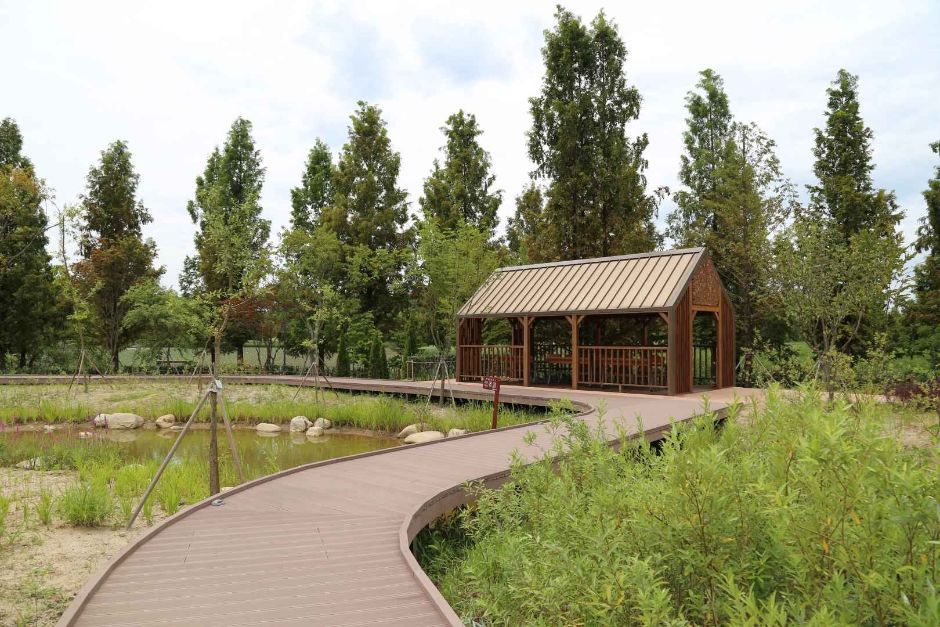
Suwon Arboretum Irwol (일월수목원)
61 Irwol-ro, Jangan-gu, Suwon-si, Gyeonggi-do
Suwon Arboretum Irwol is an urban arboretum in Suwon that is an ecological landmark. It features a variety of gardens, including a forest garden, conifer garden, ecological observation garden, meadow garden, dry garden, exhibition greenhouse, shrub garden, and grass garden. The arboretum also includes facilities such as a library, a playground, waterside deck, and the Irwol Reservoir. Visitors can participate in a range of programs, such as guided tours, plant workshops, and ecological activities.
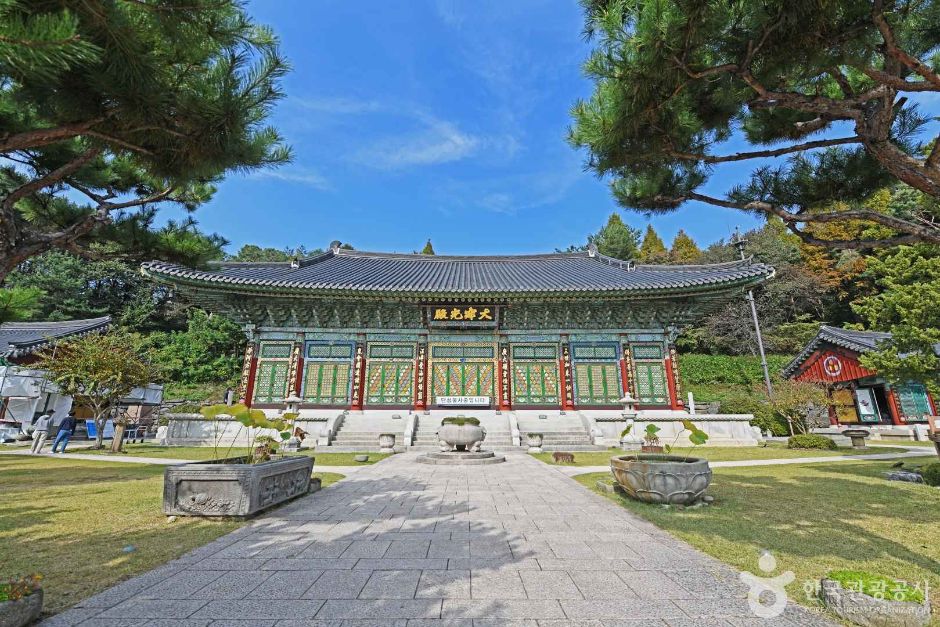
Suwon Bongnyeongsa Temple (봉녕사 (수원))
236-54 Changnyong-daero, Paldal-gu, Suwon-si, Gyeonggi-do
Bongnyeongsa Temple is located at the foothills of Gwanggyosan Mountain. It features various structures, including the main Buddha hall, meditation spaces for monks, and a bell pavilion housing ritual objects like a bell, wooden fish, cloud-shaped gong, and dharma drum. The temple is also home to an 800-year-old juniper tree. Visitors can enjoy tea at the resting space and explore the temple food education center. Templestay programs offer a chance to experience Buddhist culture through activities such as prayer, meditation, temple food making, and tea talks.
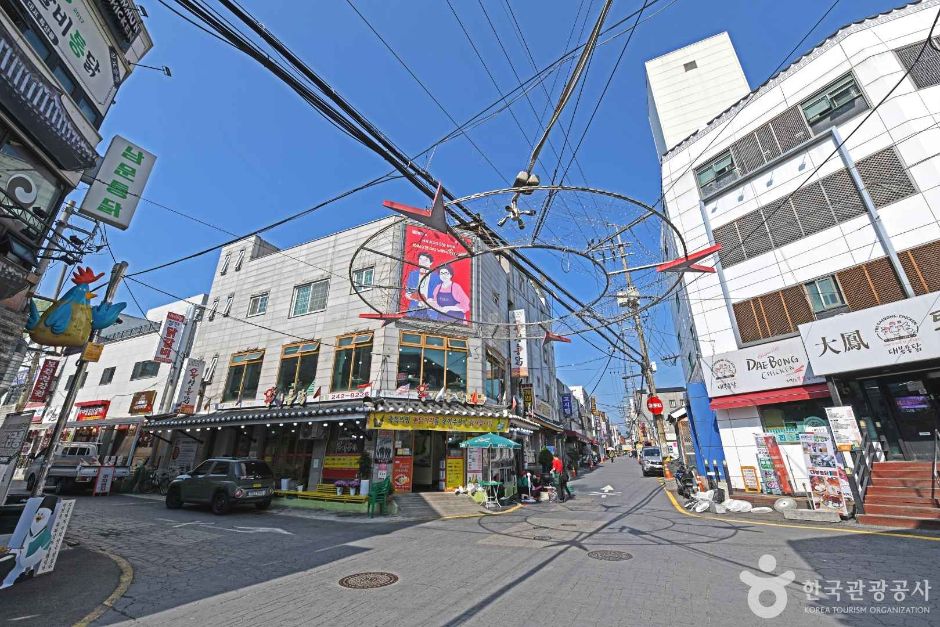
Suwon Chicken Street (수원통닭거리)
16 Jeongjo-ro 800beon-gil, Paldal-gu, Suwon-si, Gyeonggi-do
Suwon Chicken Street, located in a small 100 m-long alley on Paldal-ro, Paldal-gu, Suwon, is where about 11 stores, ranging from the original store that opened in 1970 to new ones, serve fried whole chicken. It is the tradition of Suwon Chicken Street to pour oil into a large cauldron and fry chicken. The menu only consists of fried chicken and seasoned fried chicken, but they are gaining popularity for their savory taste, different from those of famous chicken brands. In Suwon Chicken Street, you can meet the granny of “Maehyang Tongdak,” who has been selling fried chicken in Suwon Chicken Street since the 1970s using the chicken she raised in a chicken coop on a stall, as well as the famous “Yongseong Tongdak" and “Jinmi Tongdak" in this alley. The chicken price is low, so you don't have to worry about it. Thanks to plentiful servings and unique taste, the shops on this street are crowded with customers from all over the country, including students, who come having heard of the place by word of mouth.
Suwon Gwanggyo Museum (수원광교박물관)
182, Gwanggyo-ro, Yeongtong-gu, Suwon-si, Gyeonggi-do
Suwon Gwanggyo Museum features a variety of relics that were discovered during the construction of Gwanggyo New Town. The exhibitions focus on the history and culture of the Gwanggyo area based on artifacts along with materials related to Korea’s modern history, Dokdo Island, and Admiral Yi Sun-sin. Suwon Gwanggyo Museum is located in Gwanggyo History Park near the burial site of Sim On and Prince Hyeryeong, providing a great opportunity for visitors to learn about Korea’s history as well as enjoy a relaxing stroll around the park.
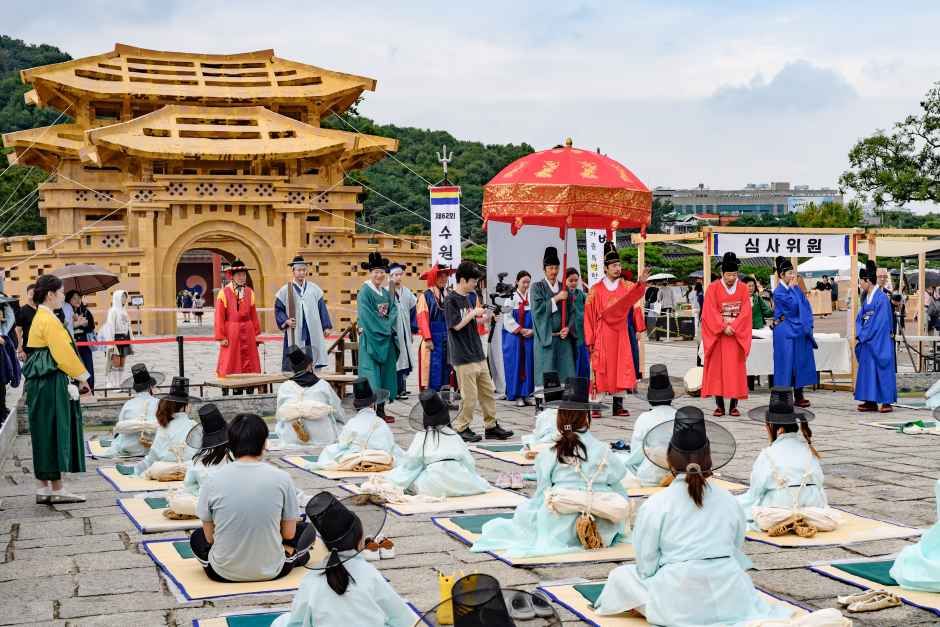
Suwon Hwaseong Festival (수원화성문화제)
825, Jeongjo-ro, Paldal-gu, Suwon-si, Gyeonggi-do
The Suwon Hwaseong Cultural Festival reimagines, through a contemporary lens, the most magnificent moments of King Jeongjo’s eight-day royal procession to Hwaseong in 1795. Historic scenes recorded in the Wonhaeng Eulmyo Jeongni Uigwe come vividly to life through high-quality cultural programs. Visitors can also take part in the King Jeongjo Royal Parade, the largest royal procession reenactment in Korea, where citizens and guests from around the world become part of the spectacle. As a leading global festival, the Suwon Hwaseong Festival offers a unique opportunity to experience the joy of a celebration that transcends time and space while bringing people together in the historic setting of Suwon Hwaseong Fortress.
![Suwon Hwaseong Fortress [UNESCO World Heritage] (수원 화성 [유네스코 세계유산])](https://tong.visitkorea.or.kr/cms/resource_photo/97/3478597_image2_1.jpg)
Suwon Hwaseong Fortress [UNESCO World Heritage] (수원 화성 [유네스코 세계유산])
Yeonghwa-dong, Jangan-gu, Suwon-si, Gyeonggi-do
Suwon was one of four main regional government centers during the Joseon dynasty. Hwaseong Fortress, built to protect the city, was designated as a UNESCO World Cultural Heritage Site on December 12, 1997 for its historical value. The fortress offers various performances daily as well as the Suwon Hwaseong Cultural Festival every fall. The walls stretch for approximately 5.7 kilometers, with Paldalsan Mountain at the center. The fortress, constructed from 1794 to 1796, was built as a display of King Jeongjo’s filial piety towards his father and to build a new pioneer city with its own economic power.
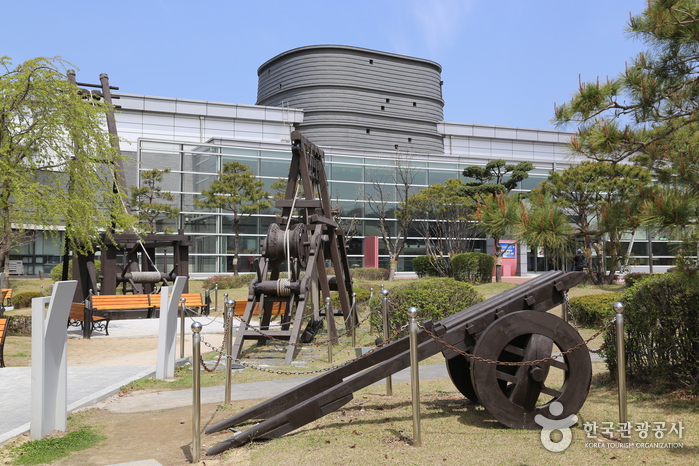
Suwon Hwaseong Museum (수원화성박물관)
21, Changnyong-daero, Paldal-gu, Suwon-si, Gyeonggi-do
Suwon Hwaseong Museum presents the history and culture of Suwon Hwaseong Fortress, an important Korean cultural asset and UNESCO World Cultural Heritage Site. Visitors to the museum can learn about the formation of the fortress and the city of Suwon itself through detailed, systematically designed exhititions. The museum houses an extensive collection of items that showcase the construction and development of the fortress, as well as gatherings and events that took place within the fortress.
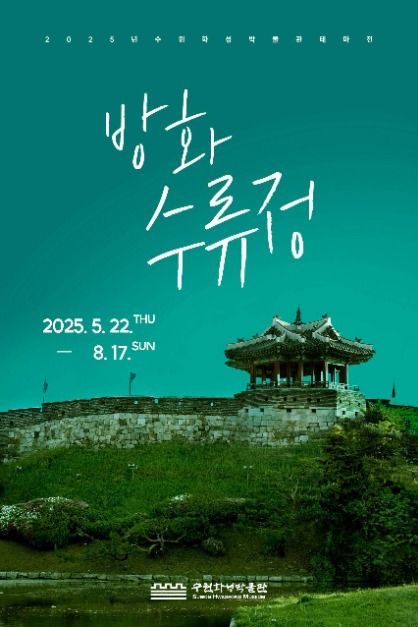
Suwon Hwaseong Museum Themed Exhibition Banghwasuryujeong Pavilion (수원화성박물관 테마전 방화수류정)
21 Changnyong-daero, Paldal-gu, Suwon-si, Gyeonggi-do
Banghwasuryujeong Pavilion stands looking over the Hwahongmun Gate and Yongyeon Pond and is a place where the aspirations of King Jeongjo live on. Suwon Hwaseong Fortress has a total of four pavilions, and Banghwasuryujeong Pavilion is located on the northwestern side of the fortress. The fortresses were built to act as a watchtower for keeping an eye on outside invasion, with Banghwasuryujeong Pavilion being located at the most strategic point. Although it was built as a military watchtower, it was designed to also act as a pavilion, and Banghwasuryujeong Pavilion was recognized as a National Treasure in 2011 for outstanding techniques and aesthetics that represent the Joseon dynasty in the 18th century.
Plan your Korea trip
Korea travel FAQ
How do I use the travel search?
Enter a place or interest, then narrow the results by region, category or sort order.
Will my filters stay selected on the next page?
Yes. Your search and filter choices stay in the page URL while you move through the results.
Can I find directions to each place?
Place pages include an external Google Maps search when coordinates or an address are available.
Source: Korea Tourism Organization, official website (https://knto.or.kr).