TRAVEL IN KOREA
Korea Places to Visit
Find attractions, culture, festivals, stays, restaurants, shopping and travel courses for a clear Korea trip plan.
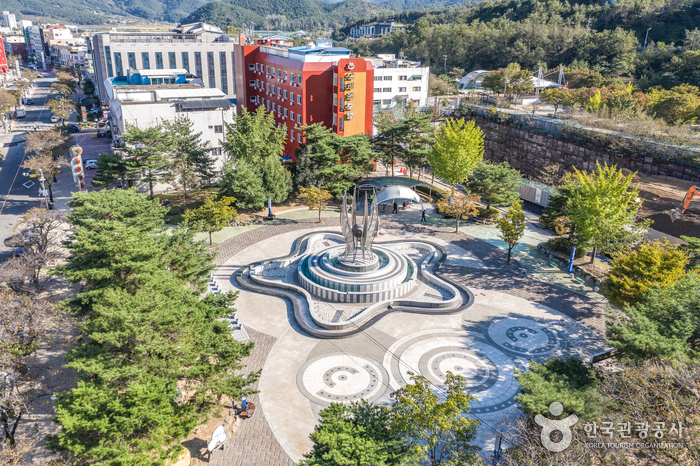
Bugok Hot Springs Special Tourist Zone (부곡온천 관광특구)
77 Oncheonjungang-ro, Bugok-myeon, Changnyeong-gun, Gyeongsangnam-do
Bugok, named after its cast-iron pot-like terrain, boasts the hottest spring in Korea with a temperature of 78°C. It features various attractions such as Hanol Park and fountain park for performances, a refreshing trail, golf courses, and foot baths. Bugok Hot Springs is believed to be effective for arthritis, skin diseases, and fatigue recovery. Nearby attractions include Uponeup Marsh, Hwawangsan Mountain, and the Gaya Tombs.
Buheung Jaecheop Sikdang (부흥재첩식당)
98 Gyeongseo-daero, Hadong-eup, Hadong-gun, Gyeongsangnam-do
Like many other restaurants in Hadong, this restaurant serves freshwater marsh clam dishes. The restaurant is most famous for jaecheophoe (raw freshwater marsh clam). This dish is served on a bed of pear, carrot, cabbage, cucumber, and other vegetables tossed with sweet and sour red chili paste. Another popular menu is the Modum Jeongsik (assorted freshwater marsh clam set menu), which has jaecheopguk, jaecheopjeon, and jaecheophoe.
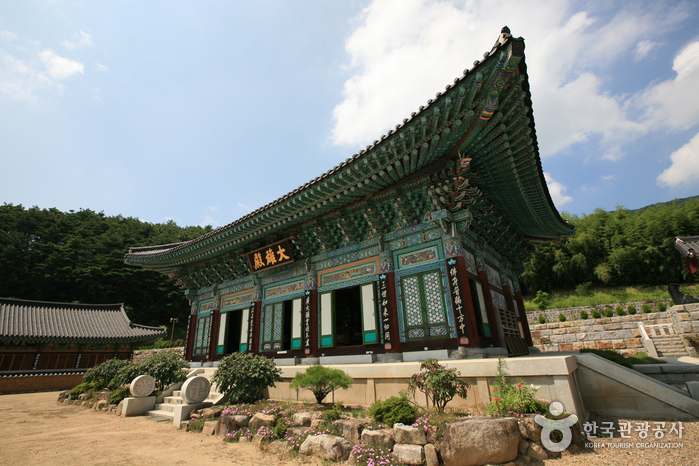
Buinsa Temple (Daegu) (부인사(대구))
967-28 Palgongsan-ro, Dong-gu, Daegu
Buinsa Temple is a temple nestled on the southern slopes of Palgongsan Mountain, with a deep historical connection to Queen Seondeok of Silla (580–647). The temple is renowned for preserving the woodblocks of the First Tripitaka Koreana, a collection of Buddhist scriptures carved in the 11th century. The current Buinsa Temple encompasses significant structures, including Daeungjeon Hall, Queen Seondeok's Memorial Hall, and Samseonggak Shrine. Visitors have the opportunity to appreciate the scenic beauty of nature while exploring the cultural and architectural heritage from the Silla and Goryeo periods.
](https://tong.visitkorea.or.kr/cms/resource/92/4022392_image2_1.jpg)
Bujeon Daehyeong Pharmacy [Tax Refund Shop](부전대형약국)
1F, 10, Saessak-ro, Busanjin-gu, Busan
-
](https://tong.visitkorea.or.kr/cms/resource/30/4023830_image2_1.jpg)
Bujeon Ginseng Market [Tax Refund Shop](부전인삼시장)
23, Jungang-daero 783beon-gil, Busanjin-gu, Busan
Bujeon Ginseng Market is a traditional ginseng specialty brand that embodies the history and trust of Korean ginseng distribution. We supply excellent quality ginseng and red ginseng freshly brought from production areas at honest prices, maintaining pride for a long time in enhancing our customers' health.
](https://tong.visitkorea.or.kr/cms/resource/32/4023732_image2_1.jpg)
Bujeon Sarang Pharmacy [Tax Refund Shop](부전사랑약국)
11, Jungang-daero 783beon-gil, Busanjin-gu, Busan
Bujeon Sarang Pharmacy is a trust-centered pharmacy brand that carefully looks after neighbors' health with warm concern and kind medication counseling. It is a partner that strongly supports the healthy lives of local residents through honest pharmaceutical services and meticulous prescription management.
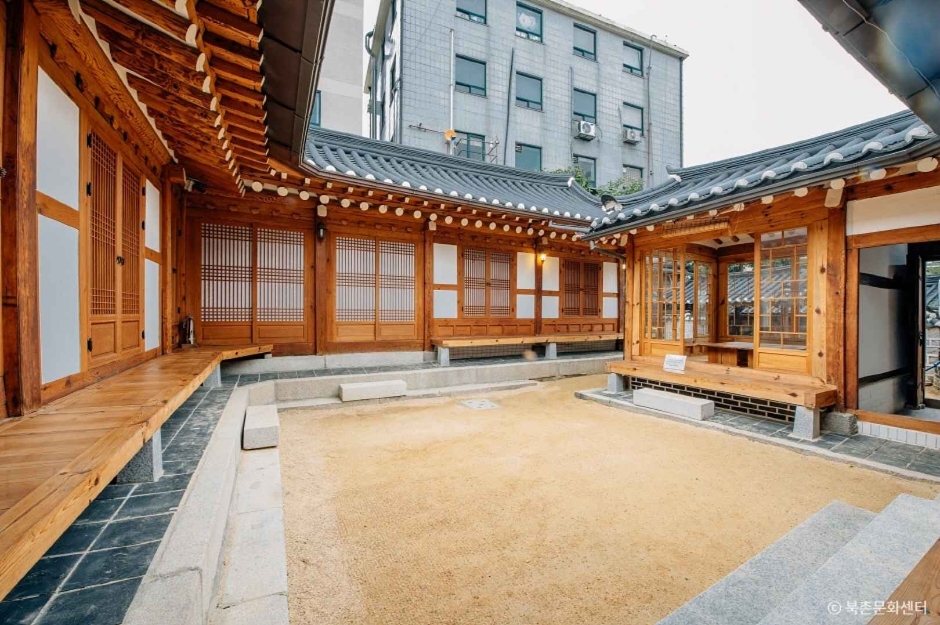
Bukchon Cultural Center (북촌문화센터)
37 Gyedong-gil, Jongno-gu, Seoul
Bukchon Cultural Center, located in a hanok, was established to offer traditional cultural experience opportunities for visitors to the area. The programs include tea ceremony, handicraft, and gugak as well as a Public Relations Exhibition Hall introducing Bukchon culture and hanok. Also, the center houses a space and a pavilion for visitors to relax while traveling.
](https://tong.visitkorea.or.kr/cms/resource/55/4044755_image2_1.png)
Bukchon Gwang[Tax Refund Shop](북촌광)
4, Bukchon-ro 11ra-gil, Jongno-gu, Seoul
Bukchon Gwang is a traditional design accessory brand that harmonizes the traditional mood of Bukchon Hanok Village with modern light (Gwang). Through neat products completed by an artisan's touch, it delivers the dignity and peaceful value of Korean aesthetics to customers' spaces.
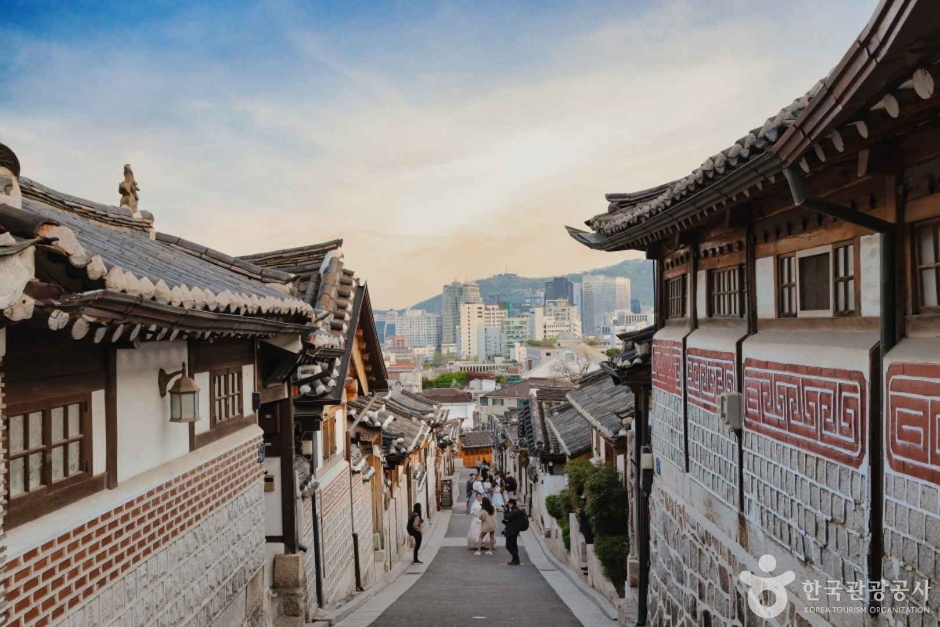
Bukchon Hanok Village (북촌한옥마을)
37 Gyedong-gil, Jongno-gu, Seoul
Surrounded by Gyeongbokgung Palace, Changdeokgung Palace and Jongmyo Shrine, Bukchon Hanok Village is home to hundreds of traditional houses, called hanok , that date back to the Joseon dynasty. The name Bukchon, which literally translates to "northern village," came about as the neighborhood lies north of two significant Seoul landmarks, Cheonggyecheon Stream and Jongno. Today, many of these hanoks operate as cultural centers, guesthouses, restaurants and tea houses, providing visitors with an opportunity to experience, learn and immerse themselves in traditional Korean culture. As Bukchon Hanok Village is an actual neighborhood with people's homes, visitors are advised to be respectful at all times while looking around.

Bukchon Hanok Village Gamgodang Street (북촌한옥마을 감고당길)
Anguk-dong, Jongno-gu, Seoul
An alley with cute cafes and galleries This is the road that appeared in the last episode and the flashback scene where Choi Ung (played by Choi Woosik) and Kuk Yeonsoo (played by Kim Dami) got drunk. Behind the Seoul Craft Museum in Bukchon Hanok Village, it extends for about 440m from Poongmoon Girls' High School to Jeongdok Library. There are many pretty cafes and galleries on the cozy road, and there are also craft markets open, so there is plenty to look around. The alley where Kuk Yeonsoo walked with the drunken Choi Ung on her back is Yunboseon Street in the middle of Gamgodang Street. It stretches along the hill between narrow tiled walls and stone walls, giving off a unique atmosphere.

Bukchon Museum (북촌생활사박물관)
90 Bukchon-ro 5na-gil, Jongno-gu, Seoul
The Bukchon Museum displays items that have been collected from Bukchon, a historical village that was once home to the nation’s nobility. The museum was founded to observe urban development that took place in the recent decades through collected and preserved veryday household items that were used by Bukchon residents. Visitors are even allowed to touch items on display to better be able to imagine life in Korea before industrialization.
](https://tong.visitkorea.or.kr/cms/resource/43/4045143_image2_1.png)
Bukchon Pharmacy [Tax Refund Shop](북촌약국)
1F, 71, Yulgok-ro 3-gil, Jongno-gu, Seoul
Bukchon Pharmacy provides warm and professional pharmaceutical services to local residents and tourists in Bukchon, where the mood of Hanok lives on. We strive to be a health hub that helps customers enjoy a healthy and peaceful daily life through meticulous medication guidance and accurate dispensing.
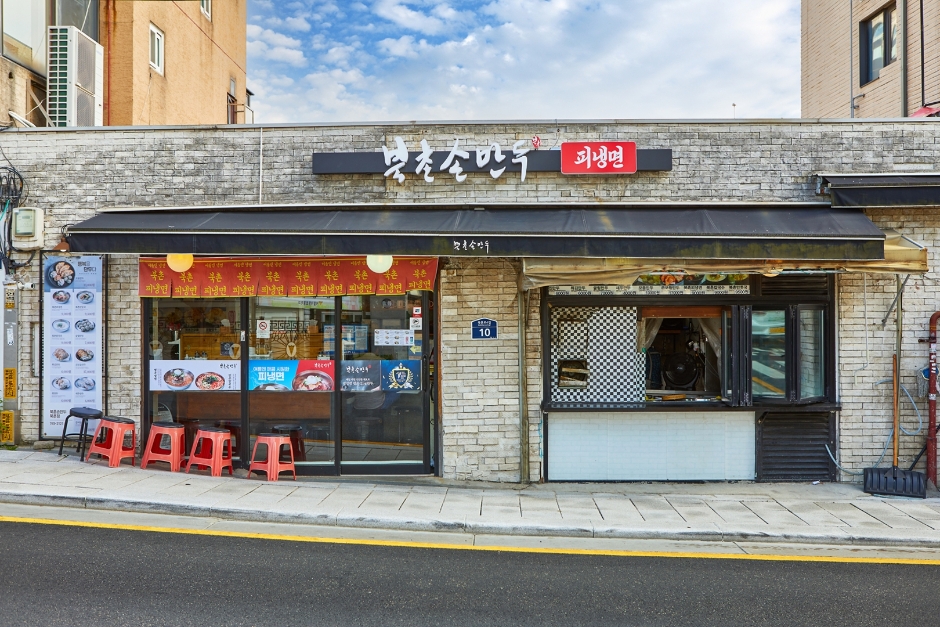
Bukchon Son Mandu Bukchon Branch (북촌손만두 북촌점)
Location details are available on the place page.
This third-generation family-owned handmade mandu restaurant has been in business since 1953. Its handmade mandu bears the tradition of nearly 70 years. This restaurant distinguishes itself above others with its unique expertise in the art of mandu-making and fresh ingredients, capturing deep flavors with care in each mandu. A full spread of mandu is available here, from steamed mandu to thin-skin mandu, deep-fried mandu, shrimp mandu, and galbi mandu, which can be ordered in individual pieces or as an assorted package. Mandu and noodles go perfectly together, and here, visitors can enjoy mandu with cold buckwheat noodles or noodle soup. The most recommended menu is the noodle soup, which serves thick, plump noodles in warm broth. But that does not mean that the cold buckwheat noodles are lacking: cold buckwheat noodles are served in a cool, red kimchi broth.
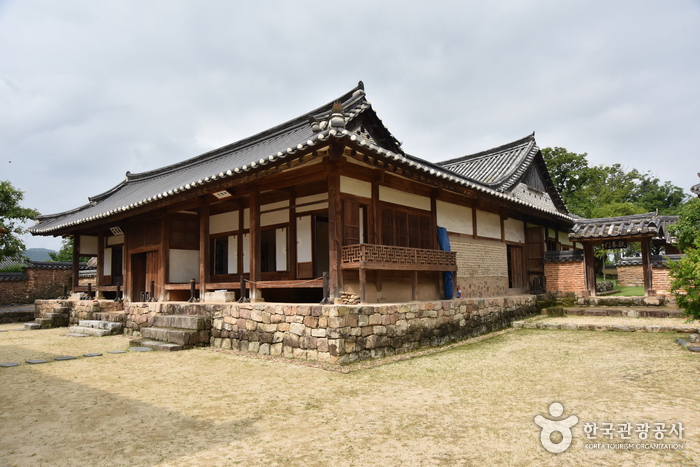
Bukchondeak (하회 북촌댁)
7 , Hahoebukchon-gil, Andong-si, Gyeongsangbuk-do
Hahoe Bukchon House is the largest house in Hahoe, Andong, Gyeongsangbuk-do, and was first built by Joseon civil official Ryu Sa-chun in the reign of King Jeongjo. Guestrooms include the former sarangbang (studies) called Bukchonyugeo, Sarang and Susinwa, as well as attic rooms and kitchens. In the yard is an exquisite 300-year-old pine tree resembling the curve the Nakdong River makes round Hahoe village. The house contains valuable relics, including a 17th century map showing Dokdo and Gando as Korean territory, and a painting of flowers given to Ryu by the king.
![Bukhansan Dulle Trail Section 1 ([북한산 둘레길] 1 소나무숲길 )](http://tong.visitkorea.or.kr/cms/resource/30/1898430_image2_1.jpg)
Bukhansan Dulle Trail Section 1 ([북한산 둘레길] 1 소나무숲길 )
12 Samyang-ro 173-gil, Gangbuk-gu, Seoul
Bukhansan Mountain is a mountain representing Seoul, which 5 million people visit every year. It is not easy to hike up to the top, but the dulle trail allows one to enjoy the beauty of the mountain without too much effort. Bukhansan Dulle Trail is a low-lying, horizontal walking trail created by connecting and refining existing side paths, allowing for a leisurely walk along the foot of the mountain. The Pine Forest Trail, one section of the trail consisting of 21 themes, is 2.9 kilometers long from the entrance to Uiryeong Trail to the top of Solbat Neighborhood Park. It is filled with majestic pine trees, and the road is wide and gentle, making it a perfect place to enjoy a walk. Most of the section is shaded by trees, so visitors can feel cool while walking up even on hot summer days.
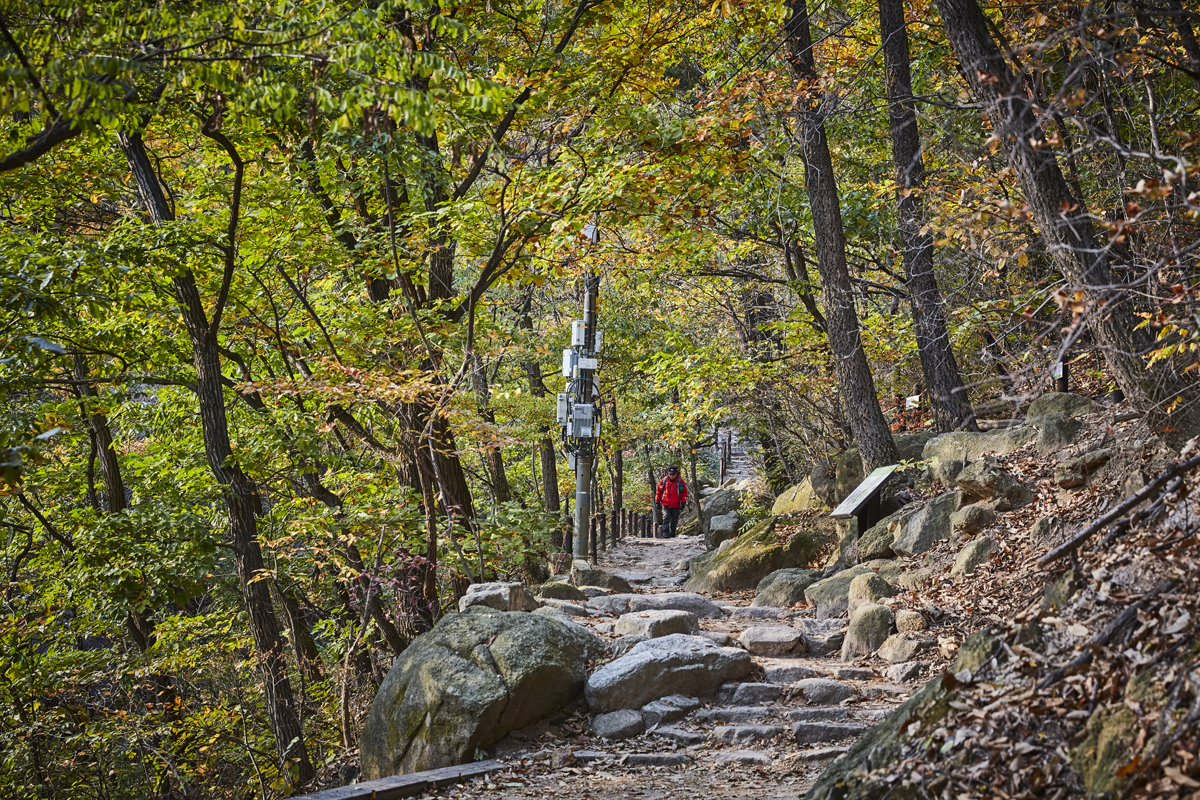
Bukhansan National Park (Seoul District) (북한산국립공원(서울))
262 Bogungmun-ro, Seongbuk-gu, Seoul
Bukhansan Mountain was officially designated as a national park in 1983. Bukhansan National Park covers both Bukhansan and Dobongsan Mountains, and spans a total area of 80.699 ㎢. At the top of Bukhansan Mountain are Baegundae Terrace (835.6 m), Insubong Peak (810.5 m) and Mangyeongdae Terrace (799.5 m), which gave the mountain the nickname "Samgaksan" or the "three-horned mountain." The mountain had other names: Sambongsan (mountain with three peaks), Hwasan (flower mountain), and Buaak (mountain shaped like a person giving a baby a piggyback ride). The current name, Bukhansan, was given after the Bukhansanseong Fortress was built under King Sukjong of the Joseon dynasty.
Plan your Korea trip
Korea travel FAQ
How do I use the travel search?
Enter a place or interest, then narrow the results by region, category or sort order.
Will my filters stay selected on the next page?
Yes. Your search and filter choices stay in the page URL while you move through the results.
Can I find directions to each place?
Place pages include an external Google Maps search when coordinates or an address are available.
Source: Korea Tourism Organization, official website (https://knto.or.kr).