TRAVEL IN KOREA
Korea Places to Visit
Find attractions, culture, festivals, stays, restaurants, shopping and travel courses for a clear Korea trip plan.
Chuncheon Oksanga - Okgwangsan Jade Mine (춘천 옥산가 (옥광산))
228, Geumok-gil, Chuncheon-si, Gangwon-do
This tourist destination was established as a healing and experience attraction based on Korea’s only jade mine in Chuncheon. It comprises Jade Cave Experience Center, Jade Mine Sauna, Toy Museum, Bakery Cafe, restaurant, and other facilities. In particular, Jade Cave Experience Center, which was built by using an actual jade pit, invites visitors to observe and touch rough gemstones. The center has a shelter surrounded by jade stones and an earthenware museum, which exhibits various types of earthenware. If you want to have a healing experience with jade’s energy, the jade sauna is an ideal place to visit. The sauna was built with high-quality nephrite from the jade mine and uses mineral water produced from deep in the jade pit. Moon Valley consisting of a gallery, modern history museum, and toy museum is popular among family visitors with children, and kidults too. The toy museum is full of famous character figures from animated films and popular movies, such as Taekwon V, Mazinger Z, Disney characters, and Star Wars characters. The outdoor park behind the Moon Valley has a small zoo and a walking path.

Chuncheon Samaksan Mountain Lake Cable Car (춘천 삼악산 호수케이블카)
245 Sports town-gil, Chuncheon-si, Gangwon-do
Samaksan Mountain Lake Cable Car is the longest cable car in Korea, which connects Samcheon-dong and Samaksan Mountain across Uiamho Lake. The 20 Crystal Cabins among the 66 total cabins offer the best choice to enjoy the beautiful Uiamho Lake and Samaksan Mountain. Samaksan Lake Cable Car Building, which resembles a bow and boomerang, has a variety of amenities. There are restaurants, convenience stores, cafes, and souvenir shops at Uiamho Lake Stop (lower platform). Visitors can enjoy the beautiful view of Chuncheon with a cup of tea at the café at Samaksan Mountain Stop (upper platform).
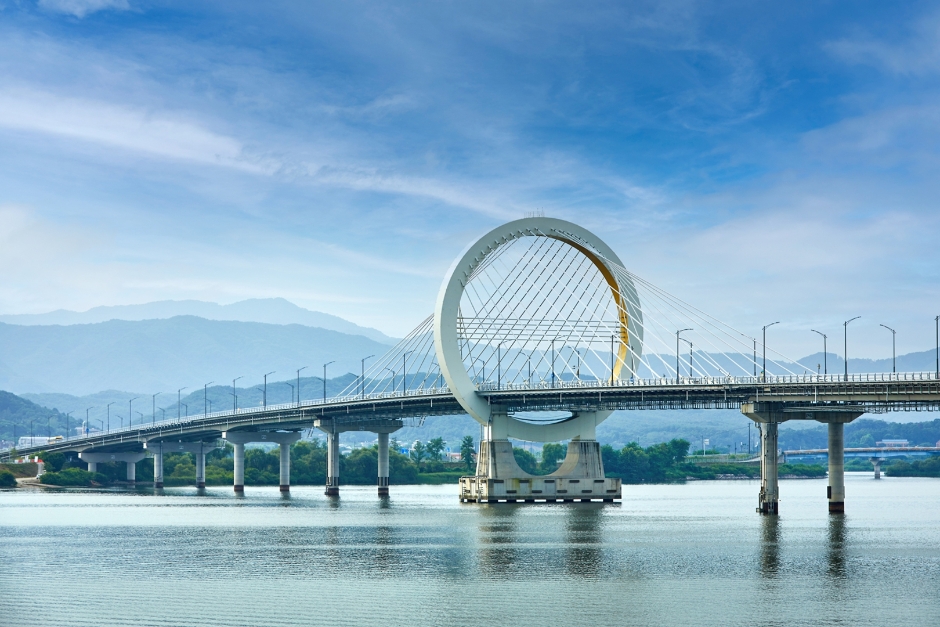
Chuncheondaegyo Bridge (춘천대교)
588 Geunhwa-dong, Chuncheon-si, Gangwon-do
Chuncheondaegyo Bridge is a bridge that connects downtown and Legoland Theme Park located on Jungdo Island in Uiamho Lake. The bridge won the Grand Prize in the Civil Engineering Structure Awards of the Year during the 2019 Civil Engineering Day celebration. The main tower made with Lego's circular shape as a motif is impressive. A night view of lights and a pleasant drive make this a popular attraction. Don't miss the brilliant fountain shows that run 3 times every evening (20:00, 21:00, 22:00) and last about 40 minutes with 12 images of Chuncheon. Meanwhile, it is the filming location for the scene where Kim Tae-ri and Nam Joo-hyuk look at the rainbow in the drama "Twenty-Five Twenty-One (2022)."
Chuncheonok (춘천옥)
19 Digital-ro 12-gil, Geumcheon-gu, Seoul
Chuncheonok is a Korean restaurant located near Gocheok Skydome. The signature menu is memil makguksu (buckwheat noodles). Served with a sweet sauce, the bibim makguksu (spicy buckwheat noodles) features a refreshing broth poured generously over the noodles, preventing them from becoming soggy. With a lower buckwheat content, the noodles have a smooth texture. It pairs well with tender and odorless bossam (napa wraps with pork). Nearby attractions include Gureumsan Forest Park, Boramae Park, and Anyangcheon Stream.
Chung-Ang Uiversity Hospital (중앙대학교병원)
102 Heukseok-ro, Dongjak-gu, Seoul
Since its foundation in 1968, Chung-Ang University Hospital has been striving to contribute to the health and happiness of humanity by achieving the best in medical treatment, research, and education based on our core values of "professionalism, fairness, change/innovation, communication/harmony, and empathy/care.” As a leader in severe disease treatment, we work with highly qualified medical staff and specialized professionals, receiving the top rating in all cancer procedures evaluated (colon, stomach, breast, and lung) by the Ministry of Health and Welfare and the Health Insurance Review and Assessment Service, and the top rating in the care appropriateness evaluation for acute stroke, coronary artery bypass, intensive care unit (adults and newborns), and hemodialysis. In a “rating from visitor reviews” conducted by a major domestic portal site, we ranked first out of 13 major tertiary hospitals in Seoul, maintaining our reputation as the friendliest hospital in Korea trusted by patients.
Chung-Ang University Gwangmyeong Hospital (중앙대학교광명병원)
110 Deokan-ro (Iljik-dong), Gwangmyeong-si, Gyeonggi-do
Chung-Ang University Gwangmyeong Hospital is a general medical institution with approximately 700 beds. Opened in March 2022, the hospital has a total floor area of 97,000㎡ and consists of 14 floors above ground and 8 floors underground. The hospital operates around six specialized clusters for critical care: Cancer Hospital, Cardiovascular & Cerebrovascular Hospital, Respiratory & Allergy Center, Digestive Disease Center, Spine Center, and Joint Center. With leading specialists in each field and state-of-the-art medical equipment, it provides advanced treatments and multidisciplinary care. Recognized as a “hospital specializing in surgery,” Chung-Ang University Gwangmyeong Hospital plays a central role in the metropolitan critical care system. It leads the digital transformation of healthcare by harmonizing digital healthcare with public health services, strengthening its position as a highly competitive medical institution. Moving forward, the hospital will continue to pursue patient-centered medical innovation and strive to become a next-generation hospital that represents not only the Seoul metropolitan area but also the Republic of Korea.
Chungcheong Suyeongseong Fortress in Boryeong (보령 충청수영성)
Chungcheongsuyeong-ro, Ocheon-myeon, Boryeong-si, Chungcheongnam-do
Chungcheong Suyeongseong Fortress in Boryeong is a stone fortress built by the Joseon dynasty (1392-1897) in the 16th century to defend against invasions through the Hwanghae Sea. It offers a picturesque view of the Hwanghae Sea and several islands. The entrance to the fortress, called Manghwamun Gate, showcases stone artistry with its polished granite arch. This site also has historical significance as a place where Catholic persecution occurred in the 19th century.
Chungcheongnam-do Museum of History (충청남도역사박물관)
24 Gukgogae-gil, Gongju-si, Chungcheongnam-do
The Chungcheongnam-do History Museum displays historical artifacts, everyday items, folk traditions, crafts, documents, paintings, and sculptures from the Middle Ages to the modern era found in Chungcheongnam-do. Its facilities include exhibition halls, a lounge, an experience room, a performance hall, and an outdoor garden. Visitors can enjoy traditional Korean games like yunnori (traditional Korean board game) and tuho (arrow-throwing). In spring, the museum hosts a cherry blossom festival in the outdoor garden during the blooming season.
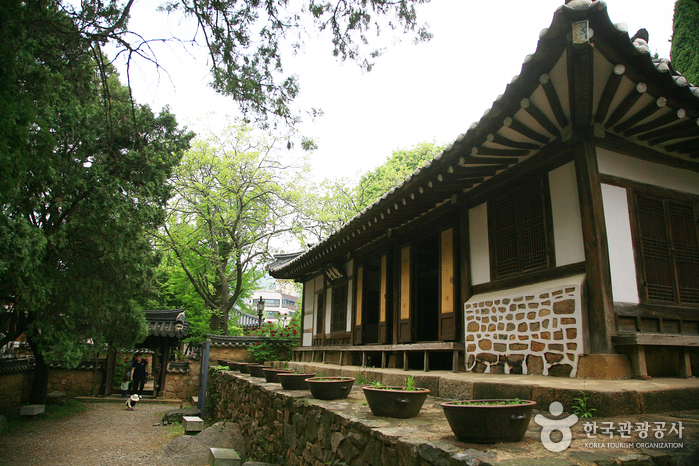
Chunghyeon Museum (충현박물관)
5-6, Ori-ro 347beon-gil, Gwangmyeong-si, Gyeonggi-do
The Chunghyeon Museum preserves the legacy of the respected scholar Ori Lee Wonik. The museum's logo is inspired by the scholar's signature on a letter that he wrote four years before his death, addressed to his son Lee Uijeon, grandson Lee Suyak, and successive descendants. Visitors can see various artifacts and ruins related to Lee Wonik.

Chungjang Street Festival of Recollection (광주 추억의 충장축제)
Geumnamno 1(il)-ga, Dong-gu, Gwangju
Every October, the Chungjang Street Festival of Recollection is held on the streets of Chungjang-ro and Geumnam-ro in the city center with the theme of memories. The themed streets exactly replicate the old Chungjang-ro with the theme of "memories of night," allowing visitors to enjoy different types of songs from the olden days. This festival, held in the heart of Gwangju, offers a wide array of events, such as nostalgic concerts, flour games, parades, and random dance performances, making it a popular attraction with plenty to see and do.◎ Chungjang-ro, GwangjuChungjang-ro is so famous as a fashion street that it is nicknamed the “Myeongdong Street of Gwangju.” The name “Chungjang” comes from the military title of General Kim Deok-ryeong, known for his valiant acts in the Japanese invasion of Korea in 1592.

Chungjang-ro Hong Kong Alley (충장로 홍콩골목)
5-2 Chungjangnoan-gil, Dong-gu, Gwangju
Hong Kong Alley is a themed street located in the heart of Chungjang-ro, Gwangju. Stepping in feels like walking through the night streets of Hong Kong in a movie. With Hong Kong-style food, illuminated streets, and Hong Kong-style music playing softly in the background, it is a must-visit nighttime attraction in Gwangju.
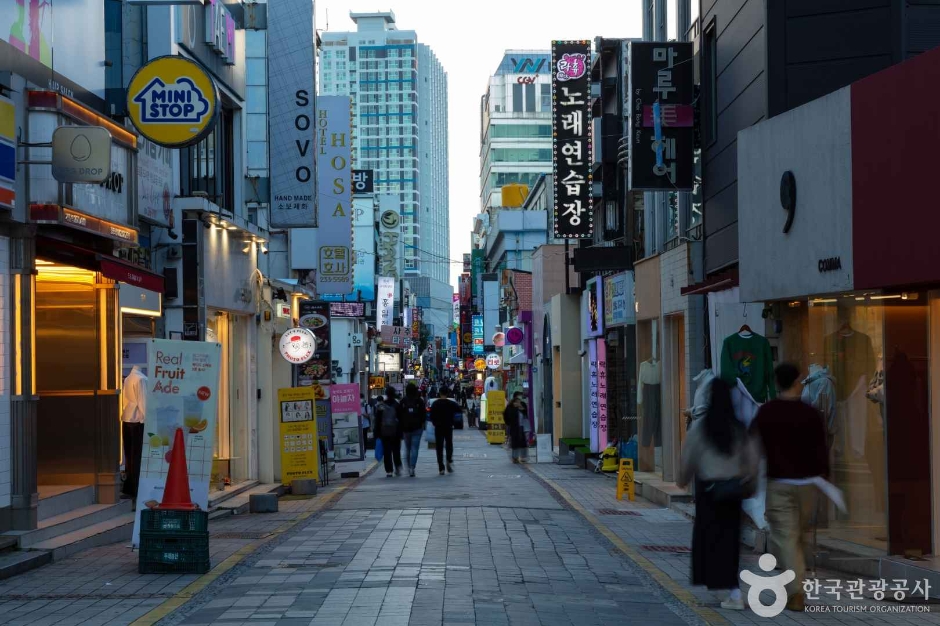
Chungjang-ro Street (충장로)
37 Seoseok-ro, Dong-gu, Gwangju
Chungjang-ro Street is Gwangju’s major fashion district, comparable with Myeongdong Street of Seoul. The streets of Chungjang-ro are lined with shopping malls, clothing stores, restaurants, cafes, movie theaters and various other attractions, providing the ultimate experience of modern culture in Gwangju. It is the city's hub of fashion, both trendy and traditional, as well as venue for diverse performances.
Chungjangsa Shrine (충장사)
13, Songgang-ro, Buk-gu, Gwangju
When you reach Baejae along the tourist road leading up to Wonhyosa Temple, you can see the well-maintained tomb and the magnificent building of Chungjangsa Shrine on the left. It was built in 1975 as a memorial to General Kim Deok-ryeong, born in Mudeungsan Mountain. In the precincts, there are the shrine, where Kim Deok-ryeong's portrait and command paper are enshrined; the east room and west room; Eullyun Monument and Commentary Monument, the relics hall; Chungyongmun Gate; and Ikomun Gate. In the relics hall, the clothes of 'General Kim Deok-ryeong,' designated as Important Folk Material, and the coffin excavated from the general's tomb, as well as his handwriting, are on display. On the hill behind the shrine is Kim Deok-ryeong's tomb and tombstone, as well as his family's tomb.

Chungju Ecology Experience Museum (충주자연생태체험관)
260 Jideung-ro, Dongnyang-myeon, Chungju-si, Chungcheongbuk-do
Chungju Ecology Experience Museum is an interactive space designed to foster appreciation for nature through hands-on exhibits, educational programs, and its surrounding natural environment. While geared toward children, it offers a relaxing and engaging experience for visitors of all ages. The complex includes a basement, three above-ground floors, Yonggyo Bridge Ecology Park, and an annex building. The basement features a safe indoor play area with slides and activity equipment. The first and second floors include a screening room for nature documentaries, exhibition halls introducing rare native species and their characteristics, and a collection of ecology-related books.
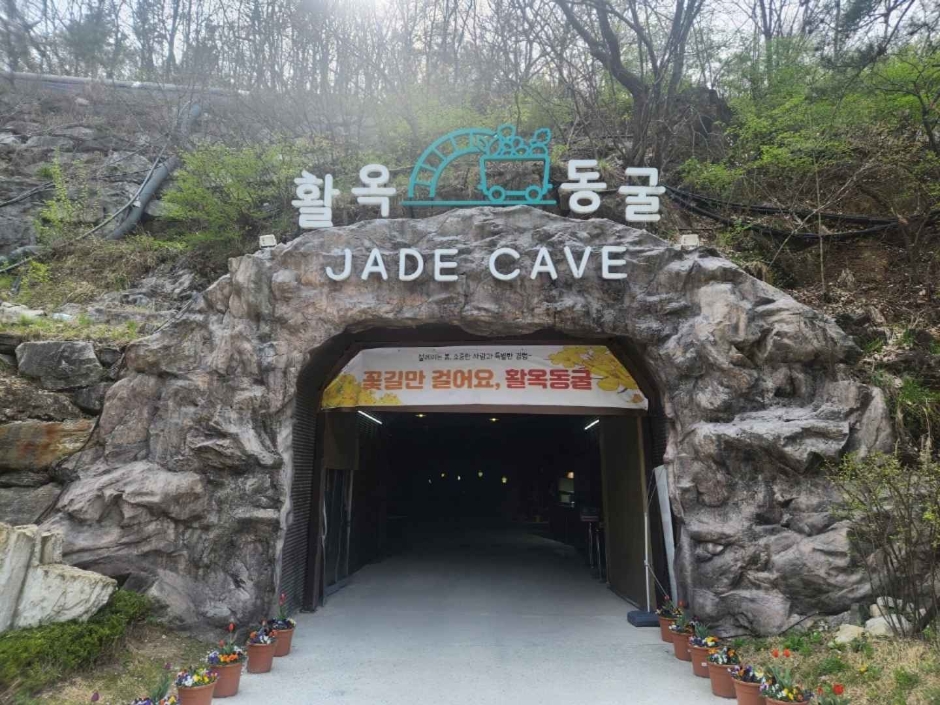
Chungju Hwalok Cave (Jade Cave) (충주 활옥동굴)
26 Mokbeoran-gil, Chungju-si, Chungcheongbuk-do
Developed in 1922 during the Japanese colonial period, this is the only talc mine in Korea and is the largest in the Eastern Asia, with a recorded length of 57 kilometers, an unofficial length of 87 kilometers, and an underground vertical height of 711 meters. A 2.5-kilometer-long stretch of the cave has been developed into a tourist site, filled with light sculptures, performance venues, and health therapy zones. LED, neon, and a variety of natural lights create a mysterious atmosphere, and since the temperature stays between 11 and 15 degrees year-round, it's even more popular in summer. There is also a kayaking experience that allows visitors to see inside the cave by kayaking in a lake created by mineral water. Note that the temperature inside the cave averages between 11 and 15 degrees Celsius, which is warm in the winter but cold in the summer, so visitors are advised to bring a long-sleeved jacket.

Chungju Jungangtap Park (중앙탑공원 (충주))
6 Tapjeongan-gil, Jungangtap-myeon, Chungju-si, Chungcheongbuk-do
Chungju Jungangtap Park is home to the Seven-story Stone Pagoda in Tappyeong-ri (National Treasure), set before the beautiful scenery of the Namhangang River. The stone pagoda was built during the Unified Silla period and was the largest stone pagoda at that time. Because of its location in the middle of the nation, it was called Jungangtap (jungang means middle in Korean). The area around the pagoda was made into a sculpture park.
Plan your Korea trip
Korea travel FAQ
How do I use the travel search?
Enter a place or interest, then narrow the results by region, category or sort order.
Will my filters stay selected on the next page?
Yes. Your search and filter choices stay in the page URL while you move through the results.
Can I find directions to each place?
Place pages include an external Google Maps search when coordinates or an address are available.
Source: Korea Tourism Organization, official website (https://knto.or.kr).