TRAVEL IN KOREA
Korea Places to Visit
Find attractions, culture, festivals, stays, restaurants, shopping and travel courses for a clear Korea trip plan.
](https://tong.visitkorea.or.kr/cms/resource/10/4041910_image2_1.jpg)
Hilton Corp. & Tailor [Tax Refund Shop](힐튼종합상사힐튼양복점)
3F, 21, Duteopbawi-ro 75-gil, Yongsan-gu, Seoul
Hilton Tailor creates authentic custom-made suits that perfectly fit a customer's physique based on a long tradition of bespoke technology. Through honest material selection and an artisan's meticulous stitching, it shows the essence of gentleman's wear whose value shines over time.
](https://tong.visitkorea.or.kr/cms/resource/59/4022059_image2_1.jpg)
himalayaeyes [Tax Refund Shop](히말라야아이즈)
1F, 19, Itaewon-ro 14-gil, Yongsan-gu, Seoul
Himalaya Eyes is an eye healthcare brand that cares for the tired eyes of modern people by imbuing the clear energy and natural ingredients of the Himalayas. Through professional solutions utilizing naturally derived ingredients, we protect customers' eye health and gift clear vision.
](https://tong.visitkorea.or.kr/cms/resource/48/4022548_image2_1.jpg)
Himchan Pharmacy [Tax Refund Shop](힘찬약국)
1F, 66, Yanghwa-ro, Mapo-gu, Seoul
Himchan Pharmacy is a health helper that robustly supports customers to spend a vibrant and energetic day, just like its name. Through systematic drug management and professional counseling services, we play a role in strengthening the community's foundational health.
Himedi, Inc. (하이메디)
4th Floor, 6-9 Teheran-ro 25-gil, Gangnam-gu, Seoul
Your Health, Your Journey. World-class medical tourism in South Korea, on your terms. We only work with best clinics in Korea. Our curated check up packages use Korea's most advanced diagnostic to give you answer beyond a typical exam, from full body check up to hormon test. Every packages comes with Himedi's concierge support. We also provide a complete range of wellness and aesthetic services—including advanced skin care, hair restoration, dental treatments, vision correction, stem cell therapy, plastic surgery, and body sculpting—to help you look and feel your best.
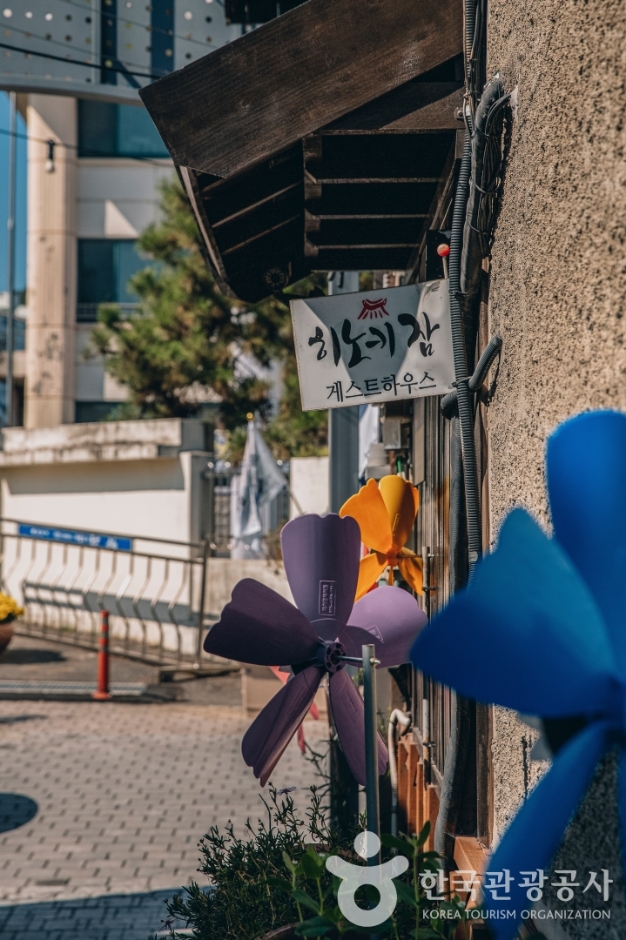
Hinokijam 1 (히노키잠(1호점))
54-1, Guyeong 6-gil, Gunsan-si, Jeonbuk-do
Hinokijam Guesthouse is a two-story traditional Japanese wooden house located on the Modern Culture and History Street of Gunsan, where you can experience the atmosphere and history of modern Japanese culture in Korea. Guests staying at the guesthouse are mostly travelers, and the room rates are reasonable, so it is a cost-effective option. There are 7 guest rooms, ranging from two-person rooms to eight-person rooms. Guest rooms for four or more people have beds depending on the room, and all bathrooms are inside the room. All rooms, with the exception of the Haetnimbang room, are charged per person. Breakfast includes toast and beverages.
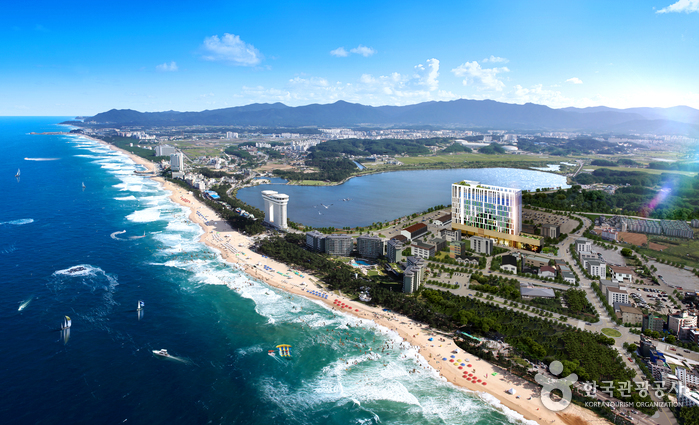
Hiocean Gyeongpo (하이오션 경포)
30-5 , Gyeongpo-ro 463beon-gil, Gangneung-si, Gangwon-do
Located next to Gyeongpo Beach and Gyeongpo Lake in Gangneung, the Hiocean Gyeongpo is a residence hotel with a stunning view of both the sea and the lake. Cooking and laundry can be done in the room, making it popular among both short-term and long-term business travelers. The lake-view rooms provide a view of the tranquil Gyeongpo Lake, while the duplex rooms offer two stories of living space. Hotel amenities include a breakfast restaurant on the 1st floor, a terrace garden on the 2nd floor, a rooftop garden on the 8th floor, a convenience store, etc.
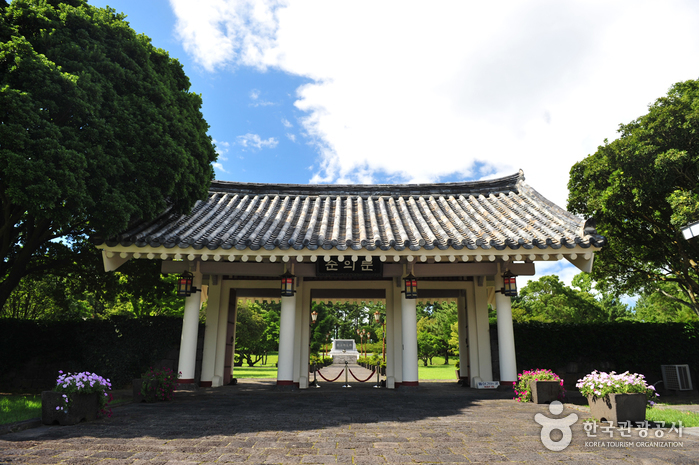
Historic Site of Anti-Mongolian Struggle in Hangpadu-ri, Jeju (제주 항파두리 항몽 유적)
50, Hangpaduri-ro, Jeju-si, Jeju-do
Historic Site of Anti-Mongolian Struggle in Hangpadu-ri is where the Sambyeolcho military unit of the Goryeo dynasty resisted the invasion of Mongolia until the last possible moment. The site houses an exhibition hall, a monument, and a unique mud fortress. Nearby is Jangsumul Spring (Jangsu means general) which flowed from the footprints of General Kim Tong-jeong. Today, water from the spring cannot be used as drinking water. Sambyeolcho was a military unit of the Goryeo dynasty. When the Goryeo dynasty made peace with the Mongolian forces in February 1270 (the 11th year of King Wonjong), the Sambyeolcho special defense unit opposed it and launched a resistance movement. They moved their base to Jindo in Jeollanam-do, but after suffering a huge defeat, they moved to Jeju-do and built Hangpaduseong Fortress. They continued to fight against the Mongolian forces for two more years there. However, all the members were killed in April 1273 (the 14th year of King Wonjong). This independent anti-Mongolian movement was born out the deeply patriotic belief in the need to safeguard the nation from foreign invasion. In 1977, the government invested 745 million won to restore part of the fortress and build a monument in commemoration of those who died in the war. The work was completed in June 1978.
Historic Site of Gosan Yun Seondo (고산 윤선도 유적지)
135 Nogudang-gil, Haenam-eup, Haenam-gun, Jeollanam-do
Historic Site of Gosan Yun Seondo is a memorial site dedicated to Gosan Yun Seondo (1587-1671), a government official and literary figure of the Joseon dynasty. Nogudang is the house where Yun Seondo lived, built in the 15th century. There is also a museum displaying numerous hanok and artifacts. It is situated in a beautiful location surrounded by large ginko trees and forests.
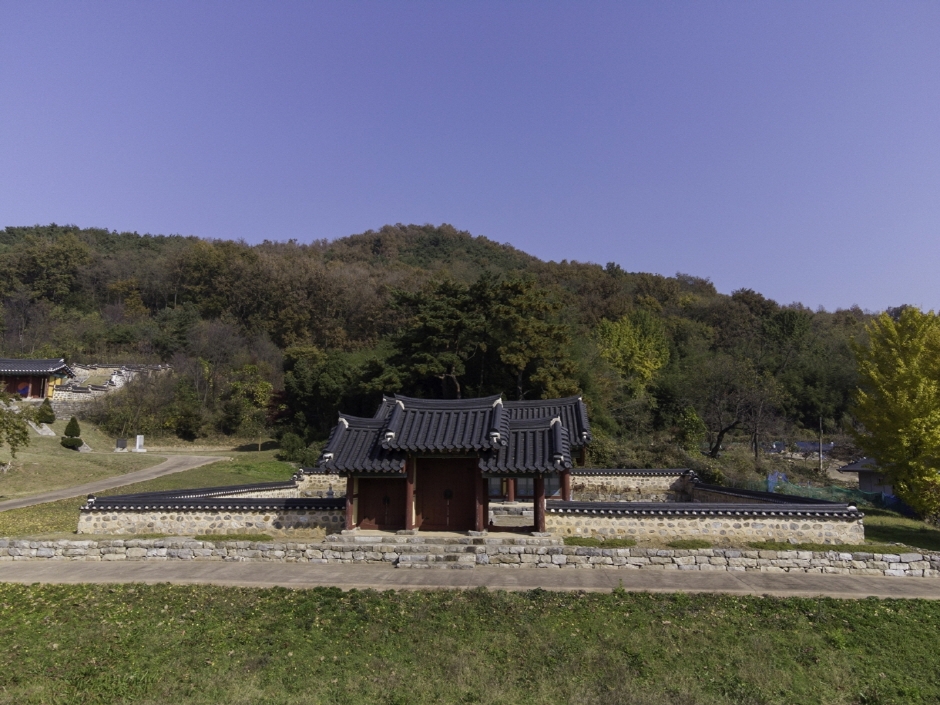
Historic Site Related to Seong Sam-mun (성삼문선생유허지)
403-12 Maejukheon-gil, Hongbuk-eup, Hongseong-gun, Chungcheongnam-do
This historic site related to Seong Sam-mun is believed to be the birthplace of Seong Sam-mun, and was founded by his maternal ancester, Park Dam. A shrine was built here in 1685 to honor Seong Sam-mun and the five others ministers who were executed with him for their plot to restore King Danjong to the throne after he was exhiled by his uncle. The site was destroyed in 1864 when Confucian facilities were removed by the government, but was later rebuilt in 1945.
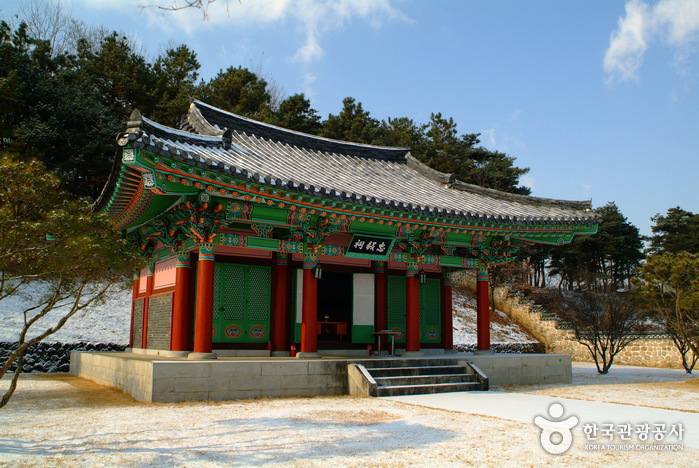
Historical site of General Chung Ki-ryong (Chunguisa Temple) (정기룡장군 유적지(충의사))
230, Chungui-ro, Sangju-si, Gyeongsangbuk-do
Chunguisa Temple is home to the tablets of General Chung Ki-ryong, a great army general who led during the reign of Joseon King Seonjo. In 1974, the temple and related relics were designated as a Regional Cultural Asset Monument. The area was expanded in 1978 to include a museum which displays Relics Related to Jeong Gi-ryong, a designated Treasure. The temple also hosts a reenactment of the recovery of Sangjuseong Fortress every October.
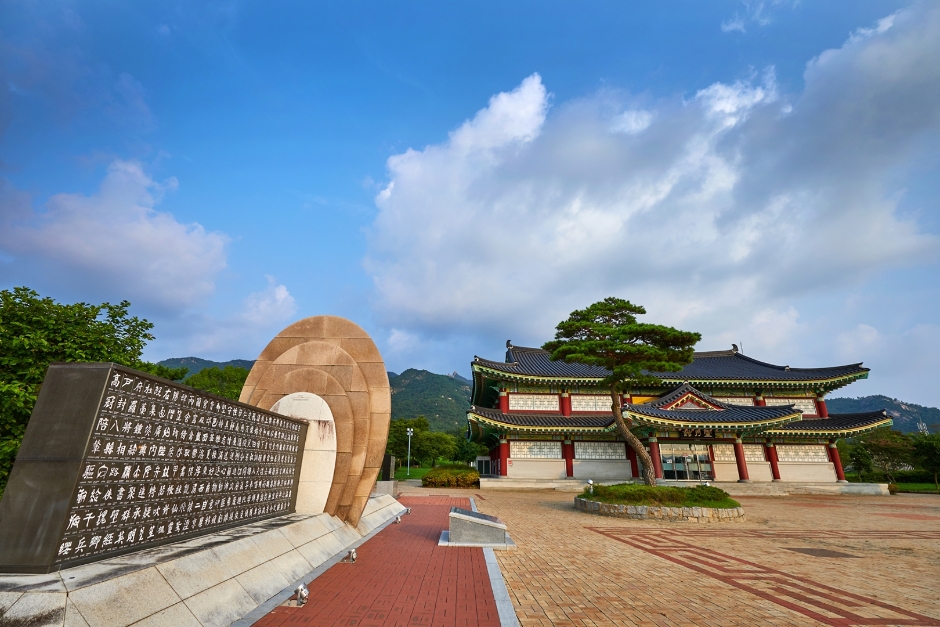
Historical Site of Wangin (왕인박사 유적지)
440 Wangin-ro, Yeongam-gun, Jeollanam-do
The hometown of Wangin Baksa (Wangin the Great Scholar) is located at the foot of Munpilbong Peak to the east of Gurim Village. Due to Wangin’s importance and contributions to Korean history, this historical attraction is preserved and maintained in honor of his memory and achievements. Seonggidong is the official birthplace of Wangin (marked by the Yuheobi memorial monument) and is also home to Seongcheon, the well Wangin is believed to have drunk from. Halfway up Wolchulsan Mountain are Chaekgul, Munsanjae and Yangsajae where Wangin is said to have studied as well as nurtured local pupils. To commemorate the significance of these areas, a memorial is held every March at Munsanjae and Yansanjae. In front of Chaekgul is a statue of Wangin which is said to symbolize his benevolent character. Just west of Seonggidong is Doljeonggogae, a hill from which it is believed Wangin made a sorrowful look back at his countrymen before leaving for Japan. Wangin departed for Japan from Sangdaepo, which at the time was an international trading port. The renowned Baekje scholar was beginning his journey at the request of Japanese Emperor Eungshin. He took with him ten books on the Analects of Confucius and a book of Cheonjamun, a text of one thousand Chinese characters. Over time, he earned the trust of the emperor and became instructor to the crown prince. Wangin is well-known for his part in the development of Japanese culture and his name appears often in Japanese history. Wangin educated beyond textbooks and made great contributions to the development of arts, crafts and music and is revered as the originator of Japan’s Asuka culture. This historic site was originally reconstructed from 1985 to 1987 and is continually receiving improvements to improve accessibility for visitors.
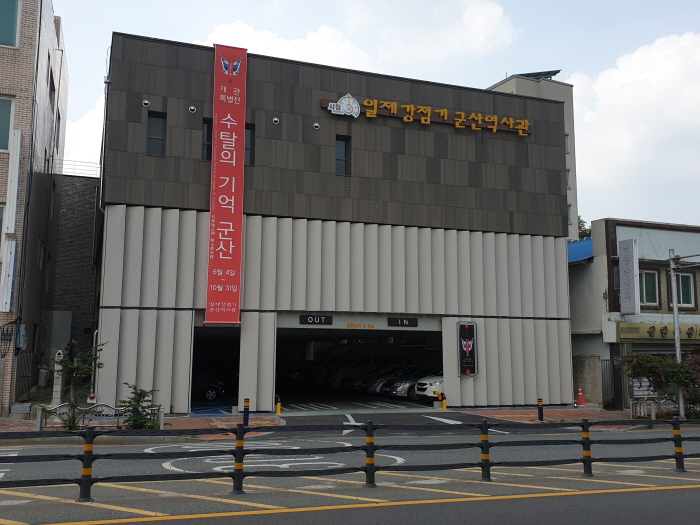
History Center of Colonial Period of Japan in Gunsan (일제강점기 군산역사관)
21 Dongguksa-gil, Gunsan-si, Jeonbuk-do
The History Center of the Japanese Colonial Period in Gunsan is dedicated to human rights, peace, and reconciliation. It serves as a place of remembrance, reflecting on the exploitation experienced under Japanese imperial rule in order to help shape a better future. The museum emphasizes interaction among people, artifacts, and historical spaces, as well as active engagement with visitors. Through materials and records spanning from the opening of Gunsan Port to liberation, it seeks to foster dialogue and understanding. By remembering the suffering caused by forced exploitation and working toward healing, the museum aims to transform this painful history into enduring values of human rights and peace through ongoing research, exhibitions, and education.
HM International Korean Medicine Clinic (하늘마음한의원 서초강남점)
2nd Floor, Seokjeong Building, 96 Banpo-daero, Seocho-gu, Seoul,
Hanulmaum Korean Medicine Clinic is an institution that has been specializing in the treatment of various skin diseases, including psoriasis, atopic dermatitis, and seborrheic dermatitis, for 35 years. The clinic aims for personalized treatment that considers an individual's constitution and symptoms.Treatment methods include herbal medicine to boost internal immunity, acupuncture to assist with blood and energy circulation, and topical agents to alleviate skin inflammation. Haneulmaeum Clinic emphasizes an integrated approach that simultaneously treats both the internal and external root causes of skin diseases. Furthermore, it provides education and counseling to help patients improve their lifestyle habits.

Hoam Museum of Art (호암미술관)
38 Everland-ro 562beon-gil, Pogok-eup, Cheoin-gu, Yongin-si, Gyeonggi-do
The first private museum to be established in Korea, Ho-Am Art Museum was founded on April 22, 1982 by Lee Byung-chul, the founder of Samsung. The art gallery exhibits a collection of over 1,000 pieces of work that has been collected in the span of 30 years. On the second floor of the museum is a lounge where visitors can relax after looking around the gallery.
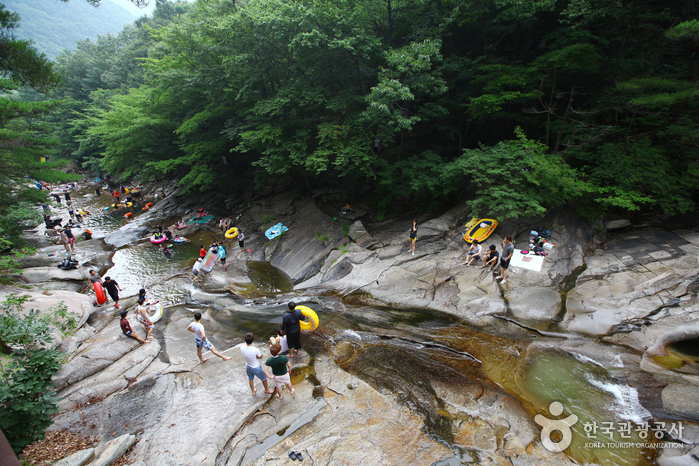
Hobaksogyegok Valley (호박소계곡)
334-1, Eoreumgol-ro, Miryang-si, Gyeongsangnam-do
Hobaksogyegok Valley is located within Gajisan Mountain approximately 3 kilometers away from Eoreumgol Valley in Jaeyaksan Mountain, where the water originates. The valley offers beautiful surroundings and clear water developed over the years. Hobakso Pond, shape like a grain-grinding tool, is located at the base of a 10-meter-high waterfall. With a circumference of 30 meters, the pond is also called Sirye Hobakso Pond, Guyeongpokpo Falls, and Baengnyeonpokpo Falls. In the past, the pond was a spiritual place where people would pray for rain. Surrounded by white granite rocks, the area is a scenic place of natural beauty, free from pollution. Visitors can also look around nearby Baengnyeonsa Temple, Hyeongjeso Pond and Ocheonpyeong Rock.
Hocheon Village (호천마을)
491 Eomgwang-ro, Busanjin-gu, Busan
Located in the Busanjin-gu district of Busan, the Hocehon Village is famous for its colorful houses, which provide a stunning backdrop for photos. As the night dawns, the warm-lamps-lit streets with colorful houses create a romantic atmosphere, making it one of the top places to visit for night views. The village became well known after getting featured in various dramas and movies, including the popular drama “Fight My Way (2017).” Another highlight of Hocehon Village is the 180-step staircase adorned with a stunning fish mural. The Hocheon Village Cultural Platform at the Village provides residents and creators with opportunities to sell their products and participate in cultural experiences and educational activities.
Plan your Korea trip
Korea travel FAQ
How do I use the travel search?
Enter a place or interest, then narrow the results by region, category or sort order.
Will my filters stay selected on the next page?
Yes. Your search and filter choices stay in the page URL while you move through the results.
Can I find directions to each place?
Place pages include an external Google Maps search when coordinates or an address are available.
Source: Korea Tourism Organization, official website (https://knto.or.kr).