TRAVEL IN KOREA
Korea Places to Visit
Find attractions, culture, festivals, stays, restaurants, shopping and travel courses for a clear Korea trip plan.
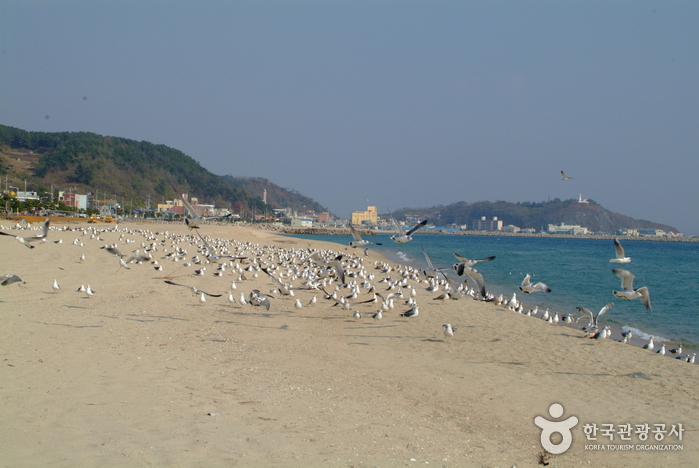
Hupo Beach (후포해수욕장)
Samyul-ri, Uljin-gun, Gyeongsangbuk-do
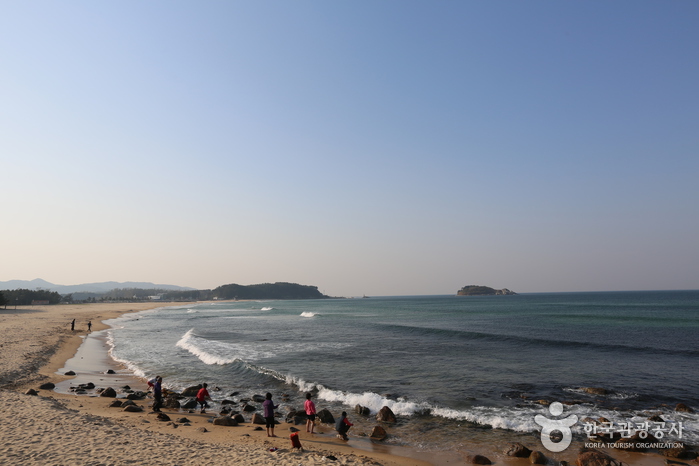
The 250-meter-long Hupo Beach is situated right by Hupohang Port. The combination of an expansive sandy beach and indigo blue waters of the East Sea creates a splendid view, drawing a large number of vacationers in the summer. Hupohang Port is the main receiving and distributing port for fish caught in the East Sea. In the early morning, the port offers a great chance to not only see fish being hauled from boats to the fish market, but also to purchase fresh raw fish at an affordable price. On the hill north of Hupo Beach stands Hupo Lighthouse where one can get an unobstructed view of the East Sea and the Uljin area. Hupo Beach is one of the few beaches offering a splendid view of both the port and the lighthouse.
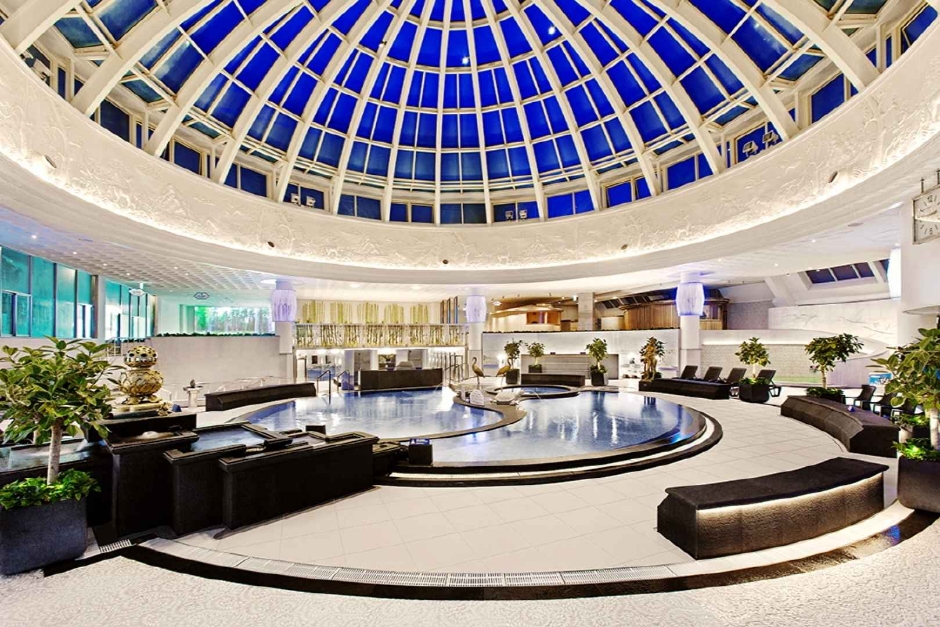
Hurshimchung (허심청)
23 Geumganggongwon-ro 20beon-gil, Dongnae-gu, Busan
Hurshimchung is a large-scale hot spring facility using natural hot spring water and lit by natural lighting through the ceiling. Known for its magnesium-rich hot spring water, it is believed to be beneficial for conditions such as neuralgia, cut wounds, back pain, and muscle aches. The facility includes large hot spring baths, saunas, restaurants, cafés, convenience stores, and massage shops. The hot spring baths feature various event baths using natural bathing ingredients and medicinal herb depending on the season. There are also various types of saunas, including charcoal sauna and red clay sauna.
](https://tong.visitkorea.or.kr/cms/resource/44/4021944_image2_1.jpg)
Hustad [Tax Refund Shop](휴스타드)
58-20, Itaewon-ro 54-gil, Yongsan-gu, Seoul
Hustad is a contemporary menswear brand capturing the confident charisma and modern sense of modern men. Through suit and casual lines featuring restrained lines and modern silhouettes, it demonstrates the standard of credible and sophisticated male style.
](https://tong.visitkorea.or.kr/cms/resource/40/4045240_image2_1.jpg)
Hwachang Tosan[Tax Refund Shop](화창토산)
212, Yeonhui-ro, Seodaemun-gu, Seoul
Hwachang Tosan is a regional specialty brand that honestly supplies superior agricultural and fishery products imbuing Korea's clear and sunny energy. We deliver trust and abundant value to customers' tables through healthy food containing the sincerity of the production areas.
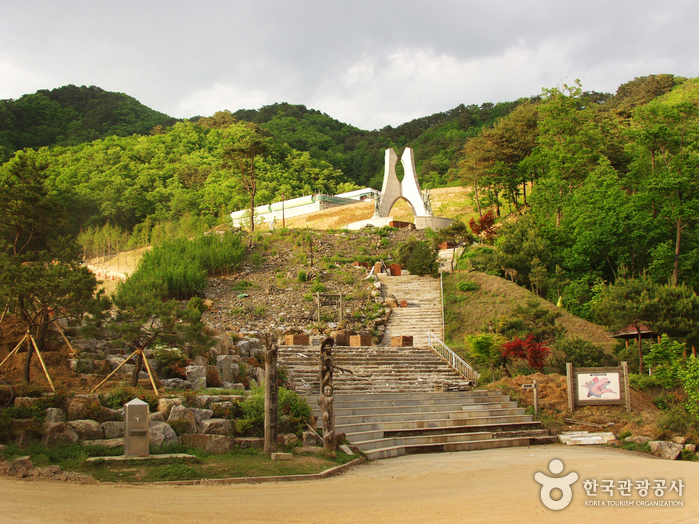
Hwacheon Bimok Park (화천 비목공원)
3481-70, Pyeonghwa-ro, Hwacheon-gun, Gangwon-do
Peace Dam was built over a period of 15 months from February 1987 to May 1988 with funds donated by the general public in response to North Korea’s construction of Geumgangsan Dam and a potential flooding attack. The flood control dam has proved its worth during the floods of 1995, 1996, and 1999 and it has become a major tourist destination over the years. Located in the vicinity of Peace Dam is Bimok Park, which is the origin of the famous national song “Bimok.” In addition to the war monuments inside the park, there are around a dozen wooden crosses with rusty iron helmets placed on top within the barbed wire entanglements around the hill, thereby reminding visitors of the national tragedy of the Korean War. The county of Hwancheon hosts the Bimok Cultural Festival from June 3 to June 6 every year at Bimok Park, Bungeoseom Island by the town’s riverside, and the surrounding areas. The four-day festival offers a variety of events such as a singing contest, memorial ceremony of poetry reading, bimok tree cutting contest, rice ball eating contest, army life experience, military music parade, and more. Crossing over to Yanggu County from Peace Dam, there is a national security education place comprised of attractions like the 4th Underground Tunnel and Eulji Observatory. Paroho Lake Battlefield Tourist Park is also worth a visit after looking around Peace Dam. Also known as the “ocean within mountains,” Paroho is a manmade lake created as a result of the Hwacheon Dam construction in 1944. The lake is home to over 70 different species of freshwater fish such as mandarin fish and carp. It also holds the sorrowful history of the water burial of three whole divisions of the Chinese Forces in defending the lake during the Korean War. The name Paroho, meaning “enemy breaking lake,” was given after the late president of Korea, Rhee Syngman, visited the place and designated a plaque in his own handwriting in memory of obtaining victory in fierce battle. There is an observatory, a security hall, and a stone monument engraved with the poetry of Wolha Rhee Taegeuk (1913-2003).
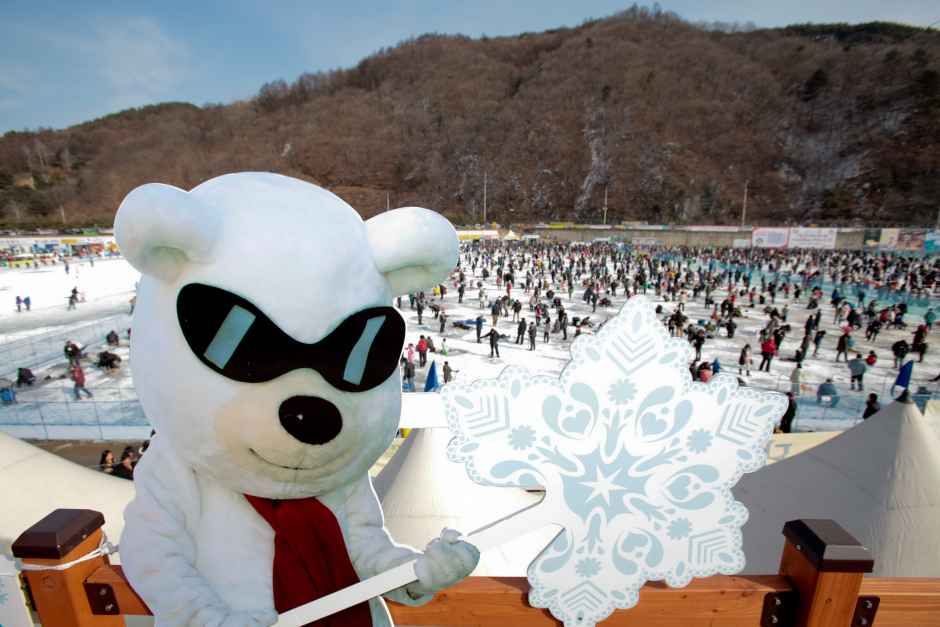
Hwacheon Sancheoneo Ice Festival (얼음나라화천 산천어축제)
137, Sancheoneo-gil, Hwacheon-eup, Hwacheon-gun, Gangwon-do
*The information below is based on the 2026 festivals. Details for the 2027 festivals will be updated as they become available.*Held in Hwacheon, Gangwon-do, the Hwacheon Sancheoneo Ice Festival is a one-of-a-kind winter event that was named one of CNN's “Seven Wonders of Winter” in 2011. The festival takes place every January, when the famously pristine waters of Hwacheoncheon Stream freeze solid. Visitors can catch sancheoneo, mountain trout often called the "Queen of the Valley", through ice fishing or even with their bare hands. The freshly caught fish can be enjoyed immediately as raw slices or grilled on the spot. Beyond fishing, the festival features a wide range of winter attractions, including ice sledding, snow sledding, and bobsledding, drawing more than one million visitors each year.
Hwacheong Galbi (화청갈비)
12 Changnyong-daero 41beon-gil, Paldal-gu, Suwon-si, Gyeonggi-do
This restaurant offers galbi jeongsik, a set meal featuring Suwon wanggalbi at a reasonable price. Available only at lunchtime, the set includes grilled galbi, steamed rice, and a variety of side dishes, making for a satisfying and filling meal. Located near Hwaseong Fortress and the vibrant Haenggung-dong area (also known as Haengnidan Street), it’s an ideal spot to enjoy a meal after exploring Suwon's famous sights.
Hwadam Botanic Garden (화담숲)
278-1 Docheogwit-ro, Gwangju-si, Gyeonggi-do
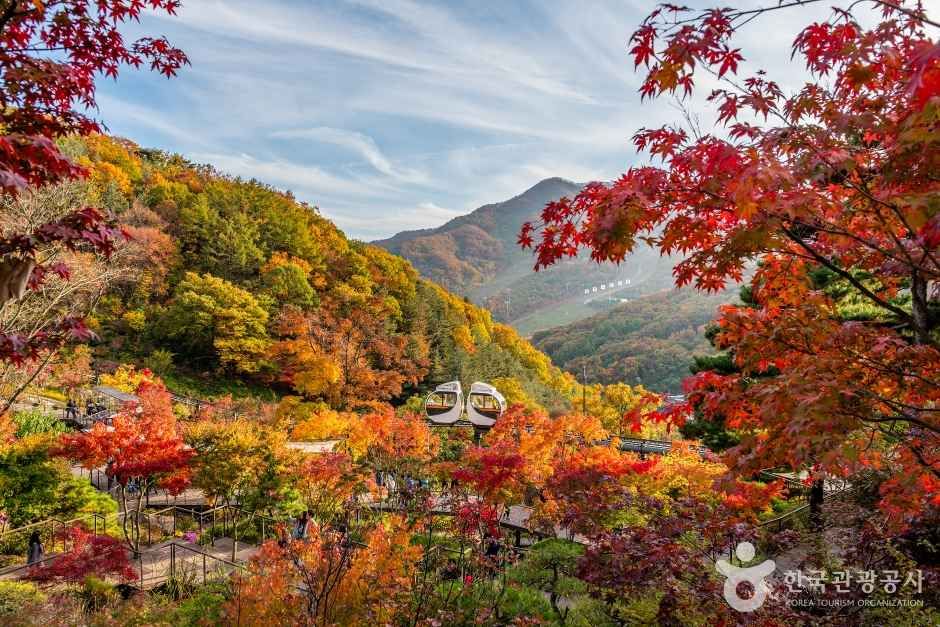
Hwadam Botanic Garden is an eco-friendly arboretum located within Konjiam Resort in Gwangju, Gyeonggi-do, a 40-minute drive away from Seoul. In an effort to revive the country's forest ecosystem, LG Evergreen Foundation brought in approximately 4,300 types of exquisite and domestic plants to form a forest park divided into 17 themes. "Hwadam" can be translated into "friendly communication," a name given to the forest in hopes that the area serves as means for people to communicate with nature. While the forest is designed to offer an environmentally friendly atmosphere to humans, the ecosystem and habitats of the forest are well-preserved, serving as a home to many living species.
![Hwadamjae[Korea Quality] / 화담재[한국관광 품질인증]](http://tong.visitkorea.or.kr/cms/resource/79/2803479_image2_1.jpg)
Hwadamjae[Korea Quality] / 화담재[한국관광 품질인증]
3 , Dalbithanok-gil, Gangjin-gun, Jeollanam-do
Hwadamjae is a hanok pension located at the entrance of Dalbit Hanok Village in Gangjin, Jeollanam-do, that offers pet-friendly accommodations. There are four cozy rooms that can accommodate two to three people each. The Dalbit room, constructed with red clay, is heated using the gudeuljang system (underfloor heating). The Dalbit Maru room is also decorated with cypress, so even after a full night's sleep, you can still feel your head clear from the soothing scent of cypress. Across the yard are large and small jangdokdaes (traditional earthen jars) and an area where you can play traditional games.
Hwado Pureunmul Center Pianopokpo Falls (화도푸른물센터 피아노폭포)
562 Pokpo-ro, Hwado-eup, Namyangju-si, Gyeonggi-do
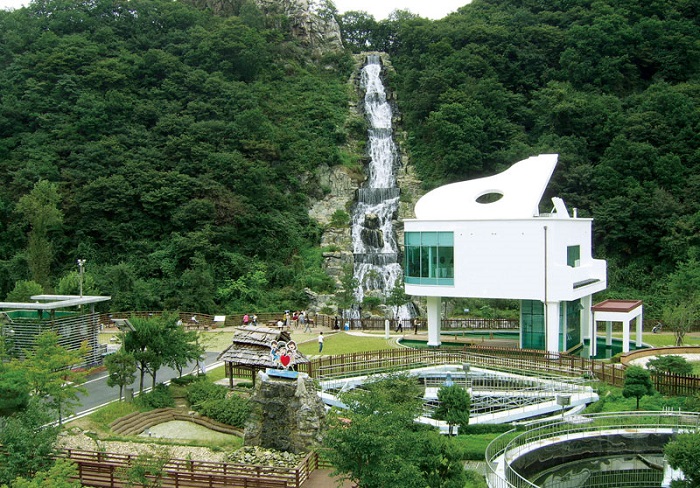
Located within the Hwado Pureunmul Center, the 61-meter tall Pianopokpo Falls is an artificial waterfall. It is constructed with a steel frame and an artificial rock structure to mimic a cliff-like appearance. The waterfall operates by pumping water discharged from the sewage treatment plant, creating a cascading flow. Opposite the falls stands a building shaped like a piano, which has won the "Beautiful Restroom" grand prize. Additionally, an ecological park has been developed in front of the waterfall, offering a pleasant walking experience.
Hwagae Garden (화개정원)
6-60 Gyodongdong-ro 471beon-gil, Gyodong-myeon, Ganghwa-gun, Incheon
Hwagae Garden is a park situated on the foothills of Hwagaesan Mountain in Gyodong-myeon. Exploring the trails, visitors can immerse themselves in the ever-changing beauty of Hwagaesan Mountain across the seasons. Opting for the monorail to reach the observatory rewards with a panoramic view extending to Ganghwado Island. The park is equipped with various amenities, including walking paths, a lawn, a children's playground, along with restaurants and cafés.

Hwahongmun Gate (화홍문(華虹門))
377 Suwoncheon-ro, Paldal-gu, Suwon-si, Gyeonggi-do
Hwahongmun Gate refers to the northern gate of Hwaseong Fortress among the two main gates installed to control the flow of Suwoncheon Stream that cuts through the fortress. Hwahongmun Gate consists of seven arched watergates in varying sizes. The watergate at the center is larger than the others to control the water flow effectively.◎ Travel information to meet Hallyu’s charm – TV series “Lovely Runner”Hwahongmun Gate is known for its beautiful nighttime view, with warm illuminations casting a glow over the gates and walkways. The bridge in front of Hwahongmun, where Sun-jae confessed his feelings to Sol, has become a popular photo spot for fans looking to capture a piece of the romance.
Hwajinpo Beach (화진포해수욕장)
Location details are available on the place page.
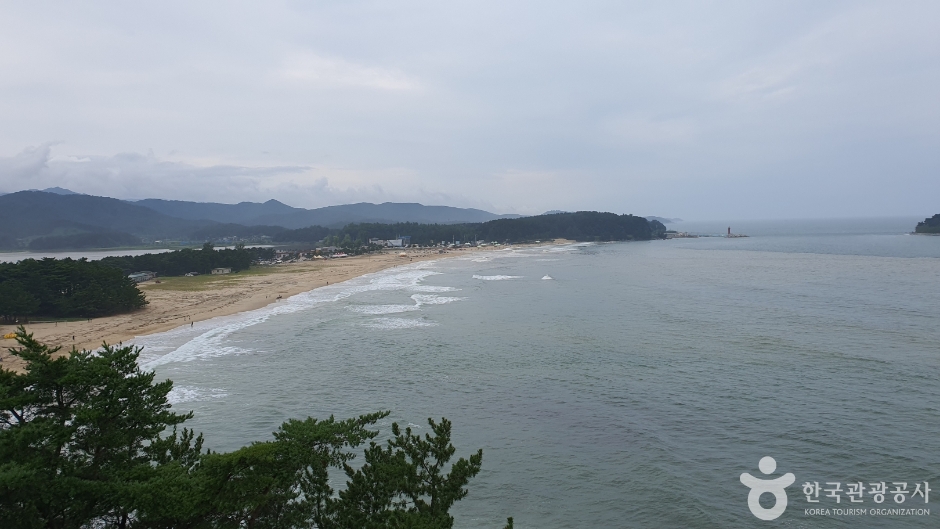
Opened in 1973, Hwajinpo Beach is a stretch of white sand made of monazite, a fine sand made of crushed shells and rocks over tens of thousands of years. Monazite sand makes a distinct sound when stepped on and repels ants. The beach is 1.7 kilometer long, about 70 meters wide, and 1.5 meters in average depth. The beach attracts many tourists with its fine white sand, clear waters, and shallow depths. Its view is characterized by scenic landscape of handsome rock formations and lush pine forests surrounding the massive Hwajinpo Lake. The area is home to the Villa of Kim Il-sung, the Villa of Syngman Rhee, the Villa of Lee Ki-poong, and Hwajinpo Maritime Museum. The scenic view of the bamboo forest on Geumgudo Island and the seagulls flying over the water will leave visitors in awe.
Hwajinpo History & Security Museum (화진포역사안보전시관)
33, Iseungmanbyeoljang-gil, Goseong-gun, Gangwon-do
Next to Hwajinpo Lake and a dense forest of pine trees lays Hwajinpo History and Security Museum. Its premier location near amazing ecological sites makes the museum a popular destination to pay a visit. The museum holds goods used during warfare and other historical remains of former presidents. Various government officials had private villas in the area including former president Syngman Rhee.
Hwajinpo Lake (화진포(화진포호))
Geojin-eup, Goseong-gun, Gangwon-do
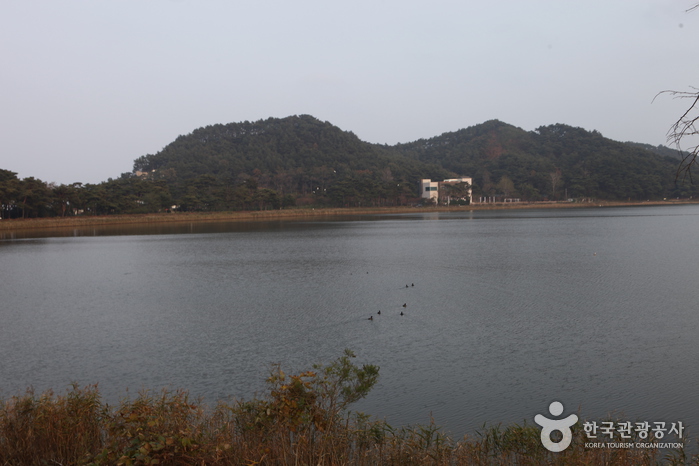
Hwajinpo Lake is the largest lagoon in Korea with its sand made from seashells and rocks that were broken down over thousands of years. With soft sand and shallow waters, it is a popular beach location. In winter, various migratory birds and swans can be seen, as the birds enjoy clean water and food from the field of reeds. Because of its excellent scenery, Kim Il-seong of North Korea and the former South Korean President Rhee Syngman and Vice-president Lee Ki-poong had summer houses here. It also has Hwajinpo Museum of History with more than 40,000 artifacts from 1,500 species.
Hwajinpo Lake (화진포)
Location details are available on the place page.
Hwajinpo Lake is one of the most famous lagoons in Korea. It is connected to the East Sea and blessed with natural light, with dense pine forests spreading like folding screens around the vast lake, which covers an area of 238ha. The beach is shallow, clear, and has a great view of the Geumgudo Island, making it popular among tourists. In winter, the area also serves as a refuge for migratory birds, including Natural Monuments like swans. Indeed, the view of the swans dancing over the lake brings to mind Tchaikovsky’s masterpiece. The reason why migratory birds head to Hwajinpo Lake is because of its clean water and the abundant food within its reed beds. The surrounding areas are home to the Castle of Hwajinpo (Villa of Kim Il-sung), Villa of Syngman Rhee, and Hwajinpo Maritime Museum, home to nearly 40,000 exhibits of 1,500 rare shellfish, coral, fish species and fossils, along with historic sites like dolmens. The area is a vital habitat to many aquatic creatures like carp, grey mullet, leather carp, and snakehead.
Plan your Korea trip
Korea travel FAQ
How do I use the travel search?
Enter a place or interest, then narrow the results by region, category or sort order.
Will my filters stay selected on the next page?
Yes. Your search and filter choices stay in the page URL while you move through the results.
Can I find directions to each place?
Place pages include an external Google Maps search when coordinates or an address are available.
Source: Korea Tourism Organization, official website (https://knto.or.kr).