TRAVEL IN KOREA
Korea Places to Visit
Find attractions, culture, festivals, stays, restaurants, shopping and travel courses for a clear Korea trip plan.
](https://tong.visitkorea.or.kr/cms/resource/31/4043831_image2_1.JPG)
Hwamiju Hair The City7 Changwon Branch [Tax Refund Shop](화미주헤어 시티세븐 창원점)
320, Woni-daero, Seongsan-gu, Changwon-si, Gyeongsangnam-do
HWAMIJU HAIR is a representative Korean beauty salon brand boasting the sophisticated skills of experienced artists and advanced trend awareness. We present the ultimate beauty through optimal hair designs that highlight each customer's individuality and premium care services.
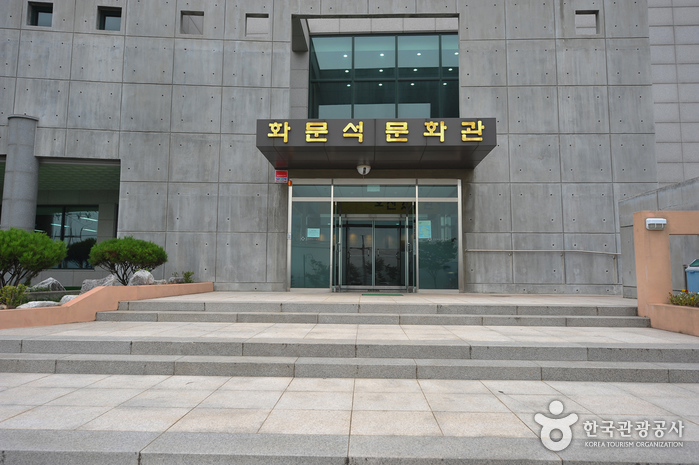
Hwamunseok Cultural Center (강화화문석문화관)
413, Jangjeongyango-gil, Ganghwa-gun, Incheon
Ganghwa Hwamunseok, Korea's only rush-weaving handicraft, is a cultural legacy inherited from the Goryeo period, and is a product that is exclusively produced in Ganghwa-gun. To preserve and develop its historic rush-weaving handicrafts, Ganghwa-gun constructed Hwamunseok Cultural Center at Yango-ri in Songhae-myeon, the craft's place of origin. Visitors to the cultural center will be able to view the individual features and transformations of Hwamunseok in addition to the past, present and future of rush-weaving handicrafts.
Hwanbyeokdang Pavilion (환벽당)
10, Hwanbyeokdang-gil, Buk-gu, Gwangju
Hwanbyeokdang Pavilion was built by Yeongcheonja Sinjam and was also called Byeokgandang, which is recorded in Go Gyeong-myeong's Yuseoseongnok. The building has a hipped-and-gabled roof with three bays in the front space and two bays in the inside space. It is a modified form in which the two rooms in the middle are used as rooms, and the front and right sides are floors. Originally, it was a traditional pavilion, but it seems to have changed to its current form as it was expanded later. A tablet written by Uam Song Si-yeol hangs here, and the poems of Seokcheon Im Eok-ryeong and Jo Ja-i are on a signboard. There are two poems written by Jeong Cheol about Hwanbyeokdang Pavilion, which are published in Songgangsokjip and Gwangjumokji. Jeong Cheol's 4th-generation descendant Jeong Su-hwan bought it from Kim Yun-je's descendants, and Yeon Il-jeong's family is currently managing it.
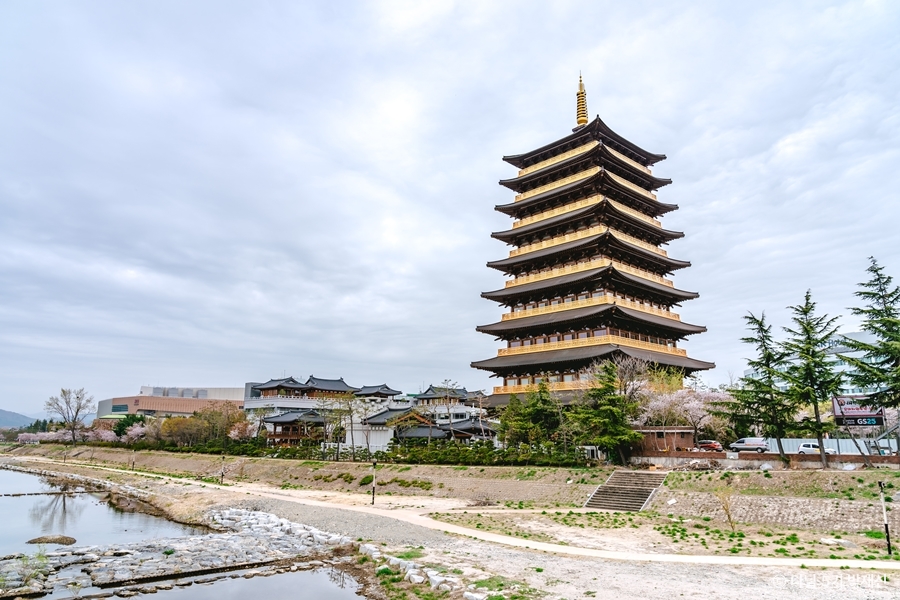
Hwang Nyong Won (황룡원)
40 Expo-ro, Gyeongju-si, Gyeongsangbuk-do
This unique architecture is a reinterpretation of the Hwangnyongsa nine-story pagoda format from the Silla period using modern science technology and architecture methods. The building has become a new landmark in Bomun Tourist Complex and is also used as a training institute that offers meditation programs. There are simple one-hour programs or overnight tour courses available through prior reservation.
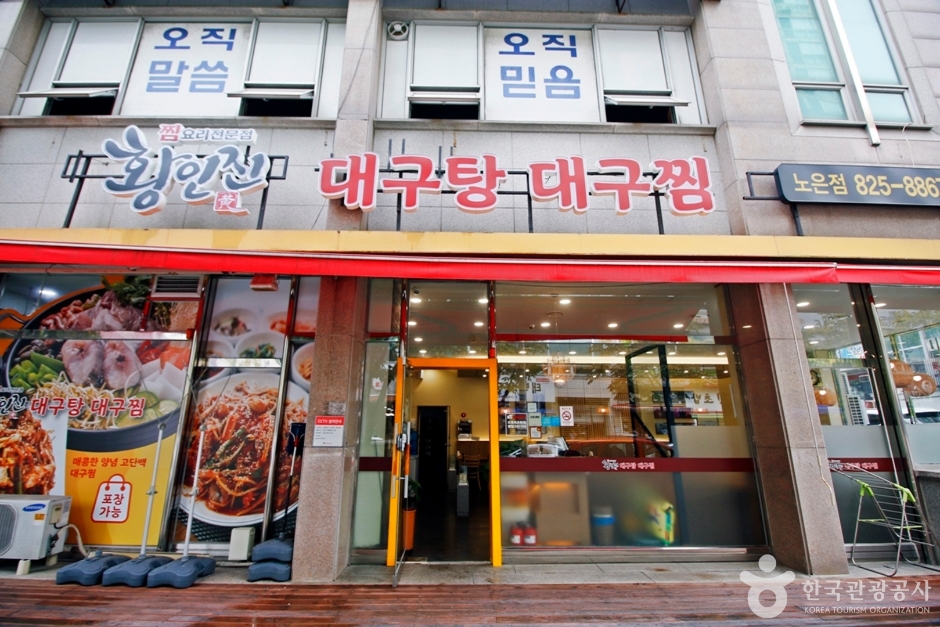
Hwang-injin Daegutang Daegujjim (황인진대구탕대구찜)
1F, 73 Eungubinam-ro 7beon-gil, Yuseong-gu, Daejeon
Hwang-injin Daegutang Daegujjim is a haemuljjim (spicy braised seafood) specialty restaurant. Its signature dish is a daegujjim (braised codfish), featuring chewy, high-protein fresh codfish combined with bean sprouts, various vegetables, and seafood, all seasoned with a spicy sauce. The fresh ingredients like bean sprouts and water parsley add a refreshing taste to the daegujjim. The dish can be ordered in various sizes, depending on the number of diners. The restaurant also offers a special delicacy, daegu twigim (deep-fried codfish), which perfectly complements the spicy flavor of the daegujjim.
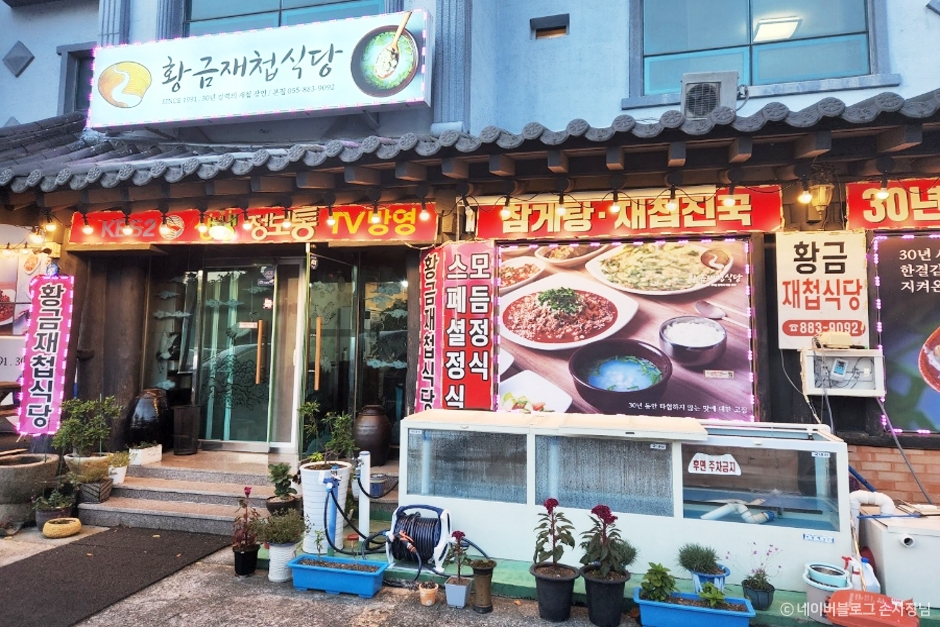
Hwanggeum Jaecheop Sikdang (황금재첩식당)
3915 Seomjingang-daero, Hwagae-myeon, Hadong-gun, Gyeongsangnam-do
This jaecheop (Freshwater Marsh Clam) restaurant overlooks the Seomjingang River. Its signature menu is the Jaecheop Special Jeongsik (freshwater marsh clam special set menu), a sumptuous table with freshwater marsh clam and hairy crab caught from the Seomjingang River. The food here is particularly fresh as all ingredients are prepared on the morning of the day. It is also quite close to Hwagae Market, Simni (10-ri) Cherry Blossom Road, and other famous springtime tourist sites in Hadong, so you don’t have to head to the center of the township.
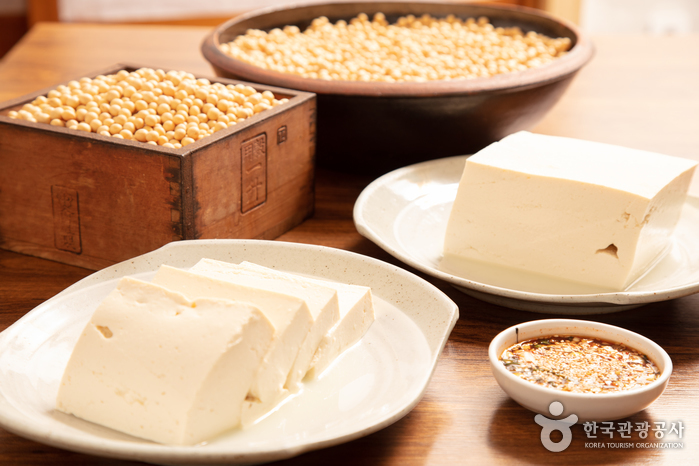
Hwanggeum Kongbat (황금콩밭)
9 Mapo-daero 16-gil, Mapo-gu, Seoul
Hwanggeum Kongbat specializes in bean curd, using 100% Korean-grown soybeans and salt to make their bean curd fresh daily. The restaurant is famous for their method of making a bean curd that is smooth and maintains the nutty yet sweet flavor of the soybeans.
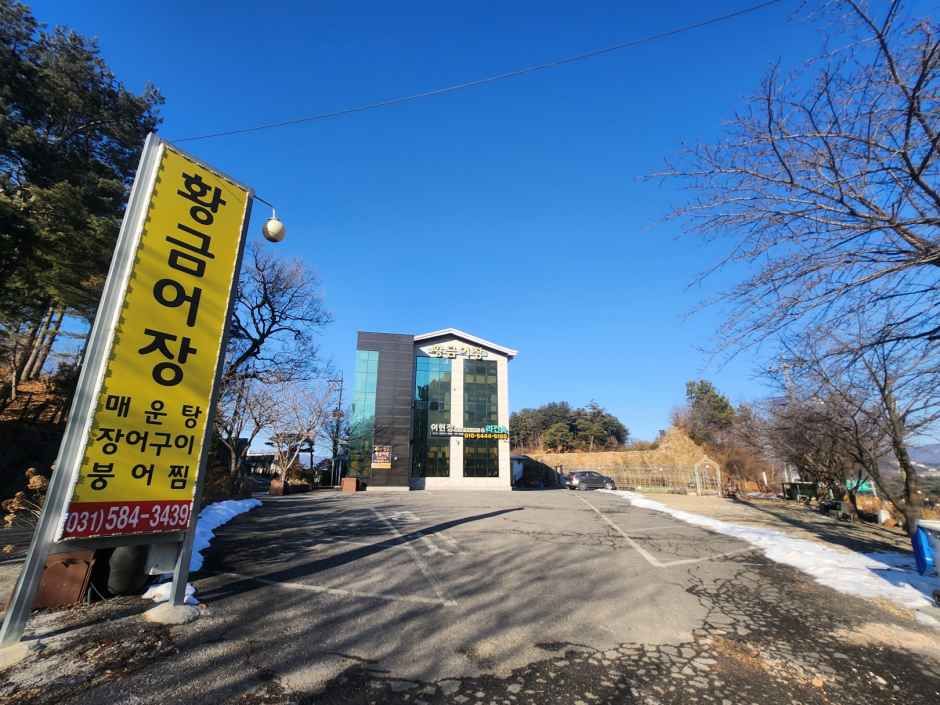
Hwanggeumeojang (황금어장)
1533-10 Yumyeong-ro, Seorak-myeon, Gapyeong-gun, Gyeonggi-do
Located near the Seorak-myeon in Gapyeong, Hwanggeumeojang is a must-visit destination specializing in grilled eel and spicy freshwater fish stews. Their signature spicy stew is prepared with high-quality local varieties, including golden mandarin fish, Korean bullhead, and amur catfish. The meal is served in an authentic two-step process: the tender fish is enjoyed first, after which sujebi (hand-pulled dough soup) are added to the rich, simmering broth for a satisfying finish. For the grilled eel, customers can choose between a classic salt-grilled style or a specialty marinated version featuring a savory sauce simmered with eel bones and traditional herbs. Every meal is accompanied by a selection of refined side dishes and fragrant rice cooked in a traditional cast-iron pot. To ensure the highest quality and freshness, the restaurant even grows many of its own ingredients right on-site.
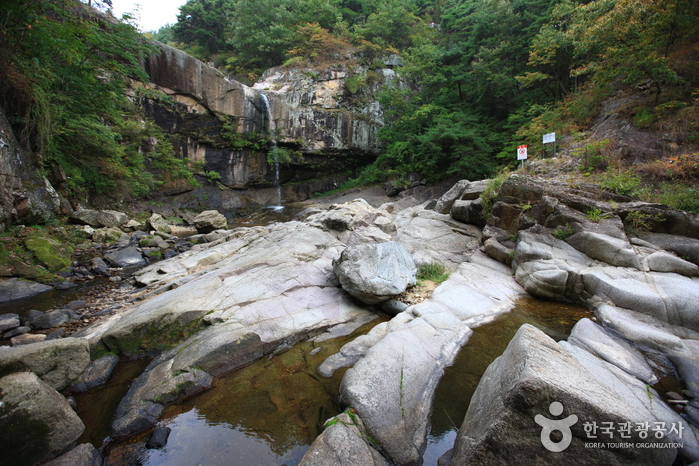
Hwanggyepokpo Falls (황계폭포)
30 Hwanggye 2-gil, Hapcheon-gun, Gyeongsangnam-do
As a famous attraction that goes well with the charming surrounding scenery: the stream flowing from Gujangsan Mountain is beautiful and the surrounding rock cliffs spread out like a folding screen. In addition to the scenery, the sound of waterfall plunging down from a 20-meter-high cliff is like roaring thunder. The amount of water may vary, but it never runs out, making one forget the heat even in the middle of summer. The lowest tier of the waterfall pool is so deep, that legend has it that a dragon had once lived in the bottom of the pool. Ancient scholars were so fascinated by the beautiful scenery that they often compared it to the famous Yeosanpokpo Falls in China.
Hwanghak-dong Flea Market (Dokkaebi Market / Manmul Market) (황학동 벼룩시장 (도깨비시장/만물시장))
11-7 Majang-ro 5-gil, Jung-gu, Seoul
Hwanghak-dong Flea Market was named after the way how merchants travel from one place to another all over the country, as if like fleas hopping around from one spot to another, to collect rare and valuable items. This market was once a haven of antiques and collectibles, but with the formation of old-fashioned art street in 1983 in Janganpyeong, many classic art shops had moved out, leaving only used item and general goods stores. Now, visitors can find stores selling antiques, used furniture, electronics, clocks, jewelry, musical instruments, camera, and machinery – pretty much anything one can name. Hwanghak-dong Flea Market is also referred to as Dokkaebbi Market, to describe how even the most rundown items become just like new, as if like the work of a dokkaebi (Korean folk goblin).
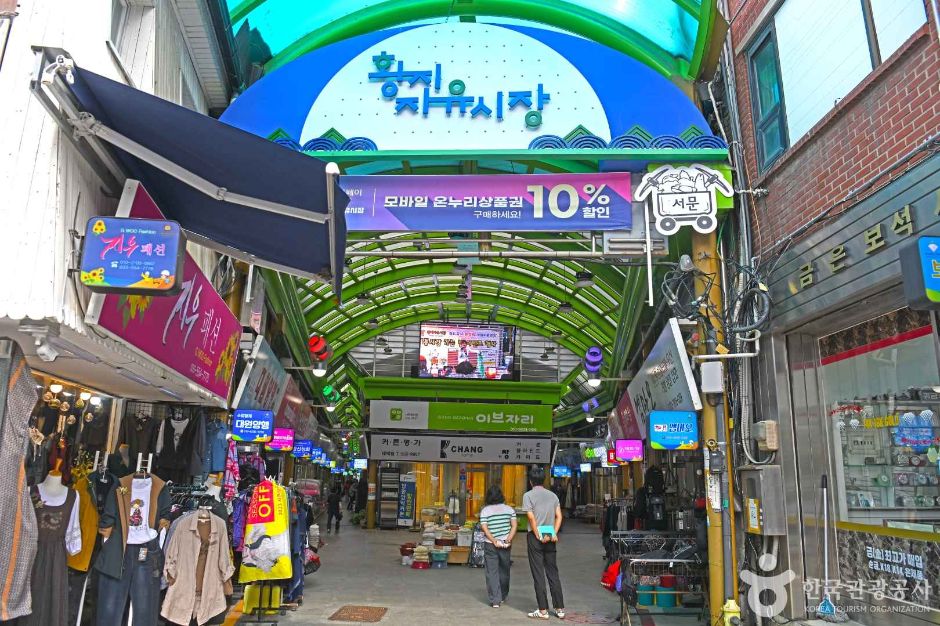
Hwangji Jayu Market(황지 자유시장)
14 Sijangan 2-gil, Taebaek-si, Gangwon-do
Established in 1971, Hwangji Jayu Market is a traditional market with over 50 years of history and roughly 170 vendors. It welcomes customers with a wide selection of goods and high-quality local specialties, including Danggui (Korean angelica) and Cheongung (Cnidium) from the highlands of Taebaek, various mushrooms, fresh and savory fish from the nearby East Sea, fruits, miscellaneous goods, clothing, shoes, and other manufactured products. Conveniently located in central Taebaek and just a two-minute walk from Hwangji Pond, a main local attraction, the market is beloved by both residents and tourists, and continues to thrive as a bustling local hub.
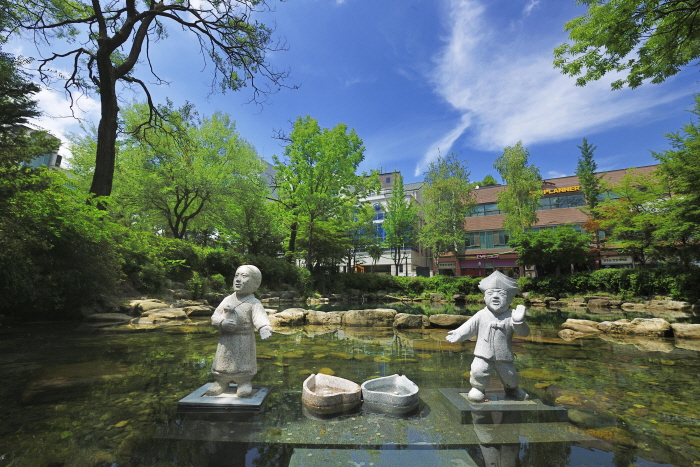
Hwangji Pond (황지연못)
12 Hwangjiyeonmot-gil, Taebaek-si, Gangwon-do
Hwangji Pond, located in downtown Taebaek, is a source of the Nakdonggang River, flowing all the way to the Yeongnam Plain. The pond is divided into three sections: Sangji, with a diameter of 100 meters, Jungji and Haji. Although it is small in size, the pond supplies 5,000 tons of water a day.
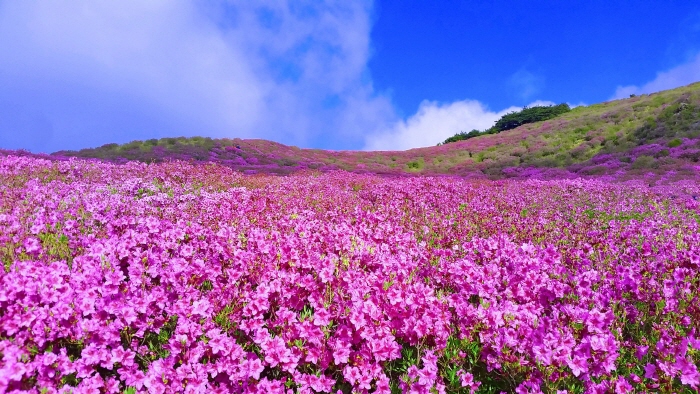
Hwangmaesan County Park (황매산군립공원)
4, Hwangmaesangongwon-gil, Hapcheon-gun, Gyeongsangnam-do
Located at the border between Gahoe-myeon and Daebyeong-myeon of Hapcheon, Hwangmaesan Mountain has long been considered a guardian mountain of Hapcheon, but was rarely ever featured in hiking or tourist publications. Thanks to this, the mountain's natural environment has been kept in pristine condition. In 1983, the mountain was designated as a county park and now, along with Gayasan Mountain, it is regarded as one of the major mountains in Hapcheon. Hwangmaesan Mountain is one of the last mountain peaks of the Taebaek Mountain Range, and reaches an altitude of 1,113 meters. Pine trees and royal azalea decorate the rocky mountain. From the summit, hikers can see Hapcheonho Lake and Jirisan, Deogyusan, and Gayasan Mountains.
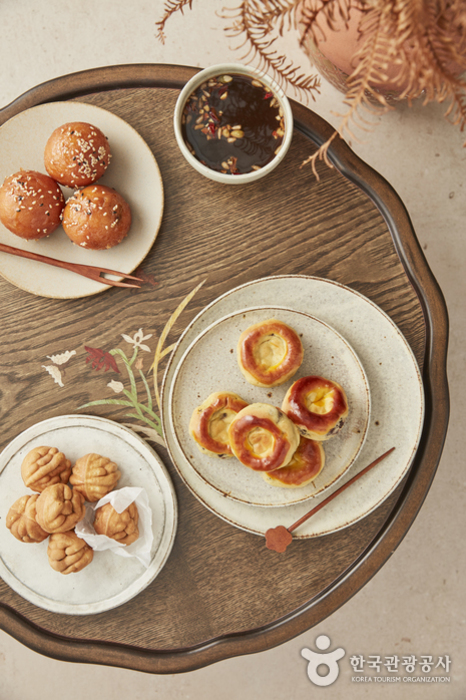
Hwangnambbang (황남빵)
783 Taejong-ro, Gyeongju-si, Gyeongsangbuk-do
Hwangnamppang, which literally means Hwangnam bread, was created in Hwangnam-dong, Gyeongju, in 1939, and the name was popularized among people who came to Gyeongju to buy this bread. Now branded as "Hwangnambbang," the late Choi Yeong-hwa, the founder of Hwangnam Bread, was a scion of the Gyeongju Choi family who came up with this masterpiece when he was 21 years old after much trial and error. Choi’s creation is based on the tradition of rice cakes and bread made with sweet red beans, passed down throughout the generations in his family. Even today, 80 years after the creation of the bread, it is only flavored with red beans. Another defining feature of Hwangnambbang is the delicate comb pattern inspired by the aesthetics of the Silla period.
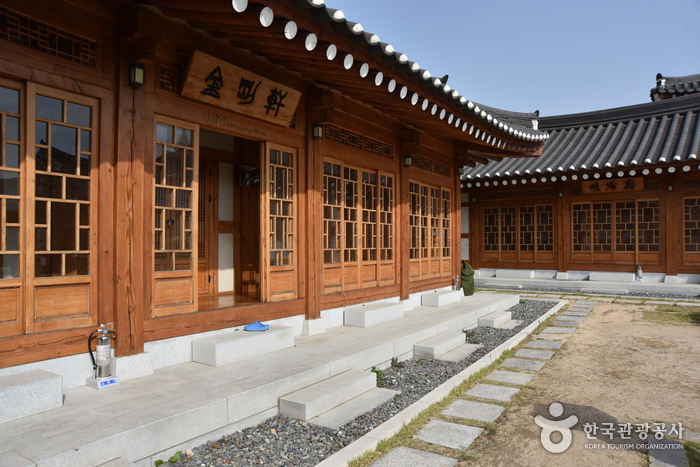
Hwangnamguan (주식회사 황남관)
1038 , Poseok-ro, Gyeongju-si, Gyeongsangbuk-do
Hwangnamgwan in Gyeongju, Gyeongsangbuk-do, is a small hanok village consisting of four single-storey hanoks and two 2-storey hanoks. Each room is equipped with a bathroom and toilet, and the Numaru Suite also has a bathtub. Facilities include a meeting room, pizza restaurant and cafe. Hwangnamgwan guests are given discount coupons for the cafe, and 50% discounts are also available at local venues Spa Lux Jjimjilbang, Kids Café, and Sports Town bowling alley. There are traditional experience programmes, and famous tourist spots are a short walk away.
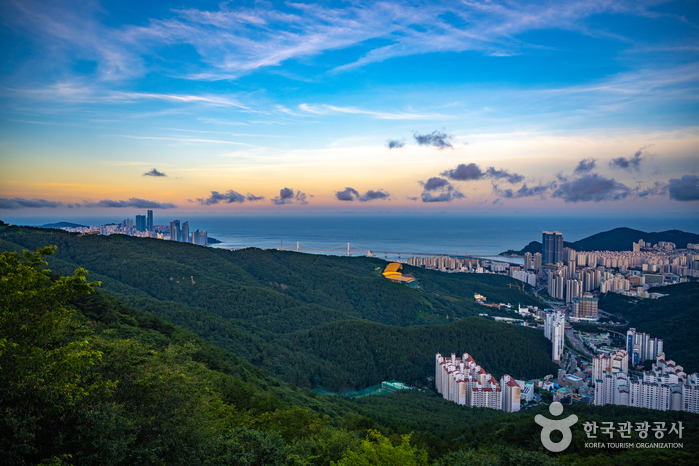
Hwangnyeongsan Mountain ()
391-39 Hwangnyeongsan-ro, Nam-gu, Busan
Hwangnyeongsan Mountain offers a lush green forest easily accessible from downtown Busan. The mountain is popular for hiking, as well as taking in the nightscape. The mountain stretches across Busanjin-gu, Nam-gu, and Suyeong-gu districts, and with an altitude of 427 meters, it is the second tallest mountain in the Geumnyeon Mountain Range. Despite this distinction, the summit can be reached after a two to three-hour hike. At the foot of the mountain, one can find a citizen's recreation area and a youth training center. Choosing which mountain trail to take depends on the transportation options available.
Plan your Korea trip
Korea travel FAQ
How do I use the travel search?
Enter a place or interest, then narrow the results by region, category or sort order.
Will my filters stay selected on the next page?
Yes. Your search and filter choices stay in the page URL while you move through the results.
Can I find directions to each place?
Place pages include an external Google Maps search when coordinates or an address are available.
Source: Korea Tourism Organization, official website (https://knto.or.kr).