TRAVEL IN KOREA
Korea Places to Visit
Find attractions, culture, festivals, stays, restaurants, shopping and travel courses for a clear Korea trip plan.
](https://tong.visitkorea.or.kr/cms/resource/09/4045809_image2_1.png)
MUJI Youngpoong Jongno Branch[Tax Refund Shop](MUJI 영풍종로점)
B1–B2, 41, Cheonggyecheon-ro, Jongno-gu, Seoul
MUJI is a Japanese lifestyle brand built around simplicity and everyday practicality. Its clean, understated design and environmentally conscious materials have made it a global benchmark for minimalist living. It's especially popular in Korea for everyday essentials and home décor.
![Muji- IPARK Mall Yongsan Branch [Tax Refund Shop] (MUJI 아이파크몰 용산점)](https://tong.visitkorea.or.kr/cms/resource/92/4017992_image2_1.jpg)
Muji- IPARK Mall Yongsan Branch [Tax Refund Shop] (MUJI 아이파크몰 용산점)
6F, 55, Hangang-daero 23-gil, Yongsan-gu, Seoul
MUJI is a Japanese lifestyle brand built around simplicity and everyday practicality. Its clean, understated design and environmentally conscious materials have made it a global benchmark for minimalist living. It's especially popular in Korea for everyday essentials and home décor.
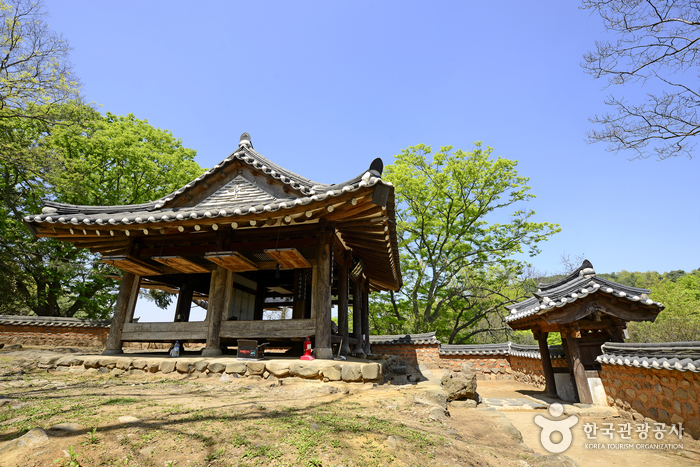
Mujinjeong Pavilion (무진정(함안))
25 Goesan 4-gil, Haman-gun, Gyeongsangnam-do
Mujinjeong Pavilion was built atop a hill to enjoy the surrounding scenery. It was built in 1567 by the descendants of Mujin in honor of his memory. Mujin passed the government officer exam in 1483 and was promoted in 1507. The pavilion is built with three kan (space between pillars) in the front and two kan on the side, and a gabled roof. The floor is raised off the ground. There are no decorations on atop the pillars, showcasing the style during the early Joseon period.
Muju Anguksa Temple (안국사 (무주))
1050, Sanseong-ro, Muju-gun, Jeonbuk-do
As the only temple in Jeoksangsan Mountain, Anguksa Temple was built in 1227 (during the 3rd year of King Chungryeol’s reign) by Monk Wolin. A secret historical archives, called Sagak, was built to store Joseonwangjo Sillok (annals of the Joseon dynasty) in 1614 (during the 6th year of King Gwanghaegun’s reign) within the mountain, while Seonukgak was built in 1641 (during the 19th year of King Injo’s reign) to store Seonwonrok (royal genealogical records). The two sites were designated as Jeoksangsan Historical Archives during the Joseon dynasty. Hoguksa Temple was also built at that time to prevent accidents from affecting the archives. The temple, along with the existing Anguksa Temple, was used to house monk soldiers who protected the archives. Because of the construction of Muju Power Plant, Anguksa Temple was relocated to the Hoguksa Temple site and rebuilt in 1995. Consisting of 15 buildings, the temple is surrounded by Sanjeong Lake. Boasting exquisite fall foliage, the temple can be easily reached by vehicle along a paved road. The nearby attractions include Muju Resort and Muju Gucheondong Valley.
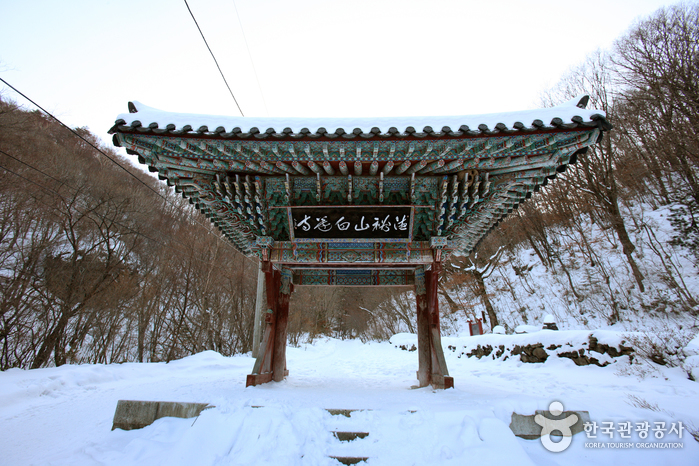
Muju Baengnyeonsa Temple (백련사(무주))
580, Baengnyeonsa-gil, Muju-gun, Jeonbuk-do
Baengnyeonsa Temple is located in the upper part of Gucheondong Valley on Deogyusan Mountain. It is said that during the Silla Kingdom, a white lotus flower bloomed here, and that's why the temple is called Baengnyeonsa (lit. White Lotus Temple). The temple is the only remaining temple out of 14 that were built in the Gucheon-dong area of Muju. After walking over Baengnyeongyo Bridge at the entrance of the temple, you will come to a stone stairway. At the top is the main sanctuary. The majesty and beauty of the main sanctuary is well complemented by the mountains. The Mokjosamjonbul Stone Buddha within the main building is presumed to have been built in the latter half of the Joseon dynasty. Past Myeongbujeon is Baengnyeonsa’s Sajeokbi tombstone, and the workmanship of the carved calligraphy is very highly regarded.

Muju Firefly Festival (무주반딧불축제)
326-14 Hanpungnu-ro, Muju-eup, Muju-gun, Jeonbuk-do
Fireflies, beloved for their twinkling tails at night, are a precious insect designated as Natural Monument in Korea. Muju, known for its pristine environment, is a prime habitat for these enchanting creatures. The Muju Firefly Festival celebrates this natural wonder every year. Visitors can participate in various programs to experience the magic of fireflies dancing under the night sky. ◎ TipTo avoid discomfort from insects and weather conditions, it’s advisable to wear long pants and closed shoes. Be aware that weather conditions like rain or storms may affect the visibility of fireflies during the festival.
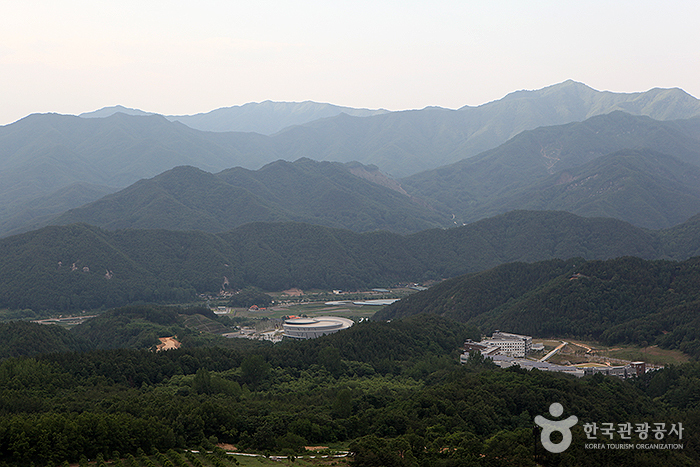
Muju Gucheong-dong Special Tourist Zone (무주구천동관광특구)
Seolcheon-myeon, Muju-gun, Jeonbuk-do
At the heart of the Muju Gucheondong Special Tourist Zone is Muju Gucheondong Valley. The outer parts of Deogyusan National Park and the mountain’s natural recreation forest are also part of the special tourist zone. The 30-kilometer-long Muju Gucheondong Valley is located to the north of Deogyusan National Park. The calm and soothing sound of the water flowing through a lush forest make this a great summer destination. The 33 scenic points of Gucheondong include Eunguam Rock, Haksodae Falls, Waryongdam Pond, Gucheon Waterfall and Yeonhwa Waterfall. In the summer, visitors can see the rare sight of fireflies in their natural habitat. The fall foliage in autumn and the winter snowscape are also quite exquisite. Within the vicinity of Muju Gucheondong is Muju Resort. The resort complex is made up of a family hotel, resort condominium and various recreational facilities where visitors can enjoy skiing, hiking, horseback riding and mountain biking. Visitors can take the gondola from the resort all the way up to Deogyusan Mountain’s Seolcheonbong Peak (1,520 meters). From, there, they can easily reach the summit at Hyangjeokbong Peak (1,614 meters). Taekwondowon, located near the Muju Gucheondong Special Tourist Zone, offers a hands-on Taekwondo experience program. Those who are interested in learning Taekwondo can take part in a 1-day program which includes a Taekwondo demonstration, a Taekwondo class (basic movements), and board breaking. [Muju Gucheondong Special Tourist Zone] Areas Covered: Mupung-myeon (Samgoe-ri) and Seolcheon-myeon (Samgong-ri and Simgok-ri) in Muju-gun, Jeollabuk-do Area size: 7,610,000 ㎡ Tourist Attractions: Deogyusan National Park, 33 Scenic Views of Muju, Gucheondong Valley, Muju Resort, forest park, Taekwondowon, Muju Hyanggyo (Confucian school), Baengnyeonsa Temple, Jeoksansanseong Fortress, etc.
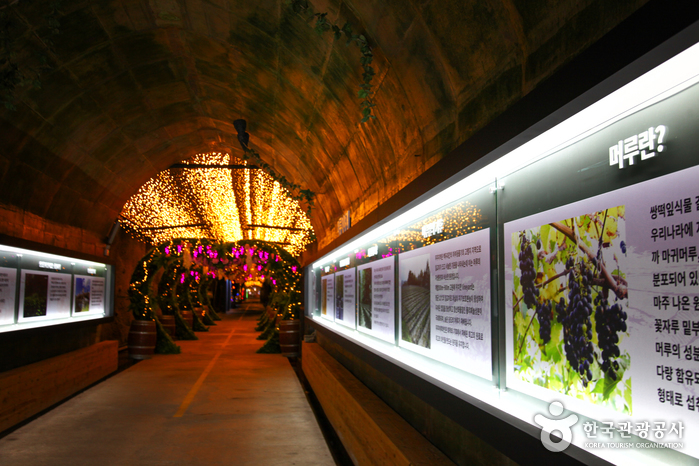
Muju Meoru Wine Cave (무주머루와인동굴)
359, Sanseong-ro, Muju-gun, Jeonbuk-do
Muju Meoru Wine Cave is surrounded by a beautiful natural landscape and various cultural heritages. The wine tunnel used to be an excavation working site to build the Muju Water Power Plant. The cave makes for an ideal place to mature and store wine as it blocks light and maintains a consistent temperature. Visitors can enjoy the taste and charm of sanmeoru (wild grape) wine and also experience a unique wine foot bath.
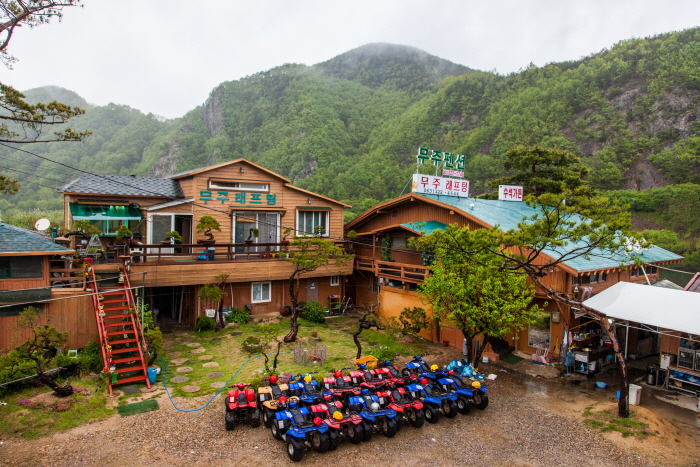
Muju Rafting (무주래프팅)
5-11, Jamdu-gil, Muju-gun, Jeonbuk-do
Muju Rafting resort is located on the upper Geumgang River and offers rafting, survival game, hiking, and fishing programs. The area is over 9,900 ㎡ in size and can accommodate lodging for up to 200 guests.
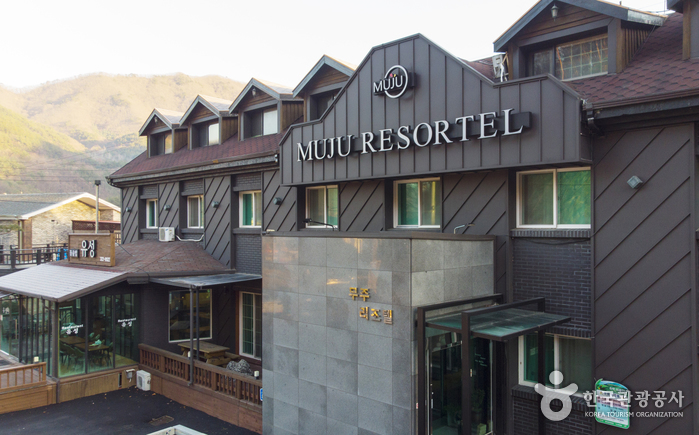
MUJU Resortel (mujuresortel(무주리조텔))
878 , Gucheondong-ro, Muju-gun, Jeonbuk-do
Muju Resortel nestles among the mountains of Deogusan National Park, where the high altitude sharpens appreciation of the beautiful scenery, the quiet sounds of the valley and the clean freshness of the air. Rooms are modern in style and clean, with high-quality bedding for a comfortable sleep. Walkers and winter sports enthusiasts can enjoy a hearty breakfast here, while a Korean restaurant is available during non-breakfast hours.
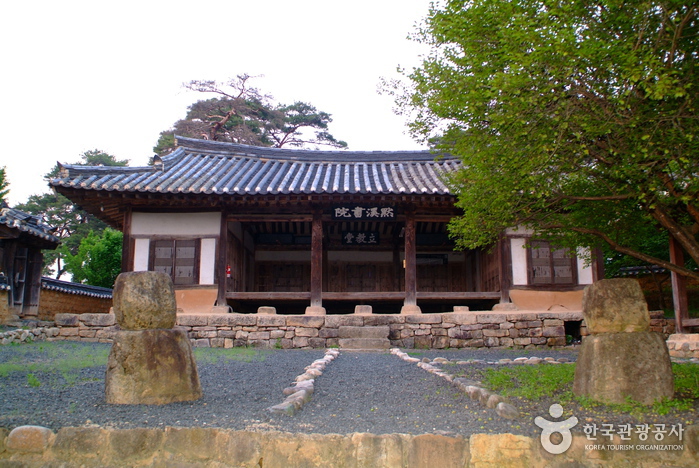
Mukgyeseowon Confucian Academy & Mukgye Head House of Andong Kim Clan (묵계서원 및 안동김씨 묵계종택)
1736-5 Chunghyo-ro, Giran-myeon, Andong-si, Gyeongsangbuk-do
Mukgyeseowon Confucian Academy was founded in 1687, but was mostly destroyed in 1869, leaving just the lecture hall behind. Recently, these removed buildings have slowly been rebuilt to restore the academy to its former glory. Mukgye Head House of the Andong Kim Clan is located near the Confucian academy and features a shrine to Bobaekdang, the founder of the academy. The house was built in a square shape with an open courtyard in the middle and has been maintained in good condition.
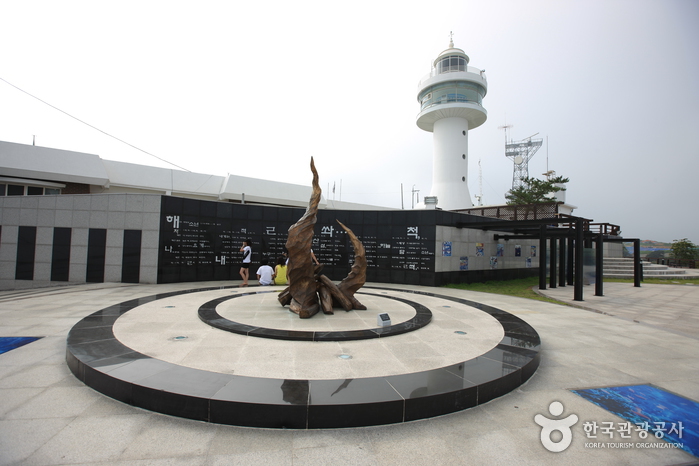
Mukho Lighthouse (묵호 등대)
300, Haemaji-gil, Donghae-si, Gangwon-do
Established on June 8, 1963, Mukho Lighthouse serves as a guarding beacon of ships coming and going at Mukho port. Mukho Lighthouse is a 12 meter-tall white circular concrete structure with two floors located at an altitude of 67 m. It is surrounded by a cozy park where forsythias blossom in spring and visitors can overlook the sea. The park is home to the Maritime Fishing Exhibition Hall, where visitors can learn about the history of fishing in the area. The lighthouse and its surrounding area are full of quiet and comfortable spots to relax and enjoy the scenery. Because of its location, the lighthouse is absolutely crucial to the safety of ships and boats coming into the port. The lighthouse’s large light, installed in October 2003, was developed by Korean scientists and uses a rotating prism lens that can shine beams of light as far as 42 km.
](https://tong.visitkorea.or.kr/cms/resource/72/4020972_image2_1.jpg)
Mulberry - Hyundai Premium Outlets Gimpo Branch [Tax Refund Shop](멀버리 현대프리미엄아울렛 김포점)
1F, 100, Arayuk-ro 152beon-gil, Gochon-eup, Gimpo-si, Gyeonggi-do
Mulberry is a global luxury leather brand that combines British craftsmanship with pastoral sensibilities. Through iconic designed bags such as the 'Bayswater,' it simultaneously provides practical utility and classic value that remains unchanged over time.
](https://tong.visitkorea.or.kr/cms/resource/26/4023726_image2_1.jpg)
Mulberry - LOTTE Premium Outlets Paju Branch [Tax Refund Shop](멀버리 롯데프리미엄아울렛 파주점)
302, Munbal-ro, Paju-si, Gyeonggi-do
Mulberry is a global luxury leather brand that combines British craftsmanship with pastoral sensibilities. Through iconic designed bags such as the 'Bayswater,' it simultaneously provides practical utility and classic value that remains unchanged over time.
](https://tong.visitkorea.or.kr/cms/resource/80/4019280_image2_1.jpg)
Mulberry - Lotte World Mall [Tax Refund Shop](멀버리 롯데월드몰점)
2F, 300, Olympic-ro, Songpa-gu, Seoul
Mulberry is a global luxury leather brand that combines British craftsmanship with pastoral sensibilities. Through iconic designed bags such as the 'Bayswater,' it simultaneously provides practical utility and classic value that remains unchanged over time.
](https://tong.visitkorea.or.kr/cms/resource/76/4021976_image2_1.jpg)
Mulberry - Shinsegae Simon Premium Outlets Yeoju Branch [Tax Refund Shop](멀버리 신세계사이먼프리미엄아울렛 여주점)
360, Myeongpum-ro, Yeoju-si, Gyeonggi-do
Mulberry is a global luxury leather brand that combines British craftsmanship with pastoral sensibilities. Through iconic designed bags such as the 'Bayswater,' it simultaneously provides practical utility and classic value that remains unchanged over time.
Plan your Korea trip
Korea travel FAQ
How do I use the travel search?
Enter a place or interest, then narrow the results by region, category or sort order.
Will my filters stay selected on the next page?
Yes. Your search and filter choices stay in the page URL while you move through the results.
Can I find directions to each place?
Place pages include an external Google Maps search when coordinates or an address are available.
Source: Korea Tourism Organization, official website (https://knto.or.kr).