TRAVEL IN KOREA
Korea Places to Visit
Find attractions, culture, festivals, stays, restaurants, shopping and travel courses for a clear Korea trip plan.

Yeoncheon Paleolithic Festival (연천 구석기축제)
1510 Yangyeon-ro, Yeoncheon-gun, Gyeonggi-do
A prehistoric cultural festival is held at the Archaeological Site in Jeongok-ri, where the first humans inhabited the Korean Peninsula. In 1978, the discovery of an Acheulean hand axe in Jeongok-ri, Yeoncheon, garnered global attention, challenging Movius’s theory that divided Paleolithic cultures into Eastern and Western categories. Being recognized for its significance in world prehistoric culture, the festival began as a small event in 1993 to promote and preserve the important Jeongok-ri archaeological site. Now, it has grown into a large-scale festival, attracting over 100,000 visitors each year. Every May, Yeoncheon becomes a hub for experiencing prehistoric cultures from around the world. This special experiential festival offers a unique opportunity to explore the wisdom of early humans who lived in harmony with nature, providing unforgettable inspiration and enjoyment.◎ Acheulean Hand AxeThe Acheulean hand axe is a stone tool from the Paleolithic period discovered at the archaeological site in Jeongok-ri. It features double-edged blades that exhibit skilled craftsmanship.
Yeoncheon World Camping Experience Zone (연천세계캠핑체험존)
123 , Seonsa-ro, Yeoncheon-gun, Gyeonggi-do
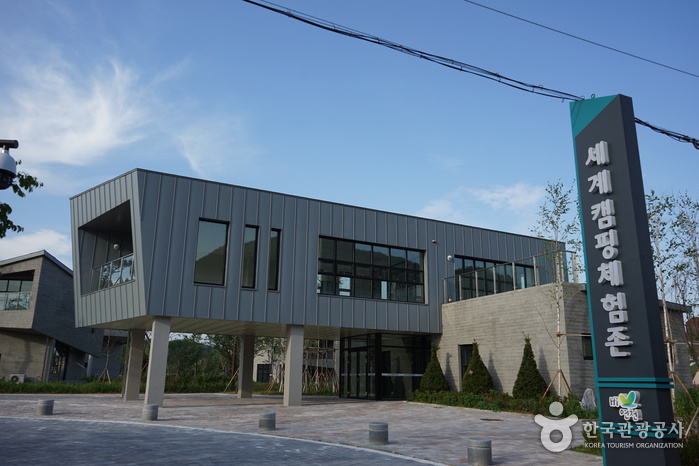
Yeoncheon World Camping Experience Zone is a pension in the Yeoncheon-gun Hantan River tourist area which is really two separate lodgings - Imjin Pension and Hantan Pension. Rooms accomodate either 4, 6 or 8 persons, and some rooms are duplex. Each building has an outdoor deck, outdoor tables, and a dedicated car park - the number of parking spaces varying according to room size. Cooking facilities and tableware are provided, but visitors should bring their own toiletries. There is a swimming pool during the summer. Discounts are available for local residents and families with multiple children.
Yeongam Pottery Museum (영암도기박물관)
5, Seohojeong-gil, Yeongam-gun, Jeollanam-do
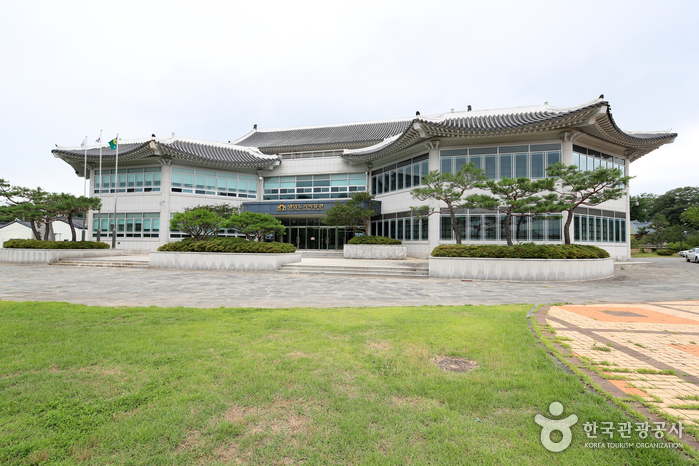
Yeongam Pottery Museum is dedicated to promoting the history of pottery in Korea, starting from the oldest known pottery coming from Gurim Village. Visitors can learn about the history of this art form through exhibitions, educational programs, and hands-on experiences. Locally produced pottery is also available for sale. Nearby attractions include the Wangin Historic Site and Ha Jung-woong Museum of Art.
Yeongam Wangin Culture Festival (영암왕인문화축제)
440, Wangin-ro, Gunseo-myeon, Yeongam-gun, Jeollanam-do
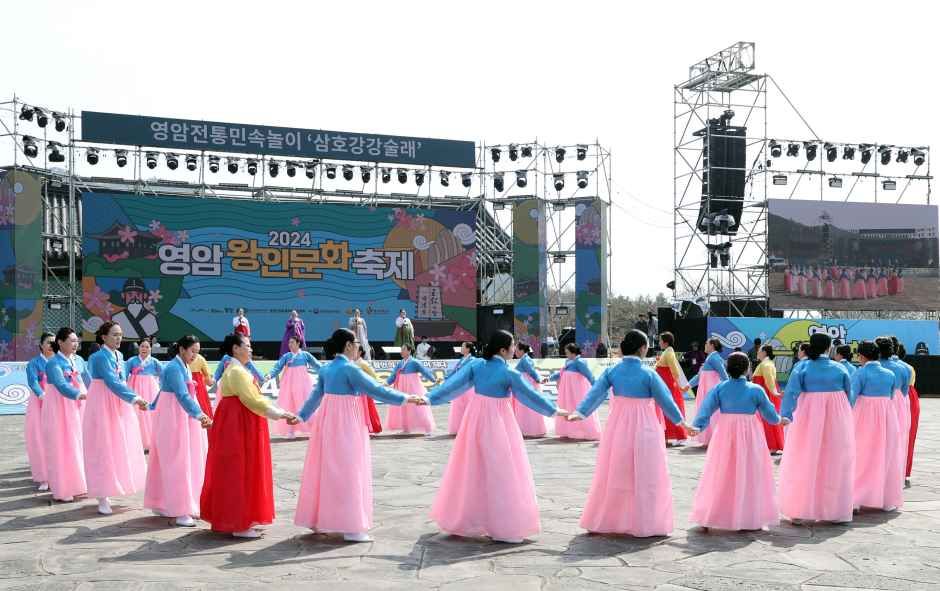
First held in 1997, the Yeongam Wangin Culture Festival is one of Korea’s leading Cultural Tourism Festivals and has been held every spring at the Historical Site of Wangin. Dr. Wangin played a pivotal role in cultural exchange across ancient East Asia. Through him, Baekje’s advanced culture and Confucian classics crossed the Korea Strait and reached the Japanese archipelago. His teachings represented far more than a transfer of knowledge; they became a driving force behind the emergence of Asuka culture, the golden age of ancient Japanese civilization. Wangin’s profound scholarship, together with the flowing Yeongsangang River and Sangdaepo Port, symbolizes the currents of exchange that carried culture across the sea. Here in Yeongam, visitors can rediscover the roots of Asuka culture.
Yeongamho Lake (migratory bird habitat) (영암호 - 철새도래지)
Yongang-ri, Yeongam-gun, Jeollanam-do
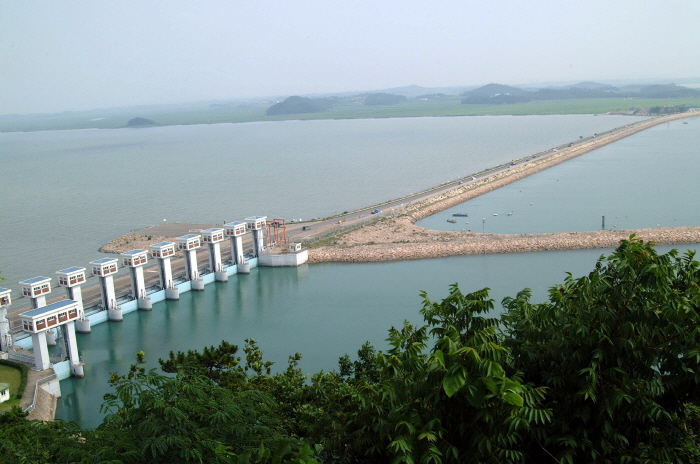
This is a huge lake created when the Geumho tide embankment was constructed in Yeongam on November 1996, as part of a national project to reclaim some 4.3 kilometers stretch of sea from Sampo-ri in Samho-myeon of Yeongam-gun to Byeoram-ri in Hwawon-myeon of Haenam-gun. Some 100 species of migratory birds, numbering some 300,000, live in this area over the winter on the mud flats which are full of things to eat. Around the embankment where the sea water and fresh water meet, there is a great spot to fish for both fresh water and the sea species. This is perhaps the only place in Korea where the long and silvery cutlass fish, usually found in the deeper areas of the ocean, can be caught while sitting on the rocks along the seashore.
Yeongcheon Bohyunsan Astronomical Science Museum (영천보현산천문과학관)
689, jeonggak-ri, Hwabuk-myeon, Yeongcheon-si, Gyeongsangbuk-do
Perched atop Bohyeonsan Mountain, an optimal location for stargazing, is the Yeongcheon Bohyunsan Astronomical Science Museum. This facility is comprised of an observation room, a planetarium, and an exhibition area. It houses twelve exhibition rooms where visitors can delve into the history of astronomy, learn about the seasonal constellations, explore ancient cosmological perspectives from various cultures, and gain insights into the solar system. The planetarium offers screenings of videos about the constellations as they change with the seasons. Meanwhile, the observation room is equipped with five telescopes, allowing guests to gaze at the stars directly. To ensure a spot, visitors are required to book their visit at least one day prior via the museum's website.
Yeongcheon Dam (영천댐)
1792 Poeun-ro, Jayang-myeon, Yeongcheon-si, Gyeongsangbuk-do
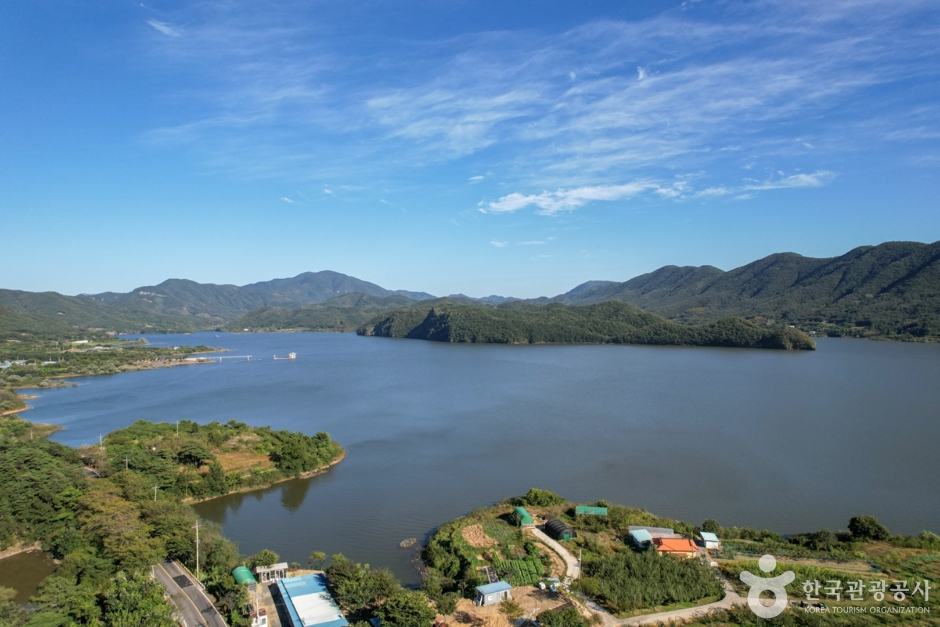
Yeongcheon Dam is a multipurpose dam located in the middle and lower reaches of the Geumhogang River basin, and below it lies the Yeongcheon Dam Downstream Park. Within the park, there are campgrounds equipped with water facilities and showers, a children's water playground open in the summer, artificial waterfalls, sports fields, and plazas. Surrounding the dam, the Youngcheon Dam Cherry Beotkkotbaek-ri, a famous drive course, is renowned, with numerous café and restaurants scattered along the route.
Yeongcheon Eunhaesa Temple (은해사 (영천))
951, Cheongtong-ro, Yeongcheon-si, Gyeongsangbuk-do
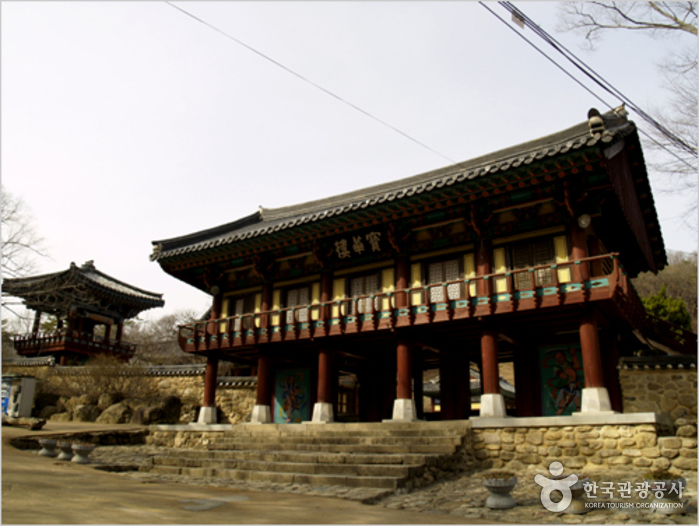
Eunhaesa Temple, located on Palgongsan Mountain in Yeongcheon city, Gyeongsangbuk-do, is one of two major temples on the mountain along with Donghwasa Temple. The temple was founded by Monk Hyecheol and was given the name Haeansa Temple in the first year of King Heondeok’s reign during the Silla Kingdom (AD 809), but was moved to the current site in the Joseon dynasty in 1546 (the first year of King Myeongjong). Upon its relocation, King Injong of Joseon dynasty was commemorated with a new lecture hall along with a memorial stone plaque where the king's umbilical cord was buried and sealed. It was then when the temple was also given its current name, Eunhaesa Temple. The temple houses the main shrine, Bohwaru pavilion, Seolseondan Hall, Shimgeondang Hall, eight small hermitages, as well as Baegeungam Temple, Jungangam Temple, and a professional Buddhist education institution, the Eunhaesa Buddhist University. Eunhaesa Temple is home to a National Treasure, Geojoamyongsanjeon Hall, and Treasure, Baekheungamgeukrakjeon Hall. It also contains Treasure, the Sunidan Buddha Platform; Treasure, the Wunbuamcheongdongbosal Seated Buddha Statue; and Treasure, the Eunhaesa Temple Gwaebultaeng hanging Buddha picture. The area is also close to the Seongbu Museum, which exhibits cultural assets from Eunhaesa Temple and the neighboring areas, as well as popular tourist attractions such as Geukrakgul grotto of Jungangam temple (Hwaeomgul Grotto), Geondeul Rock, Manyeonsong Pine Tree, Ganggunsu Waters, and Anheungpokpo Falls of Gigiam Temple.
Yeongcheon Starlight Village (영천 별빛마을)
22 Jeonggak-gil, Hwabuk-myeon, Yeongcheon-si, Gyeongsangbuk-do
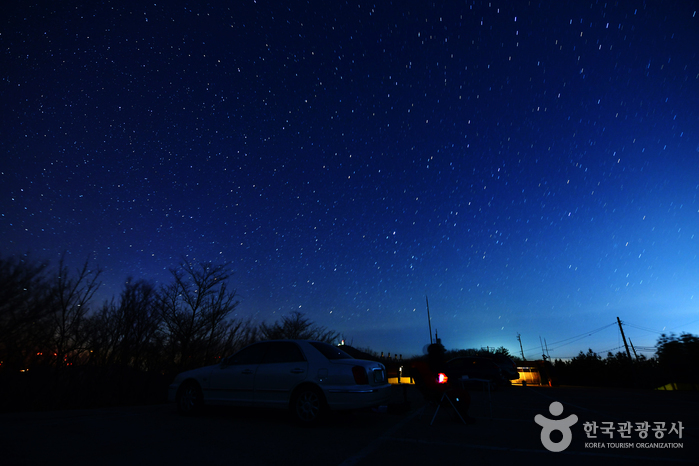
Nestled at the foot of Bohyeonsan Mountain, Yeongcheon Starlight Village is a haven of natural beauty, surrounded by lush forests brimming with pine and chestnut trees. The village provides a range of accommodations and experiential programs, featuring guest rooms, seminar rooms, multipurpose spaces, and a cultural center. Its proximity to Bohyeonsan Mountain allows visitors to explore the enchanting Bohyeonsan Starlight Trail. In spring, visitors can also attend the Yeongcheon Bohyeonsan Starlight Festival, a celebrated annual event dedicated to astronomy and science. Additional local attractions include the Cian Art Museum, Unjusan Recreational Forests, Yeongcheon Dam, and the Bohyunsan Astronomical Science Museum.
Yeongdeok Crab Village (영덕대게마을)
68, Yeongdeokdaege-ro, Yeongdeok-gun, Gyeongsangbuk-do
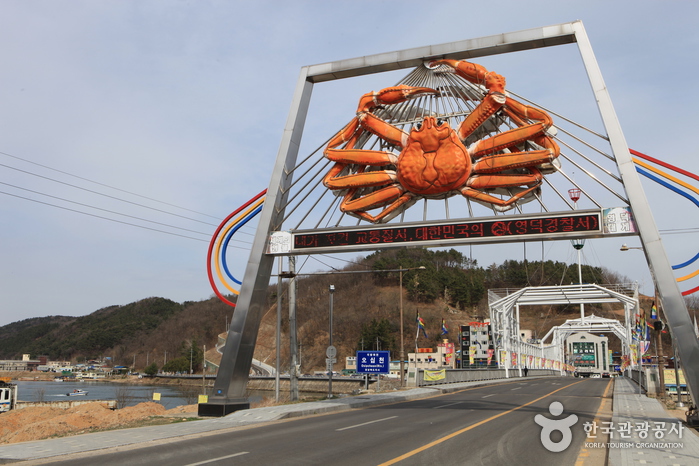
Located on the coast of the East Sea, Yeongdeok Crab Village is famous for its classical scholars, and its wonderful scenery, where the mountains meet the sea. The traditional fishing village is the home of Yeongdeok snow crab that was well-known from Goryeo dynasty (King Taejo) and also has a huge street for snow crabs, packed with around 100 shops selling crabs along the Gangguan Port. When the season for snow crabs arrives in November, lasting through May, the village is crowded with visitors from all over the world eager to try Yeongdeok snow crabs. In addition, the location of the village gives visitors the opportunity to enjoy one of the most beautiful sea roads in Korea. In the area are also a sea fishing site, beaches, and water resort venues that are suitable for both recreation and relaxation.
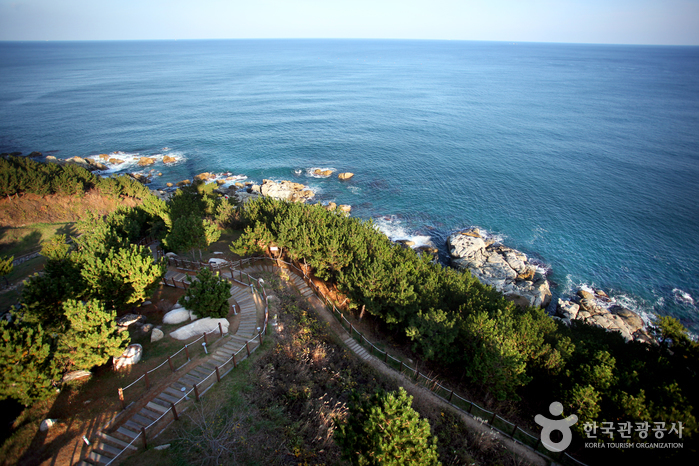
Yeongdeok Sunrise Park (영덕 해맞이공원)
968 Yeongdeokdaege-ro, Yeongdeok-gun, Gyeongsangbuk-do
Yeongdeok Sunrise Park is located on the eastern coast, with an unmanned lighthouse and wooden promenades, using wood from trees that were damaged in a large fire here in 1997. The observation deck from the peak of the park provides grand views of the surrounding area, and is a popular location for photography. Additional attractions within the park include a pergola, musical fish statues, and an ecological education field.
Yeongdeok Wind Farm (영덕풍력발전단지)
247 Haemaji-gil, Yeongdeok-eup, Yeongdeok-gun, Gyeongsangbuk-do
Yeongdeok Wind Farm, situated in Yeongdeok, capitalizes on the area's constant coastal winds and is perched above Sunrise Park. The wind turbines, standing tall at 80 meters with a wingspan of 41 meters, are strategically positioned on a hill to offer a magnificent view of the sea. The Wind Farm includes a New & Renewable Energy Center, a playground for children, and an Aircraft Exhibit Park, providing a diverse range of activities for visitors. In the vicinity, one can also explore local attractions such as Gangguhang Port, Samsa Marine Park, and Yeongdeok Daege Wonjo Village, enriching the experience of the area.

Yeongdeungpo Yeouido Spring Flower Festival (영등포 여의도 봄꽃축제)
Yeouiseo-ro, Yeongdeungpo-gu, Seoul
Yeongdeungpo Yeouido Spring Flower Festival is held on Yeouiseo Road (Yunjung-ro) in April when the azaleas, forsythia, royal azaleas, and other spring flowers are in full bloom. The celebration is famous for its 1,886 Korean cherry trees.
Yeongdo Cheonghak Reservoir Observatory (영도 청학배수지 전망대)
36 Wachi-ro, Yeongdo-gu, Busan
The observatory boasts stunning vistas of Busan's scenery. It is particularly renowned for the breathtaking night view of the Busan Port Bridge, making it a favorite spot for photography enthusiasts. Surrounding areas are well-equipped with a variety of exercise equipment, enhancing the outdoor experience. Additionally, visitors can explore the History Park, embark on the scenic Namparangil 2-course walking trail, or enjoy a leisurely walk or jog around the tranquil Bongnaesan Mountain.
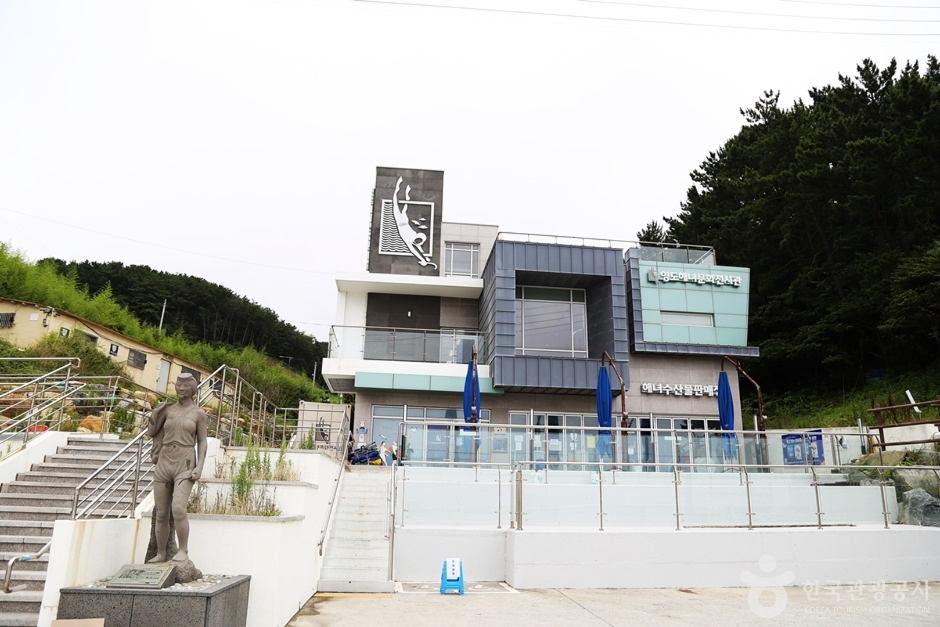
Yeongdo Haenyeo Culture Exhibition Hall (영도해녀문화전시관)
Location details are available on the place page.
Yeongdo Haenyeo Culture Exhibition Hall is a two-story building with meaning and history Haenyeo on display. Haenyeo are women divers that dive for seafood without any equipments. The tradition of Haenyeo has become a UNESCO Intangible Cultural Heritage of Humanity. First floor of the building consists Haenyeo seafood store that sells fresh seafood collected by the Haenyeos, while the second floor is an exhibition hall dedicated to Haenyeo.
Yeongdo Lighthouse (영도 등대)
181, Jeonmang-ro, Yeongdo-gu, Busan
Yeongdo Lighthouse, first lit in 1906, stands at Taejongdae Park. It houses a maritime library, galleries, an observatory, and a café. From the observatory, on clear days, you can even see as far as the Japanese island of Tsushima Island. At the base of the lighthouse, there's a sculpture of a woman turned into stone, waiting for her husband who went out to sea. You can reach it by walking from Taejongdae Park or taking the Taejongdae Danubi Train.
Plan your Korea trip
Korea travel FAQ
How do I use the travel search?
Enter a place or interest, then narrow the results by region, category or sort order.
Will my filters stay selected on the next page?
Yes. Your search and filter choices stay in the page URL while you move through the results.
Can I find directions to each place?
Place pages include an external Google Maps search when coordinates or an address are available.
Source: Korea Tourism Organization, official website (https://knto.or.kr).