TRAVEL IN KOREA
Korea Places to Visit
Find attractions, culture, festivals, stays, restaurants, shopping and travel courses for a clear Korea trip plan.
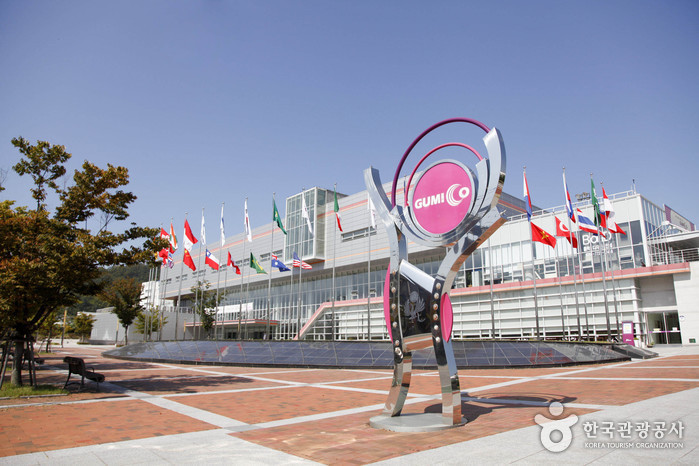
Gumico (구미코)
49 Cheomdangieop1-ro, Sandong-eup, Gumi-si, Gyeongsangbuk-do
Gumico is the convention center of Gumi. Established in 2004 to commemorate Gumi's $2 million in exports. Various exhibitions and convention events such as the Gumi Art Fair, Vacation SW Education Camp, and Wedding Fair are held. Visitors can check the event schedule on the website to find plenty of interesting attractions to enjoy.
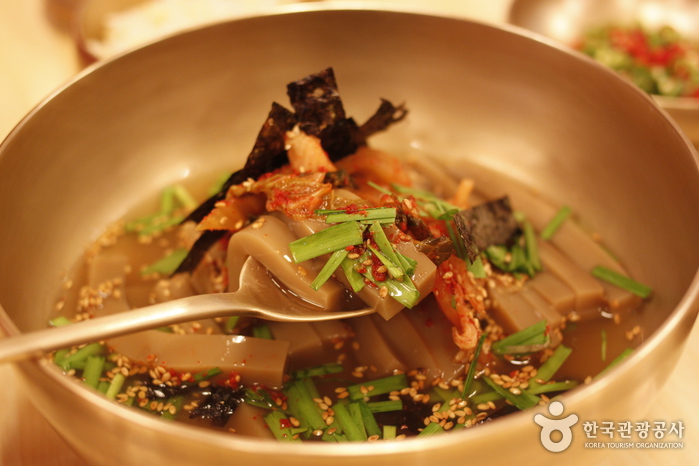
Gungnara Naengmyeon Mukbap (궁나라냉면묵밥)
6, Jibong-ro 12-gil, Jongno-gu, Seoul
Gungnara Naengmyeon Mukbap originally opened in Ansan, serving up delicious meals of naengmyeon and mukbap. The restaurant became popular, and eventually moved to its current location in Seoul. The jiggly acorn jelly goes well wit the sweet and sour broth in mukbap, a favorite summer-time dish. Visitors can also order the dish with a warm broth for a delicious and healthy dish year round.

Gungpyeong Port (궁평항)
1049-24 Gungpyeonghang-ro, Seosin-myeon, Hwaseong-si, Gyeonggi-do
Spectacular sunset spot This is the place where Choi Ung appeared while reminiscing on his most memorable trip, and you can see the wonderful sunset. The scenery created by anchored fishing boats and seagulls hovering overhead is quite stunning. The wooden deck extending to the sea, a popular attraction of Gungpyeong Port, is not just a promenade or breakwater, but a 'fishing pier'. It is very popular as a facility that allows you to fish on the deck without having to go out to sea on a boat. The sunset seen from the deck is much more spectacular than in the drama.
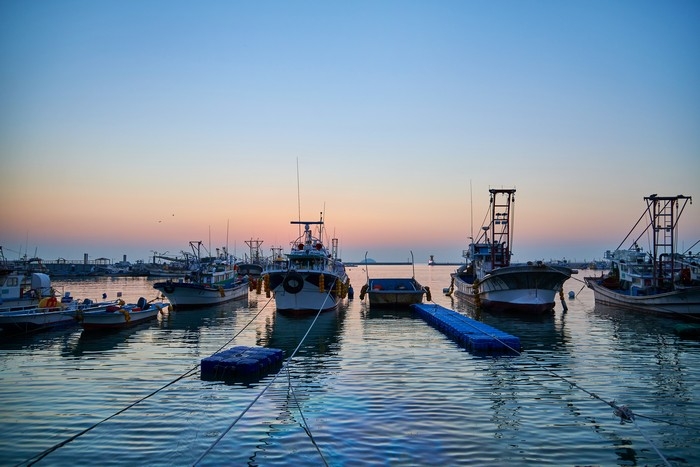
Gungpyeonghang Port (궁평항)
1069-17 Gungpyeonghang-ro, Hwaseong-si, Gyeonggi-do
◎ Travel information to meet Hallyu’s charm - "Our Beloved Summer" The first and the last travel destination visited by Choi Ung and Kook Yeon-su. The ocean sunset, gentle waves, and the wooden deck over the water all come together to create a scenic view. Follow the coastal road for five minutes to reach the filming location. The port is also a popular sunset viewing spot in the Seoul metropolitan area.
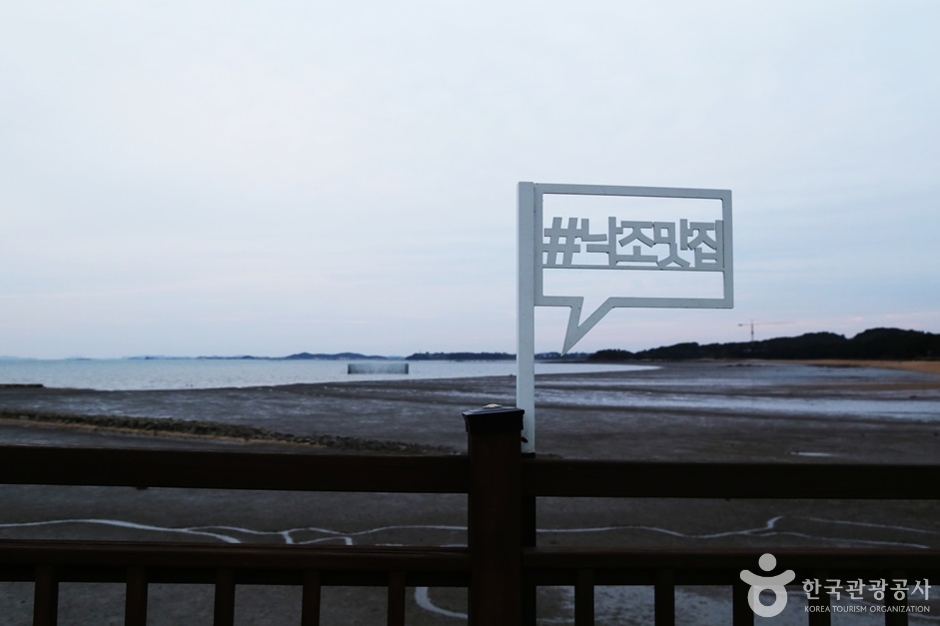
Gungpyeongni Beach (궁평리해수욕장)
Gungpyeong-ri, Seosin-myeon, Hwaseong-si, Gyeonggi-do
Gungpyeongni Beach, featuring a two kilometer long and fifty meter wide sandy shore, offers a variety of activities, including water sports and tidal flat experiences. Visitors can enjoy views of the sunset over the sea from the deck-built Gungpyeong Sunset Trail. Open twenty-four hours, this path is illuminated by scenic lighting at night. As you walk along the path, you'll encounter various sculptures, making it an ideal spot for photography.
Gunnam Flood Control Theme Park (군남홍수조절지 두루미테마파크)
Gunnam-myeon, Yeoncheon-gun, Gyeonggi-do
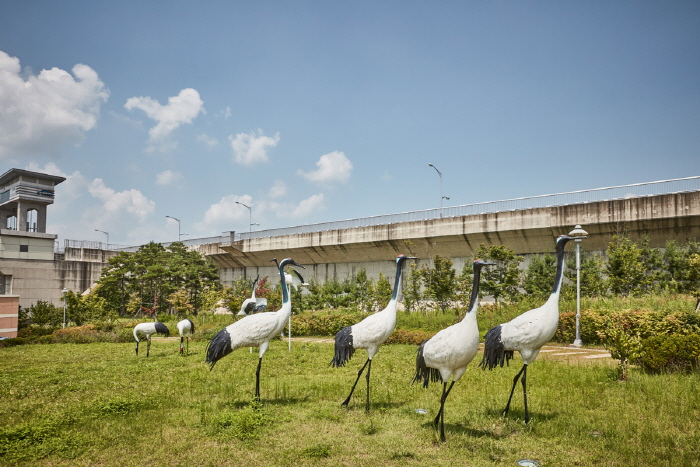
The Gunnam Flood Control Site is situated near the border between North and South Korea just six kilometers away from the demarcation line. More than 97% of the land around the Gunnam flood control dam is part of North Korea. The site is effective in controlling the flooding of the Imjingang River and improving irregular water flow. This area is a key wintering site for various migratory birds such as white-naped cranes, and hooded cranes, with up to 200 birds spending every winter in the area. Given the unique characteristics created by the geographical condition of the area near the border between South and North Korea and the natural environment of the Imjingang River, the site is a great natural ecological habitat for various wildlife. The Gunnam Flood Control Theme Park features “The Story of Peace and Love told by Cranes” as its theme. Various story-telling facilities are installed, such as the drum of peace, a wishing tree, and crane structures. There are also outstanding facilities to minimize impact on the environment, such as an alternative habitat for cranes, fishway ecology, and ecological wetlands. The facility makes it a great place to learn about and experience ecology.
Gunsan Country Club (군산 컨트리클럽)
1685, Namgunsan-ro, Gunsan-si, Jeonbuk-do
Gunsan Country Club is a golf course featuring 81 holes, including 18 holes exclusively for members only, on the site of an abandoned salt field that spans over 1,060 acres. It is the only course in Korea where all the holes are surrounded by lakes; around 380 acres or 36% of the course is comprised of lakes, and the holes are connected by 26 bridges. It has some of the longest golf holes in the world, including a Par 7 hole (1,004 m) and a Par 6 hole (661 m). The 18-hole private golf course is done in the classic American style, while the public golf course offers more variety.

Gunsan Dongguksa Temple (동국사(군산))
16 Dongguksa-gil, Gunsan-si, Jeonbuk-do
Dongguksa Temple was built by Japanese monk Seoneungbulgwan in 1909. The temple was run by Japanese monks for 36 years during the Japanese occupation, reverting to Korean jurisdiction when Korea was liberated in 1945. The historical temple is the only surviving Japanese-style temple in the nation. The temple is characterized by its two main buildings, Daeungjeon Hall and Yosachae, which are connected by a corridor, and the temple’s relative lack of decoration, which stands as a sharp contrast to the brilliantly-colored Korean temples. Dongguksa Temple was officially designated as a cultural heritage in July 2003 and is now a branch temple of Seonunsa Temple in Gochang, the 24th district of the Korean Buddhist Jogye Order.
Gunsan Geumgang Estuary Bank (금강하구둑(군산))
120, Cheolsae-ro, Gunsan-si, Jeonbuk-do
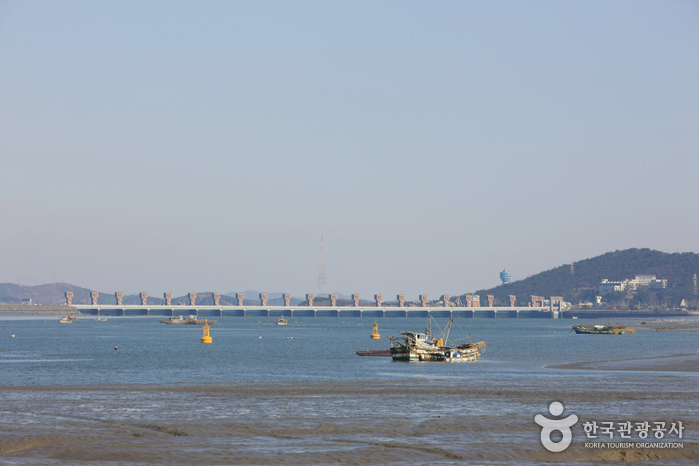
Geumgang Estuary Bank was completed in 1990 as part of an agricultural development project for 6 cities and counties in Chungcheongnam-do and Jeollabuk-do. The Korea Agricultural and Rural Infrastructure Corporation invested approximately 100 billion won for the project and the construction lasted for 8 years. The estuary bank can hold up to 130 million tons of water. The 1,840-meter long bank serves a bridge that connects Chungcheongnam-do to Jeollabuk-do. Aside from being the source of water for agricultural and industrial use in Jeollabuk-do and Chungcheongnam-do, the bank also provides flood control for the area around Geumgang River. It helps keep Gunsanhang Port operational by preventing soil and sand from accumulating at the mouth of the river. It also prevents the backwash of seawater from causing damage to farmlands. Geumgang Estuary Bank has an important role as a tourist destination by connecting Gunsan and Janghang.

Gunsan Mallaengyi Village (군산 말랭이마을)
Sinheung-dong, Gunsan-si, Jeonbuk-do
Sinheung-dong began to form as a residential area when Japanese people started building houses in the area around the 1930s and 1940s. During the Korean War, refugees settled in areas such as Haemang-dong and Sinheung-dong, leading to the establishment of the village. At that time, houses were built closely together on wooden planks on top of rocks, and as time passed, the neighborhood became filled with thatched roofs. It was named Mallaengyi Village, derived from the Jeolla dialect meaning "the hillside." Currently, the area is experiencing urban decline due to population outflow, but in 2014, as part of a project to promote representative tourist attractions in Jeonbuk-do, nine artist residences and eight exhibition halls were established, creating a village where over 50 households and seven teams of artists live together harmoniously. Visitors can find murals, photo zones, sound spaces, and other notable attractions throughout the village. A walk up to Wolmyeongsan Mountain offers panoramic views of where the Geumgang River meets the West Sea. The viewpoint is also well known for its beautiful sunsets and nighttime scenery.
Gunsan Modern Architecture Exhibition Hall (근대건축관 (구)조선은행군산지점)
214 Haemang-ro, Gunsan-si, Jeonbuk-do (장미동)
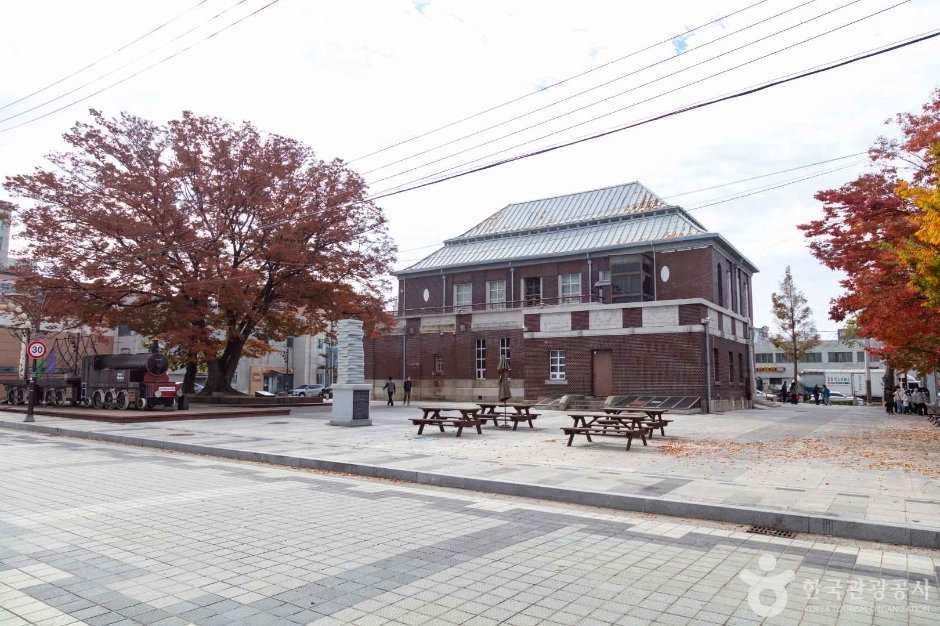
Built in 1923, this red-brick building was originally the Joseon Bank Gunsan Branch, a major financial institution operated by the Japanese colonial government. Though two stories in structure, it rises to the height of four stories and features a grand, steeply pitched roof. The front entrance projects outward with five flat arches, flanked by semi-circular arches on either side. As a symbolic landmark of Gunsan’s modern history, it appears in the novel "Tangnyu" ("Murky Waters") by Chae Man-sik, set in colonial-era Gunsan. Today, the building operates as a modern architecture museum, exhibiting works related to Gunsan’s modern architectural heritage along with currency and historical artifacts from the Japanese colonial period.
Gunsan Modern Art Museum (군산근대미술관)
230 Haemang-ro, Gunsan-si, Jeonbuk-do (장미동)
The building of Gunsan Modern Art Museum was originally founded in 1907 during the Japanese colonial period as the 18th Bank of Japan's Gunsan branch. Located in Jangmi-dong near the inner harbor, it primarily provided trade-related loans. During the colonial period, the bank financed the purchase of Korean land and profited from exporting rice to Japan. The building was sold to the Joseon Industrial Bank in 1936 and transferred in 1938 to the Joseon Rice Warehouse Co., Ltd. (later Korea Express). It consists of a wooden main office and brick vault annexes connected at the rear. After liberation, it operated as a Korea Express branch. Designated a registered cultural heritage site in 2008, it was renovated as the Gunsan Modern Art Museum. The main building presents exhibitions on colonial exploitation and the site’s history and restoration, while the former vault displays the original safe and a recreated prison cell of Ahn Jung-geun.

Gunsan Modern History Museum (군산근대역사박물관)
240 Haemang-ro, Gunsan-si, Jeonbuk-do
The Gunsan Modern History Museum highlights the history of Gunsan's transformative role as an international trading port. The museum exhibits past images of Gunsan, showing the city's rise and importance as a West Sea maritime distribution port.
Gunsan Modern History Street (군산 근대화 거리)
41, Jangmi 1-gil, Gunsan-si, Jeonbuk-do
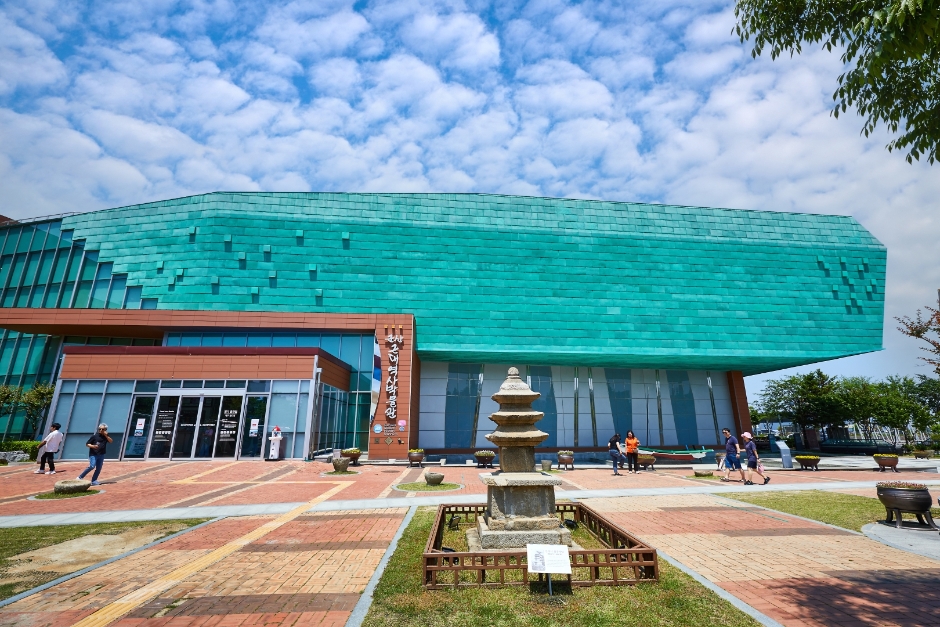
Gunsan was historically an important trading port. Because of that, it often served as the landing point of new culture in Korea. One such example is the modern culture during the Japanese colonial period, which traces of that time can still be found today. At Gunsan Modern History Street, you will find Gunsan Modern History Museum, Old Gunsan Customs Office, Gunsan Modern Art Museum, Gunsan Modern Architecture Hall, and the former Joseon Bank building standing in a row. If you want to see Gunsan’s past and present, a visit to the museum is recommended. The area between Leesungdang and this area is the old city center of Gunsan, home to shops and cafes that build upon Gunsan’s uniquely retro aesthetics.

Gunsan Oreum Volcanic Cone (군산오름)
564 Changcheon-ri, Andeok-myeon, Seogwipo-si, Jeju
Gunsan Oreum Volcanic Cone stands behind Nandeureu Village on the Seogwipo coast. The climb to the top takes just 30 minutes, and its gentle slope makes it easy for anyone to enjoy. From the summit, you’ll find wide-open views of the sea and Hallasan Mountain. In "Welcome to Samdal-ri (2023)," this is the olle trail where Sam-dal, after hitting rock bottom, returns home in search of herself.
Gunsan Port (군산항)
442 Imhae-ro, Gunsan-si, Jeonbuk-do
Gunsan Port, established in 1899, is the port of Gunsan. During the Japanese colonial period, Gunsan prospered as a trading port. Modern buildings from that era still remain around Gunsan Port, creating a nostalgic atmosphere often referred to as a "time-travel village." Nearby attractions include the Gunsan Modern History Museum and the Sinheung-dong Japanese-style House Street.
Plan your Korea trip
Korea travel FAQ
How do I use the travel search?
Enter a place or interest, then narrow the results by region, category or sort order.
Will my filters stay selected on the next page?
Yes. Your search and filter choices stay in the page URL while you move through the results.
Can I find directions to each place?
Place pages include an external Google Maps search when coordinates or an address are available.
Source: Korea Tourism Organization, official website (https://knto.or.kr).