TRAVEL IN KOREA
Korea Places to Visit
Find attractions, culture, festivals, stays, restaurants, shopping and travel courses for a clear Korea trip plan.

Gunsan Seonyudo Cruise (군산선유도유람선)
37 Seonyubuk-gil, Okdo-myeon, Gunsan-si, Jeonbuk-do
Gunsan Seonyudo Cruise departs from Seonyudo Island and offers a scenic tour around the Gogunsan Archipelago. Two routes (Course A and B) pass landmarks such as Seonyu 1-gil (Gubul-gil), Seonyubong Peak, Mermaid Lighthouse, Dongnimmunbawi Rock, Jangja Halmae Rock, and more. Departure times vary depending on daily weather conditions. Visitors are advised to check the route, date, and schedule in advance, purchase tickets online, and arrive at least 30 minutes early with ID for confirmation and boarding. From the cruise, passengers can enjoy stunning views of Seonyudo Island’s famed “Eight Scenic Views,” including its celebrated sunset and other coastal landscapes.
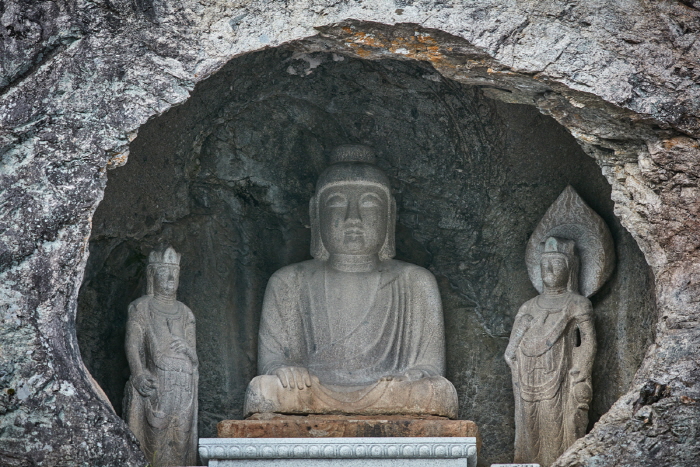
Gunwi Buddha Triad Grotto (2nd Seokguram) (군위 아미타여래삼존 석굴)
24, Namsan 4-gil, Gunwi-gun, Gyeongsangbuk-do
At the Hantijae Peak of Palgongsan Mountain in Daegu, is the Gunwi Buddha Triad Grotto, referred to as "the 2nd Seokguram Grotto". This grotto, designated as a National Treasure, is a natural cave on a sheer cliff. There is the beautiful Amitabul Buddha, the Bodhisattva of Power and the Bodhisattva of Compassion. The cave is 4.25 meters wide and 4.3 meters long, and is located 20 meters above the ground. This grotto is the progenitor of the Gyeongju Seokgulam Grotto, preceding the construction of Seokguram grotto by 100 years. It has been designated as a world cultural heritage. The square-shaped ceiling is highest in the middle of the chamber. The Amitabul Buddha sits in the center with the Bodhisattva of Power and the Bodhisattva of Compassion flanking its left and right sides. The main Buddha is very refined and graceful with short hair and a divine smile on its face, sitting with crossed legs in a full-lotus posture.
Gunwi Iroun Hanu (군위 이로운한우)
14 Gandongyuwonji-gil, Hyoryeong-myeon, Gunwi-gun, Daegu
Gunwi Iroun Hanu is a restaurant specializing in Korean beef, offering a unique dining experience where patrons select their meat and pay for a table to enjoy hanu gui (grilled Korean beef). Guests have the choice between dolpan gui (stone-grill) and sutbul gui (charcoal-grill). The dolpan gui method emphasizes the meat's juiciness, while the sutbul gui highlights its savory flavor. The menu features an array of options including kkotdeungsim (ribeye), ansim (grilled tenderloin), galbisal (galbi), mungtigi (sliced raw bottom round steak), yukhoe (beef tartare), and hanu teungmodeum gui (grilled assorted Korean beef cuts special).
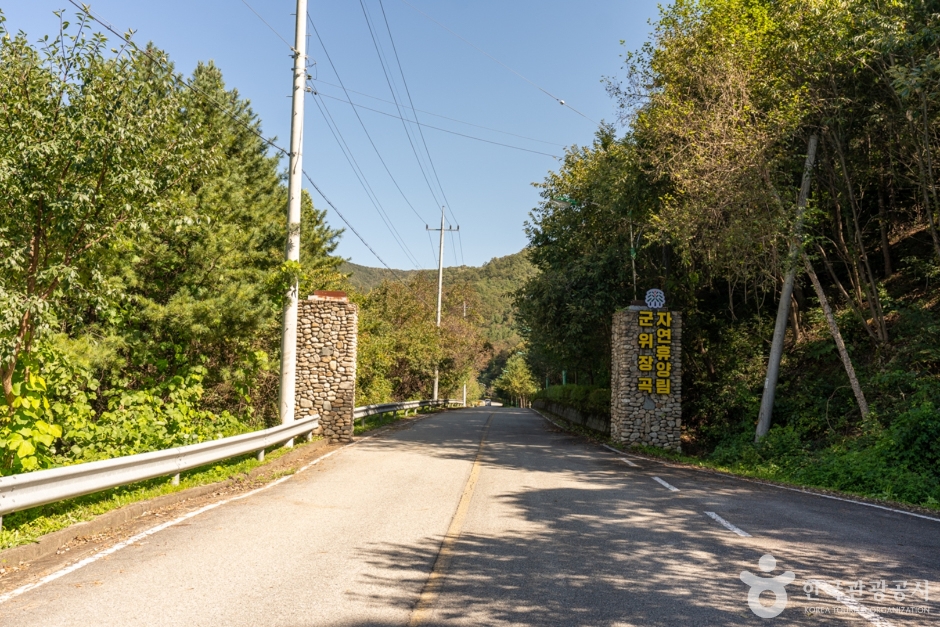
Gunwi Janggok Recreational Forest (군위 장곡자연휴양림)
195 Janggokhyuyangnim-gil, Goro-myeon, Gunwi-gun, Daegu
The Gunwi Janggok Recreational Forest offers a unique vacation experience where Korean history, culture, and nature converge. Nestled within a dense forest of broad-leaved and pine trees, it provides a serene environment for relaxation and forest bathing in the fresh air. The facility boasts a range of amenities including accommodation, a campground, walking trails, a forest park, an observatory, a nature observation center, and a seminar room. Additionally, it caters to younger visitors with a playground and a small sports field. During the summer, an outdoor water playground for children is also available.
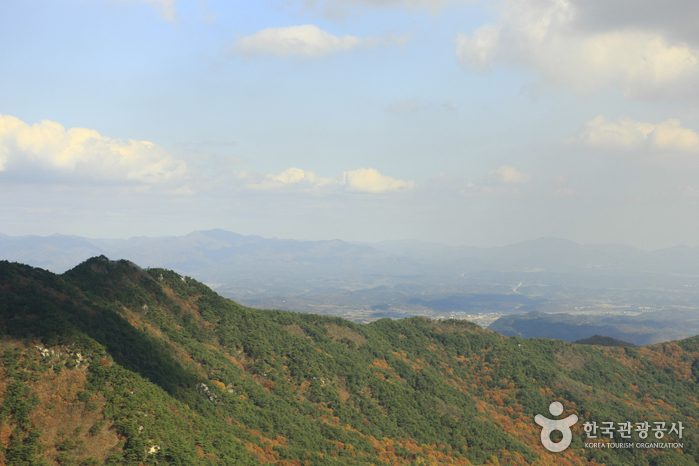
Gunwi-gun Palgongsan National Park (팔공산국립공원(군위군))
Namsan-ri, Gunwi-gun, Gyeongsangbuk-do
Palgongsan Mountain is located south of the Taebaek Mountain Range where the Nakdonggang and Geumhogang Rivers meet. The mountain stands high and stretches out like a folding screen. Near the top of the mountain, the granite protrudes in an odd shape creating a tall, grand geographical feature of the mountain. Furthermore, every valley is decorated with an exquisite rock face and lush forest adding to the mountain's reputation. Palgongsan Mountain was designated as a National Park in December 2023. The mountain has many ancient temples and historical sites such as the Gatbawi Stone Buddha, Wonhyosa Temple, Cheonseongsa Temple and Bulgulsa Temple.
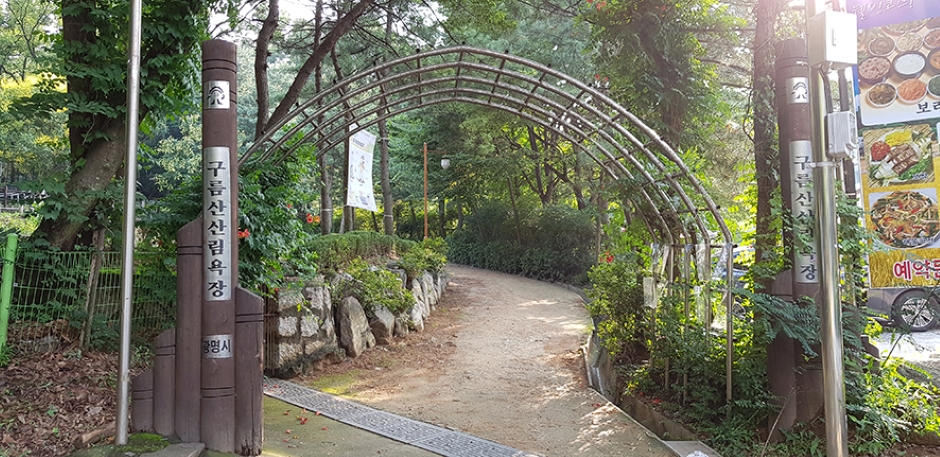
Gureumsan Forest Park (Gureumsan Urban Forest Park) (구름산 산림욕장 (구름산 도시자연공원) )
27 Ori-ro 619beon-gil, Gwangmyeong-si, Gyeonggi-do
Gureumsan Forest Park is densely populated with trees that are 20 meters high. The forest park has a playground and wooden benches, and has the highest phytoncide concentration out of all the 13 forest parks in Gyeonggi-do. This hiking trail has been developed with 356 fir trees and an 184-meter red clay trail to provide citizens and tourists with a relaxing barefoot walking experience. Most of the forest paths in the park area are covered in wood chips, making it easier to walk.
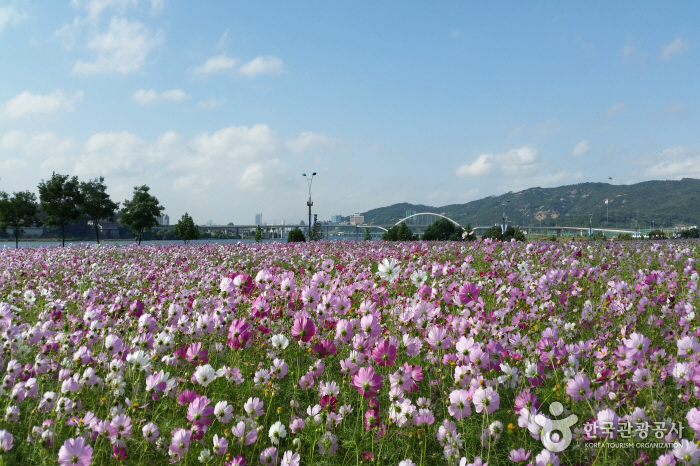
Guri Hangang Park (Cosmos Park) (구리시민한강공원 (코스모스공원))
Topyeong-dong, Guri-si, Gyeonggi-do
Guri Hangang Park offers a perfect rest area for visitors where visitors can feel the cool breeze coming off the river and rest amidst the beautiful natural scenery. The park’s bounties of flowers are at their peak in May with field of canola flowers, and in September when the cosmos bloom.
Gurye Cheoneunsa Temple (천은사(구례))
209, Nogodan-ro, Gurye-gun, Jeollanam-do
Located north of Gurye on Jirisan Mountain, and built during the Unified Silla Period, Cheoneunsa Temple is one of the three great Buddhist temples of Jirisan Mountain. Cheoneunsa Temple is believed to have been built by Monk Deokun and Monk Seru from India in AD 828 during the 3rd year of King Heungdeok. Because it initially laid next to spring water as clean and cold as a morning dew, the temple was also called Gamrosa, meaning Sweet Dew Temple. The spring water was rumored to clean one’s body and soul, leading to crowd of Buddhist monks to visit the temple. During King Chungryeol’s reign, the temple was named the Best Temple in the south. The temple was burned down during the Imjin War (1592-1598) and then later rebuilt and renamed Cheoneunsa. Legend has it that while the temple was being rebuilt, a large serpent often came out of the spring. When the serpent was finally captured and killed, the spring waters suddenly dried up. Hence the name Cheoneunsa, meaning Disappearance of Spring Water, was given.
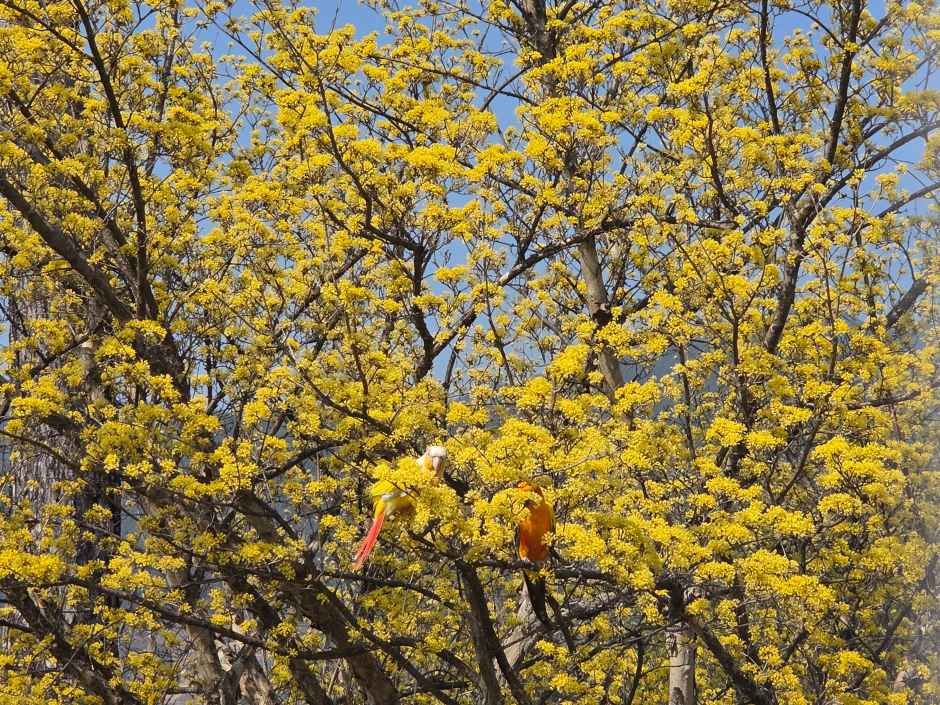
Gurye Sansuyu Festival (구례산수유꽃축제)
45 Sanggwan 1-gil, Gurye-gun, Jeollanam-do
Gurye Sansuyu Festival is an annual spring flower festival. Major programs include exhibition of local products made from sansuyu (cornus fruit), while other programs include traditional music and dance performances, experience programs, and fireworks.
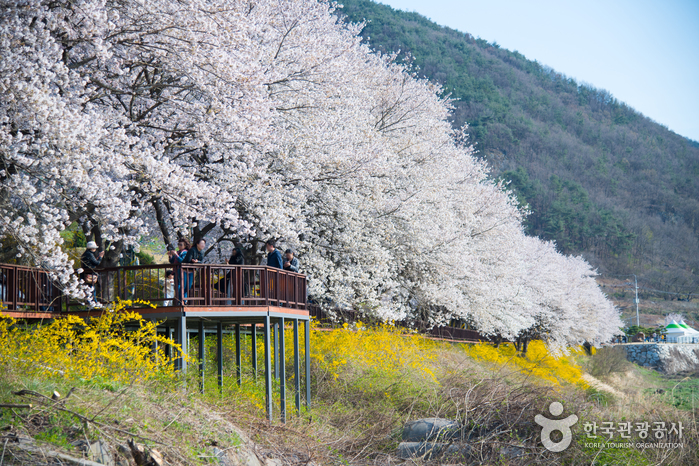
Gurye Seomjingang Cherry Blossom Trail (구례 섬진강 벚꽃길)
Muncheok-myeon, Gurye-gun, Jeollanam-do
The Seomjingang Cherry Blossom Trail in Gurye follows National Roads 17 and 19 along the pristine Seomgjingang River. Stretching over 3 kilometers, the trail is lined with cherry blossom trees planted in 1992. As well as being a popular drive course, the trail can also be enjoyed on foot, and is even used as a marathon course. The trail has received recognition as one of the "100 Most Beautiful Roads in Korea." Restaurants along the trail serve local foods such as euneo hoe (sliced raw sweetfish) and minmul maeuntang (spicy freshwater fish stew).
Gurye Unjoru Historic House (구례 운조루 고택)
59 Unjoru-gil, Gurye-gun, Jeollanam-do
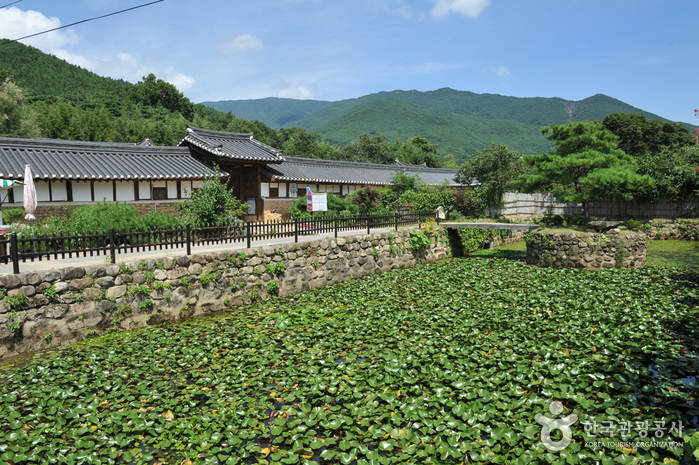
Unjoru Historic House was built in 1776 by Ryu I-Ju, a high government official of the Sam-su Department during the reign of King Yeong-jo. Of the house's original 99 kan (traditional building measurement), only 73 remain today. The name Unjoru means "a hidden house like a bird in the clouds," which was inspired from an old poem written by poet Tao Yuan Ming.
Guryonggyegok Valley (구룡계곡)
Guryongpokpo-gil, Namwon-si, Jeonbuk-do
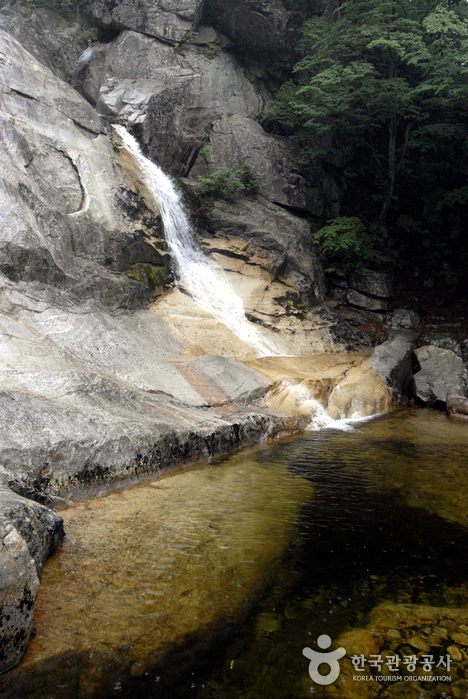
Guryonggyegok Valley, a 3 kilometer-long valley in the northern part of the Jirisan National Park, located in Namwon, Jeollabuk-do, is just the place to enjoy a panoramic view of the unusually shaped rocks and precipitous cliffs. Under the Guryongpokpo Falls, located at the peak of the valley, is a small pond called, ‘Yongso’ (meaning ‘dragon pond’). Legend has it that a dragon lived here before it ascended to heaven. Visitors can tour the valley by driving along the skyway, an extension of the tourist road of Jirisan Mountain, or take an invigorating hike up a mountain by taking the Jeongnyeongchigan route, which extends along the valley to Baemsagol Valley(Banseon) and Nogodan Peak.
Guryongpo Beach (구룡포해수욕장)
6 Homi-ro 426beon-gil, Guryongpo-eup, Nam-gu, Pohang-si, Gyeongsangbuk-do
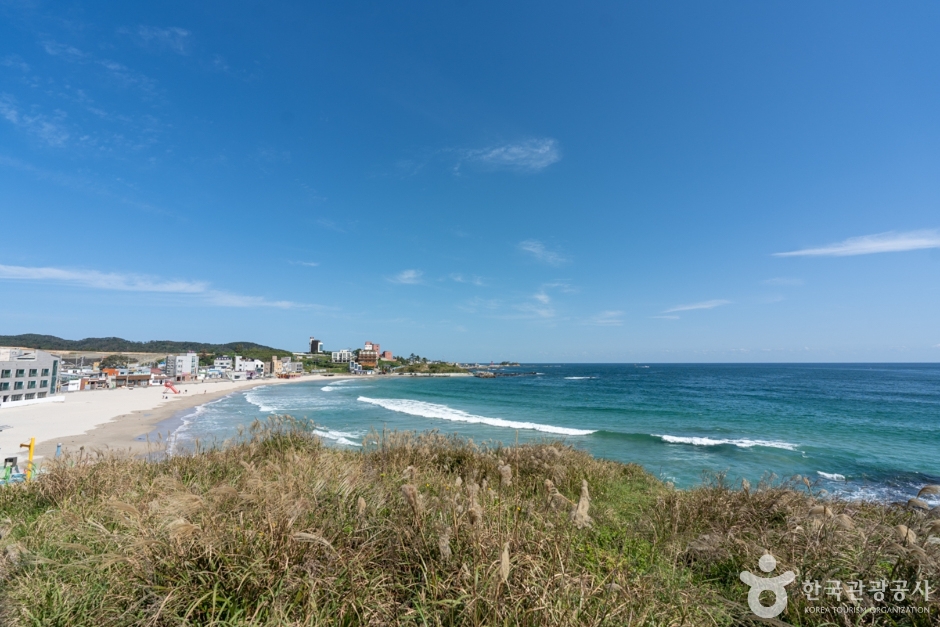
Guryongpo Beach is a seaside resort located in Homigot, where "Homi" means tiger tail. The crescent-shaped white sandy beach stretches 400 meters in length and 50 meters in x_width, offering pristine waters of the East Sea. It is renowned as a sunrise spot. Guryongpo Columnar Joints and Guryongpo Beach Embankment are notable features, complemented by cafés, restaurants, and accommodation facilities. The area is rich in tourist attractions, including Homigot and Yeongildae.
Guryongpo Fifth-Day Market (구룡포장 (3, 8일))
72-1, Guryongpo-gil, Nam-gu, Pohang-si, Gyeongsangbuk-do
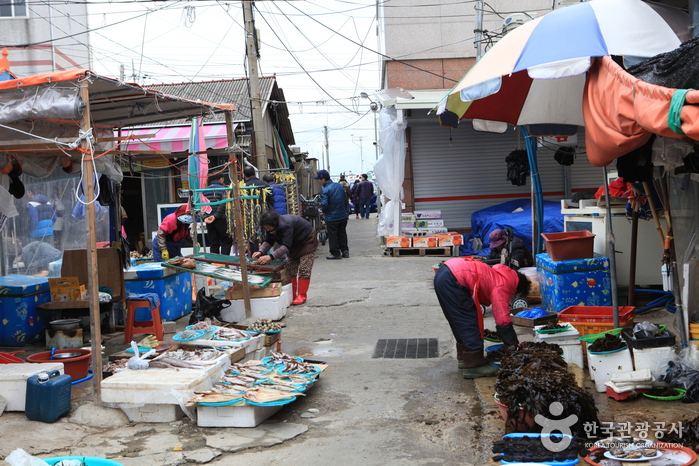
Guryongpo Market area expands all the way to Changjucheon Stream area every fifth-day market day, bustling with crowds of merchants and customers. Guryongpo Fifth-Day Market is held on the 3rd, 8th, 13th, 23rd, and 28th of every month. The market first started when a small village was formed around Guryongpo Port. In the 1950s and '60s, when Guryongpo was incorporated into the county of Yeongil, Guryongpo Market flourished because it became the main market of Yeongil. Nowadays, thanks to the rows of seafood restaurants inside, the market became even more popular among seafood lovers. The market carries a wide variety of fresh vegetables and produce, herbs, grains, and regional specialties. The seafood at the market is delivered fresh from Guryongpo Port. The squid at Guryongpo Port, which is also the specialty of the market, makes up about 70% of the total catch in Gyeongsangbuk-do. The market is also frequently visited by seafood gourmets for its squid.
Guryongpo Japanese House Street (구룡포 일본인 가옥거리)
153-1 Guryongpo-gil, Guryongpo-eup, Nam-gu, Pohang-si, Gyeongsangbuk-do
Guryongpo Japanese House Street is where the Japanese who came to Joseon lived after the Joseon-Japan Trade Treaty was signed between Joseon and Japan in 1883. Over time, the Japanese grew power over the fishing industry in the East Sea while restricting Joseon's fishing rights. To remember the past pains and events, the city of Pohang preserved 47 wooden Japanese-style houses from the time and named the area "Guryongpo Japanese House Street." It is now a tourist attraction where people can see the traces of Japanese lifestyle during the Joseon period and how the poeple of Joeseon braced the Japanese colonial period. It also attracts many K-drama fans as the area served as the main filming location of the drama "When the Camellia Blooms (2019)." The scenery seen from the park steps received a Korea Landscape Award because of the fishing village, which can be seen at a glance, revealing the daily life of the common people.
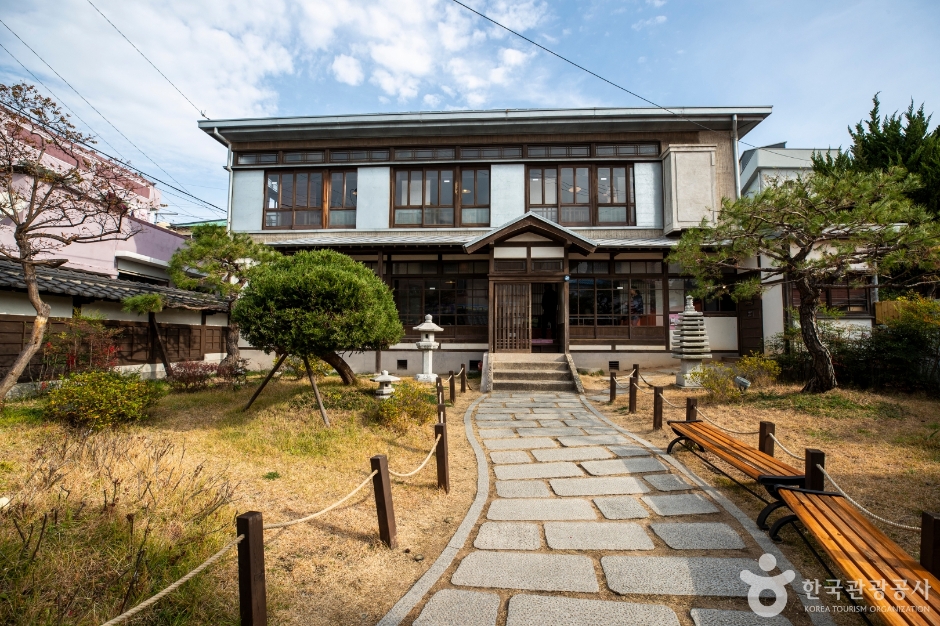
Guryongpo Modern History Museum (구룡포 근대문화역사관)
153-1 Guryongpo-gil, Guryongpo-eup, Nam-gu, Pohang-si, Gyeongsangbuk-do
The Guryongpo Modern History Museum, situated on Guryongpo Japanese House Street, is housed in a two-story wooden building constructed in the Japanese style. Built by Jenkichi Hashimoto in the 1920s, this historic structure was acquired by Pohang-si in 2010 and subsequently transformed into a history museum following extensive restoration. The museum features two exhibition floors, showcasing traditional Japanese furniture and accessories such as butsudan and kotatsu. Additionally, a traditional kitchen and toilet have been meticulously recreated. Visitors can gain a vivid understanding of the lifestyle during that era and explore the distinctive structural elements of Japanese-style buildings.
Plan your Korea trip
Korea travel FAQ
How do I use the travel search?
Enter a place or interest, then narrow the results by region, category or sort order.
Will my filters stay selected on the next page?
Yes. Your search and filter choices stay in the page URL while you move through the results.
Can I find directions to each place?
Place pages include an external Google Maps search when coordinates or an address are available.
Source: Korea Tourism Organization, official website (https://knto.or.kr).