TRAVEL IN KOREA
Korea Places to Visit
Find attractions, culture, festivals, stays, restaurants, shopping and travel courses for a clear Korea trip plan.
Gyeongju Seokguram Grotto [UNESCO World Heritage] (경주 석굴암 [유네스코 세계유산])
238 Seokgul-ro, Gyeongju-si, Gyeongsangbuk-do
Seokguram Grotto was constructed by Kim Dae-Seong during the reign of King Gyeongdeok (742-765) of the Silla Kingdom. Located 3 kilometers away by hiking trail and 9 kilometers by car from Bulguksa Temple, the grotto was designed very harmoniously with the seated Buddha facing the East Sea. It is a valuable cultural heritage that is preserved and registered as a UNESCO World Heritage on December 6, 1995.
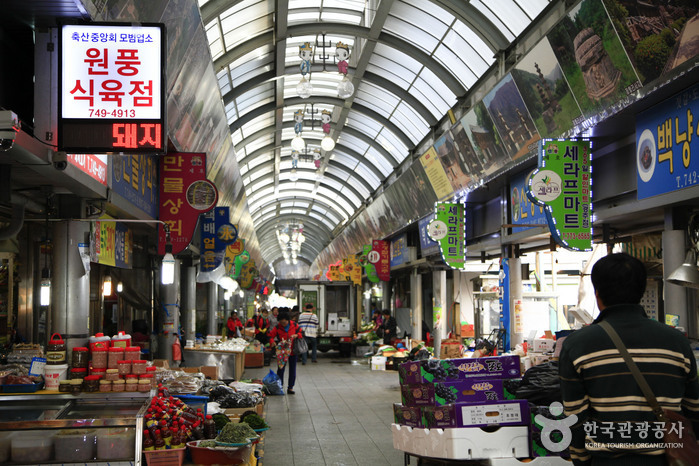
Gyeongju Seongdong Market (경주 성동시장)
11 Wonhwa-ro 281beon-gil, Gyeongju-si, Gyeongsangbuk-do
Gyeongju Seongdong Market has approximately 300 stores and 30 vendors. The market as found its place as the city’s representative local marketplace since its opening in 1971. Following a decline of customers due to the public's steadily increasing preference of supermarkets, Gyeongju Seongdong Market underwent a huge renovation in the recent past. From floorings to ceilings, and alleyways and walls, the market received a new look that emphasizes Gyeongju's historical significance to attract travelers and the local community alike.
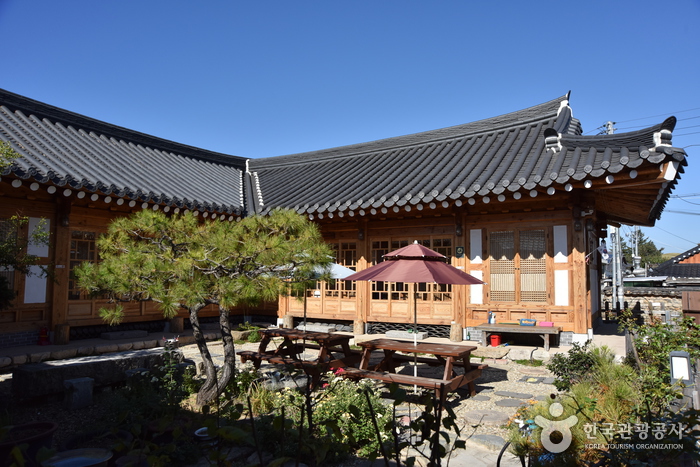
Gyeongju Soohojeong (경주수호정)
15-15 , Poseok-ro 1068beon-gil, Gyeongju-si, Gyeongsangbuk-do
Suhojeong hanok guesthouse stands right in front of the Daereungwon Silla tombs, in Gyeongju, Gyeongsangbuk-do. The house is constructed of traditional materials - pinewood, red clay and straw - and each guestroom has a bathroom with toilet. In the spacious yard is a stone table where visitors can rest and chat. Transport links are excellent, with Gyeongju Station and Intercity Bus Terminal just 5 minutes away on foot. Nearby tourist attractions include Cheomseongdae, Banwol Fort, and Anapji Pond.
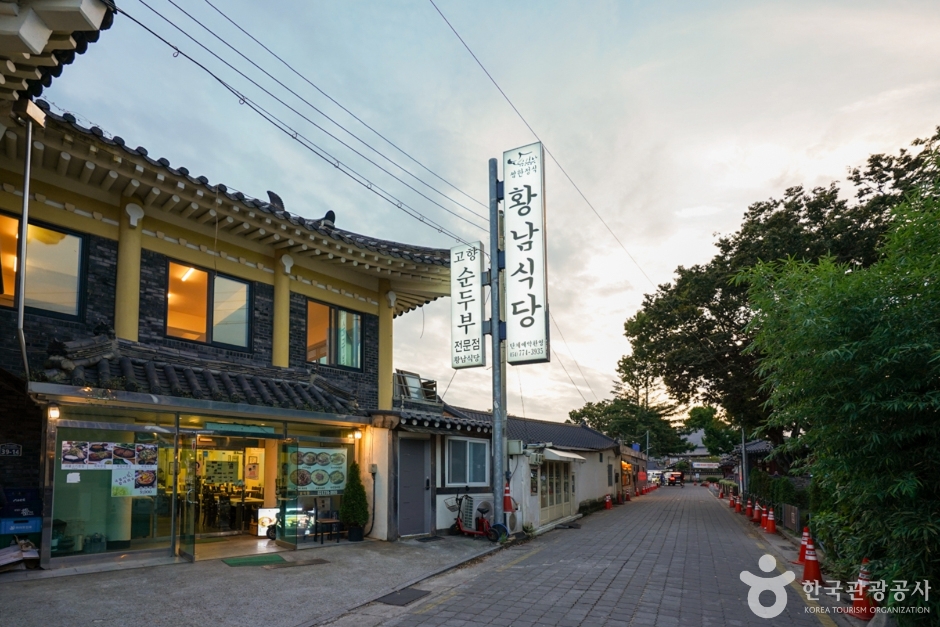
Gyeongju Ssambap Street (경주 쌈밥거리)
9 Gyerim-ro, Gyeongju-si, Gyeongsangbuk-do
Gyeongju Ssambap Street, developed around the Daereungwon Ancient Tomb Complex in Gyeongju, offers a diverse culinary experience. A highlight is ssambap (leaf wraps and rice), a dish featuring fresh vegetables accompanied by substantial side dishes like fish, meat, and doenjang jjigae (soybean paste jjigae) made from homemade soybean paste. Additionally, this street presents a variety of snacks, including Hwangnam ppang (Hwangnam bread) prepared with red beans and flour, and jjondeugi, a traditional chewy snack made from cornmeal and sugar. Nearby attractions include the Cheomseongdae Observatory, Donggung Palace and Wolji Pond, Woljeonggyo Bridge, and the Gyeongju National Museum.
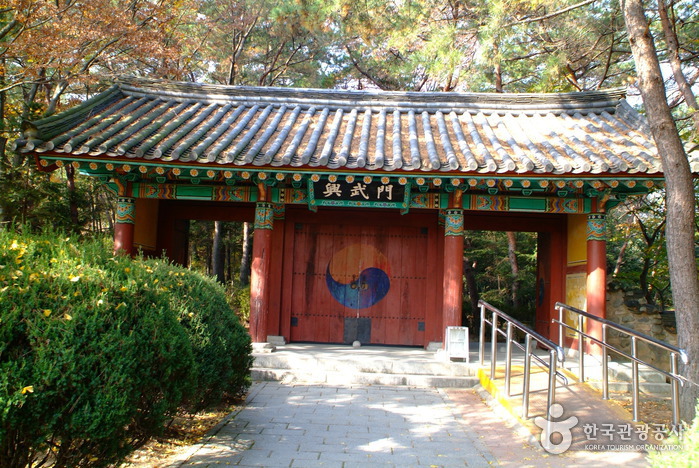
Gyeongju Tomb of Kim Yu-sin (경주 김유신묘)
44-7, Chunghyo 2-gil, Gyeongju-si, Gyeongsangbuk-do
The tomb of General Kim Yu-sin (595-673) is located near the Gyeongju Express Bus Terminal at the end of a scenic lane, popular in spring for its walls of yellow forsythia and pink cherry blossom trees in bloom. The tomb itself is located in a scenic area thick with pine trees, on the eastern side of Songhwasan Mountain. The tomb of General Kim Yu-sin is a large tomb measuring roughly 30 meters in diameter, circled by a stone fence with 24 guard posts. The tomb base wall features relief carvings of the 12 Oriental zodiac gods standing guard over the tomb, brandishing weapons. The carvings are unique in that while their bodies face outwards, the heads are all turned to the right. The elaborately decorated tomb is second in grandeur only to those of royalty.
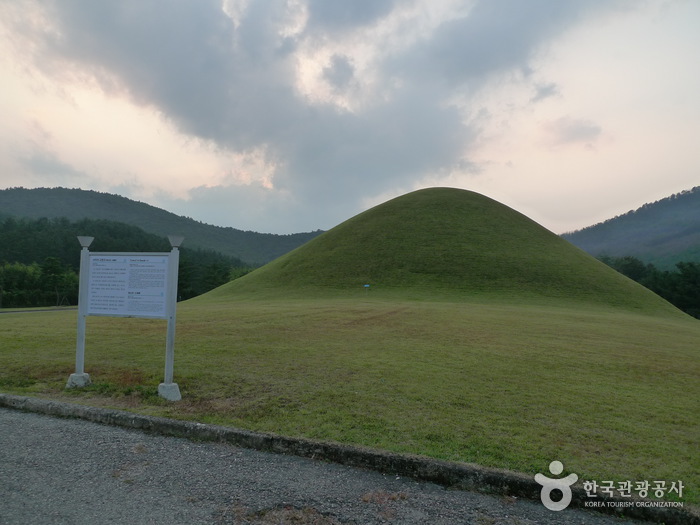
Gyeongju Tomb of King Muyeol, Stele of King Taejong Muyeol (경주 무열왕릉, 태종무열왕릉비)
10-4 Neungnam-gil, Gyeongju-si, Gyeongsangbuk-do
The Tomb of King Muyeol is the tomb of Kim Chun-chu, who acsended to the throne as King Muyeol (r. 654-661), the 29th ruler of the Silla Kingdom. The tomb is located at the southwestern foot of Seondosan Mountain in Gyeongju. As king, he sought to unify the three kingdoms by allying forces with China's Tang dynasty, but passed away before he could successfully accomplish his goal. His tomb is relatively large, reaching a x_height of 8.7 meters, and having a circumference of 114 meters. Originally made with large stones, the tomb has been covered in dirt and grass with the passing of time. To the east of the grave are the remains of his stele with an inscription that reads “Taejong Muyeol Daewangjibi (Tombstone of the Great King Muyeol)," indicating the owner of this grave.
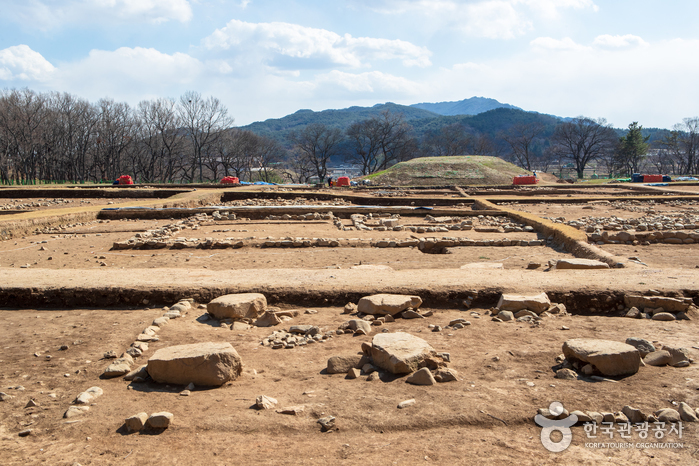
Gyeongju Wolseong Palace Site (Banwolseong Fortress) (경주 월성(반월성))
Inwang-dong, Gyeongju-si, Gyeongsangbuk-do
This was the location of the palace-fortress during the Silla dynasty (57 BC ~ AD 935). The fortress takes after its name, which, literally translates to mean a crescent moon shape on top of a hill. The famous history books of Samgukyusa mention that Silla’s 4th King Seoktalhae (AD 57~80) thought this area was an ideal spot for the fortress and bought the land from a nobleman. The 2nd King Namhae (AD 4~24) impressed by Seoktalhae’s actions, took him in as his son-in-law, later, becoming the 4th king. The area was then under Silla’s rule for 900 years, the last king being the 56th, Gyeongsoon (AD 927~935). Although the magnificent grandeur of the palace is now just an empty lot, it has been told that this area was filled with imperial buildings during the Silla dynasty. Currently, the region of Wolseong has a freezer made out of rocks called Seokbinggo, an archery range, a horse-riding field, and a traditional playground, which resembles the grounds of the Joseon Period (the dynasty that ruled the Korean peninsula from 1392-1910).
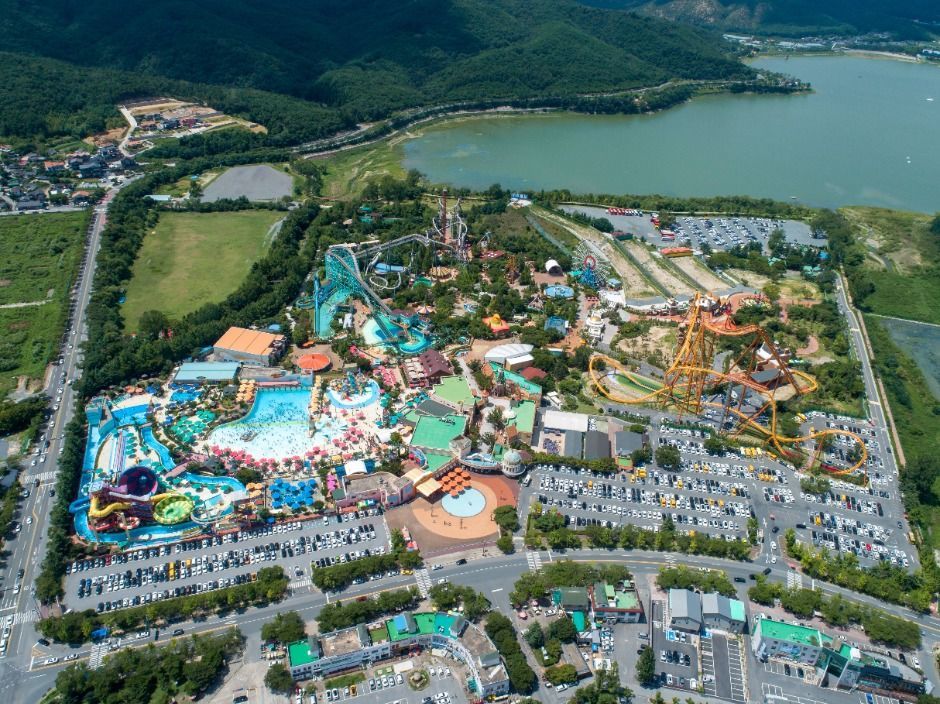
Gyeongju World (경주월드 어뮤즈먼트)
544 Bomun-ro, Gyeongju-si, Gyeongsangbuk-do
At Gyeongju World, visitors can enjoy the popular water park California Beach in the summer, and a large-scale snow park in the winter. The Bazaar District in Gyeongju World looks like as if it came straight out of a fairy tale and serves as a popular photo spot with a various rides, convenience facilities, and restaurants. It is expected to become a must-see destination for tourists from all over the country visiting Gyeongju as it offers much to see, eat, and enjoy.
![Gyeongju Yangdong Village [UNESCO World Heritage] (경주 양동마을 [유네스코 세계유산])](https://tong.visitkorea.or.kr/cms/resource/62/3506362_image2_1.jpg)
Gyeongju Yangdong Village [UNESCO World Heritage] (경주 양동마을 [유네스코 세계유산])
134 Yangdongmaeul-gil, Gyeongju-si, Gyeongsangbuk-do
Gyeongju Yangdong Village is Korea’s largest traditional village, showcasing the traditional culture of the Joseon dynasty and the beautiful natural surroundings. Thanks to its many cultural heritages, including treasures, national treasures, and folklore materials, the entire village has been designated as a cultural heritage site. Many people have visited this village to see its wealth of cultural heritages and scenic surroundings, including King Charles III, who visited this village in 1993. Seolchangsan Mountain and its four spines of mountains can be seen beyond the village. Approximately 160 old houses and 500-year-old thatched-roof cottages are nestled within the valley. Fifty-four of these homes are over 200 years old and have been excellently preserved in their original state, offering the opportunity to view a variety of unique traditional Korean houses in person.
Gyeongju Yangnam Columnar Joint Observatory (경주 양남 주상절리 전망대)
498-13 , Donghaean-ro, Gyeongju-si, Gyeongsangbuk-do
This observatory was built in October 2017 and allows visitors to enjoy the view of columnar joints of Yangnam, a national geopark. The columnar joints are formed along the shoreline of Eupcheon-ri in Yangnam-myeon. Several different forms of columnar joints can be observed from columnar joints that point upward to those that fan out or lean to the side. In particular, the fan-shaped columnar joint is a rare sight not only in Korea but also worldwide, and thus has been designated as a Natural Monument in 2012. Visitors can also see informational exhibits on diverse geographical resources at the observatory as well as ask for a detailed guide by the geology commentator on-site.
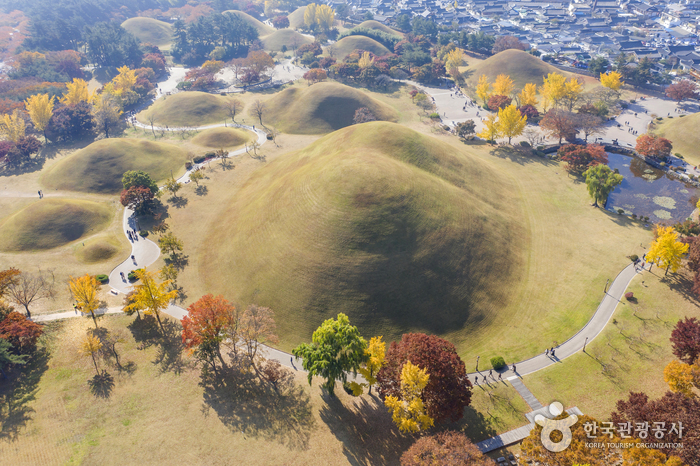
Gyeongju-si Special Tourist Zone (경주시 관광특구)
614 Gyeonggam-ro, Gyeongju-si, Gyeongsangbuk-do
Gyeongju was the capital city of the ancient kingdom of Silla. The city is often referred to as a “museum without walls” because of the many cultural relics scattered throughout the city. Almost everything in this city, from the streets to the mountains, is rich in history. Gyeongju has roughly 300 sites that have been designated as a cultural heritage, with some of them being UNESCO-recognized World Heritage Sites. The Gyeongju Special Tourist Zone includes the districts of Namsan, Wolseong, Daereungwon, Hwangryongsa, and Sanseong. This area has a total of 52 cultural assets registered on the World Heritage list. Many of the hills are actually royal tombs and fields of grass used to be sites of ancient temples. The entire Namsan Mountain can almost be considered a cultural asset because of the many stone pagodas and Buddha statues that can be found here. The Bulguk district is home to many of Gyeongju’s most well-known attractions such as Bulguksa Temple, Seokguram Grotto, Gyeongju Folk Village, Silla Arts and Science Museum, and Goereung. In the Bomun district, there are plenty of recreation facilities surrounding Bomunho Lake. Other attractions in the area include Gyeongju World Culture Expo Park, Gyeongju World, and Silla Millennium Park. [Gyeongju Special Tourist Zone] Areas included: Downtown area, Bomun Lake Resort, and Bulguksa Temple in Gyeongju-si, Gyeongsangnam-do Area size: 32,650,000㎡ Tourist Attractions: Bulguksa Temple, Seokguram Grotto, Daereungwon Tomb Complex, Namsan Mountain, Bomunho Lake, Shilla Millennium Park, Gyeongju World Culture Expo Park, etc.
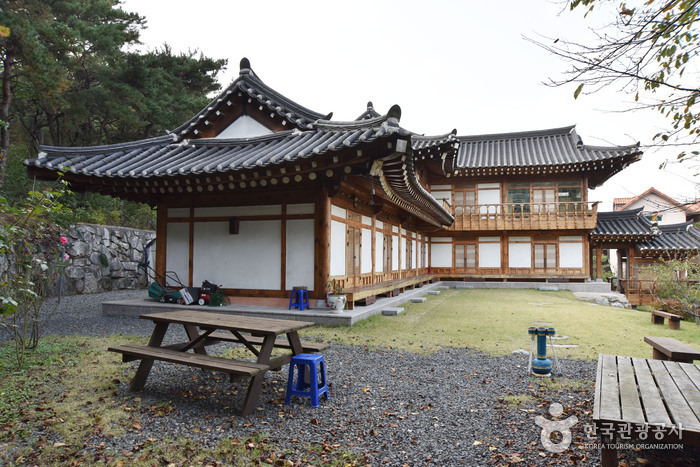
GyeongjuCheonnyeonhanok Pension (경주천년한옥펜션)
86-61 , Sidong-ro, Gyeongju-si, Gyeongsangbuk-do
Cheonnyeon Hanok Pension in Gyeongju, Gyeongsangbuk-do, is a modern two-storey hanok built of pinewood and red clay, and equipped with geothermal heating and double doors to keep out drafts. Rooms have individual toilets and cooking facilities, and there is a spacious yard where children can play and grown-ups can experience folk games such as Tuho and Jegichagi. There are fine views of Joyang Reservoir and Tohamsan Mountain, and an inviting pine forest trail next to the house. Nearby tourist attractions include Seokguram Grotto and Bulguksa Temple.
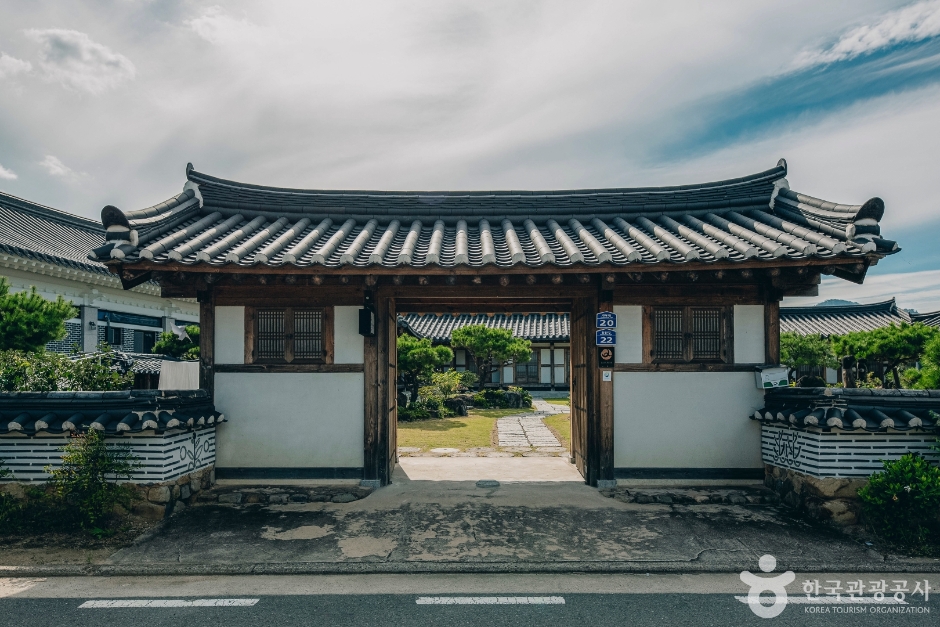
Gyeongjuhanok 1st (경주한옥1번가)
20 , Cheonwon 1-gil, Gyeongju-si, Gyeongsangbuk-do
Standing at the entrance of Cheonwon Village in Gyeongju, Gyeongsangbuk-do, Gyeongju Hanok First is a hanok stay combining the beauty of tradition with modern convenience. All rooms are Korean-style with comfortable bedding on the floor, and all have a toilet and bathroom. One guestroom has its own kitchen, while the others have basic cooking facilities in a shared kitchen. The spacious yard is decorated with figurines in traditional clothes. Nearby tourist attractions include Anapji Pond, Cheomseongdae Observatory, and Gyeongju Museum.
Gyeongjuhyanggyo Local Confucian School (경주향교)
27-20 Gyochonan-gil, Gyeongju-si, Gyeongsangbuk-do
Gyeongjuhyanggyo Local Confucian School is located near Gyochon Hanok Village in Gyeongju. The surrounding areas, Gyochon, Gyori, and Gyodong, derive their names because of this school. Although the exact date of its original construction is unknown, Gyeongju Hyanggyo was renovated during the reign of King Seongjong of the Joseon Dynasty, modeled after Seoul’s Seonggyungwan National Academy. The buildings follow the typical Confucian layout of “hall in the front, shrine in the back.” While seowon were private academies, hyanggyo were public institutions. Although it no longer serves the educational purpose, every spring and autumn it hosts traditional Confucian rituals. It also offers cultural programs such as tea ceremonies, rice-cake pounding, and archery. From April to October it hosts traditional Korean-style demonstration weddings, where visitors can participate in the ceremonies for free.

Gyeongjusanseong Fortress Food Village (행주산성먹거리촌)
89 Haengju-ro 15beon-gil, Deogyang-gu, Goyang-si, Gyeonggi-do
Located in the Haengjunae-dong and Haengjuoe-dong areas of Deogyang-gu, Goyang, this food village sits along the banks of the scenic Hangang River. Its prime location allows visitors to enjoy a variety of local dishes while overlooking the river and the historic Haengjusanseong Fortress. While the area primarily focused on grilled eel and spicy fish stews in the 1970s, it has since grown into a diverse culinary hub with dozens of restaurants. The grilled eel remains a national highlight, known for its high quality and the distinct flavor of being charcoal-grilled. On weekends, the village is a favorite stop for tourists visiting the fortress. Beyond its famous eel, the area is well known for its "noodle village," which serves affordable and hearty portions of janchi guksu (banquet noodles). Visitors can also enjoy other traditional favorites such as pajeon (green onion pancake) and dotorimuk (acorn jelly salad).
Gyeongnam Art Museum (경남도립미술관)
296, Yongji-ro, Uichang-gu, Changwon-si, Gyeongsangnam-do
Gyeongnam Art Museum, located in Uichang-gu, Changwon-si, Gyeongsangnam-do, opened on June 23, 2004. It consists of four floors above ground and one floor underground, functioning as an exhibition space for visitors and a place for academic research and education. In addition to large and small exhibitions for the general public, special exhibitions with hands-on activities are held for children as well. Moreover, sessions and seminars for professional artists are held to promote networking and communication with the aim of developing local culture and arts.
Plan your Korea trip
Korea travel FAQ
How do I use the travel search?
Enter a place or interest, then narrow the results by region, category or sort order.
Will my filters stay selected on the next page?
Yes. Your search and filter choices stay in the page URL while you move through the results.
Can I find directions to each place?
Place pages include an external Google Maps search when coordinates or an address are available.
Source: Korea Tourism Organization, official website (https://knto.or.kr).