TRAVEL IN KOREA
Korea Places to Visit
Find attractions, culture, festivals, stays, restaurants, shopping and travel courses for a clear Korea trip plan.
Gyeongnidan Street (경리단길)
Itaewon-dong, Yongsan-gu, Seoul
Gyeongnidan Street refers to the 937-meter-long road from the main gate of MND Financial Management Corps to Grand Hyatt Seoul as well as all of the nearby streets and alleys. It is called Gyeongnidan Street because the Korean army's central finance corps, or Gyeongnidan in Korean, used to be located here, and has gained fame for presenting a different vibe than that of Itaewon despite being part of Itaewon-dong. Gyeongnidan Street is an area of culture and youth where people are able to enjoy diverse and special cuisine and dishes at unique restaurants and cafes. Although it resembles a typical neighborhood of Seoul, it features foreigners who have come from many different places around the globe living in natural harmony with Korean locals, which exudes a unique, exotic atmosphere. It is fun to walk along the various streets and alleys to discover novel and sophisticated shops.
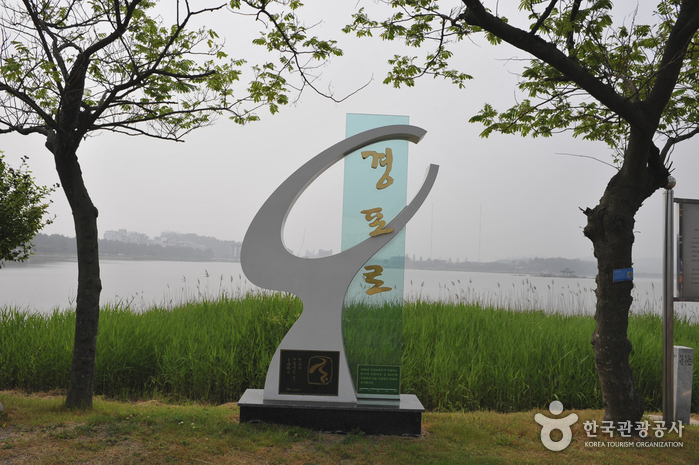
Gyeongpo Provincial Park (경포도립공원)
San 284-1, Sacheon-myeon, Gangneung-si, Gangwon-do
Gyeongpo Provincial Park was officially opened on June 26, 1982. It houses many cultural assets and memorial sites centered around Gyeongpodae Pavilion, Gyeongpoho Lake, and Gyeongpo Beach. One of the eight scenic spots in Gwandong (old name of Gangwon-do), Gyeongpodae is famous for viewing the moon, as well as fishing at Gyeongpoho Lake. However, fishing is now prohibited due to the lake being designated as a natural protection area. Gyeongpo Beach is thought to be the best beach on the East Coast. The crystal waters of Gyeongpo Beach, elegant Gyeongpoho Lake, Gyeongpodae Pavilion, Banghae Pavilion, Hohae Pavilion, Gyeongho Pavilion, and Gyeongyangsa Temple make Gyeongpo Provincial Park a great vacation attraction year round. Known as one of the most scenic locations in Gangwon-do, visitors can enjoy cherry blossoms in the spring, swimming in the summer, and deep-sea fishing and walking on the beach in the winter.
Gyeongpodae Pavilion (강릉 경포대)
365 Gyeongpo-ro, Gangneung-si, Gangwon-do
Gyeongpodae Pavilion, located on a small hill north of Gyeongpoho Lake, is one of the eight scenic sites of Gwangdong (northeastern coast). The pavilion was originally built in another location in 1326 but was moved to its current location in 1508. The pavilion shape and design changed over time before settling on the current design. The pavilion has five pillars in the front and on the side, with a gabled roof line, a common design in Korean architecture. The inside of Gyeongpodae Pavilion is decorated with calligraphy and poems written by many famous scholars of the Joseon dynasty, including both King Sukjong and Yulgok Yi I. The pavilion is surrounded by a pine tree forest, and is famous for its view of the moon reflecting off the waters of the lake below, which gave the pavilion its name. The area around the pavilion was designated as a provincial park in 1981.
Gyeongpoho Lake (경포호(철새도래지))
Jeo-dong, Gangneung-si, Gangwon-do
Gyeongpoho Lake is a popular attraction, with beautiful natural scenery and many cultural relics nearby. The view of the moon reflecting off the lake from Gyeongpodae Pavilion is especially stunning. The 1,256,204 m² naturally formed lake is connected to the ocean, and is famous as a destination site for migratory birds in winter. There are also many fish in the lake, but the lake has been designated as a nature protection site and fishing is prohibited.
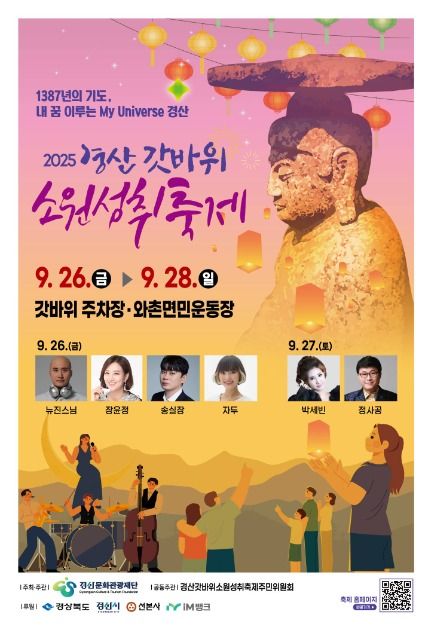
Gyeongsan Gatbawi Wish Fulfillment Festival (경산 갓바위소원성취축제)
Wachon-myeon, Gyeongsan-si, Gyeongsangbuk-do
Gyeongsan Gatbawi Wish Fulfillment Festival is a healing and participatory festival that blends traditional culture with modern performances. Various events and hands-on activities are offered during the festival, including tea ceremony programs, temple stay, wish pagoda stacking, meditation, and yoga. Visitors can also explore various regional products such as fresh Wachon plums and enjoy opening performances.
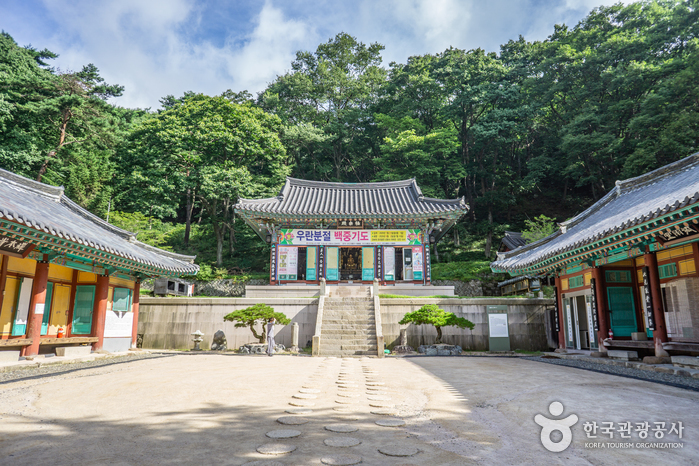
Gyeongsan Seonbonsa Temple (선본사(경산))
699, Gatbawi-ro, Gyeongsan-si, Gyeongsangbuk-do
Seonbonsa Temple is a centrally administered temple of the Jogye Order. It was originally built in 491 by Geukdal, and later repaired in 1641. The temple is home to many important cultural treasures, including the Stone Seated Buddha at Gwanbong Peak (Treasure), Three-story Stone Pagoda (Gyeongsangbuk-do Cultural Heritage), and stone lanterns.

Gyeongsangbuk-do Arboretum (경상북도수목원)
647 Sumogwon-ro, Jukjang-myeon, Buk-gu, Pohang-si, Gyeongsangbuk-do
Located at the foothills of Naeyeonsan Mountin in Pohang, Gyeongsangbuk-do Arboretum is the second largest arboretum in Korea that represents Gyeongsangbuk-do. The arboretum preserves and exhibits local plants from Gyeongsangbuk-do, and creates an eco-friendly environment where citizens can observe and learn about the various plant species native to Korea. The arboretum has total of 26 gardens, including the Alpine Botanical Garden, Ulleungdo Native Plant Garden, Needle-leaf Tree Garden and more.
Gyeongsangnam-do Arboretum (경상남도 수목원)
386 Sumogwon-ro, Ibanseong-myeon, Jinju-si, Gyeongsangnam-do
Gyeongsangnam-do Arboretum is a botanical garden in Daecheon-ri, Jinju. Spanning an area of 117 hectares, the arboretum includes Special Arboretum, Botanic Garden, and Tropical Botanical Garden, primarily focusing on the flora of Korea's southern region. It preserves and showcases over 3,000 species of domestic and international plants. Complementing these features are a range of essential facilities, including a Theme Center, Experience Center, Ecological Forest, Wildlife Center, and more.
Gyeongui Line Forest Park (Yeontral Park) (경의선숲길(연트럴파크))
133, Donggyo-ro 51-gil, Mapo-gu, Seoul
Gyeongui Line Forest Park is a linear city park located in Mapo-gu and is also called Yeontral Park. It includes Daeheung-dong, Yeonnam-dong, Saechanggogae Pass, Changjeon-dong, Sinsu-dong, and Wonhyo-ro, which were opened in this order. Gyeongui Line Forest Park is established atop the Gyeongui railroad line and the Gyeongui Line and Airport Railroad Express are constructed as a double track underground. Gyeongui Line Forest Park was designed to be incomplete on purpose to invite the citizens in completing the park. The area which could have been left empty and neglected has turned into a meaningful green park for the citizens by the citizens.
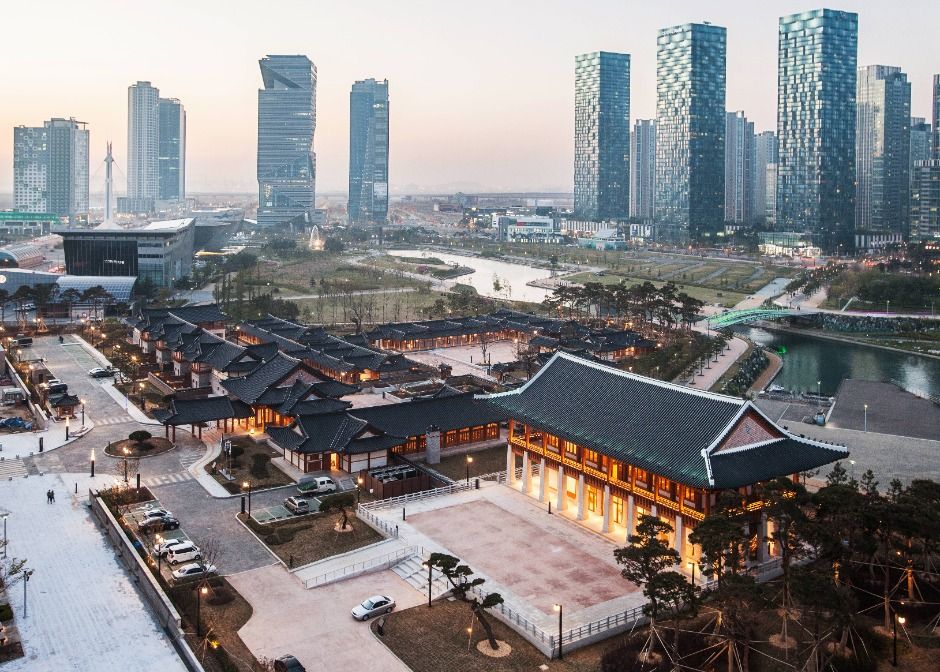
Gyeongwonjae Ambassador Incheon (경원재 앰배서더 인천)
200 Techno park-ro, Yeonsu-gu, Incheon
At first glance, Gyeongwonjae Ambassador may appear somewhat out of place: A classical hanok hotel nestled amidst a forest of cutting-edge skyscrapers. However, this juxtaposition aligns perfectly with its concept, “a walk through time on the Korean peninsula." This unique blend of tradition and modernity has earned Gyeongwonjae not only the distinction of being the first five-star hanok hotel in Korea but also the prestigious “Stars of Korean Tourism" award from the Korea Tourism Organization. Remarkably, it has achieved this claim despite lacking many contemporary hotel amenities such as swimming pools, saunas, and bars. A stay at Gyeongwonjae offers a unique experience that can only be found in a hanok, a space that encapsulates Korean traditions. The single-story building, with its low eaves and absence of flamboyant dancheong (decorative coloring), exemplifies the aesthetic of unadorned humility that characterizes Korean culture. It harmoniously blends into the surrounding nature. Guests can partake in a traditional tea ceremony followed by a rejuvenating soak in a cypress bathtub filled with water infused with traditional Korean medicinal materials, clearing the mind of clutter and promoting natural healing.
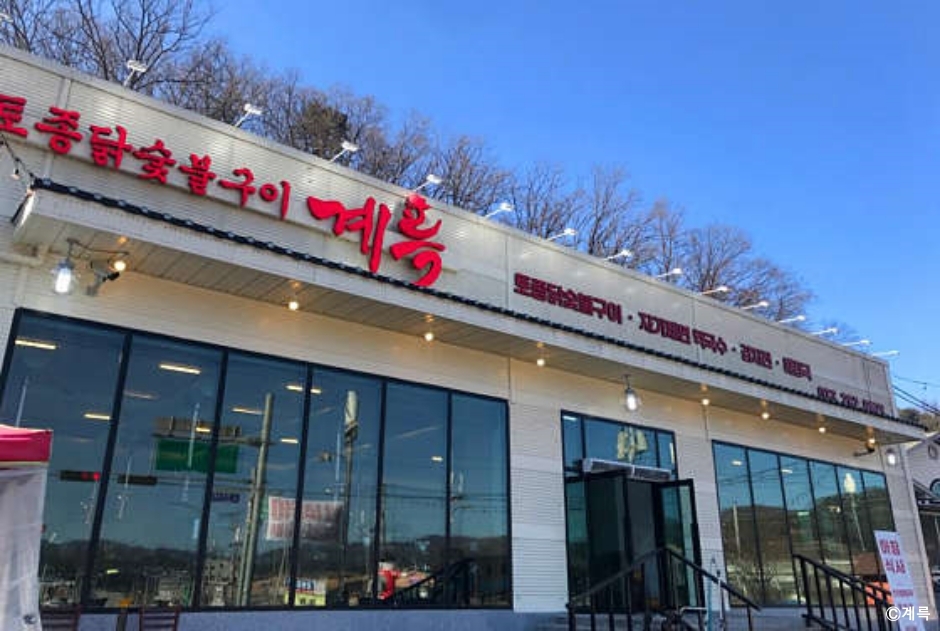
Gyereuk (계륵)
강원특별자치도 춘천시 남산면 김유정로 351
This restaurant specializes in sutbul dakgalbi (Spicy Stir-fried Chicken) made with native Korean chicken. Here, the sutbul dakgalbi is made with salt-based marinade, enhancing the chicken’s savory flavor even without a sauce. Conveniently located between Chuncheon and Hongcheon, it is an ideal stop if you’re planning to visit both areas.
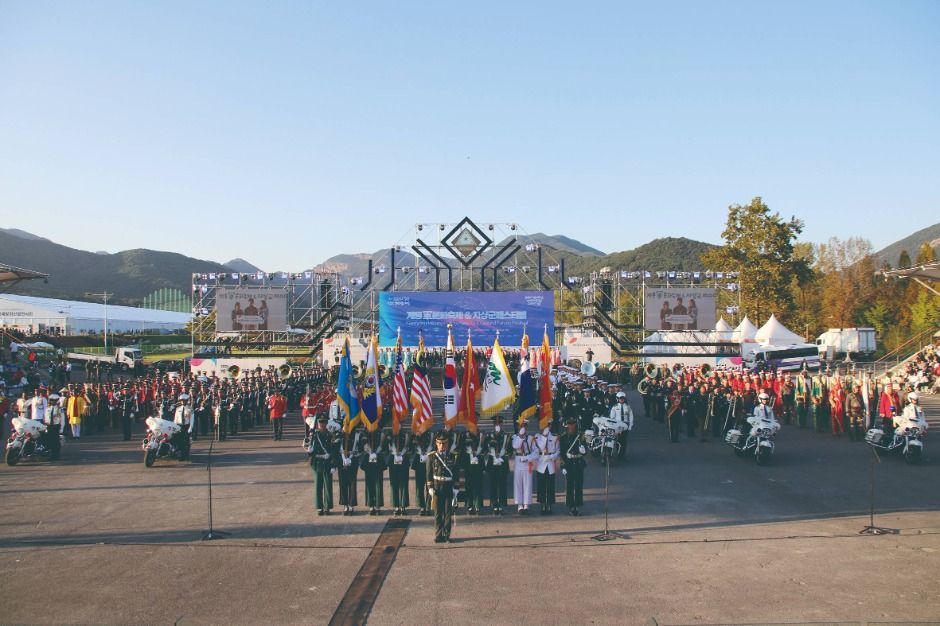
Gyeryong Military Culture Festival (계룡軍문화축제)
Jeongjang-ri, Sindoan-myeon, Gyeryong-si, Chungcheongnam-do
Gyeryong Military Culture Festival, one of Korea’s prestigious festivals, features various performances, including an opening act and military culture concert with rock, trot, and K-pop acts. In addition, military band performances, road parades, and various hands-on experience programs are held, offering diverse content that can be enjoyed by people of all ages.
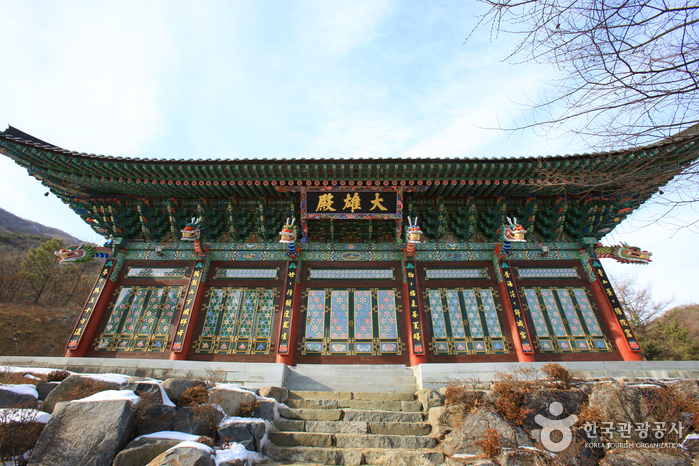
Gyeryong Musangsa Temple (무상사(계룡))
129, Hyangjeoksan-gil, Gyeryong-si, Chungcheongnam-do
Musangsa Temple is an international Zen Temple exclusively for foreigners. The temple aims at promoting Korean Zen Buddhism among foreign monks and nuns while encouraging non-Buddhist priests and religious leaders to experience Zen. Twice a year (once in the summer and once in the winter) a 3-month program is held for foreign monks and nuns to come and practice Ganhwaseon, a type of Zen Buddhism. Travelers and other foreigners are also welcome to participate in shortened versions of the program, which are typically one week in length. During meditation/program periods, public visits are limited. The temple’s yearly schedule is divided into three sections with the last section providing various events and programs including weekend events and workshops. The temple also offers temple stay and other programs run in both Korean and English.
Gyeryongsan Ceramics Village (계룡산 도자예술촌)
71-25 Doyechon-gil, Banpo-myeon, Gongju-si, Chungcheongnam-do
Gyeryongsan Ceramics Village is a traditional pottery community in Banpo-myeon, Gongju, formed by potters and ceramists in 1993. The village was founded to create a hub based on pottery culturea and to preserve the tradition of making buncheong ware. Currently, there are 12 potters and ceremists who reside in the village. The village has become a major attraction of Gyeryongsan Mountain, and regularly hosts festivals and programs.

Gyeryongsan National Park (계룡산국립공원)
327-6 Donghaksa 1-ro, Banpo-myeon, Gongju-si, Chungcheongnam-do
Gyeryongsan National Park stretches across the cities of Daejeon, Gongju, and Nonsan in Chungcheongnam-do and was made a national park on December 31, 1968. The name of the mountain comes from the fact that the ridgeline looks like a dragon wearing a chicken's crest on its head. The topographical features are what make this mountain stand out and its mysterious folklore is what makes it so interesting. The park features many peaks, including the main peak Cheonhwangbong (alt. 847 m), as well as Sambulbong, Yeoncheonbong, and Gwaneumbong Peaks. This mountain is famous for its many interesting sites, with its fantastic rock structures, attracting hikers from across the country.
Gyeryongsan Sutonggol Valley (계룡산 수통골)
47-3, Sutonggol-ro, Yuseong-gu, Daejeon
Gyeryongsan Sutonggol Valley is a popular course in the Sutonggol Valley District, located close to a city, in Gyeryongsan National Park featuring a mountain as beautiful as silk and gorgeous valleys where pure water greets visitors. Because of its close proximity to a large city and mild-sloped trail, many people visit throughout the year to enjoy the romantic, picturesque valley, the freshness of Sutongpokpo Falls, and the beautiful course leading to the gorgeous Geumsubong Peak.
Plan your Korea trip
Korea travel FAQ
How do I use the travel search?
Enter a place or interest, then narrow the results by region, category or sort order.
Will my filters stay selected on the next page?
Yes. Your search and filter choices stay in the page URL while you move through the results.
Can I find directions to each place?
Place pages include an external Google Maps search when coordinates or an address are available.
Source: Korea Tourism Organization, official website (https://knto.or.kr).