TRAVEL IN KOREA
Korea Places to Visit
Find attractions, culture, festivals, stays, restaurants, shopping and travel courses for a clear Korea trip plan.
Gwanggyosan Mountain (광교산)
58 Sanggwanggyo-dong, Jangan-gu, Suwon-si, Gyeonggi-do
Gwanggyosan Mountain straddles the cities of Suwon and Yongin. Its summit, Shirubong Peak, stands at 852 meters above sea level. The mountain is located in a plain area with no large mountains around it, and the ridges are very gentle and lush with trees in all directions, so many people visit for forest bathing and hiking. Its winter snowscapes are particularly renowned. Notable cultural assets include the tomb and monument of General Kim Joon Ryong, built to commemorate his great victory during the Qing invasion of Joseon, and the tomb of Sim On who served as a civil minister in Joseon dynasty.
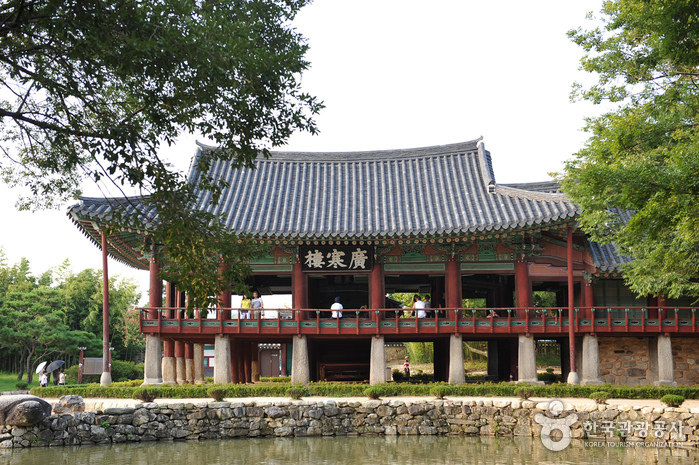
Gwanghallu Pavilion (광한루)
1447, Yocheon-ro, Namwon-si, Jeonbuk-do
Rebuilt in 1638 (the 16th year of King Injo), Gwanghallu Pavilion is one of the Joseon dynasty’s most exemplary structures. The pavilion was constructed in 1419 by Hwang Hui, a noted prime minister in the early Joseon dynasty, during his exile to Namwon. The name of the pavilion at that time was Gwangtongnu. In 1434, while the pavilion was undergoing reconstruction, scholar and politician Jeong In-ji called it Gwanghallu after Gwanghancheongheobu, the mythical palace on the moon. Designated as Treasure No. 281, the pavilion is one of four major pavilions known for excellent craftsmanship, along with Yeongnamnu Pavilion (Miryang), Chokseongnu Pavilion (Jinju), and Bubyeoknu (Pyeongyang). Gwanghalluwon Garden, which consists of Gwanghallu Pavilion, a pond, Bangjangjeon Pavilion, and Yeongjugak Pavilion form Historic Site No. 33.
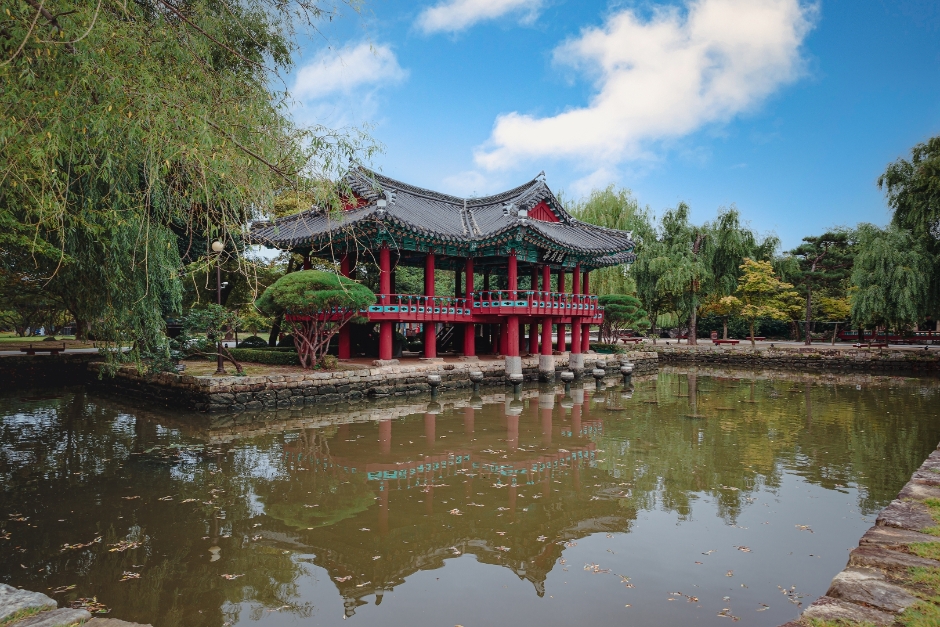
Gwanghalluwon Garden (광한루원)
1447 Yocheon-ro, Namwon-si, Jeonbuk-do
Originally known as Gwangtongnu, Gwanghalluwon Garden was built by Hwang Hui Jeongseung in 1419 during the reign of Joseon dynasty’s King Sejong. Because of its outstanding beauty, Governor Jeong In-ji gave the garden the name "Gwanghallu" in 1444, comparing it to a garden from the palace on the moon. It is famous as the location where Lee Mong-ryong and Chunhyang (two lovers from a well-known Korean folk story) first met. In the 1920s Chunhyangsa Temple was established in the neighboring area and a portrait of Chunhyang was hung in a place of honor. The garden is the venue of the Chunhyangjae Festival every spring, celebrating the deep and lasting love of the famous couple. The area around Gwanghalluwon Garden is full of many attractions, including Ojakgyo Bridge, symbolizing the bridge connecting Chilseok and Gyeonwu from the traditional story of Chilseok; and Chunhyang Hall, Wolmae-jip (house of Chunhyang's mother), Wanwoljeong Pavilion, Yeongjugak Pavilion, Samsinsan and many other traditional buildings.
](https://tong.visitkorea.or.kr/cms/resource/05/4024405_image2_1.jpeg)
Gwanghwamun 2F Pharmacy [Tax Refund Shop](광화문이층약국)
2F, Jeongwoo Building, 89, Saemunan-ro, Jongno-gu, Seoul
Gwanghwamun 2nd Floor Pharmacy is a reliable pharmacy that promptly and accurately looks after the health of busy office workers and local residents in Gwanghwamun, the heart of history. We provide vibrant health and satisfaction to weary modern people through professional medication guidance and customized nutritional supplement suggestions.
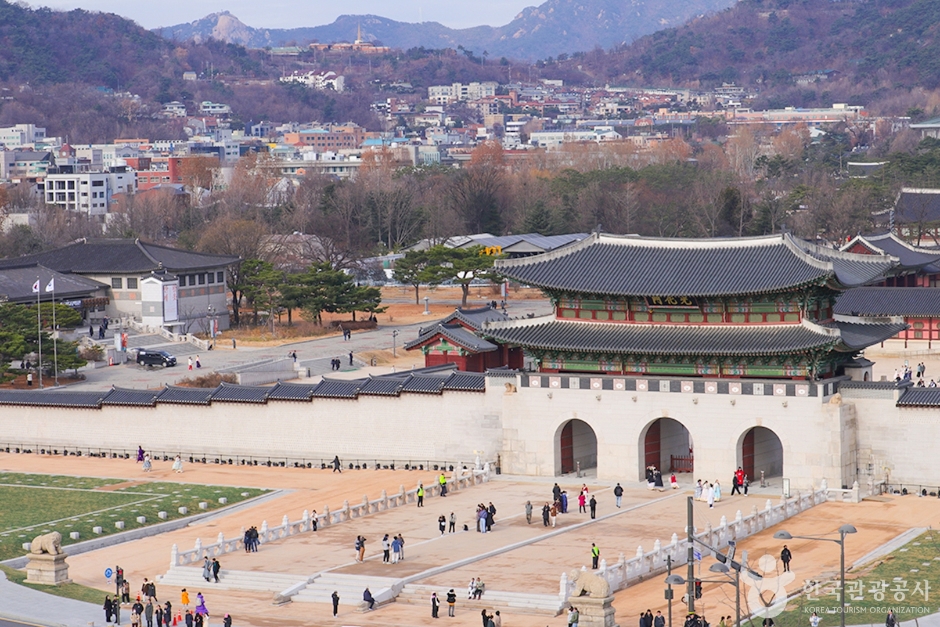
Gwanghwamun Gate (광화문)
161 Sajik-ro, Jongno-gu, Seoul
Built in 1395 under the reign of King Taejo, the first king of the Joseon dynasty, Gwanghwamun Gate is the southern gate of Gyeongbokgung Palace. It is also the main gate of the palace, therefore larger and fancier in comparison to the other gates. Gwanghwamun Gate consists of three arched gates; the center gate was used by the king, while the other two were used by the crown prince and royal officials. The tall granite walls of the gate serve as a platform for the wooden gate tower that watches over the city. The gate has a sign with its name written at the top center of the gate tower. Gwanghwamun Gate went through several damages and restorations over the course of history. It was first severely damaged during the Imjin War (1592-1598) and was not restored until the reconstruction of Gyeongbokgung Palace in 1864. Under the Japanese administration, the gate was demolished and relocated to the north of the palace's eastern gate, followed by series of damages during the Korean War (1950-1953). In 1968, Gwanghwamun Gate was relocated back to the south of the palace and was rebuilt using concrete; however, the gate’s position was shifted a few meters away from its original location. In 2006, a major reconstruction project took place to restore Gwanghwamun Gate to its original state and location, disassembling the structure completely and replacing concrete with granite and wood. After three years and eight months of construction, Gwanghwamun Gate was fully restored to its original form and was open to the public on August 15, 2010.
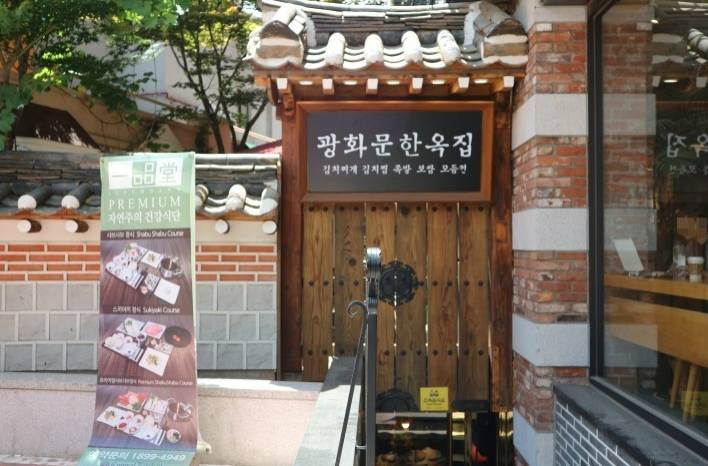
Gwanghwamun Hanokjip (광화문한옥집)
7, Saemunanro5ga-gil, Jongro-gu, Seoul
A store with rooms reproducing a traditional kitchen. The best menu at this restaurant is napa wraps with pork. This is a Korean cuisine located in Gwanghwamun Gate, Seoul.
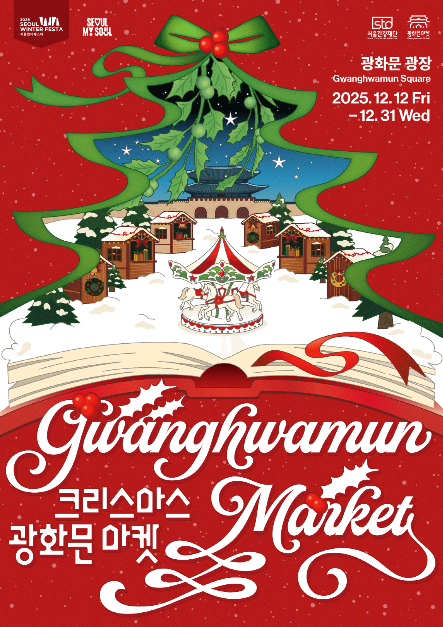
Gwanghwamun Market (광화문 마켓)
B172 Sejong-daero, Jongno-gu, Seoul
Gwanghwamun Market takes place along with the Seoul Lantern Festival to support local small businesses and promote Seoul night tourism. The market features local store owners and businesses that exhibit and sell seasonal decor, handcrafted items, and winter snacks.

Gwanghwamun Square (광화문 광장)
172 Sejong-daero, Jongno-gu, Seoul
Gwanghwamun Square is centered around Sejong-ro, the main street of Seoul with 600 years of history, and an open public space for historical and cultural experiences inspired by restoring the old Yukjo Street. Woldae (Elevated Ceremonial Stage) was reconstructed at the entrance of the "The Space that Recovers the History of Gwanghwamun," and the statue of Haetae, an imaginary animal that judges good and evil, has been restored. In addition, traces of Yukjo Street, the main street of Hanyang in the past, were restored in the "Space that recreates the scenery of Yukjo Street" near Sejong-ro Park, with a scale model installed. This is an excellent place for a stroll with beautiful scenery, including Gyeongbokgung Palace and Bugaksan Mountain.
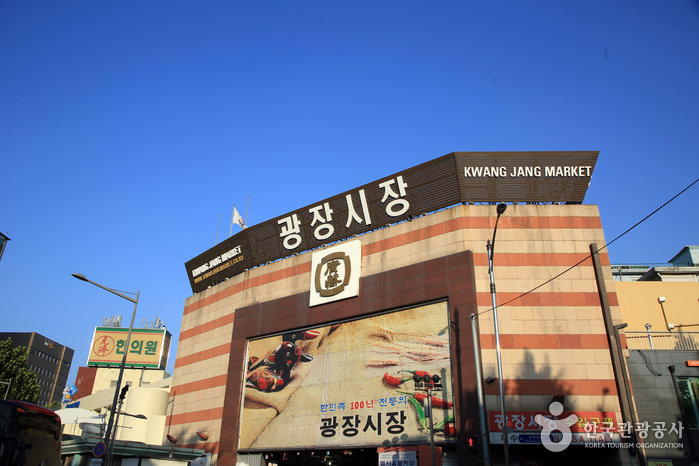
Gwangjang Market (광장시장)
88, Changgyeonggung-ro, Jongno-gu, Seoul
Gwangjang Market was the first permanent market in Korea and continues to thrive as a popular tourist destination today. The name Gwangjang means "to gather from afar and keep altogether." The market began as a small trading center that brought in goods from nearby regions, but has now grown into a large wholesale market selling a variety of goods, including upholstery, imported goods, groceries, dried fish, traditional goods, and more. The most popular section of the market is the food street connected to the East Gate, North Gate 2, and South Gate 1. The food street caters to a wide range of patrons due to the plethora of menus available. It is also one of the most recommended tourist attraction for international travelers.
](https://tong.visitkorea.or.kr/cms/resource/71/4022271_image2_1.jpg)
Gwangjin Jeil Keun Pharmacy [Tax Refund Shop](광진제일큰약국)
1F, 164, Jayang-ro, Gwangjin-gu, Seoul
Gwangjin First Large Pharmacy is a large-scale pharmacy responsible for the health of local residents through an extensive supply of medicines and professional consultation services. Equipped with kind medication guidance and a systematic prescription dispensing system, we are a health partner that customers can visit with confidence.
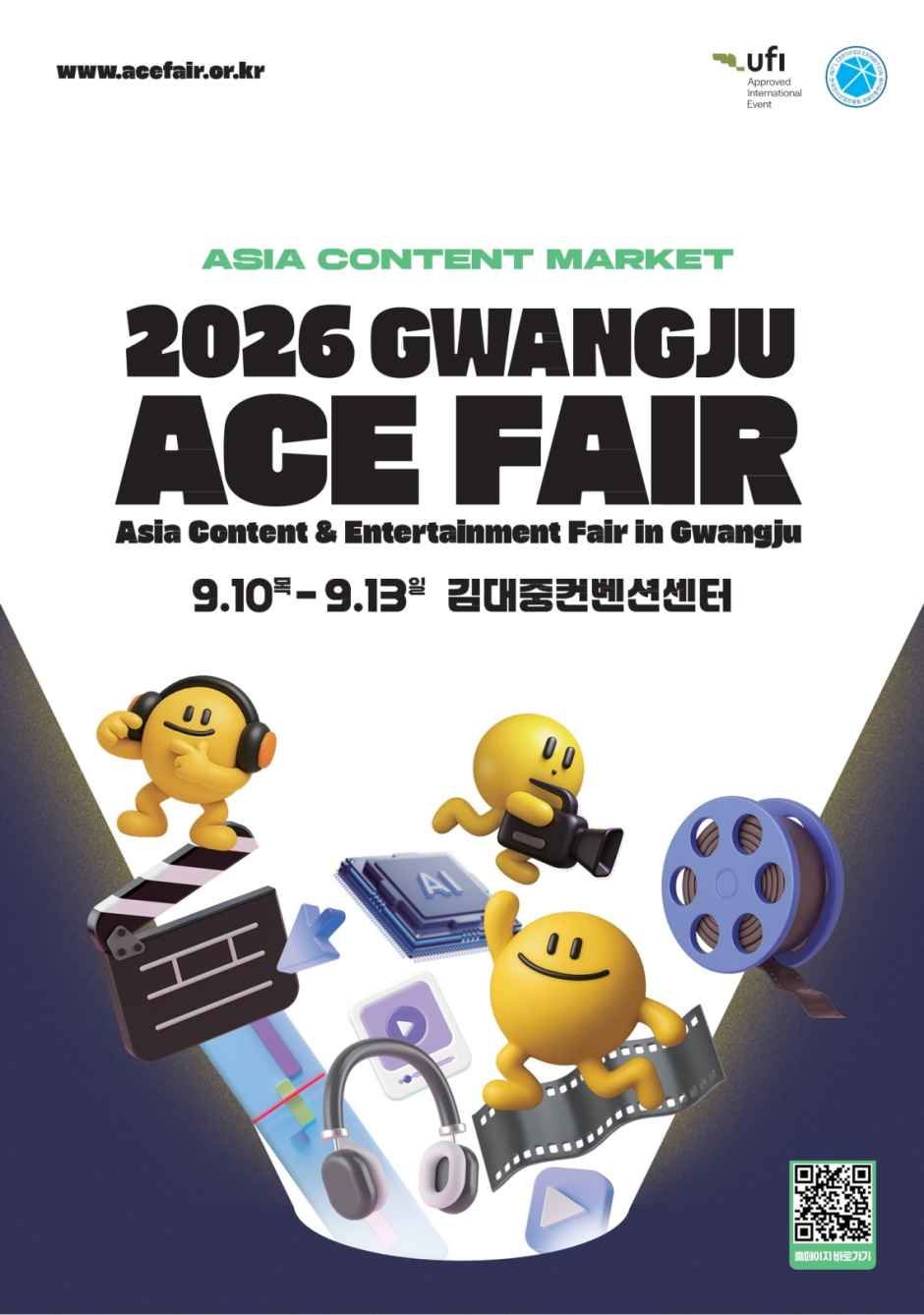
Gwangju ACE Fair (광주 ACE Fair)
30 Sangmunuri-ro, Seo-gu, Gwangju
Held at the Kimdaejung Convention Center, the 2026 Gwangju ACE Fair is a comprehensive cultural content festival where broadcasting, animation, characters, games, and webtoons converge. This dynamic event serves as both a professional business hub for industry networking and a vibrant playground for the public. While domestic and international companies showcase the latest trends in the exhibition halls, visitors can enjoy a rich array of participatory programs, including an illustration fair featuring unique artist goods, lively cosplay competitions, and stage events with popular creators. The festival also offers family-friendly entertainment such as a dedicated board game zone and bubble shows, alongside creative markets like the Juicy Festival and Semogwi Market for exclusive character merchandise.
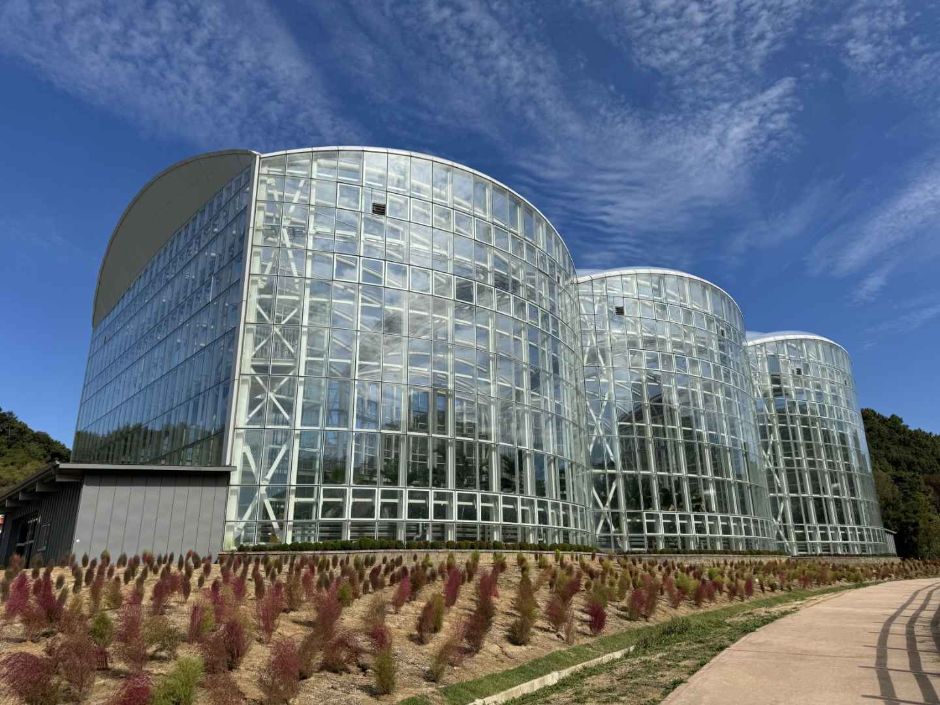
Gwangju Arboretum (광주시립수목원)
142 Dodong-gil, Nam-gu, Gwangju
Gwangju Arboretum was built on a sanitary landfill to restore the natural ecological environment by planting trees and creating convenience facilities. The arboretum preserves, manages, researches, and exhibits the indigenous plants of the region and provides visitors with a space to relax and connect with nature. Visitors of all ages can enjoy educational programs and forest commentary tours, making it a great place for families.
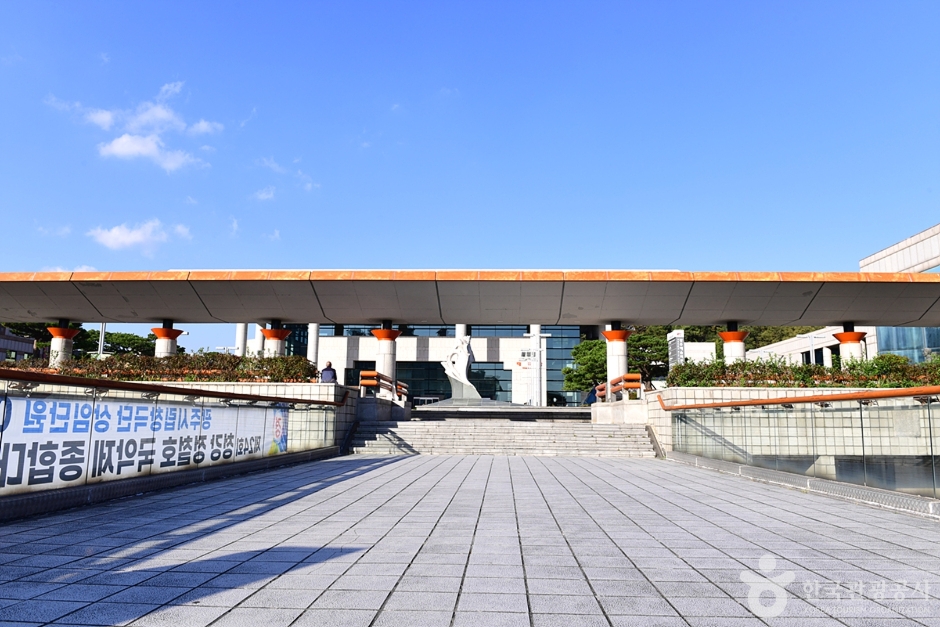
Gwangju Arts Center (광주예술의전당)
60 Bungmun-daero, Buk-gu, Gwangju
Opened in 1991, the Gwangju Arts Center is the cornerstone of culture and arts in Gwangju. It offers high-quality performances and exhibitions across various genres, including Korean traditional music, opera, classical music, and ballet. The center boasts a range of artistic facilities, such as a main theater, a secondary theater, a traditional music hall, a sculpture garden, and an amphitheater. The main theater has a seating capacity for up to 1,500 people.
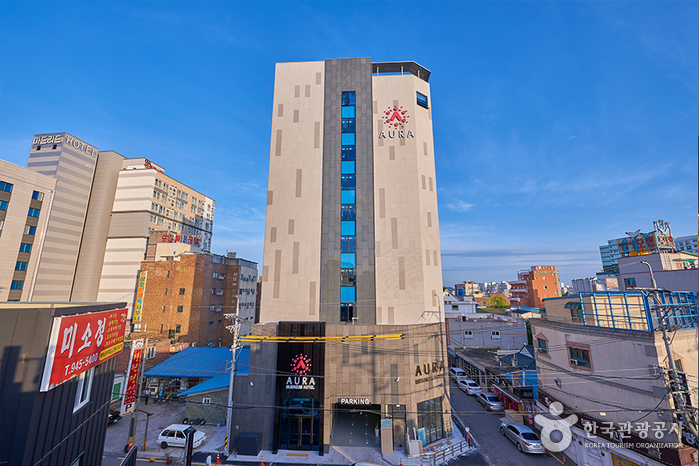
Gwangju Aura Hotel (광주 아우라 비즈니스 호텔)
28 , Songjeong-ro 1beon-gil, Gwangsan-gu, Gwangju
The Aura Hotel in Gwangju, Jeollanam-do, is a business hotel directly opposite KTX Songjeong Station, which offers clean and comfortable rooms with spacious bathrooms and an elegant atmosphere. Transport connections are good, with Gwangju Airport and Gwangju 2nd Ring Road just 10 minutes away, Must-visit Gwangju sights Songjeong Tteokgalbi Street, 1913 Songjeong Old Market, and Songjeong 5-Day Market are also nearby.
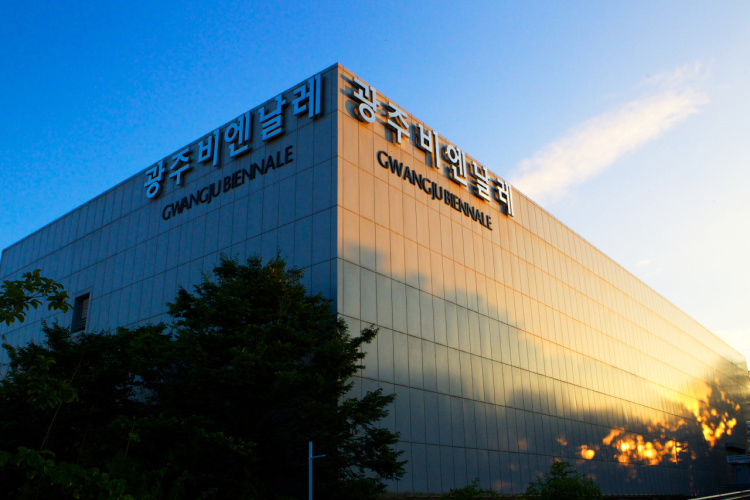
Gwangju Biennale Exhibition Hall (광주비엔날레전시관)
111 Biennale-ro, Buk-gu, Gwangju
Since its establishment in 1994, the Gwangju Biennale Exhibition Hall has significantly contributed to Korea's art culture and the world through numerous exhibitions. It strives to give joy and motivation to many people and serves as a channel for Korean artists' forays into the world. Notably, the Biennale exhibition is not a one-time event, and various attempts are being made to make it a sustainable platform as it increases the regional value of Gwangju, the home of the Biennale. In the era of COVID-19, online services are also provided to citizens who have difficulty visiting the site in person to experience the exhibition.
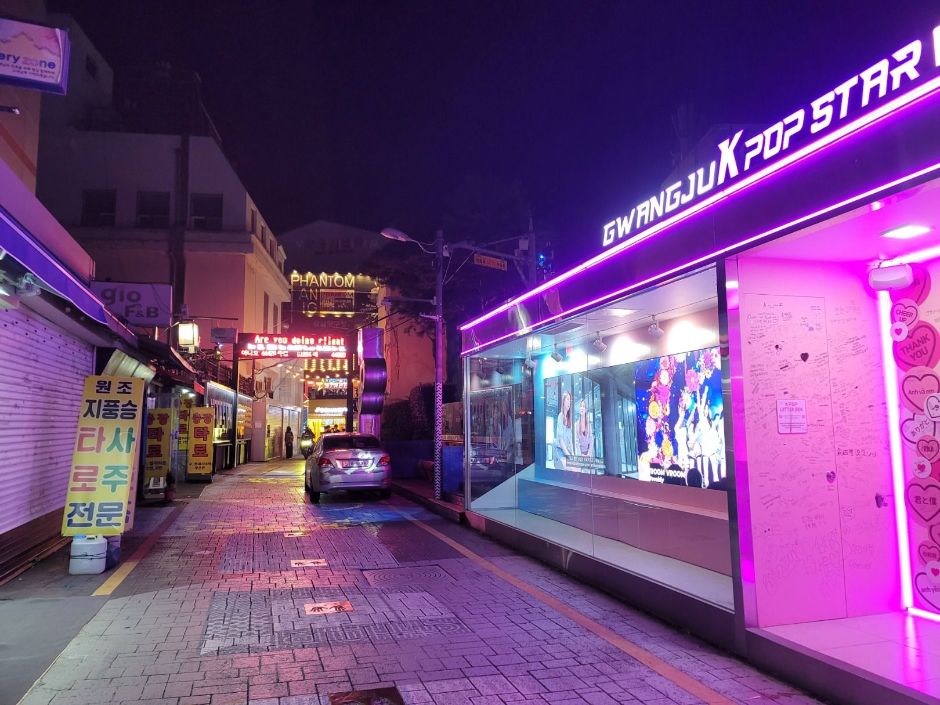
Gwangju Chungjang-ro KPOP STAR Street(광주 충장로 케이팝 스타의 거리)
94 Chungjang-ro, Dong-gu, Gwangju
J-hope Hope World This street was created to commemorate K-pop stars from Gwangju. Within the street, there are murals depicting singers' album jackets, benches decorated with song titles, handprints, and sculptures. After j-hope personally stopped by the bench decorated with the theme of a BTS song and posted a proof shot, it became a holy place for fans. It is one of the essential courses that 'ARMY' cannot miss because he left a message of appreciation and impressions of visiting this place.
Plan your Korea trip
Korea travel FAQ
How do I use the travel search?
Enter a place or interest, then narrow the results by region, category or sort order.
Will my filters stay selected on the next page?
Yes. Your search and filter choices stay in the page URL while you move through the results.
Can I find directions to each place?
Place pages include an external Google Maps search when coordinates or an address are available.
Source: Korea Tourism Organization, official website (https://knto.or.kr).