TRAVEL IN KOREA
Korea Places to Visit
Find attractions, culture, festivals, stays, restaurants, shopping and travel courses for a clear Korea trip plan.

Seonyudo Beach (선유도해수욕장)
Okdo-myeon, Gunsan-si, Jeonbuk-do
Seonyudo Beach, is a natural coastal sand dune beach with a vast white sand area as transparent and beautiful as glass beads, which is why it is also known as Myeongsasimni Beach. At Seonyudo Beach, the depth of the water is only waist-high even at 100 meters into the sea, and there are no high waves so even children can play in the water safely.
Seonyudo Island (선유도)
34-22, Seonyunam-gil, Gunsan-si, Jeonbuk-do
Seonyudo Island, one of the most popular tourist destinations on the west coast during the summer, lies in the heart of the Gogunsan Archipelago. The island has an area of 2.12 ㎢, which is only about 1/4 of Yeouido in Seoul. The island's coastal shore is around 12.8 kilometers long and the highest point is Namaksan Mountain, which reaches about 155.6 meters in altitude. Seonyudo is the central point of Gogunsan Archipelago and has even served as the headquarters for the naval army during the Joseon dynasty. It played a vital role during the Imjin War as Admiral Yi spent days on the islands to prepare for the next battle after his victory in the Battle of Myeongnyang. Visitors can enjoy the island in three ways. First is to look around the neighboring islands. Seonyudo, Munyeodo, Jangjado, and Daejangdo islands are all connected by a bridge, allowing one to move between the islands on foot or a bicycle. Other ways to enjoy the island is to take a walk along the Myeongsa-simni Shore, one of the Eight Scenes of Seonyudo, and to try the clam collecting program at a mudflat.
Seonyudo Park (선유도공원)
343 Seonyu-ro, Yeongdeungpo-gu, Seoul
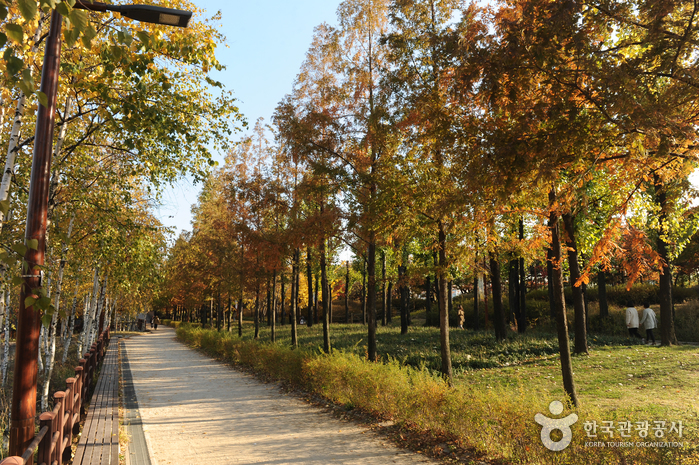
Seonyudo Park is Korea's first water-themed ecological park. The park was renewed from an old water treatment plant. Visitors can observe a water purification system, an aquatic plant garden, and an ecological forest, as well as exhibitions and other interesting facilities. The park also hosts diverse hands-on programs and exhibitions.
Seonyudonggyegok Valley (Sancheong Section) (선유동계곡(산청))
Suwol-ro, Sancheon-gun, Gyeongsangnam-do
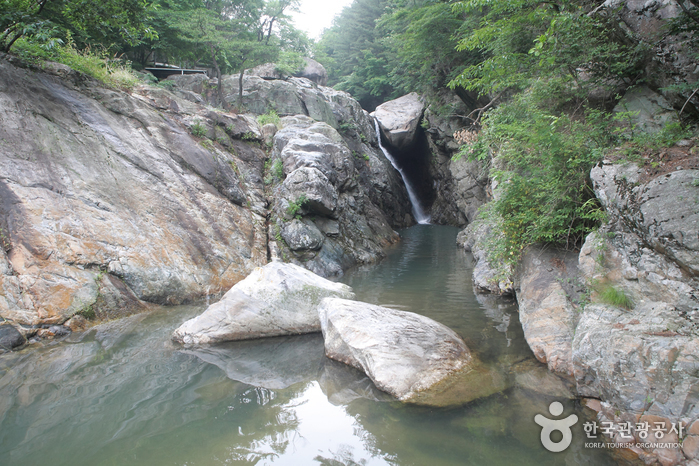
Seonyudong means the place where fairies come down from heaven to play. It has been said that fairies would often come down to the valley to make liquor and store them in flagons. There are some leftover depressions in the boulders which demonstrate there may be some truth to the legend. Near Seonyudonggyegok Valley, they say that the bamboos and pine trees stay green all year long and wood nymphs fly down to play with each other under the Suwolpokpo Falls in Suwol Village.
Seonyudonggyegok Valley (선유구곡(선유동계곡))
179, Seonyudong-gil, Goesan-gun, Chungcheongbuk-do
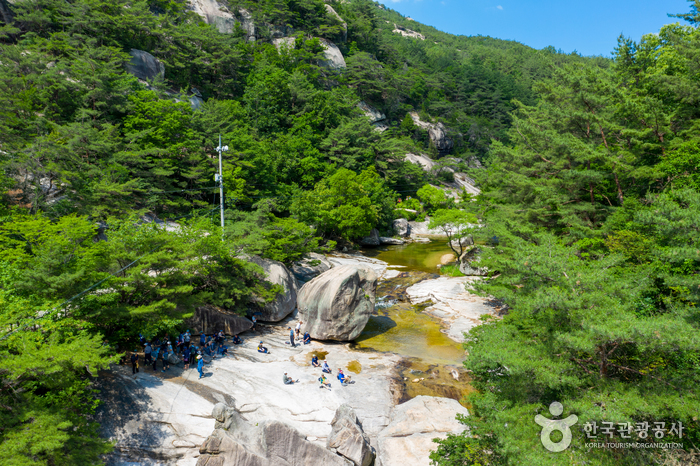
Seonyudonggyegok Valley is located in Goesan-gun, Chungcheongbuk-do Province. Including Seonyudongmun, the playground for the mountain gods, a total of nine valleys form the area: Gyeongcheonbyeok, Haksoam, Yeondallo, Waryongpok, Nangadae, Gigugam, Guam, and Eunseonam. Seonnyudonggyegok Valley is famous for the legend that mountain gods came to savor fresh mountain spring water. A renowned geographical account, Taekriji, published in 1751, stated that Seonyudonggyegok Valley boasted some of the best scenery. One of the most eminent Confucian scholars of the Joseon dynasty, Lee Hwang spent nine months in this beautiful valley. He gave names to all his favorite places, which still remain to this day.
Seopirang Park (서피랑공원)
22 Chungnyeol-ro, Tongyeong-si, Gyeongsangnam-do
Seopirang Park, located on Seopirang Hill in Tongyeong, showcases the region’s unique charm and historical significance. The park features walking trails, 99 stairs, a music garden, and piano stairs, with vibrant murals along the uphill path that make the climb enjoyable. From sunset to midnight, the park is beautifully illuminated, creating a magical atmosphere. At its summit, Seoporu, visitors are treated to stunning panoramic views of Tongyeong Bay and the city.
Seopjikoji (섭지코지)
107 Seopjikoji-ro, Seogwipo-si, Jeju-do
Seopjikoji gets its name from its shape, jutting out to sea, with 'koji' being the Jeju dialect for a cape. Located just south of Seongsan Ilchulbong Tuff Cone, the cape is a popular tourist attraction. The tuff cone along with a beautiful vista of the ocean and fields of canola flowers can easily be seen from the peak of Seopjikoji. On top of the hill stands a beacon fire station, reaching 4 meters in height with a diameter of 9 meters, built using volcanic rocks. Behind the beacon fire station is Bulgeunoreum Volcanic Cone, vibrant with red soil. The white lighthouse atop the cone stands out in contrast. Seopjikoji has been used as a filming site for many Korean movies and dramas.
Seopori Beach (서포리해변)
15, Deokjeongnam-ro 587beon-gil, Ongjin-gun, Incheon
Seopori Beach, designated as a national tourism area, is surrounded by a luxurious forest of 100-year-old pine trees. The moderately sloped, white sand beach extends 3 kilometers in length and 300 meters in x_width. The beach and the pine tree forest provide a great recreational area for the 100,000 annual visitors. Leisure facilities include a vast sports field, seaside playground, tennis court, restaurants, karaoke, bicycle rentals, and more. Visitors can enjoy fishing from the rocks on the seashore, swimming in the clean sea, and strolling through the pine forest to appreciate the scenic surroundings.
Seopyeonje; The Original(서편제; The Original)
서울특별시 중구 정동길 43 (정동) 국립정동극장
Seorae Village (서래마을)
Banpo-dong, Seocho-gu, Seoul
Seorae Village is located in between Banpo 4-dong and Bangbaebon-dong in Seocho-gu, Seoul. Seorae Village took its form as a French neighborhood when French residents moved to the area after Ecole Francaise de Seoul, a school for French residents in Korea, was established here in 1985. According to 2008 census, about half of the total 1,000 French citizens residing in Korea were registered to be living in Seorae Village. The area naturally took shape as a global neighborhood as many international residents settled at Seorae Village much thanks to the strong presence of French residents. In addition to its convenient location near the central district area as well as Gangnam area and Hangang River Park, Seorae Village serves as a pleasant environment space for all. Many shops and restaurants in Seorae Village are small in size and rather charming, resembling those in Europe. A bakery that makes traditional French baguettes using ingredients directly imported from France can be found here. In recent years, Seorae Village has undergone several changes, gaining much attention as one of the most modern and fanciest regions found in Seoul.
Seorak Beach (설악해수욕장)
Dwinnaru 2-gil, Ganghyeon-myeon, Yangyang-gun, Gangwon-do
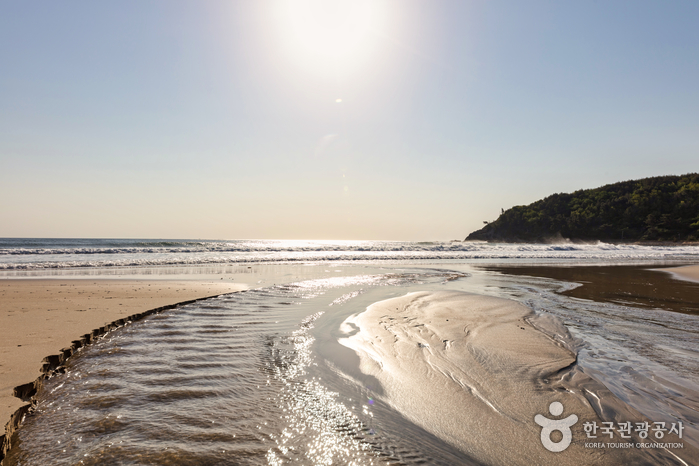
Known for its shallow waters and clean white sand, this beach is a sanctuary for surfers. It is conveniently located near famous tourist sites such as Seoraksan Mountain and Naksansa Temple, making it ideal for sightseeing. Just a five-minute walk from Hujin Harbor, go for a walk during sunset period like Lee Know and enjoy the beautiful sunset in the background.
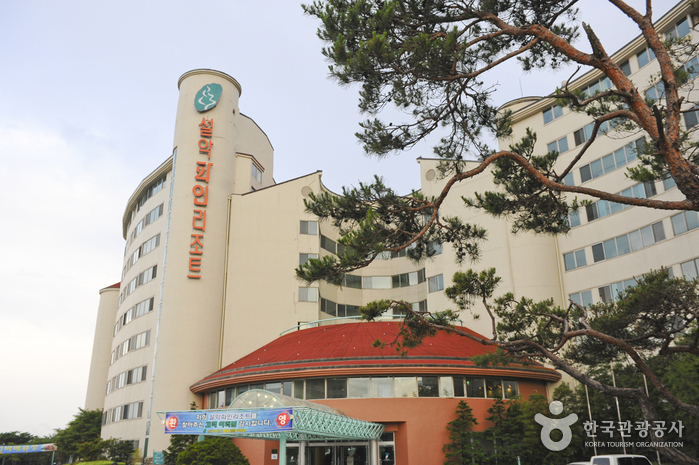
Seorak Pine Resort (설악파인리조트)
14, Gwangwang-ro 408beon-gil, Sokcho-si, Gangwon-do
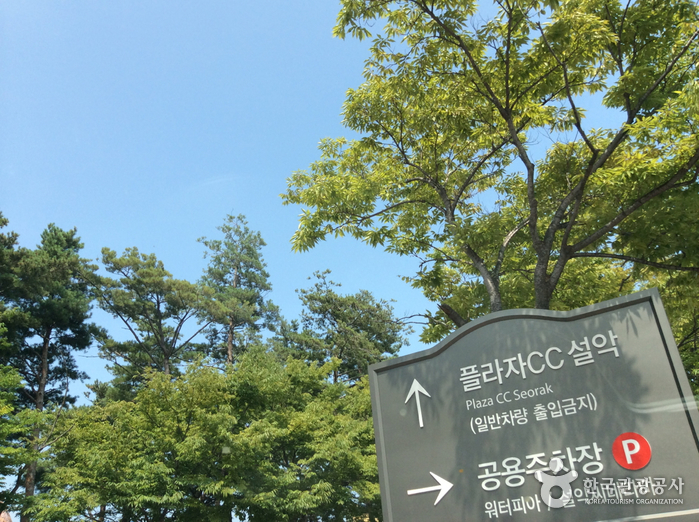
Seorak Plaza Country Club (설악프라자컨트리클럽)
1111, Misiryeong-ro 2983beon-gil, Sokcho-si, Gangwon-do
Seorak Plaza Country Club is located in the beautiful environment of Sokcho on Korea's eastern coast. The Mountain View Course showcases Seoraksan National Park, while the Sunrise View Course overlooks the East Sea.
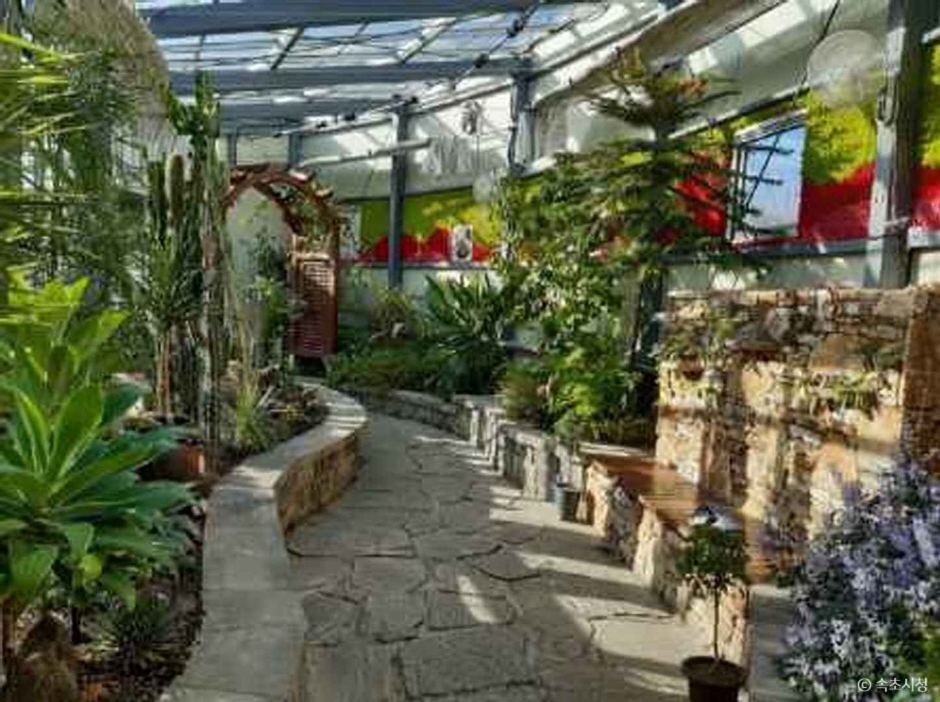
Seoraksan Botanical Garden (설악산 자생식물원)
164 Baramkkonmaeul-gil, Sokcho-si, Gangwon-do
Seoraksan Botanical Garden is a miniature version of Seoraksan Mountain. The garden features a wide range of plants, from rare species native to the mountain to more common wildflowers. It includes a water plant garden connected to the Sabang Dam, a rock garden with rare plants, a maze garden perfect for children, and greenhouses. Forest trails, walking paths, and stepping stones add to its charm, making it an ideal year-round destination.
Seoraksan Cable Car (설악산 케이블카)
1085 Seoraksan-ro, Sokcho-si, Gangwon-do
A ride on the Seoraksan Cable Car is the best way to enjoy the unexplored regions of Seoraksan Mountain. The cable car station is located in Seoraksan National Park, and it takes about 10 minutes to reach Gwongeumseong Fortress, which is 700 meters above sea level. Since one-way tickets are not available, passengers must purchase a round-trip ticket. From the cable car window, passengers can see famous attractions like Ulsanbawi Peak and Manmulsang Rocks. From Gwongeumseong Fortress, passengers can take in a panoramic view of Seoraksan Mountain. Seoraksan Mountain, seen from the top of Gwongeumseong Fortress, is majestic and mysterious with unique rock formations. Upon reaching the top of the mountain, the entire scenery of Outer Seorak unfolds before one's eyes. Visitors will be amazed by the Allak Hermitage from the Silla dynasty and the Muhagsong Pine Tree, which has survived for hundreds of years just below Gwongeumseong Fortress. There are many tourists on weekends, public holidays, and fall foliage season, so visitors are advised to plan ahead.
Seoraksan Daecheongbong Peak (설악산 대청봉)
1 Daecheongbong-gil, Yangyang-gun, Gangwon-do
Standing at 1,708 meters above sea level, Daecheongbong is the highest peak of Seoraksan Mountain. It is the third highest peak in South Korea, after Hallasan Mountain (1,950 meters) and Jirisan Mountain (1,915 meters). The peak is a home to a variety of alpine species, including dwarf pine, Korean rosebay, and Erman's Birch, and its summit offers breathtaking views. The shortest of Seoraksan's hiking trails is the Osaek course (Osaek-Seorak Falls-Daecheongbong), which takes about four hours.
Plan your Korea trip
Korea travel FAQ
How do I use the travel search?
Enter a place or interest, then narrow the results by region, category or sort order.
Will my filters stay selected on the next page?
Yes. Your search and filter choices stay in the page URL while you move through the results.
Can I find directions to each place?
Place pages include an external Google Maps search when coordinates or an address are available.
Source: Korea Tourism Organization, official website (https://knto.or.kr).